You can attract ten common backyard birds with cracked corn, the most budget-friendly seed option available. Cardinals forage beneath feeders for scattered kernels.
Blue jays push corn toward edges, benefiting ground feeders like juncos and sparrows.
Mourning doves are ground-feeding champions that peck in open areas.
Quail and game birds prefer cracked corn over whole kernels.
Crows and grackles eat it readily too.
Keep feeders low, remove moldy kernels daily, and space feeders fifteen feet apart.
Discover specific feeding strategies for each species by exploring further.
Cardinals: Ground Feeders That Love Cracked Corn
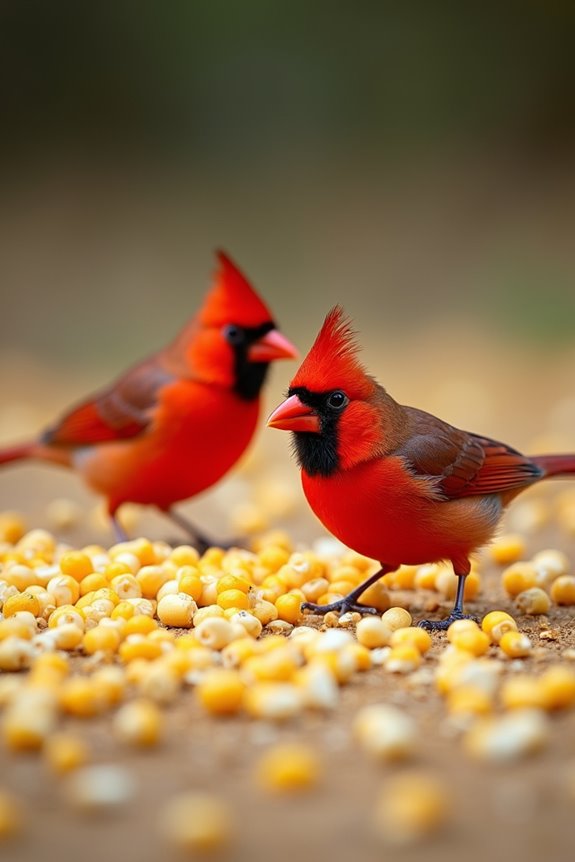
Want to attract those brilliant red cardinals to your yard? You’re in luck. Cardinals love cracked corn. This versatile seed works well in multiple feeder types. Platform feeders and hopper feeders both work effectively. Mix cracked corn with other seeds for best results. Cardinals prefer varied diets that include sunflower products too.
Ground feeding is cardinal behavior you’ll observe regularly. They forage beneath feeders for spilled kernels. Scatter cracked corn on open ground for direct access. This inexpensive option produces reliable results. You’ll notice cardinals joining other bird species at corn stations. They create a multi-species feeding community. The bright males become yard regulars. Females join them at consistent feeding spots. Cracked corn transforms your backyard into cardinal territory. It’s an effective, budget-friendly strategy that works.
Blue Jays: The Edge-Pushing Strategy
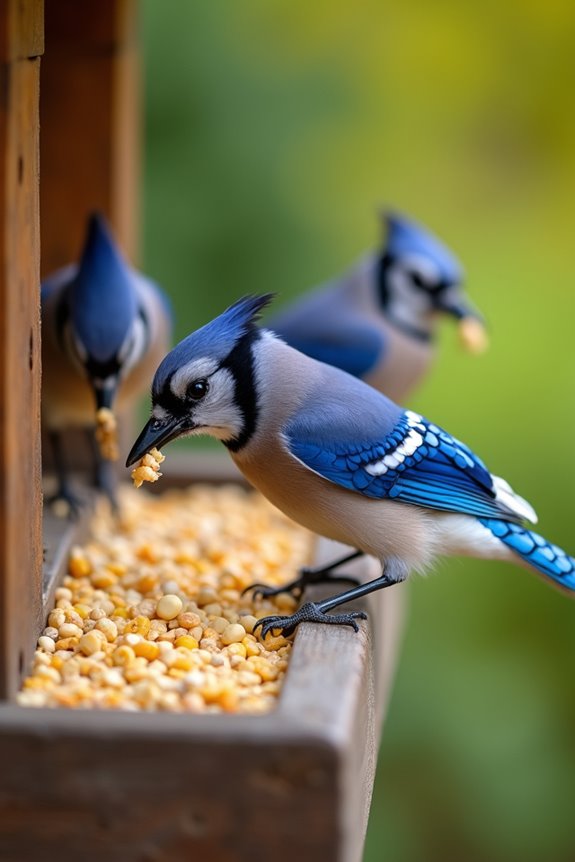
While cardinals forage peacefully beneath feeders, blue jays employ a completely different feeding technique. You’ll notice jays push cracked corn toward the feeder’s edge with remarkable precision. This edge-pushing behavior creates what experts call an auto-feeding dynamic. Corn accumulates at the periphery or tumbles to the ground below.
Here’s what happens next. Ground-foraging birds like cardinals and doves benefit from this scattered corn. Jays maintain control of the central seed area while inadvertently sharing resources. You’re observing a two-tier feeding system develop naturally.
This strategy demonstrates jays’ intelligence and adaptability. They’re not randomly pecking. They’re systematically accessing preferred seeds while redistributing cracked corn for lighter ground-foragers. Understanding this behavior helps you recognize the complex social dynamics occurring at your backyard feeder daily.
Sparrows Love Cracked Corn
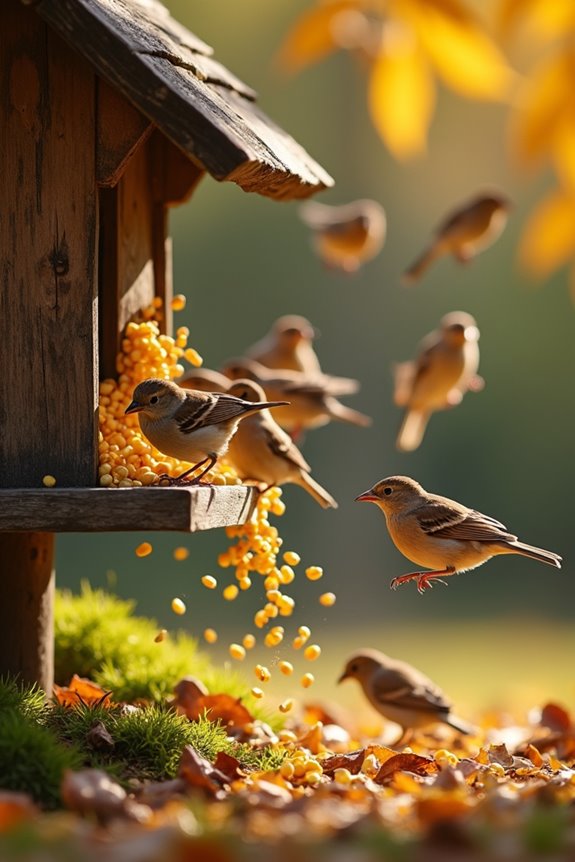
You’ll notice that sparrows show remarkable variety in how they handle cracked corn depending on their species and feeding style. Ground feeders like juncos and chipping sparrows exploit scattered corn on the ground, while house sparrows work platform and tube feeders by pushing kernels to the edges to access them. Since sparrows aren’t always picky eaters, they’ll readily consume cracked corn when mixed with premium seeds or when preferred options run low.
Species Variety And Preferences
Because sparrows are ground feeders with smaller beaks, cracked corn becomes their preferred choice at backyard feeders. You’ll notice house sparrows and chipping sparrows eagerly gathering scattered kernels. They’re not alone either. Juncos and towhees join the feast when you spread cracked corn on the ground.
Different regions show varying preferences. Some areas see sparrows favoring cracked corn over black oil sunflower seeds. Others show mixed results depending on available options. In competitive mixed seed setups, larger seeds often displace cracked corn. Your sparrows will actively forage for it in accessible spots.
Here’s what matters most: moderation and maintenance. Mold and health concerns can affect feeding behavior. Keep feeders clean. Rotate fresh corn regularly. You’ll maintain a healthy sparrow community in your backyard.
Ground Feeding Behaviors
Sparrows don’t just prefer cracked corn. They actively forage on the ground for it. When you scatter cracked corn at ground level, sparrows arrive quickly. Chipping sparrows and other small passerines consume significant amounts from low platforms. Blue jays inadvertently help sparrows by pushing kernels off feeders. This edge-pushing behavior creates a convenient food source below. You’ll notice increased ground-feeding activity beneath hopper or tray feeders. The fallen cracked corn attracts mixed foraging groups. Doves and quail join sparrows in these feeding assemblages, especially where scattering is common. Understanding this natural behavior helps you design better feeding stations. Position your feeders strategically to accommodate ground-feeders. Offer cracked corn directly on the ground. You’re supporting multiple species simultaneously while observing natural feeding patterns.
Juncos and Sparrows: Reliable Corn Eaters
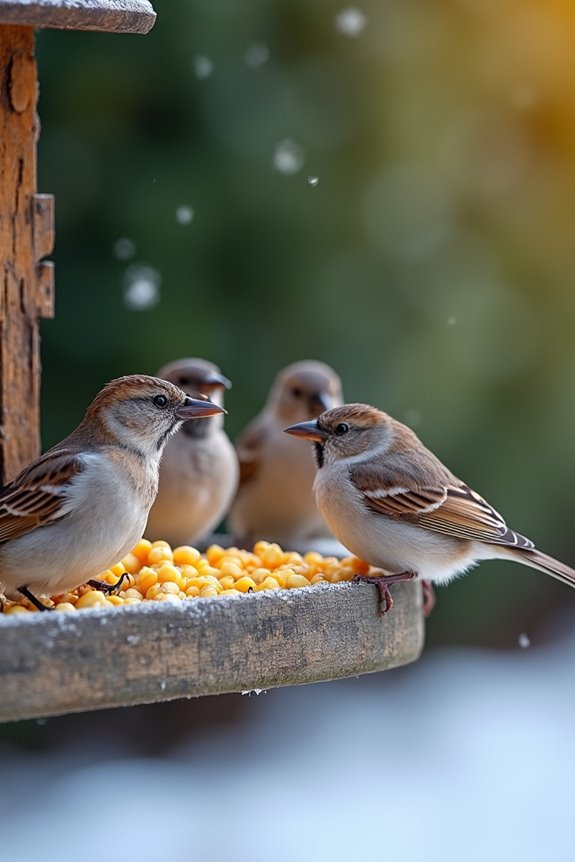
Juncos and sparrows are natural corn eaters. You’ll find these reliable visitors eagerly consuming cracked corn at your feeders. They’re attracted to this affordable seed option because it matches their ground-feeding habits.
Juncos and sparrows eagerly consume cracked corn at feeders, attracted to this affordable option that matches their ground-feeding habits.
What makes cracked corn work for these species:
- Easy accessibility: Juncos and sparrows prefer small, manageable pieces they can consume quickly
- Ground-feeding preference: Both species naturally forage on the ground, making scattered corn ideal
- Regional reliability: White-throated and house sparrows consistently visit cracked corn offerings across most areas
- Seasonal supplement: During winter or when other seeds are scarce, cracked corn becomes especially valuable
Keep your feeders clean and dry. Moisture creates mold that reduces appeal and can harm your birds. Fresh cracked corn maintains its attractiveness and keeps these dependable visitors returning regularly to your yard.
Mourning Doves: Ground Feeding at Its Best
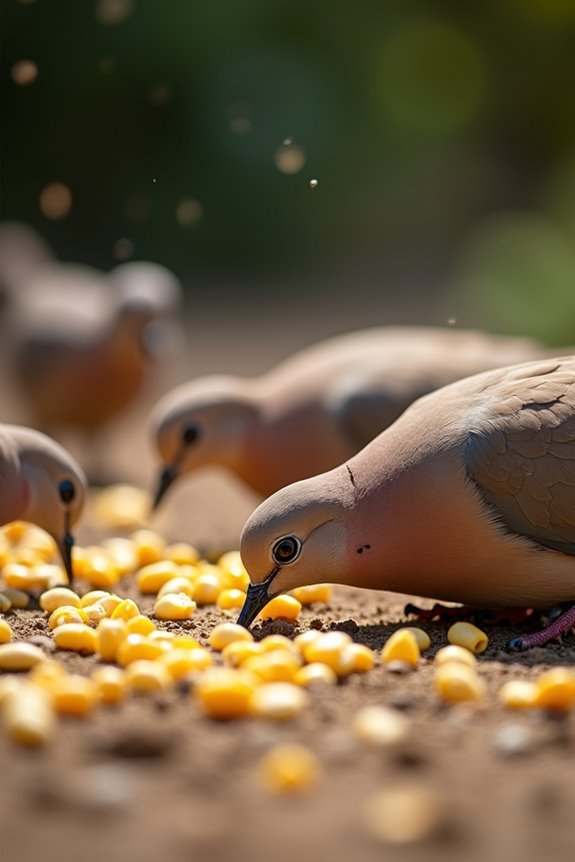
You’ll find mourning doves are ground-feeding champions. They peck at cracked corn scattered on open, flat surfaces where their gentle feeding style is most effective, especially when larger birds have already knocked kernels down from elevated feeders. To attract these graceful visitors to your backyard, scatter cracked corn away from raised feeders and keep it fresh and dry so it stays appealing to these cautious ground feeders.
Ground Feeding Behavior Patterns
While hopper and platform feeders work well for many birds, mourning doves prefer hunting for meals on the ground. You’ll notice they actively forage beneath feeders where cracked corn naturally accumulates. This ground-feeding preference creates distinct dynamics in your yard.
- Blue jays push kernels downward, creating an auto-feeding system where exposed cracked corn drops for ground feeders below
- Cardinals and juncos increase visits when you scatter corn directly on soil rather than using feeders exclusively
- Sparrows and doves participate together in ground-feeding opportunities you provide
- You’ll attract additional species, including grackles and starlings, requiring management strategies to protect smaller birds
Understanding these patterns helps you design a feeding system that welcomes your preferred visitors while managing unwanted guests.
Cracked Corn Preferences And Appeal
Mourning doves aren’t picky eaters. You’ll find them happily consuming cracked corn beneath your feeders. They prefer ground feeding and love scattered kernels from spilled hopper loads. This preference makes them reliable cleanup crew members in your yard.
Cracked corn appeals to mourning doves because it’s easy to eat and readily available. Unlike whole kernels, the smaller pieces fit their feeding style. You’ll notice doves foraging most actively after dawn and during late afternoon hours when ground activity peaks.
Mourning doves adapt well to varying corn quality. Even slightly aged kernels work fine for them. This adaptability means you won’t waste money replacing corn frequently. They’ll consume what other birds leave behind, maximizing your feeder efficiency.
Attracting Doves To Backyard Feeders
How can you turn your yard into a dove magnet? Mourning doves are ground-feeding specialists that you can reliably attract with the right approach. These gentle birds prefer cracked corn and will visit your feeders consistently when you offer it properly.
What works:
- Scatter cracked corn on the ground or low platform feeders where doves naturally forage
- Keep feeders accessible and low to accommodate their ground-feeding behavior and preferences
- Offer moderate amounts to prevent waste and avoid drawing excessive competition
- Remove spoiled kernels that develop mold or sit in sun-exposed, damp areas
Doves will compete with sparrows for your cracked corn, especially when other seeds are limited. Starting with modest quantities lets you observe their feeding patterns and adjust accordingly. Your patience pays off when you see these peaceful birds become regular visitors.
Crows: When They’ll Eat Cracked Corn
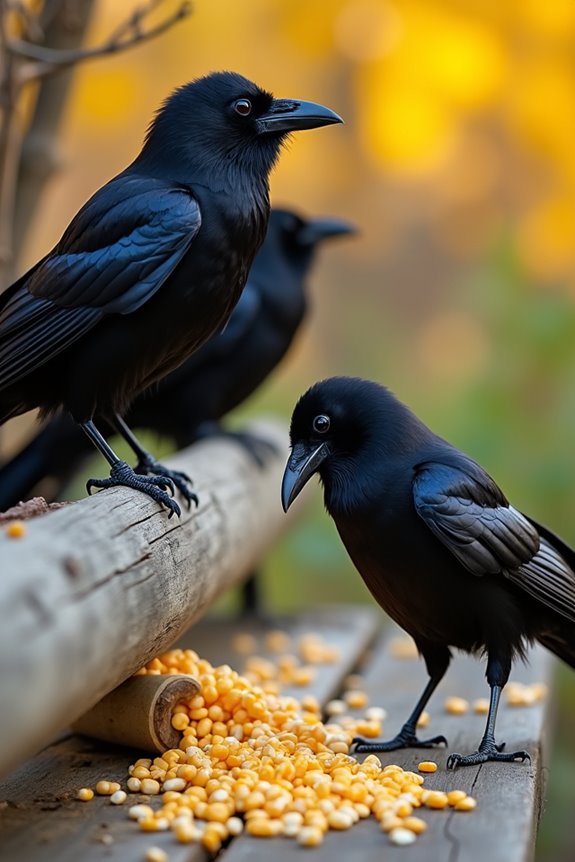
Do crows actually prefer cracked corn over other foods? They’ll eat it readily when available. You’ll notice crows sample cracked corn most often at feeders they can access from elevated spots or edges, not just ground levels. They’re opportunistic feeders. When you mix cracked corn with other seeds, crows become especially attracted to your yard or feeding area. Here’s what happens next: these intelligent birds often dominate the corn supply. They’ll push aside smaller birds competing for the same resources. This creates multi-species feeder dynamics you might observe in your backyard. Crows don’t necessarily prefer cracked corn exclusively. Instead, they recognize it as an easy food source worth visiting. If you’re managing a mixed-bird feeding setup, expect crows to claim significant portions of any cracked corn you offer.
Quail and Game Birds Attracted to Corn
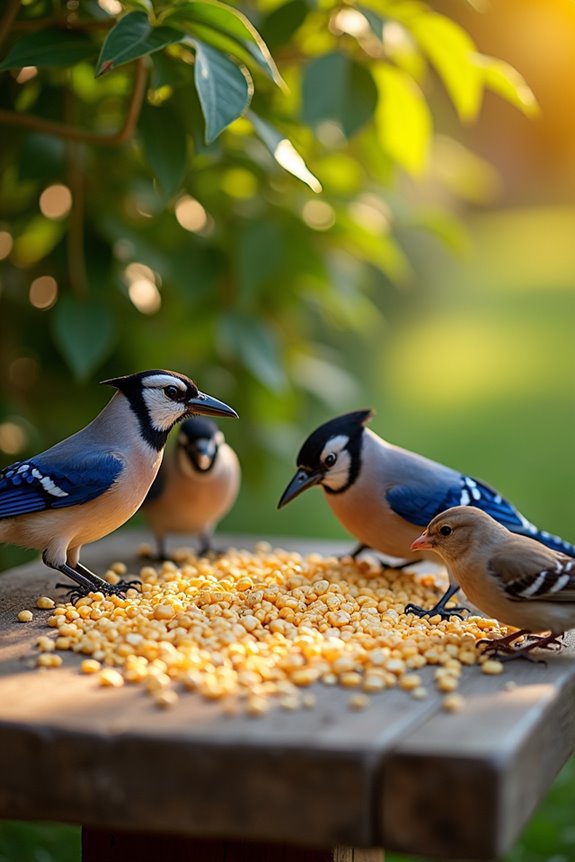
You’ll attract quail and game birds by understanding their ground-foraging habits. These birds innately forage on the ground, so you’ll have better success offering cracked corn on ground feeders or platforms rather than elevated trays. Quail especially favor cracked or whole corn mixed into your backyard offerings, though you’ll want to moderate portions to avoid drawing too many non-target species like doves and sparrows.
Game Bird Feeding Preferences
When you’re trying to attract quail and other game birds to your backyard, cracked corn becomes one of your most effective tools. These birds have specific feeding habits. Understanding their preferences helps you succeed.
Game birds favor cracked corn for several reasons:
- Ground-foraging birds find cracked corn easier to eat than whole kernels
- Mixed feeds combining cracked corn with other seeds appeal to diverse game bird species
- Energy-rich corn sustains quail through cold months and breeding seasons
- Separate feeding stations reduce competition with unwanted species
Your setup matters. Place cracked corn in open areas where quail feel safe foraging. They prefer accessible food near cover. Some regions show stronger preference for cracked corn over whole corn. This variation depends on local bird populations and habitat types. Strategic placement maximizes your success attracting game birds consistently.
Ground Foraging Behavior Patterns
Beyond understanding what game birds prefer, you’ll notice they’ve got distinct ways of finding and eating that cracked corn. These ground feeders use specific patterns you can observe in your own yard.
| Bird Species | Foraging Style | Preferred Location | Activity Level |
|---|---|---|---|
| Quail | Pecking clusters | Dense ground cover | Morning/evening |
| Doves | Gentle gleaning | Open spaces | Midday |
| Cardinals | Selective picking | Feeder edges | Throughout day |
| Sparrows | Rapid consumption | Scattered patches | Continuous |
You’ll see birds moving methodically across areas where you’ve scattered cracked corn. They’ll peck and probe the ground searching for kernels. When preferred seeds disappear, they’ll shift toward the corn as backup nutrition. Spring and early summer bring increased ground foraging activity as birds need extra energy for nesting. Watch how they exploit every scattered kernel beneath elevated feeders. This accessible food stream supports their natural feeding instincts.
Red-Winged Blackbirds and Grackles: Spring’s Corn Competitors
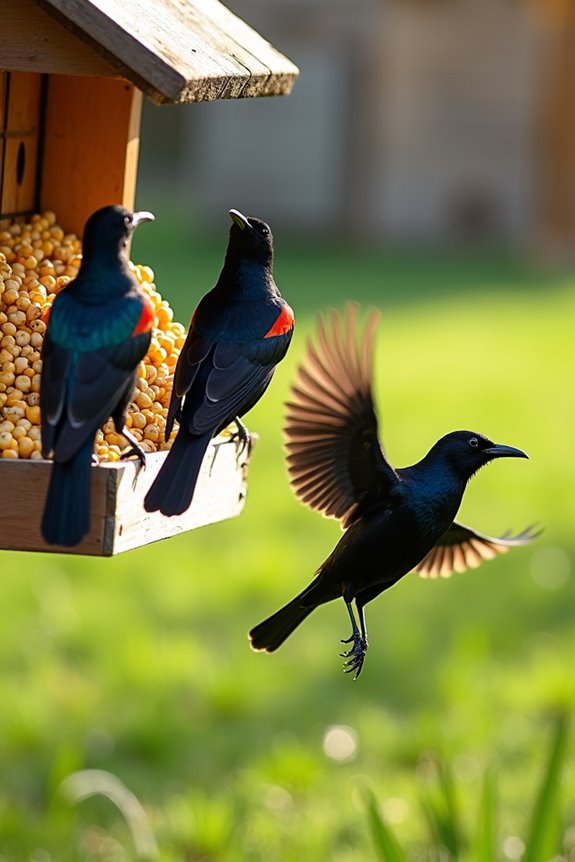
What happens when spring arrives in places like Minnesota? Red-winged Blackbirds and Grackles show up hungry. You’ll notice these competitive birds dominating your cracked corn feeders almost immediately.
Here’s what you’re dealing with:
- Aggressive feeding tactics: Grackles push kernels to feeder edges and ground below
- Flock arrivals: Red-winged Blackbirds descend in groups during migratory season
- Territory dominance: Both species control hopper stations effectively
- Cascading effects: Doves and sparrows must forage underneath for scattered scraps
These spring visitors consume cracked corn at impressive rates. You’ll watch them contend with other species beneath hoppers. The competition’s real, but it’s also natural. Understanding their behavior helps you prepare adequate supplies and accept that sharing happens. Mixed-species setups mean accepting some birds eat first while others wait their turn below.
Health and Safety: Mold, Storage, and Avian Flu Concerns
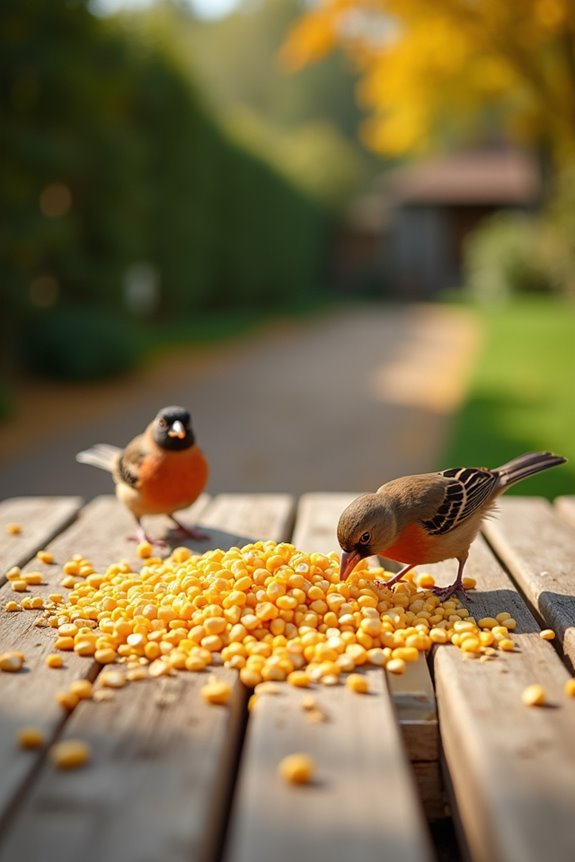
You’ve got aggressive birds competing for cracked corn. Now protect your backyard flock from hidden dangers lurking in those feeders.
Moisture creates real problems. Cracked corn absorbs water and molds quickly. Moldy corn harms both birds and you when handling contaminated seed. Store corn in dry containers. Check feeders regularly. Replace wet or discolored corn immediately.
| Risk Factor | What Happens | Your Action |
|---|---|---|
| Moisture exposure | Corn molds within days | Empty wet feeders daily |
| Improper storage | Fungal growth spreads | Use airtight containers |
| Avian influenza | Disease spreads to birds | Consult local extension first |
Before filling feeders, contact your local university extension office. They’ll advise whether feeding waterfowl is safe in your area. Some regions restrict feeding entirely during disease outbreaks. You’re protecting your community’s birds by staying informed and cautious.
Setting Up Cracked Corn Feeders
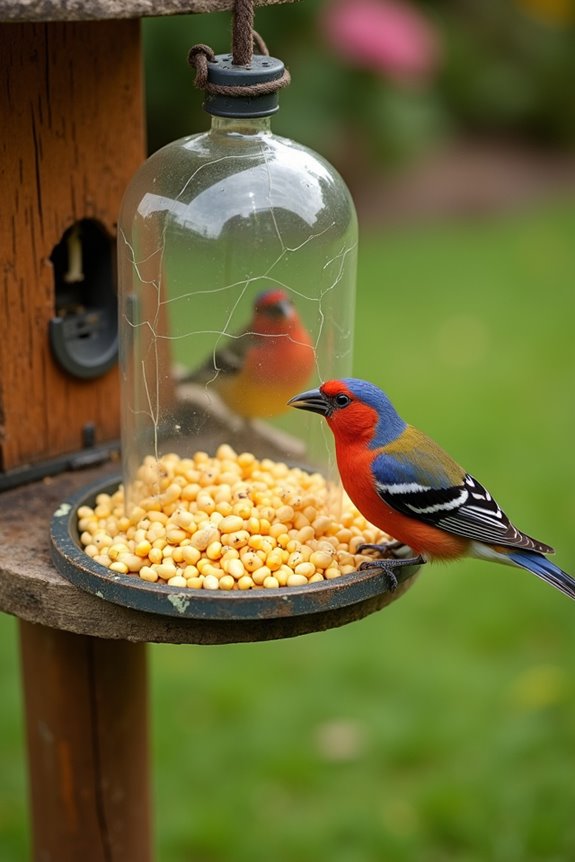
Setting Up Cracked Corn Feeders
Where should you place those feeders? Consider positioning them strategically to attract desirable birds while managing problem visitors.
- Use hopper or platform feeders to keep cracked corn off wet ground. This reduces mold and moisture damage that spoils your feed quickly.
- Space feeders 15 feet apart using rotating stations. This separation helps you manage squirrels and aggressive birds more effectively.
- Pair cracked corn with other seeds—add sunflower seeds and millet nearby. You’ll create a diverse buffet that appeals to cardinals, jays, and sparrows in your region.
- Monitor seed spoilage regularly. Check feeders every few days for wet or moldy corn.
Proper placement keeps your yard organized as a feeding station. You’ll attract more birds with fewer management issues.