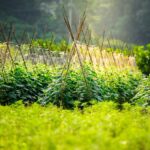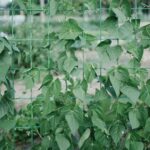
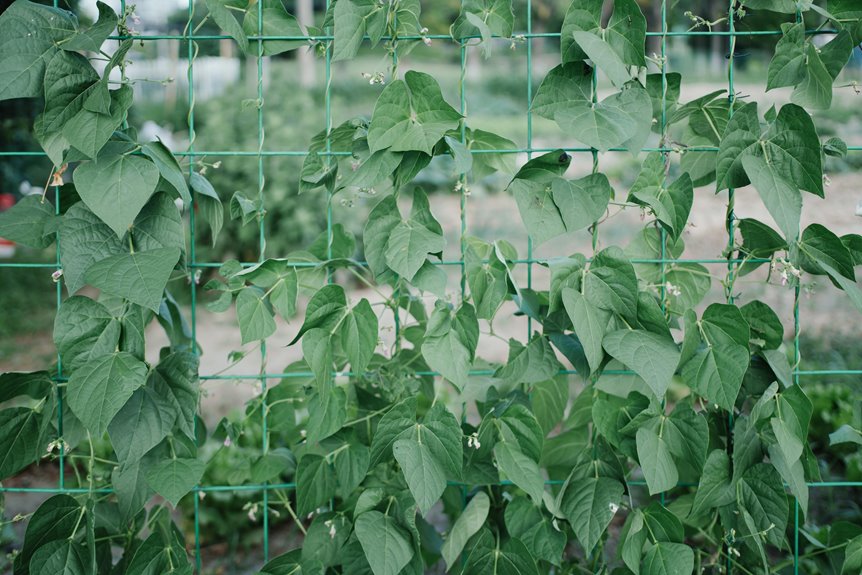
Not all green beans need a trellis. Bush beans stay compact and low-growing, finishing harvest in eight weeks without support.
Pole beans, however, grow 8 feet tall and require a sturdy trellis to stay upright. A trellis improves air circulation, reduces fungal diseases, increases sunlight exposure, and makes harvesting easier. You’ll pick more beans over a longer season with proper support. The right trellis design matters for success.
Do Pole Beans Really Need a Trellis?
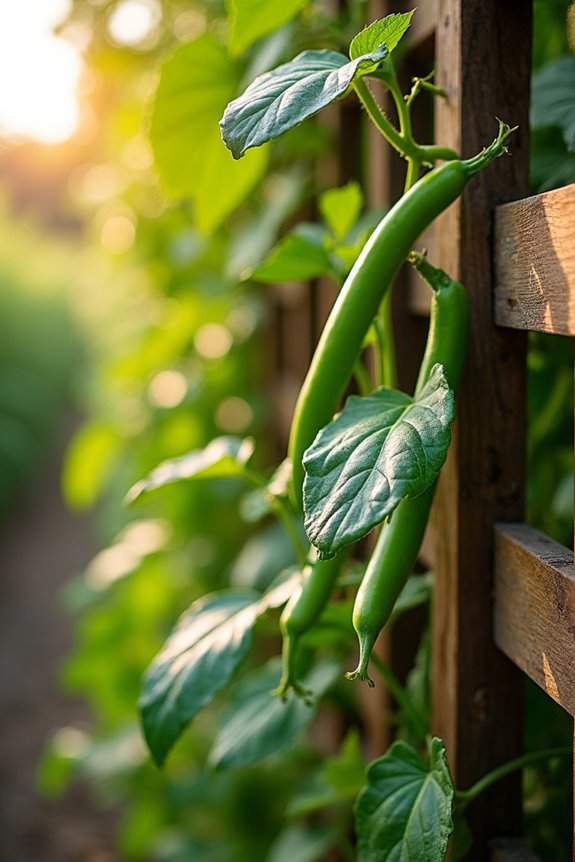
Why do pole beans need so much vertical space? Pole beans grow tall—reaching 8 feet or higher. They’re natural climbers that sprawl without support. You’ll need a sturdy trellis to keep them upright and organized.
A trellis does more than just save space. It improves air circulation around your plants. Better airflow means fewer disease problems for your crop. The vertical setup also makes harvesting easier since beans dangle accessibly along the structure.
Here’s the practical truth: pole beans aren’t technically *required* to use a trellis. They’ll still produce beans growing on the ground. However, you’ll sacrifice easier harvesting and longer productivity. Most gardeners find that supporting pole beans with a trellis creates better results and more enjoyable growing experiences.
Bush Beans vs. Pole Beans: Understanding the Difference
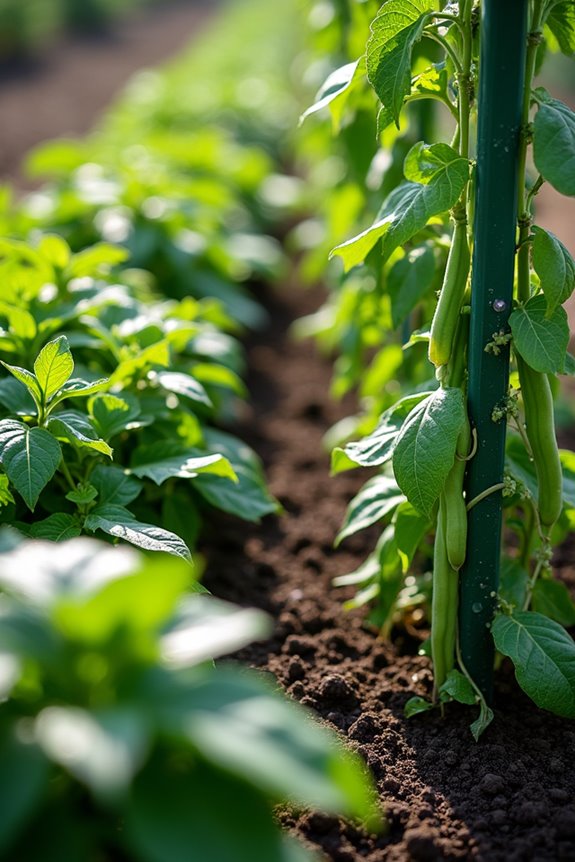
Bush beans and pole beans aren’t just different sizes of the same plant. They’re actually designed for completely different growing styles.
Bush beans stay compact and low-growing. You won’t need a trellis for these varieties. They’ll finish their entire harvest cycle in about eight weeks without any vertical support structure required.
Bush beans stay compact and low-growing, finishing their entire harvest cycle in about eight weeks without needing a trellis.
Pole beans, however, climb tall—reaching up to eight feet or higher. These varieties absolutely need a trellis. Without one, they’ll sprawl messily across your garden bed.
The spacing differs too. Bush beans go 1–3 inches apart. Pole beans need more room: 4–6 inches apart. Both types use the same planting depth of one inch.
Your choice depends on your garden setup and harvest preferences. Bush beans offer simplicity. Pole beans deliver extended harvests and better yields when properly supported.
Why Trellising Reduces Disease and Improves Yields
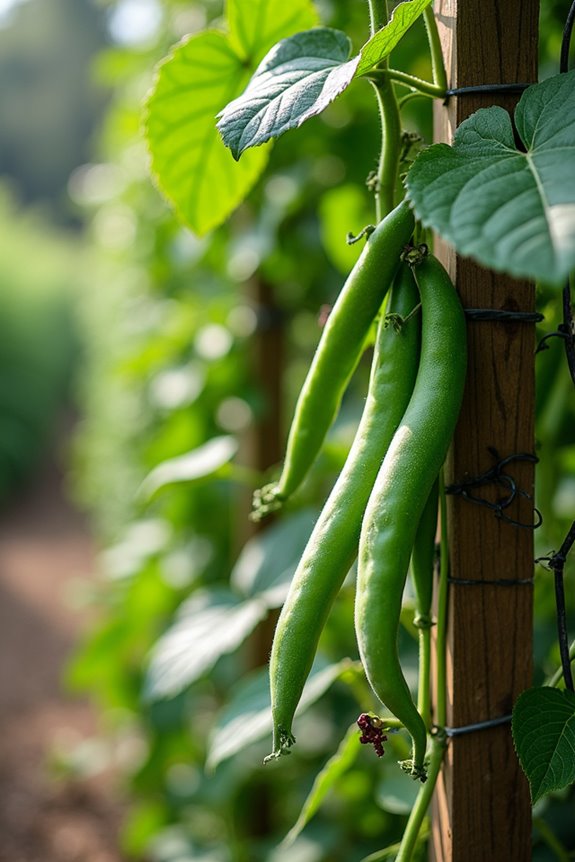
When you trellis green beans, you’re solving three major problems at once. Better air circulation around your plants cuts down on fungal diseases and rust, while increased sunlight hitting the foliage boosts your bean production considerably. You’ll also find it much easier to spot pests and spray treatments directly onto supported vines, giving you real control over disease management.
Air Circulation Prevents Fungal Issues
One of trellising’s biggest advantages? You’ll markedly reduce fungal diseases. When you grow green beans on a trellis, you’re elevating foliage off damp soil. This spacing matters tremendously. Better airflow circulates around leaves and stems. That reduced humidity at the canopy prevents powdery mildew and rust from taking hold. Dense bush growth traps moisture. Leaves stay wet longer. Fungi flourish in those conditions. Your trellis design prevents this problem. Adequate spacing and proper tension keep leaves separated. Wet soil contact drops markedly. This isn’t just theory—foliage in better condition means your plants transpire more efficiently. You’re effectively creating an environment where fungal spores can’t establish themselves. The result? Stronger plants that produce higher yields.
Increased Sunlight Boosts Production
Beyond disease prevention, your trellis does something equally important for productivity. When you elevate your green beans vertically, every leaf gets better access to sunlight. This increased light exposure powers photosynthesis, the process plants use to convert sunlight into energy and growth. More energy means more flowers and beans developing on your plants.
Think of it this way: a sprawling bean plant on the ground shades its own lower leaves. That’s wasted potential. A trellised plant maximizes every inch of available sunlight from top to bottom. You’ll notice more consistent flowering and larger harvests throughout your growing season.
The result? Higher yields in the same garden space. Your trellis turns your green bean patch into a production powerhouse.
Better Pest Management Access
How does lifting your green beans off the ground improve pest control? Trellising creates better pest management access. When your beans grow vertically, you gain better visibility and spot problems early. Disease prevention becomes simpler.
What you gain with a trellis system:
- Improved air circulation reduces leaf dampness that fosters bean rust and aphid buildup around your vines
- Easier monitoring allows you to inspect plants thoroughly for early pest detection and intervention
- Cleaner harvesting keeps pods off soil, eliminating soil-borne diseases that compromise your yields
The Four Most Reliable Trellis Designs for Beans
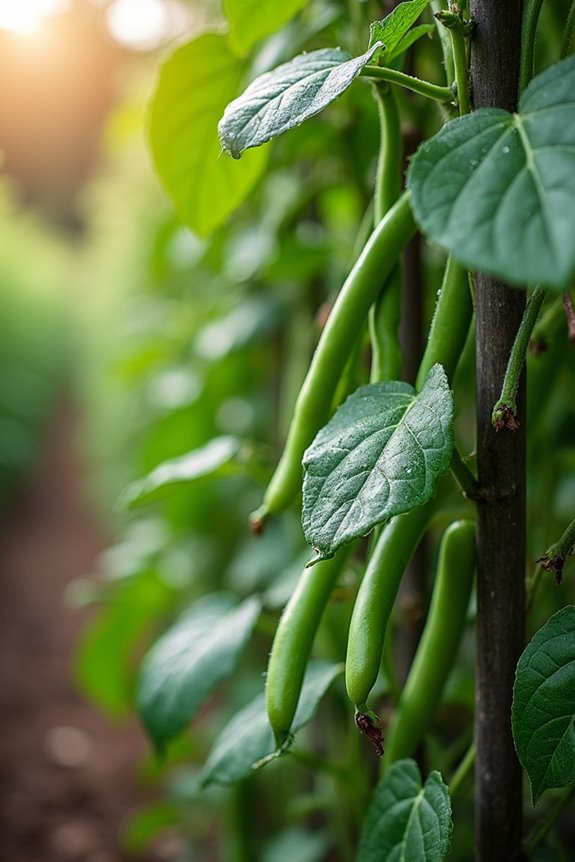
You’ve got two proven options for your bean garden. String and twine systems use natural fibers like jute or nettle twine strung between posts, offering a simple setup that works well for pole beans reaching up those vertical lines. Bamboo pole structures—a framework of bamboo stakes lashed together with hemp or nettle twine—provide sturdy support that handles heavy yields and withstands wind better than lighter materials.
String And Twine Systems
What makes string and twine systems effective for bean trellises? They’re flexible, affordable, and adaptable to your garden’s needs.
String trellises work well because dangling twine attached to a cross or top bar sways with the breeze. This wind tolerance prevents damage that rigid structures might cause.
Here’s what you can use:
- Bamboo with hemp or nettle twine for completely compostable options
- Jute string for durability, though it may rot faster when tying
- Simple vertical strings anchored securely for straightforward pole bean support
To stabilize your trellis in windy conditions, anchor ends firmly. Add weight or bury string ends deep into soil. This keeps everything secure while your beans climb vertically upward. Net trellis designs offer another accessible alternative you can assemble quickly.
Bamboo Pole Structures
Because bamboo offers both strength and simplicity, it’s become one of the most popular trellis materials for bean gardeners. You’ll appreciate how bamboo poles provide sturdy vertical support. They’re attractive too.
You can arrange bamboo in various configurations. A simple single-pole setup works well. You can also create a cross-pattern or net-like frame. This maximizes vertical growth for your pole beans.
Your bamboo trellis typically lasts two to three years. Heavy winds or large crops may shorten this lifespan. Pair your bamboo with hemp or nettle twine. This creates a fully compostable option that won’t harm your garden.
For smaller spaces or lightweight bean varieties, short bamboo stakes offer temporary stabilization. They’re easy to install. They won’t overwhelm tight garden areas.
Trellis Materials Ranked by Durability and Cost
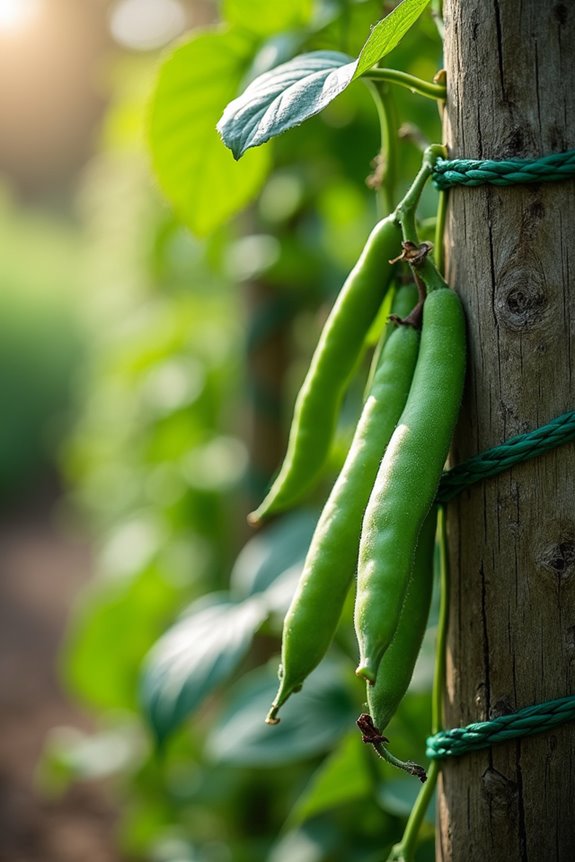
Which trellis material will last in your garden?
You’ll want to match your green beans trellis to your budget and patience level. Here’s what works:
- String or twine trellises — Affordable but require annual replacement. Natural fibers like jute rot faster than synthetics.
- Bamboo pole structures — Last 2–3 years with typical use. A solid middle ground for durability and cost.
- Chain-link or net designs — Most durable options. Require proper anchoring but outlast other materials significantly.
Natural fiber trellises are compostable yet prone to faster deterioration. Net trellises assemble quickly and handle tension well. Your choice depends on whether you prefer replacing materials annually or investing upfront in something that stays put for years.
Building a Basic String Trellis in Five Steps
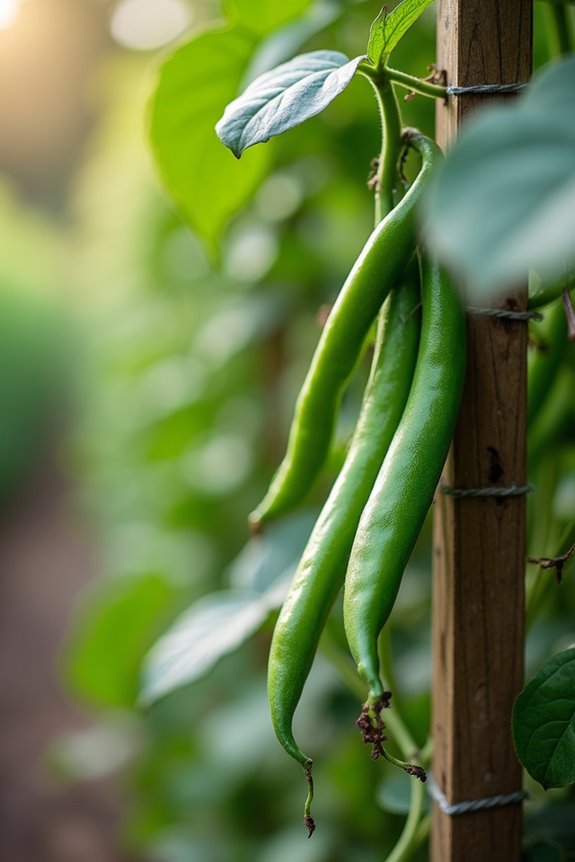
Now that you’ve picked your trellis material, it’s time to build. You’ll need five simple steps to create your string trellis. Start by positioning 6-foot-tall end stakes firmly into the ground. Install a top cross piece connecting both stakes. Attach dangling twine from the cross piece down to your planting area. Add ground boards for extra stability if desired. Finally, bury string ends near planting sites for additional support.
| Step | Material | Purpose |
|---|---|---|
| 1 | End stakes | Frame support |
| 2 | Cross piece | Twine anchor |
| 3 | Jute twine | Bean climbing |
| 4 | Ground board | Stability |
| 5 | Buried string | Root support |
Your basic string trellis accommodates a 6-foot-wide harvesting area. Natural fibers like jute compost completely when finished. This straightforward design works for gardeners of all skill levels.
Spacing Beans and Companion Plants on a Trellis
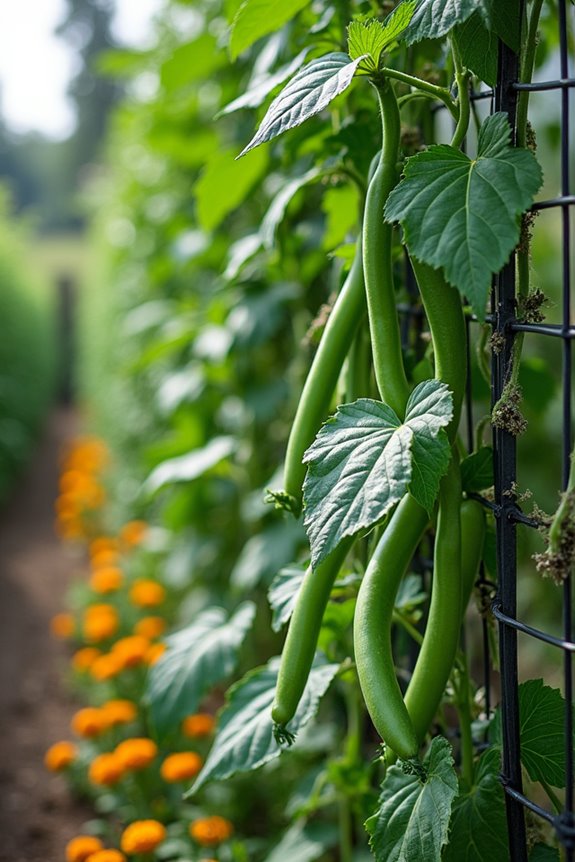
How you space your beans on a trellis affects your harvest.
Proper spacing prevents overcrowding. Your beans need room to breathe. Good airflow reduces disease risk and improves growth. Consider these spacing guidelines:
- Plant beans 4-6 inches apart along the base of your trellis
- Leave 12-18 inches between trellis rows for easy harvesting access
- Position companion plants like corn or squash at least 2 feet away from bean rows
Dense planting seems efficient but backfires. Crowded beans struggle for sunlight and nutrients. You’ll notice fewer pods and more fungal issues.
Companion planting works when spaced correctly. Tall plants like corn support pole beans naturally. Squash shades soil and conserves moisture. These combinations create a productive garden setup that results from your planning.
Why Your Trellis Might Fail (and How to Build It Right)
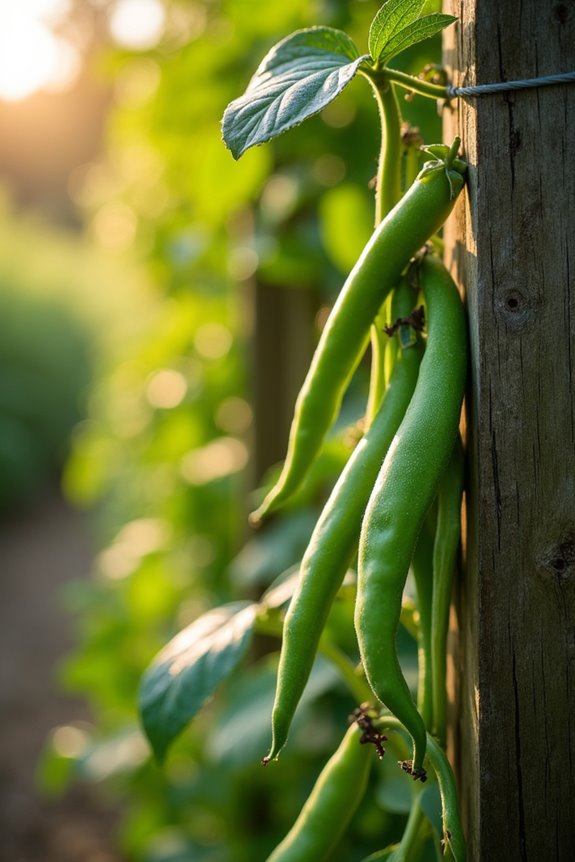
You’ve built your trellis. Now don’t watch it fail.
Wind anchoring is your foundation. Bury or weight the end pieces deeply into soil. Without this, your structure lifts or topples in open areas. Mid-span supports prevent sagging when heavy beans load your trellis.
Choose flexible materials over rigid ones. String or twine sways with wind. Rigid netting breaks more easily. Natural-fiber twine sounds good but rots quickly. Pick durable, weather-resistant options instead. They last seasons longer.
Height matters too. Pole beans grow 6–8+ feet tall. If your trellis is too short, plants pull it down as they climb. Build taller than you think necessary.
Trellis stability comes from planning ahead. These steps prevent frustration and wasted effort.
When to Harvest Beans Growing on a Trellis?
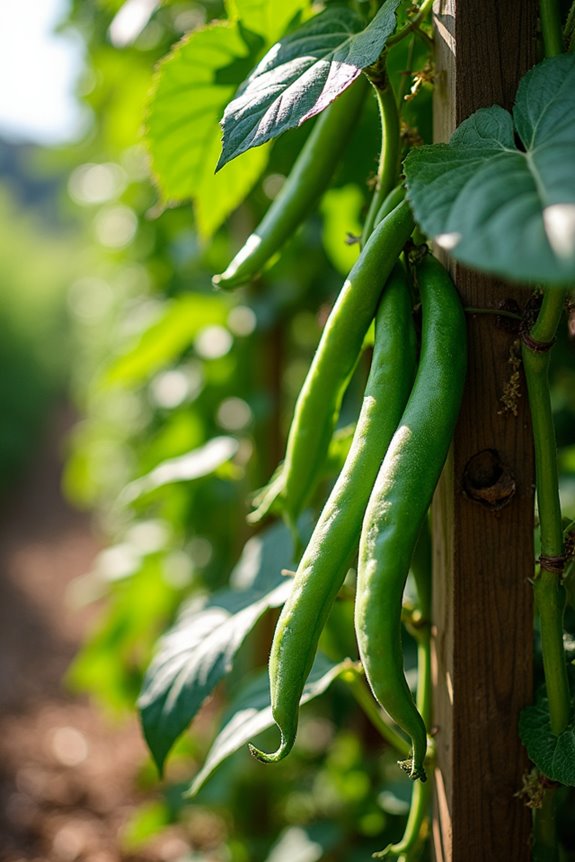
When’s the right moment to pick those beans? You’ll want to harvest when they’re mature but still tender. Here’s what makes the timing work:
- Check your trellis daily once beans reach full size and snap easily when bent
- Pick beans before they turn hard, tough, or bitter from sitting too long
- Pole beans on sturdy trellises produce for about eight weeks
Your trellis setup actually helps here. Tall, stable structures keep beans at eye level, making it easier to spot ripe pods without bending or searching through tangled vines. Pick every few days to encourage more growth. Store your harvest in the refrigerator for about a week, or blanch and freeze them for up to a year of enjoyment.