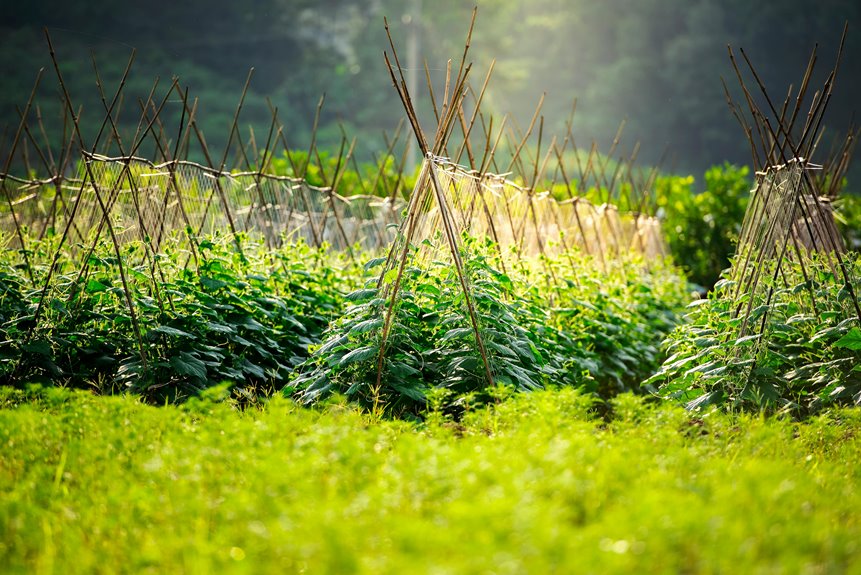
You don’t technically have to trellis tomatoes, but you’re trading convenience for disease and rot. Ground-sprawling plants invite fungal infections, slugs, and hidden fruit that’s harder to harvest. Indeterminate varieties sprawl indefinitely without support, creating dense foliage that traps moisture near soil. Trellising elevates fruit, improves air circulation, and reduces disease risk significantly. Even determinate bush types benefit from some support. The upfront effort pays off through better plant health and increased yields. Discover exactly which setup works best for your garden.
Do You Actually Need to Trellis Tomatoes?
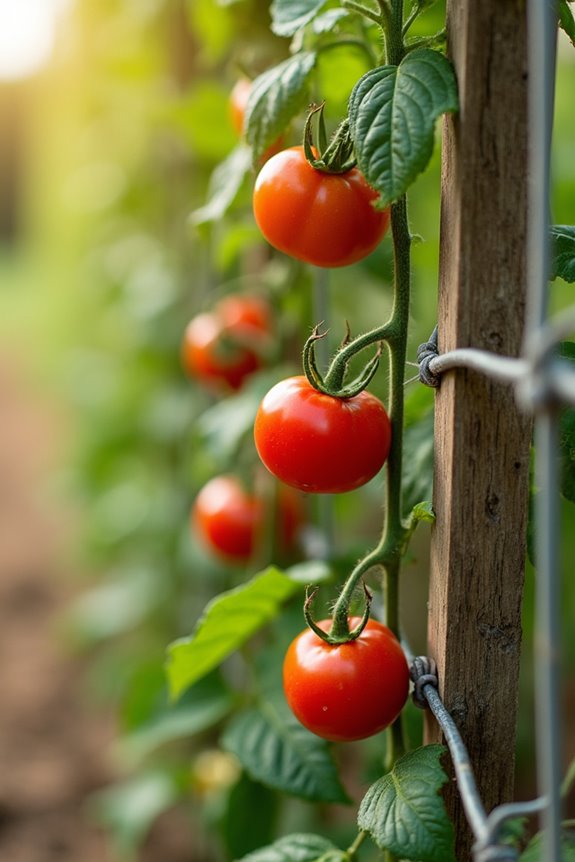
Why do so many gardeners spend time and money on tomato supports? The answer is practical. You don’t absolutely have to trellis tomatoes. However, you’re choosing a harder path without support.
You don’t absolutely have to trellis tomatoes. However, you’re choosing a harder path without support.
Trellising keeps fruit elevated. This prevents rot and ground damage. You also improve air flow around foliage. Better air circulation reduces disease pressure like blights. Dense growth near soil creates moisture problems.
Without support, harvesting becomes frustrating. You’ll miss fruit hidden in tangled vines. Pest monitoring gets difficult. Pruning takes longer.
Even determinate varieties benefit from caging or staking. They maintain better structure. Your garden stays organized.
Think of trellising as an investment. Metal panel trellises last multiple seasons. You’ll replace flimsy cages repeatedly. Support systems pay for themselves through reduced crop loss and easier maintenance.
Which Tomato Types Need Trellising?
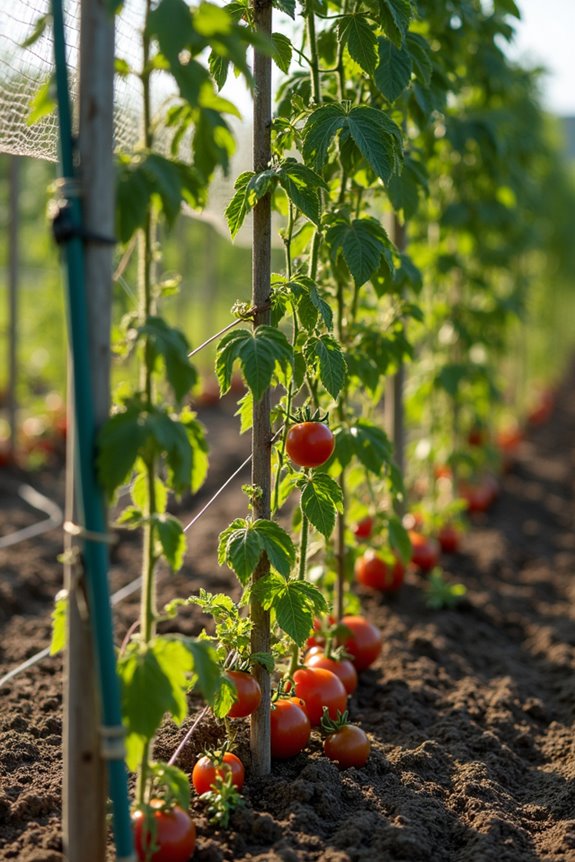
Not all tomatoes behave the same way. Your choice between determinate and indeterminate varieties fundamentally changes your trellising needs.
Indeterminate tomatoes vine indefinitely. They’ll sprawl without support. Ground contact increases disease risk. You’ll want trellising for these climbers.
Determinate bush types are more compact. They still benefit from support though. Even smaller varieties topple under fruit weight. Consider your specific cultivar carefully.
Support system benefits:
- Manages continual growth in indeterminate types
- Improves airflow around foliage
- Eases harvesting for taller plants
- Prevents disease from ground contact
- Maintains proper plant structure
A hybrid approach works well. Use sturdy panels or tall cages. This accommodates everything from bush types to aggressive climbers. You’re investing in plant health and easier harvesting.
How Air Circulation Stops Disease and Rot
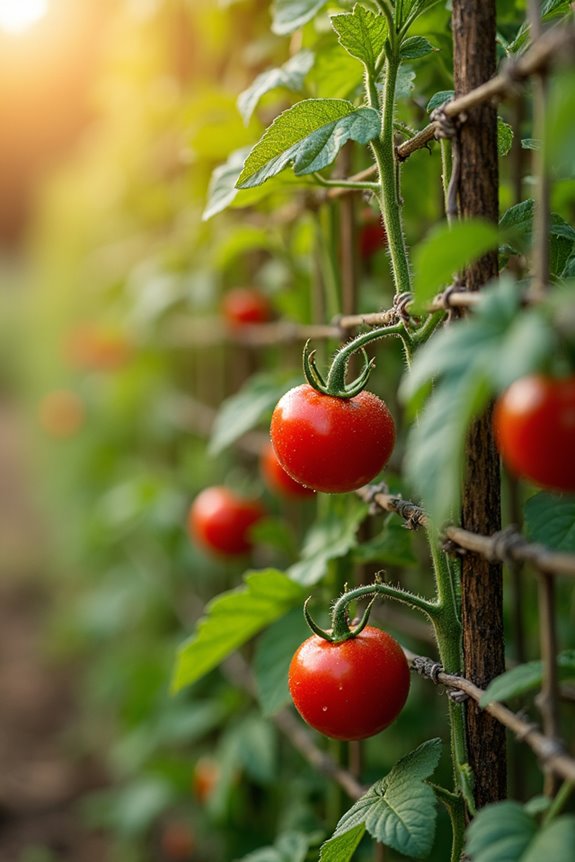
the space around your tomato plants matters just as much as the plants themselves. Good air circulation prevents fungal diseases like early blight and late blight.
When you trellis tomatoes, you’re creating airflow that lets leaves dry quickly after rain or watering. Wet leaves invite fungal spores to settle and multiply. Pruned, airier canopies speed up evaporation, reducing the leaf wetness duration that diseases favor.
Elevated fruit stays drier too. Ground moisture and soil-borne pathogens can’t reach trellised tomatoes as easily. Spacing plants properly prevents dense foliage that traps humidity and blocks air movement.
You’ll also spot problems faster. Better visibility means catching infections early before they spread throughout your garden. That’s prevention working for you.
Ground-Sprawling Tomatoes: Problems and Risks
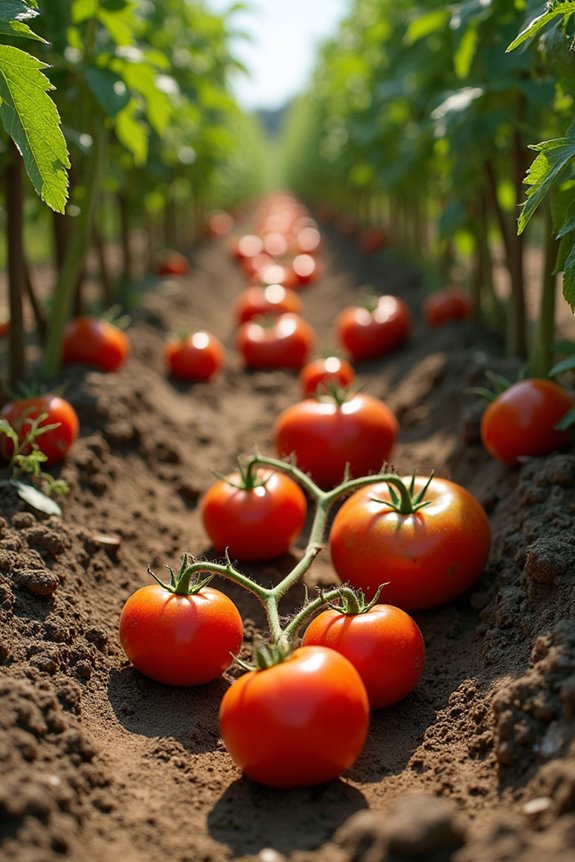
When you let tomatoes sprawl on the ground, you’re inviting serious trouble. Fruit sitting in soil and wet mulch rots faster, while slugs and hornworms find easy meals in the dense foliage near ground level. You’ll also struggle to spot diseases early or locate ripe fruit hidden under leaves, making both harvesting and plant care difficult.
Disease And Pest Vulnerability
Sprawling tomatoes invite serious problems. When your plants spread across the ground, you’re creating the perfect environment for pests and diseases to multiply. Dense foliage traps moisture and blocks airflow, which fuels fungal infections like early and late blight.
Soil contact multiplies your troubles significantly:
- Fruit touching contaminated ground develops rot quickly
- Leaves brushing soil spread soil-borne diseases upward
- Hidden fruit becomes invisible to your monitoring efforts
- Slugs and hornworms hide easily in dense growth
- Early pest detection becomes nearly impossible
You’ll struggle to spot slugs and hornworms crawling through thick vegetation. This delays your response when infestations begin. Plus, fallen fruit on soil rots faster and attracts destructive pests. Supporting your tomatoes vertically solves these vulnerabilities by improving air circulation and keeping fruit safely elevated away from contaminated soil.
Fruit Damage And Rot
How quickly does tomato fruit decay when it sits on wet soil? Faster than you’d like. Ground-sprawling tomatoes face serious rot problems. Fruit touching damp earth invites fungal infections that spread rapidly. Soil-borne diseases and pests reach your fruit directly. You’ll miss ripening fruit hidden in dense foliage. By harvest time, you’re discovering overripe or decayed tomatoes. Leaves and branches touching soil transfer moisture and pathogens to fruit, amplifying rot potential.
Trellising and tomato cages prevent these issues. Vertical support systems keep fruit elevated and safe. Improved airflow lets moisture dry between rain events. You’ll spot ripening fruit easily. Harvest happens at peak quality. Trellising is practical disease prevention. Protecting your tomato investment makes sense for any gardener serious about healthy yields.
The Metal Panel Method: Setup and Materials
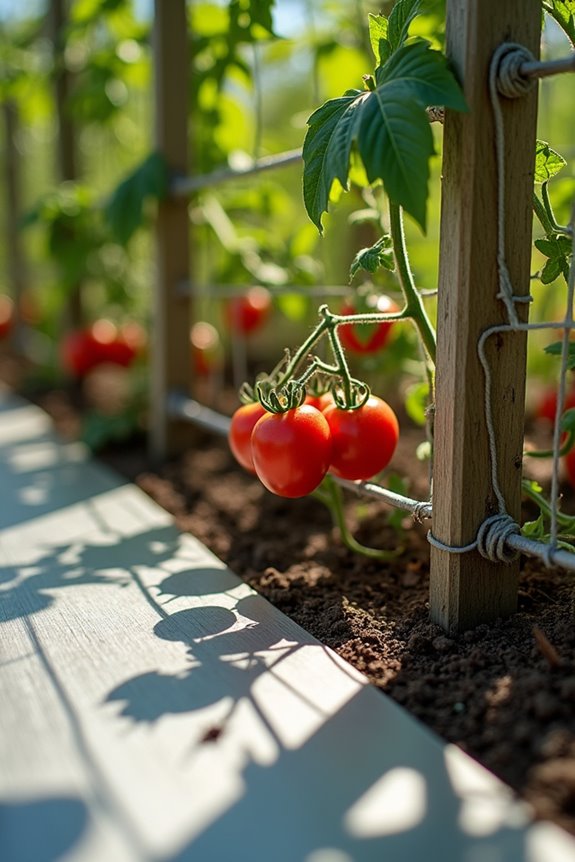
One of the easiest trellis systems you can build uses sturdy cattle panels—those metal grids you’d normally see on a farm—as your main support structure. You’ll attach these panels to 6-foot T-posts using black nylon zip ties. This setup creates a frame perfect for training tomato vines upward.
Here’s what you’ll need:
- Cattle or livestock panels (metal grids)
- 6-foot T-posts for vertical support
- Black nylon zip ties (3–4 per post)
- Varying-size bungee cords for training plants
- Long, narrow beds (4×8 or 4×10 feet)
Start with small bungees to lift seedlings onto the panel initially. As your tomatoes grow taller, progress to larger bungees. This method minimizes pruning and reduces maintenance work. You’re joining a community of gardeners who’ve ditched complicated systems for something simple and functional.
How to Train Tomatoes Onto a Panel Trellis
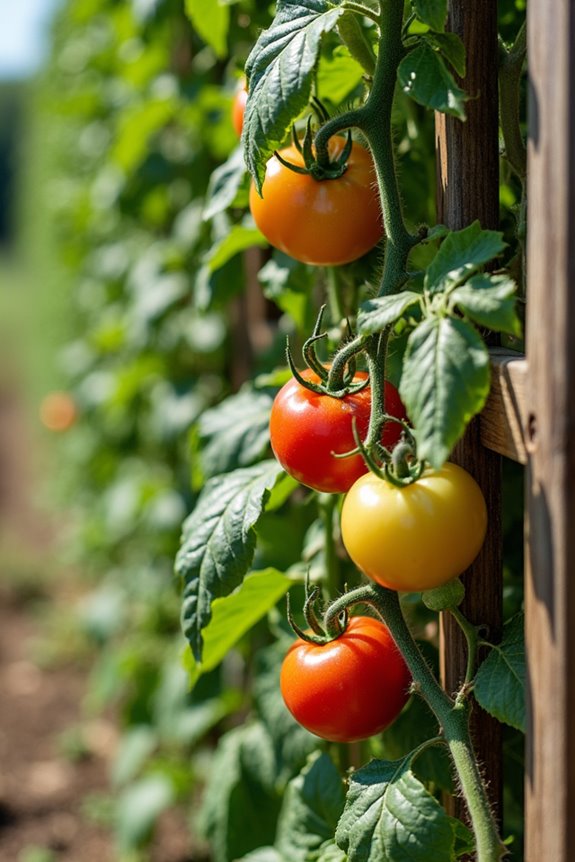
You’ll need to secure your metal panel properly before training anything onto it. Install 6–7 ft T-posts and attach your cattle panel with black nylon zip ties, creating a sturdy framework that won’t shift as your tomatoes grow heavier. Once your panel’s locked in place, you’re ready to guide those seedlings upward and keep them organized throughout the season.
Panel Setup And Installation
Panel Setup And Installation
Because metal fencing panels provide sturdy, long-lasting support, they’re an excellent choice for tomato trellising. You’ll create a reliable framework that lasts for years.
Start by spacing three 6-foot panels about 2 feet apart. Attach each panel to 6-foot T-posts using black nylon zip ties. This setup maximizes stability and airflow around your plants.
Key installation steps:
- Secure panels to posts in 3–4 places per post
- Position panels in long, narrow beds (4×8 or 4×10)
- Use both sides of panels depending on bed size
- Anchor T-posts firmly in soil
- Check alignment before attaching panels
Plan your trellis layout before planting. Consider how you’ll access plants for harvesting and training. A well-installed panel system supports heavy tomato growth without shifting or wobbling. You’re building infrastructure that handles the weight.
Guiding Growth With Support
Installing your metal panels is just the beginning. Now you’ll guide your tomato plants upward using bungee cords for flexible support. Start with small, thin bungees to lift seedlings onto the panel. These lightweight cords adjust easily as your vines climb higher.
As branches grow taller, switch to larger bungees. Direct new shoots along the panel to maximize your trellising system. This approach keeps plants organized and prevents tangling early on.
Position bungees gently around stems without crushing them. Space them every 12-18 inches up the panel. Your goal? Create a neat, manageable growth pattern.
Later in the season, indeterminate varieties may intertwine despite your efforts. That’s normal. Prune selectively to focus energy on ripening fruit while maintaining good airflow. This support system makes harvesting easier and keeps plants in good condition.
Avoid These Common Trellising Mistakes
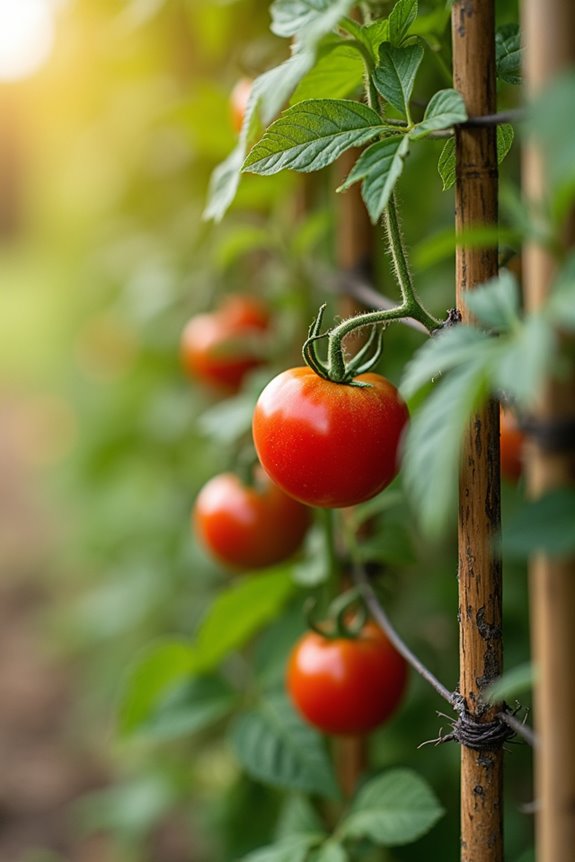
Avoid These Common Trellising Mistakes
Many gardeners stumble right from the start with weak support systems. You’ll regret choosing flimsy cages that collapse under heavy fruit weight. Invest in sturdy panels or tall cages—ideally 5 feet or taller—to prevent toppling disasters.
Common trellising mistakes include:
- Installing supports after plants grow too large. Damage roots and invite unnecessary movement.
- Neglecting bottom pruning. Dense foliage traps moisture and invites pests and fungal diseases.
- Waiting too long to train vines. Entangled growth reduces fruit quality significantly.
- Ignoring airflow completely. Poor circulation around plants creates disease problems.
- Skipping leaf removal beneath flower clusters. This simple step improves airflow.
Plan your approach before planting. Remove lower leaves and suckers strategically. Secure supports at planting time. These decisions keep your garden healthy and productive.
Basket Weave and String Training: Two Alternatives
Want a trellising method that’s simpler than traditional cages? Consider basket weave or string training. Both offer scalable alternatives that improve airflow and simplify harvesting.
Basket weave involves driving 8-foot posts between plants. You’ll weave string between posts starting from the ends, creating an espalier-like structure. Weave every 6–10 inches and thin to 6–8 strong leaders for optimal growth. The dual weave pattern provides support in opposite directions.
Basket weave creates an espalier-like structure using 8-foot posts and string, with dual support patterns spaced every 6–10 inches.
String training works best for greenhouses or house-side trellises. Attach strings to an overhead frame and clip stems every 10–12 inches beneath leaves using tomato clips. Maintain one leader per string, pruning regularly beneath fruit clusters.
Both methods accommodate indeterminate varieties as they grow taller. Your support structures remain reusable season after season, reducing costs and labor over time.
Tomato Cages vs. Trellising: Pros and Cons Compared
Should you grab a cage or build a trellis? Both work. Your choice depends on space. Cages offer quick setup and immediate support. You install them right after planting without fuss. However, they can trap dense foliage. This creates disease problems.
Trellising takes more effort upfront. But you’ll gain real benefits:
- Better airflow around leaves and stems
- Easier fruit harvesting off the ground
- Reduced disease risk from moisture buildup
- Sturdier late-season support for heavy tomatoes
- Multi-directional training for space optimization
Cages constrain growth nicely for small balconies. Indeterminate varieties eventually outgrow them though. Trellising handles these vigorous growers better. Consider a hybrid approach: panel trellis with staking. You’ll combine quick setup with durability and airflow benefits. This works for diverse varieties you’re growing.
Prune for Better Air and Faster Ripening
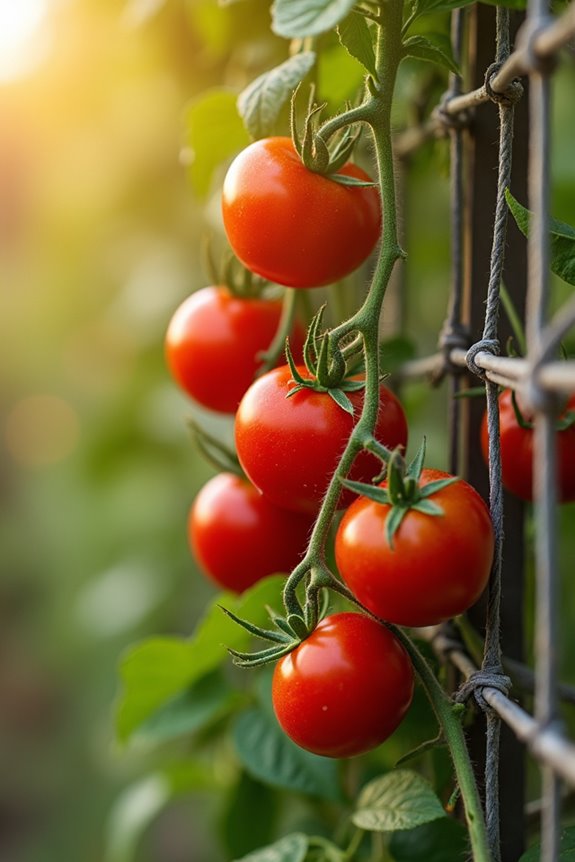
Pruning for Better Air and Faster Ripening
Pruning isn’t just about making your tomato plants look neat. It’s a strategic move that directly impacts your harvest. When you remove lower leaves and suckers, you improve air circulation around the canopy. Better airflow reduces humidity. Less humidity means fewer fungal diseases threatening your plants.
Pruning also speeds up ripening. By removing excess foliage, you redirect the plant’s energy toward finishing existing fruit rather than growing new leaves. Think of it as telling your plant: focus on what’s already there.
Start from the bottom. Remove leaves beneath each flower cluster. This lets light penetrate deeper into the plant. Use clean, sharp snips for every cut. Never prune wet plants—you’ll spread disease easily. Selective pruning keeps enough leaves for photosynthesis while removing crowded growth.
Metal Trellis Costs: Panels vs. Cages Over Time
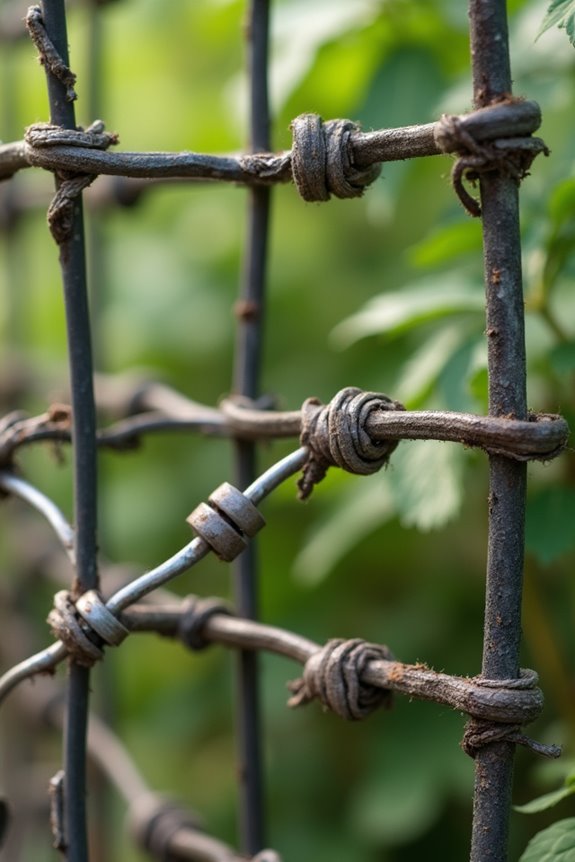
You’ll face a choice between metal cages and sturdy panels. Cages cost less upfront but wear out in just a couple seasons, forcing you to replace them repeatedly and actually spend more money over time. Panels like cattle panels with 6-foot T-posts and black nylon zip ties cost more initially yet last for years, saving you cash and effort through multiple growing seasons.
Initial Investment Versus Durability
What’s the real cost of tomato support systems when you factor in years of gardening?
You’ll spend more upfront on metal panel trellising. But the payoff is clear: you’re investing in durability that delivers results. Cheap cages fail after two seasons. Metal panels last for years.
Consider this breakdown:
- Metal panels require higher initial investment but eliminate replacement costs
- Wooden components deteriorate quickly and demand frequent purchasing
- Flimsy cages become unusable after a couple of seasons
- T-posts and panels create long-lasting infrastructure for your garden
- Annual maintenance costs drop markedly over time
Your setup uses 6-foot T-posts, metal panels, and black nylon zip ties. You’ll re-tension plants with bungee cords occasionally. That’s it. No rebuilding. No constant shopping trips.
The math works out. Durability wins when you’re serious about trellising tomatoes season after season.
Long-Term Replacement Savings
How much does your tomato support system really cost over a decade? Metal panels save you money compared to cheap cages. Cages need replacing every season or two. Metal panels last for years.
| Year | Cage Cost | Panel Cost | Cumulative Cage | Cumulative Panel |
|---|---|---|---|---|
| 1 | $15 | $80 | $15 | $80 |
| 5 | $75 | $80 | $150 | $80 |
| 10 | $150 | $80 | $300 | $80 |
Here’s what happens: you buy cheap cages repeatedly. Maintenance becomes constant. Wooden stakes rot. Metal panels eliminate this cycle.
After five seasons, your panel investment breaks even. By year ten, you’ve saved $220. That’s real long-term value. Gardeners who’ve ditched the replacement cycle and switched to durable trellising see the financial benefit clearly.