
Yes, patio heaters are worth it if you use them regularly. They extend your outdoor season by one to two months, turning shoulder seasons into usable time for gatherings and relaxation.
Electric models cost around $0.18–$0.45 hourly depending on wattage, while gas offers broader coverage. The investment pays off quickly with consistent use, especially in semi-enclosed spaces that retain heat better.
Match the heater type to your space size and climate for maximum value and comfort.
How Long Do Patio Heaters Extend Your Outdoor Season?
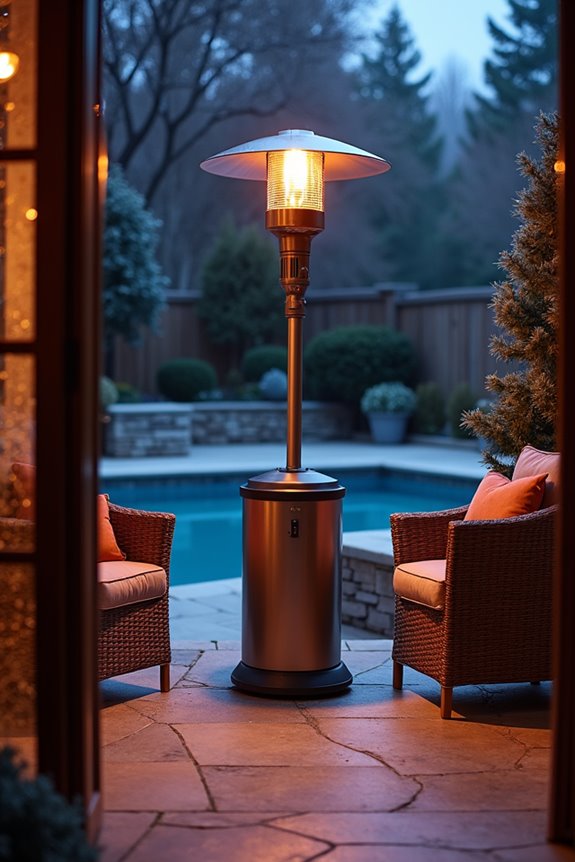
How many months do you actually spend enjoying your outdoor spaces? Most people surrender their patios when temperatures drop. Patio heaters change that equation. You’ll extend your outdoor season by 1–2 extra months, transforming shoulder seasons into usable time. This means more gatherings on your deck. More evenings by the pool. Semi-enclosed spaces benefit most from outdoor heating since they retain warmth effectively. The heat output from modern units warms areas quickly and efficiently. You’re reclaiming lost time without major construction. This cost-effective retrofit beats expensive renovations by far. Consider your climate and how often you actually use outdoor areas—that determines your real payoff. The investment pays dividends when you’re hosting friends or simply relaxing outside longer.
Gas or Electric: Which Patio Heater Works for Your Space?
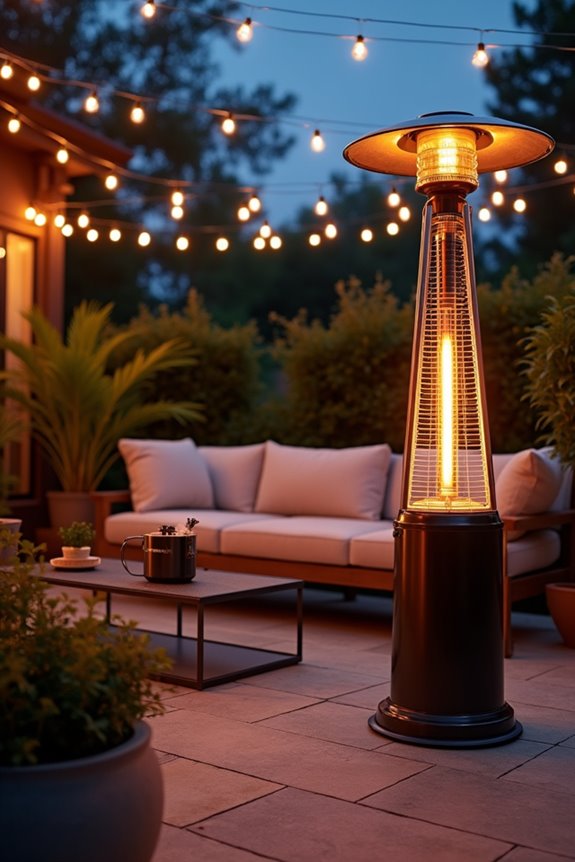
Choosing between gas and electric comes down to your specific setup. You’ll want to measure your patio size—electric units typically cover around 200 sq ft, while gas models heat spaces up to 215 ft and work better for open areas where wind isn’t a major concern. Your installation options matter too: electric heaters need just a wall outlet and an outdoor-rated extension cord, but gas requires either a fixed natural gas line or a portable propane tank that you’ll manage seasonally.
Space Size And Coverage
The right heater depends entirely on your space. Your outdoor patio size determines whether you need electric heaters or gas heaters for proper coverage.
Small patios work well with electric heaters. They typically range from 1,200 to 3,000 watts. One unit usually covers a modest patio space effectively. Larger areas demand different solutions.
Gas heaters provide superior coverage for expansive outdoor spaces. These units heat up to 215 feet depending on power and BTU output. Higher BTU gas heaters perform well in large open areas where you want consistent warmth.
Consider your patio space’s dimensions carefully. Manufacturer guidance suggests one small patio needs just one heater. Larger patios often require multiple units for balanced warmth. This balanced approach prevents cold spots and maximizes your investment’s effectiveness.
Ventilation And Installation Needs
Where you’ll place your heater matters just as much as which type you choose. Installation requirements differ significantly between gas and electric models. You need to understand what each demands from your space.
Gas heaters require serious ventilation considerations:
- Propane models need at least 25% of your space remaining open to the air for safe operation
- Natural gas units demand a fixed line installation by a professional
- Poor ventilation creates dangerous carbon monoxide buildup in enclosed areas
Electric heaters simplify installation. You mount them under canopies. Recessed ceiling options work in semi-enclosed spaces. No ventilation concerns exist since they produce zero emissions.
Think about your patio layout before deciding. Gas offers maximum heat coverage but demands careful planning. Electric provides flexibility with minimal safety restrictions. Proper installation ensures years of comfortable outdoor use.
What Will Your Patio Heater Cost Per Hour to Run?
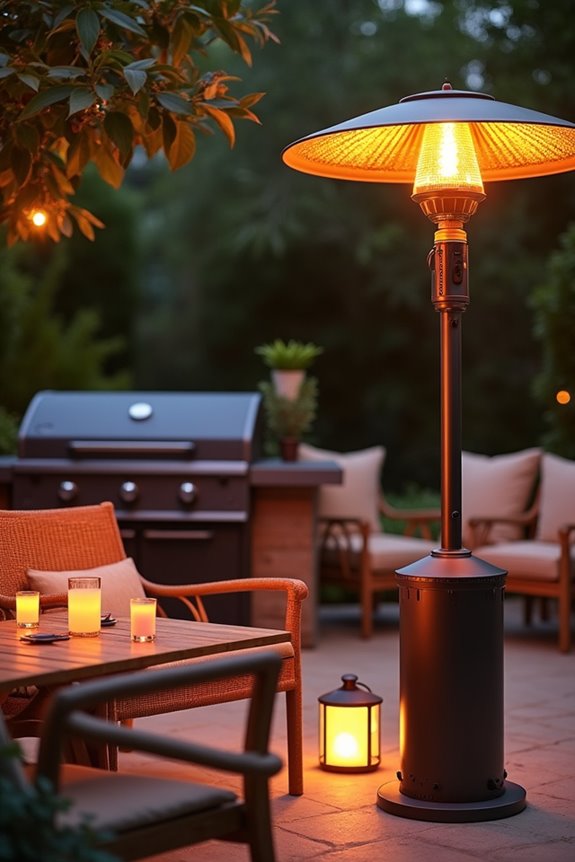
How much you’ll actually pay to run your patio heater depends mainly on two things: the heater’s wattage and your local electricity rates. You’ll calculate your hourly cost by dividing the wattage by 1,000, then multiplying by your kWh rate. Most electric models range from 1,200 to 3,000 watts. A 1,200W unit costs roughly $0.18 per hour. A 1,500W model runs about $0.23 hourly. The popular 2,000W option averages $0.30 per hour. A powerful 3,000W heater reaches $0.45 hourly. These estimates assume $0.15 per kilowatt-hour. Your actual running cost depends on your local electricity rate, which varies by region. Higher wattage means greater heat output but steeper electricity bills.
Do Patio Heaters Pay for Themselves?
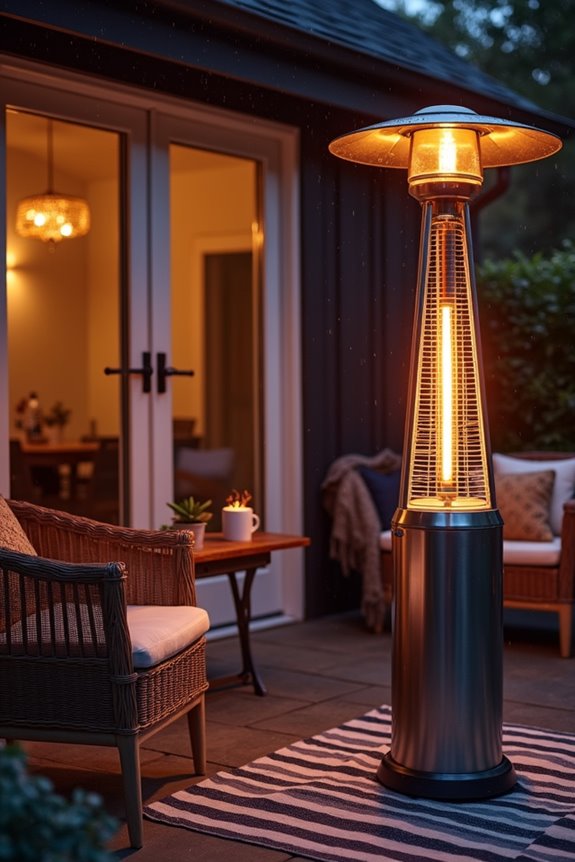
When you’re weighing whether to buy a patio heater, the real question isn’t just about upfront cost—it’s about whether you’ll actually use it enough to justify the expense.
Here’s the math: rental patio heaters cost $50–$150 daily. You’ll break even quickly with frequent use. Consider these factors:
- Patio heaters cost less over time than renting when you use them regularly throughout seasons
- Electric vs gas affects affordability—electric heaters cost roughly $0.18–$0.45 per hour, while propane requires tank refills
- Runtime per tank matters: quality propane models deliver 8+ hours, covering multiple gatherings before replacement
Your investment pays for itself within a single season if you’re outdoors regularly. Whether you prioritize BTU heat output for large spaces or value energy costs per hour for efficiency, purchasing beats renting for consistent patio users.
How to Keep Your Patio Heater Safe and Working
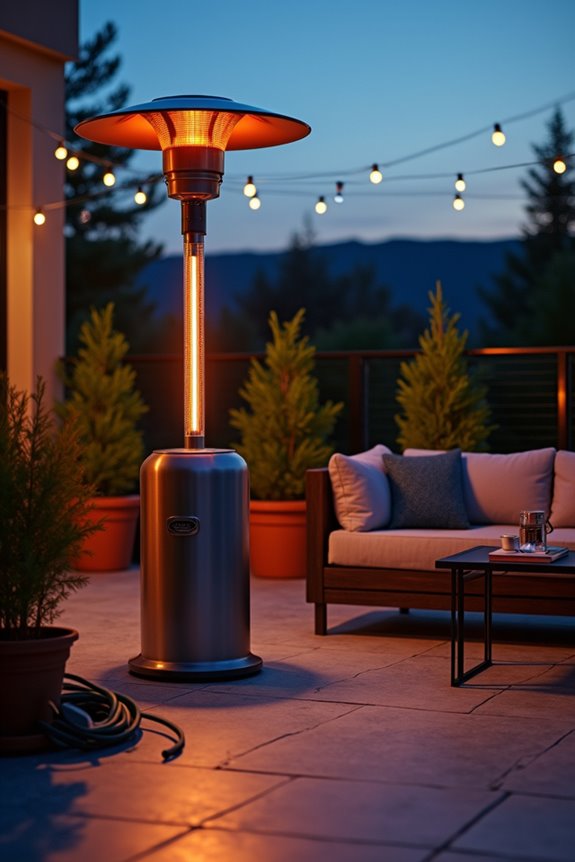
You’ll want to tackle regular maintenance essentials and run through a safety inspection checklist to keep your heater functioning reliably. Skipping these steps invites problems. Your effort now prevents costly repairs, dangerous malfunctions, and wasted investment down the road.
Regular Maintenance Essentials
Since patio heaters sit outside year-round, they’re exposed to dirt, debris, and weather that can damage performance and create safety issues. You’ll want to establish a maintenance routine that keeps your investment running safely.
Start with these essential tasks:
- Annual cleaning: Remove dirt and debris that accumulate on surfaces and around burner areas
- Burner inspection: Check propane gas burners for obstruction that affects heating and safety
- Venting checks: Maintain proper airflow and venting for gas models to prevent hazardous buildup
Electric units need less attention. You’ll simply wipe them down occasionally and remove cobwebs. For propane gas heaters, inspect burners regularly and store tanks properly outdoors. Use outdoor-rated safety equipment when needed.
Consider adding a protective cover during off-seasons. This simple step extends your heater’s lifespan. Regular maintenance prevents costly repairs later.
Safety Inspection Checklist
Keeping your heater clean is only half the battle. You’ll also need a solid safety inspection routine to protect yourself and your outdoor spaces. Check gas lines monthly for cracks or leaks using soapy water—bubbles mean trouble. Inspect the burner for corrosion and debris that blocks heat flow. Ensure proper ventilation around your unit, especially with propane or natural gas models. Look at electrical cords on electric patio heaters for damage. Verify all connections are tight and secure. Test your heater in a safe location before full use. Keep the area clear of flammable materials within ten feet. Regular maintenance catches problems early, preventing costly repairs and dangerous malfunctions that could ruin your investment and your time outdoors.
Your Patio Heater Buying Checklist: Size, Budget, and Installation

What’s the real difference between buying the wrong patio heater and buying the right one? You’ll save money and actually enjoy your outdoor space.
The right patio heater means saving money and genuinely enjoying your outdoor space year-round.
Start by assessing your situation:
- Measure your space size – Electric units cover up to 160 ft. Gas heaters reach 215 ft. Know your square footage first.
- Choose electric vs gas – Electric works best for covered patios. Gas handles large open areas better.
- Set your budget and installation needs – Electric requires a weatherproof outlet. Gas needs ventilation and propane delivery access.
Consider the EnerG+ HEA-21288LED for small covered patios. Its overhead design and IP24 rating handle weather well. For coastal properties, explore premium stainless steel options.
Match heat coverage to your actual space. Don’t overspend on power you won’t use. Installation determines whether you’ll use it regularly.