
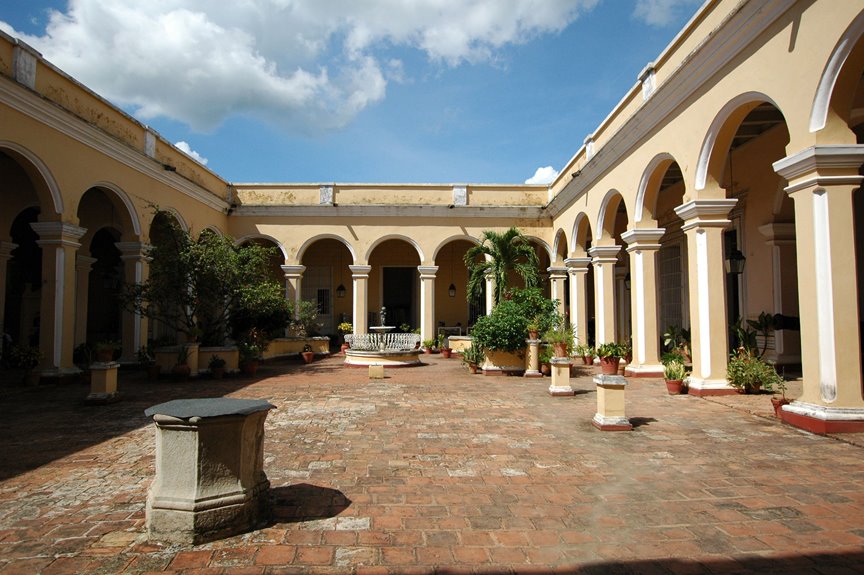
The word “patio” comes directly from Spanish, describing an inner courtyard open to the sky. Medieval Spanish homes used patios for practical reasons: collecting rainwater, cooling air naturally, and creating private gathering spaces. The term entered English dictionaries by 1931, adopted from Spanish during the early 1900s. Modern patios descend from this centuries-old tradition, though their meaning expanded from formal courtyards to any outdoor living area. Understanding these roots reveals how architecture shaped language itself.
The Spanish Word “Patio”: Court Open to the Sky
The term describes something specific. It’s not just any outdoor area. An inner courtyard must be enclosed. The sky remains visible overhead. This combination creates a unique space. Families gathered in these patios. They enjoyed fresh air and sunlight. The design kept privacy while allowing openness.
When English speakers adopted this word, they kept its original meaning. Your patio today likely echoes this Spanish concept. It’s an outdoor extension of your home. Walls or structures define its limits. You can see the sky above.
When Did “Patio” Enter English? Timeline and Early Adoption
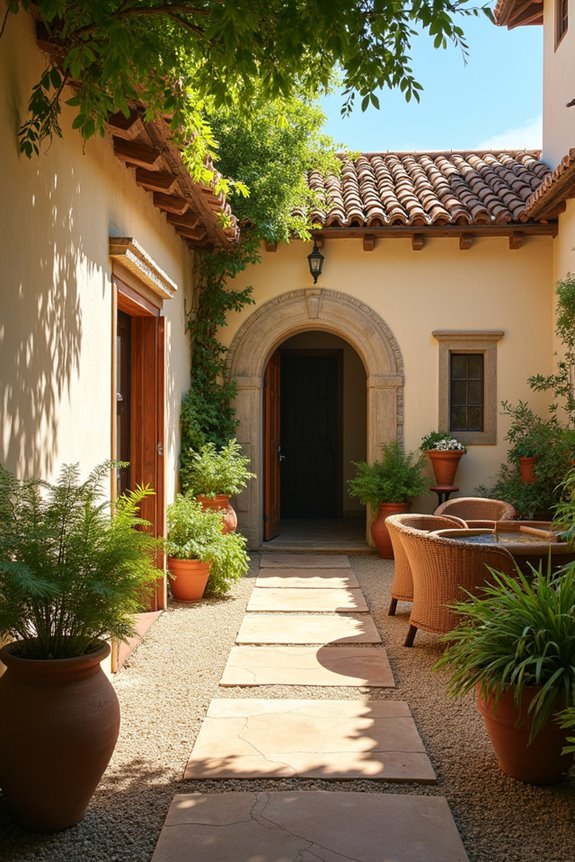
You’ll find that English speakers didn’t embrace “patio” overnight. The word appeared in English dictionaries by 1931, but early documentation clearly shows it came straight from Spanish rather than developing naturally in English. What’s interesting is how quickly the term shifted from a specialized architectural concept (describing an inner court open to the sky) into everyday consumer language—by 1924, California advertisements were already selling “patio furniture” to regular homeowners, and by 1929, “patio door” became a recognized architectural feature in American homes.
Early Documentation In English
Documentation shows patio’s entry into English happened gradually throughout the 19th century. Early appearances emerged sporadically before becoming mainstream. Writers like P.G. Wodehouse referenced patios around 1931, helping legitimize the term. By 1818, “patio” primarily described Spanish courtyards open to the sky. The word didn’t immediately replace existing English terms for outdoor spaces.
| Year | Source | Definition | Context |
|---|---|---|---|
| 1818 | Early Documentation | Inner court open to sky | Spanish contexts |
| 1931 | Wodehouse | Outdoor area | Literary usage |
| 1941 | Expanded Usage | Paved terrace beside building | American adoption |
| 1950s | Advertising | Outdoor living space | Commercial promotion |
The definition shifted gradually. What started as a courtyard concept transformed into outdoor living areas. American advertisers accelerated this change by promoting patios with furniture and doors. This marketing strategy helped establish patios as recognized household features.
Spanish Borrowing And Adoption
When did English speakers first start using the Spanish word “patio”? You’ll find the Spanish borrowing happened gradually during the early 1900s. By 1931, English dictionaries documented “patio” through Wodehouse’s writings. This marked the adoption of a Spanish architectural term into English vocabulary.
The word originally described an inner courtyard open to the sky in Spanish-speaking regions. English speakers found it useful for describing similar outdoor spaces. The adoption accelerated quickly once furniture companies got involved. By 1924, California advertisements featured “patio furniture,” expanding the term beyond architecture. Then came “patio door” in 1929, showing how versatile the Spanish borrowing had become.
You observed this transformation unfold within just three decades. Spanish borrowing filled a linguistic gap English needed for modern outdoor living.
Old Provençal Pati and the Pasture Connection
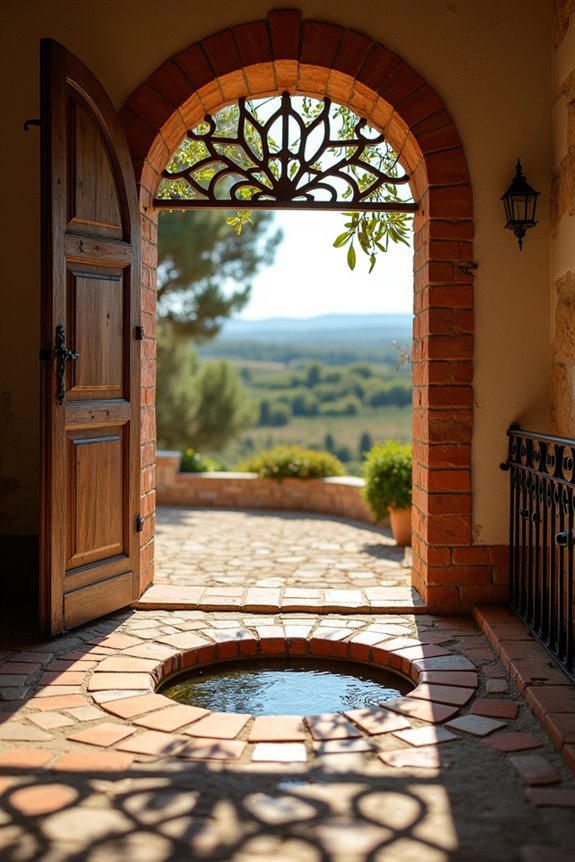
You’ll find that tracing “patio” back to Old Provençal “pati” opens a door to understanding medieval culture. This term likely connected to communal pastures—shared grazing lands where communities kept their animals and livestock herds in open spaces that belonged to no single person. When you follow this linguistic thread through the Occitan and Catalan languages into Late Latin, you observe how a practical pasture concept gradually transformed into the enclosed courtyards and open-air gathering spaces we recognize as patios today.
Communal Pasture Origins
How’d the word patio end up meaning an open courtyard when its roots might trace back to shared grazing lands?
The connection runs deeper than you’d think. Old Provençal pati originally meant communal pasture. Shared grazing spaces. These weren’t fenced-off areas. They represented openness and community access. People gathered there. Animals roamed freely. The concept emphasized shared resources and open spaces.
As Romance languages evolved, the term shifted meanings. Patio began describing inner courtyards. Spanish speakers adopted it for sky-open spaces. The communal aspect remained central. Your patio, like those ancient pastures, represents openness. It’s a gathering place. A shared area. Modern patios echo that original spirit of accessibility and communal purpose, connecting you to centuries of cultural tradition around open, welcoming spaces.
Provençal Language Connections
Where’d the Spanish word patio actually come from? Consider this: the Provençal language connection offers compelling evidence. Scholars propose that Old Provençal pati or patu—meaning communal pasture—directly influenced the Spanish patio we use today. This etymology, meaning word origin, suggests something fascinating. You’re looking at a sense shift from shared grazing land to outdoor courtyards. The Provençal root emphasizes open, communal space. Over time, that concept expanded. Shared pastures became paved outdoor areas beside buildings. It’s a logical progression. Language evolves as cultures interact. The Provençal connection remains one competing theory among multiple proposed origins. Etymologists still debate which explanation fits best. Yet this pasture-to-courtyard journey reveals how language reflects our changing relationship with outdoor spaces.
From Pasture To Courtyard
The Provençal connection reveals something about how spaces shaped language itself. You’re looking at a journey from open land to enclosed architecture. Old Provençal speakers used “pati” or “patu” to describe communal pasture. These shared grazing areas were essential to medieval life. Over time, the word’s meaning shifted dramatically. Communities began building homes around central open areas. This courtyard design reflected Mediterranean climate and culture. The pasture concept transformed into an architectural feature. You can see this linguistic evolution as a mirror of how people organized their living spaces. The word patio eventually reached English. It carried both its pastoral roots and new courtyard meanings. This transition shows how language follows human needs and settlement patterns.
Latin Roots: Pactum and Patere Theories Compared
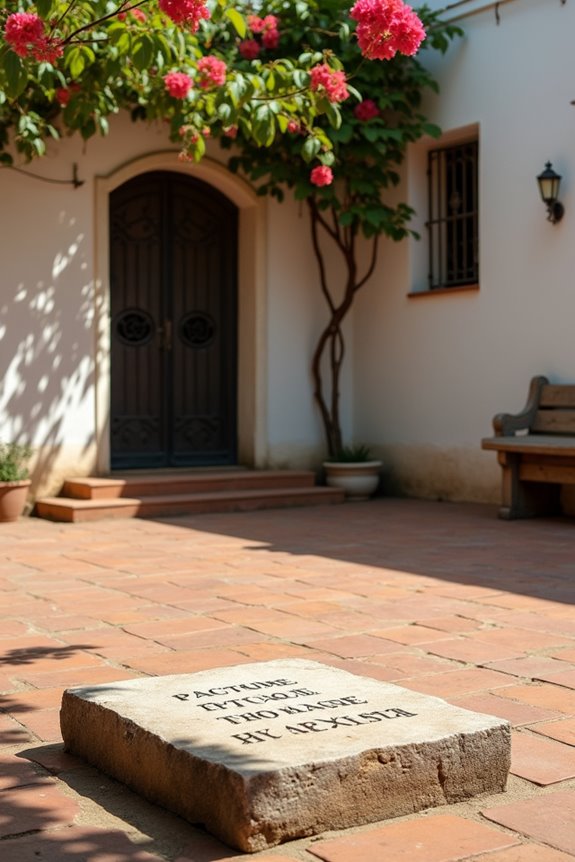
Scholars can’t agree on patio’s deepest origins. Two competing theories dominate the debate. The first connects patio to pactum, a Latin word meaning agreement or pact. This theory suggests patrum pactum—ancestral agreements—shaped how communities bound spaces together. The second theory links patio to patere, meaning “to lie open” in Latin. This emphasizes openness rather than binding. You’ll notice these theories point in opposite directions. Pactum highlights enclosures created through social contracts. Patere emphasizes exposure and unrestricted space. Neither explanation wins universal acceptance among etymologists. However, both reveal how patio evolved from simple courtyard to built outdoor enclosure. Understanding these competing roots helps you grasp why patio carries such complex meaning across Romance languages.
Which Etymology Is Correct? What Scholars Agree On
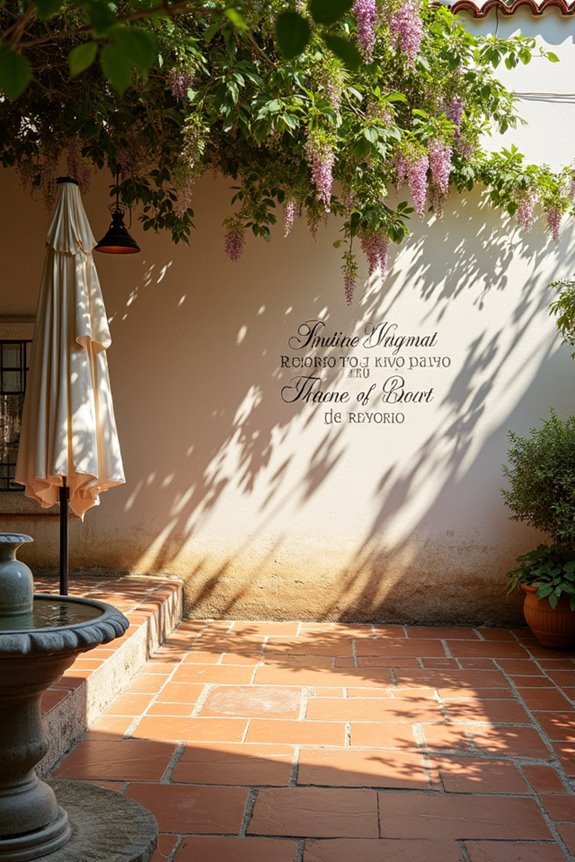
Consensus among etymologists isn’t where you’d find clarity on patio’s deepest origin. Scholars simply haven’t reached agreement on one single source. Instead, they’ve identified multiple plausible candidates. What they do agree on is the Spanish semantic development—patio means an open-to-sky courtyard. That’s settled. Beyond that? Competing theories exist.
What scholars actually agree on:
- Spanish origins are documented by 1818 in courtyard contexts
- The patio etymology likely derives from Latin roots
- Multiple pathways could’ve led to the modern word
- No single universally accepted origin exists
- The open-to-sky courtyard meaning is definitively Spanish
You’re looking at a word with genuine multiple roots. Old Provençal patu, Late Latin pactus, and Latin patēre all present reasonable possibilities. Rather than frustrating, this reflects language’s natural complexity. The Spanish origins remain clear. Etymology’s messiness? That’s how words actually evolve.
The *pag- Root: How Patio Links to Peace, Pact, and Pale
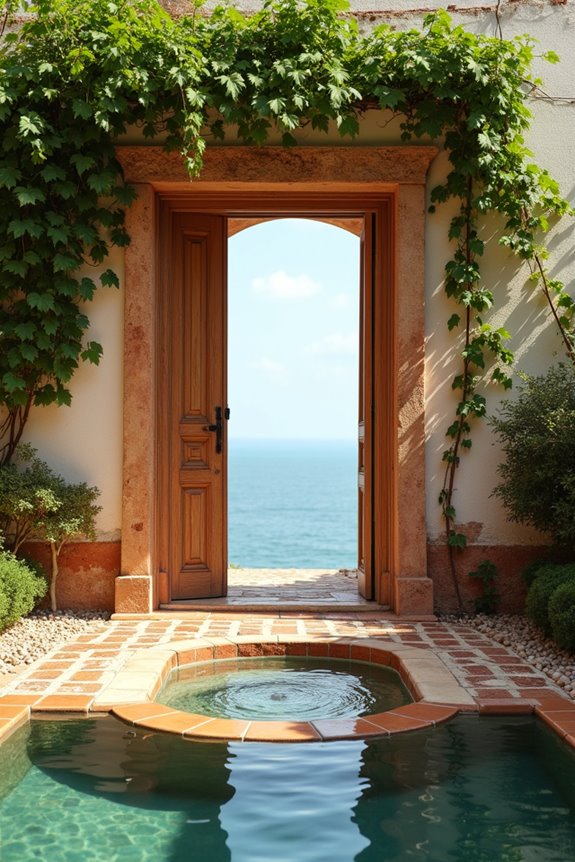
You’re looking at a web of connected meanings. The Proto-Indo-European root *pag- originally meant “to fasten” or “bind,” and scholars trace this single ancient concept through branches that eventually became pact (an agreement that binds people), peace (a binding of conflicting parties), pale (a fence that binds an area), and possibly patio itself. What’s tricky is that patio doesn’t connect to *pag- in one straight line—instead, you see multiple pathways where Latin derivatives like *actum (agreement) may have shifted their meaning over centuries, allowing the binding concept to gradually transform into the idea of an enclosed, defined space like a courtyard.
Proto-Indo-European Fastening Concept
A web of ancient roots connects patio to concepts you wouldn’t expect. You’re exploring how the Proto-Indo-European root Pag- shaped multiple languages and meanings across centuries.
The Pag- root meant “to fasten” or “to join.” From this single concept, linguists trace several interconnected words:
- Pactum (Latin agreement) — formalized joining through contract
- Pax (Latin peace) — fastening people together harmoniously
- Patere (Latin to lie open) — space created by joined boundaries
- Patio (Spanish courtyard) — enclosed space formed by fastened walls
- Palisade (fence) — literally fastened wooden stakes
You can see how “fastening” evolved into “enclosing.” When Romans joined materials together, they created bounded spaces. These spaces became patios—courtyards defined by their fastened perimeters.
Understanding this connection helps you grasp how ancient concepts shaped your everyday language.
Latin Derivatives And Semantic Shifts
How did one ancient root branch into words as different as “peace,” “pact,” and “patio”?
The *pag-/*pak- cluster explains this linguistic puzzle. You’re looking at Latin inheritance patterns that shifted meanings over centuries. The root connected fastening and binding concepts. From there, it spawned multiple paths.
| Latin Word | Meaning | Modern English |
|---|---|---|
| pactum | agreement | pact |
| patere | to lie open | patent |
| pax | peace | pacify |
| pagu | stake/pale | palisade |
| patu/pati | open space | patio |
Etymologists propose pactum (agreement) links to patio through a negotiated space concept. Alternatively, patere (to lie open) aligns perfectly with patio’s open courtyard sense. The Old Provençal patu/pati offers another route entirely.
You’re encountering multiple legitimate origins here. Scholarly consensus remains unsettled because Latin’s flexibility allowed semantic shifts. These weren’t random changes—they followed logical progressions from binding to agreement to open spaces.
Connected Words Across Languages
When you trace patio backward through time, you’ll discover it’s not alone—it belongs to a sprawling family tree of words that all branch from the Proto-Indo-European root *pag-/*pak-, which originally meant “to fasten” or “to fix firmly.” This ancient root didn’t just stick to one language or one meaning.
Instead, it evolved across cultures. You’ll recognize these connected words:
- Pact and pax (peace)—both tied to agreements and binding commitments
- Patere (to lie open)—suggesting openness and exposure
- Page, pallet, and palisade—showing how fastening extended to physical structures
- Areopagus—an ancient assembly space where decisions were made
- Peace—the ultimate covenant between people
The root explains patio’s deeper meaning. An open-air space becomes more than architecture. It represents openness and shared agreement—a place where people gather under mutual understanding. You’re not just stepping into a courtyard. You’re entering a space rooted in human connection and covenant.
Regional Variations: Why Quebec, Spain, and North Africa Define Patio Differently
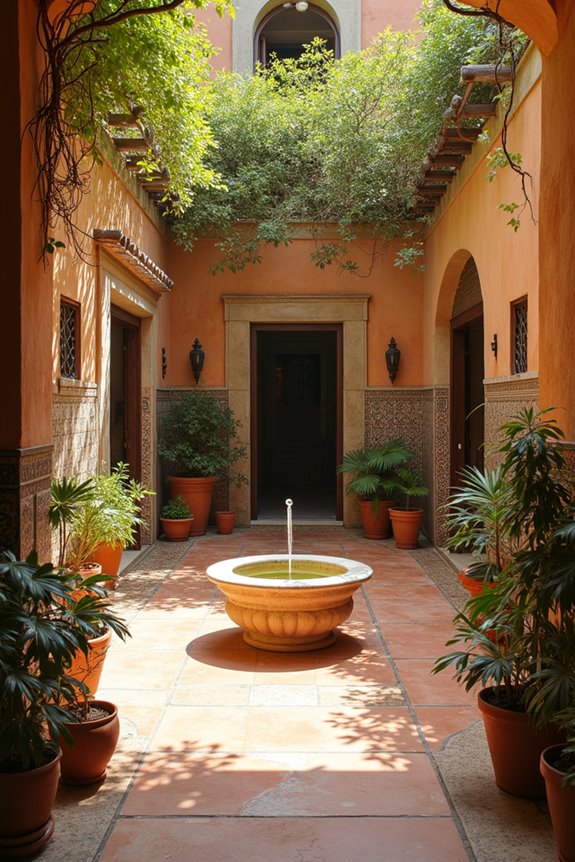
Why does the same word mean such different things depending on where you live? The patio’s etymology and regional variations reveal how geography shapes language. In Spain, you’ll find patios as inner courtyards. Open to the sky. Enclosed by walls. Quebec residents, however, view patios as outdoor spaces attached to homes. North African interpretations emphasize riad-style courtyards with fountains and gardens. Climate drives these differences. Spain’s hot summers favor inward-facing designs. Quebec’s harsh winters influence seasonal use patterns. North Africa blends Islamic architectural traditions with Mediterranean openness. The word itself traces back to Latin patere (to open) and Occitan roots. Each region adapted the patio concept to match local needs. Cultural norms shaped what you consider a proper patio. Understanding these variations helps you appreciate how communities transform shared vocabulary into distinct practices reflecting their environments.
Patio Furniture and Modern Extensions: When the Word Shifted
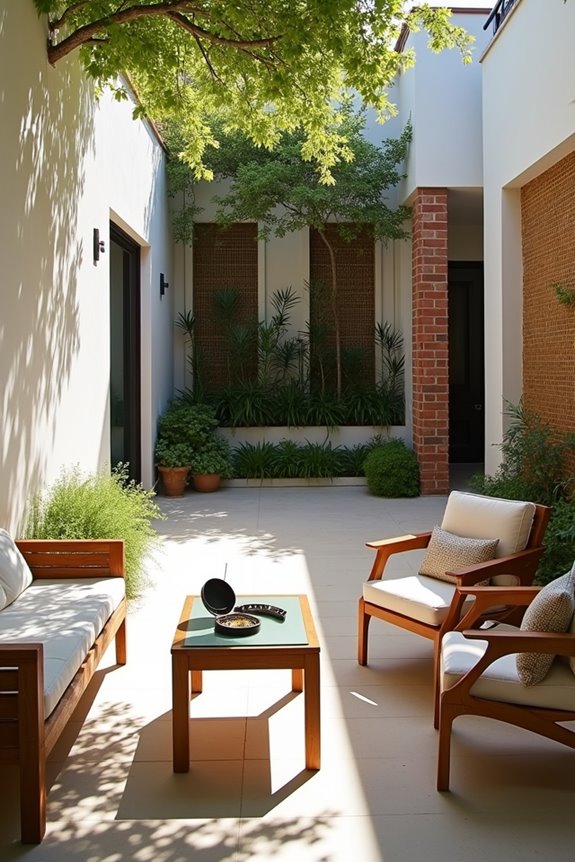
The patio’s meaning didn’t stay locked in Spain’s ancient courtyards. You’ve witnessed how this Spanish word transformed into something entirely different. By the 1920s, the patio shifted from a formal architectural feature to your everyday outdoor living space. Companies marketed patio furniture starting in 1924. Designers introduced patio doors by 1929. The word now described where you’d relax and dine.
By the 1920s, patio transformed from formal Spanish courtyard to your everyday outdoor living space where you relax and dine.
This evolution reflects real changes in how you use outdoor spaces:
- Patio furniture became a distinct product category
- Patio doors connected indoor and outdoor living
- Real estate agents adopted “patio” to describe home features
- The word entered household vocabulary naturally
- Modern patios serve multiple purposes beyond courtyards
The Spanish origin remained, but the meaning expanded dramatically. You’re using a word that once meant only architectural courtyards to describe your personal outdoor living area.
Spanish Courtyard Culture: Why Homes Face Inward
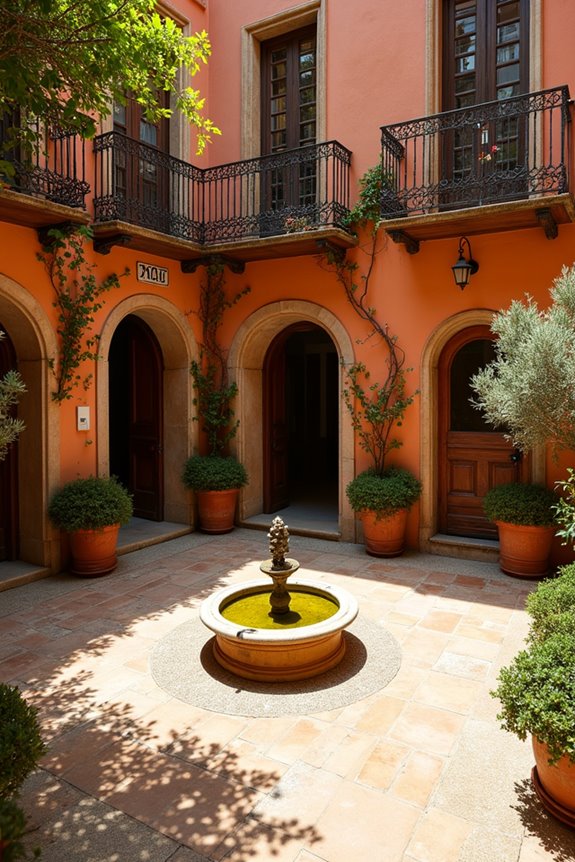
How’d Spanish architects solve the problem of scorching heat and the need for privacy? They designed inward-facing homes around central courtyards. This practical approach created personal microclimates while keeping family life protected from outside eyes.
Your patio development stems from this functional thinking. Living spaces wrapped around open-air courtyards. Fountains, tiled floors, and enclosing walls or arcades suppressed heat and glare effectively. The layout transformed outdoor spaces into essential family centers.
This courtyard culture reflects deeper values. Privacy mattered tremendously in Spanish society. Social connection happened within these protected spaces. Climate-responsive design wasn’t just comfortable—it was necessary for survival in hot regions.
Spanish-American homes inherited this tradition. The patio remains your connected outdoor room today. Understanding this history shows how practical solutions become cultural identity.
From Medieval Fountain to Modern Design: The Patio’s Role in Spanish Homes
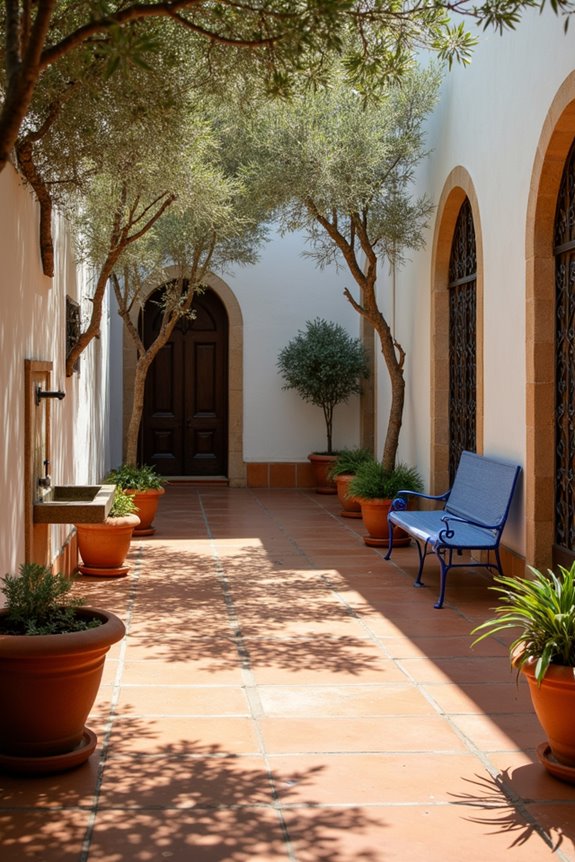
Picture a medieval Spanish home built around a sunlit courtyard. You’d recognize how the patio functioned as the heart of domestic life. These central spaces weren’t just beautiful—they served essential purposes for families seeking comfort and connection.
The evolution of Spanish patios reflects changing needs:
- Medieval fountains provided fresh water and cooled surrounding air naturally
- Rainwater collection basins made homes more self-sufficient and practical
- Decorative elements transformed functional spaces into gathering areas for conversation
- Shaded walkways protected residents from intense Mediterranean heat
- Open designs encouraged air circulation throughout connected rooms
Your modern patio descends directly from this medieval tradition. Today’s outdoor dining areas maintain that same philosophy: creating welcoming spaces where you belong. The fountain remains a centerpiece, bridging past and present. Whether you’re designing a contemporary courtyard or enjoying an inherited Spanish home, you’re participating in centuries of thoughtful outdoor living design.
From Spanish Courtyard to American Backyard: How Patio Meaning Evolved
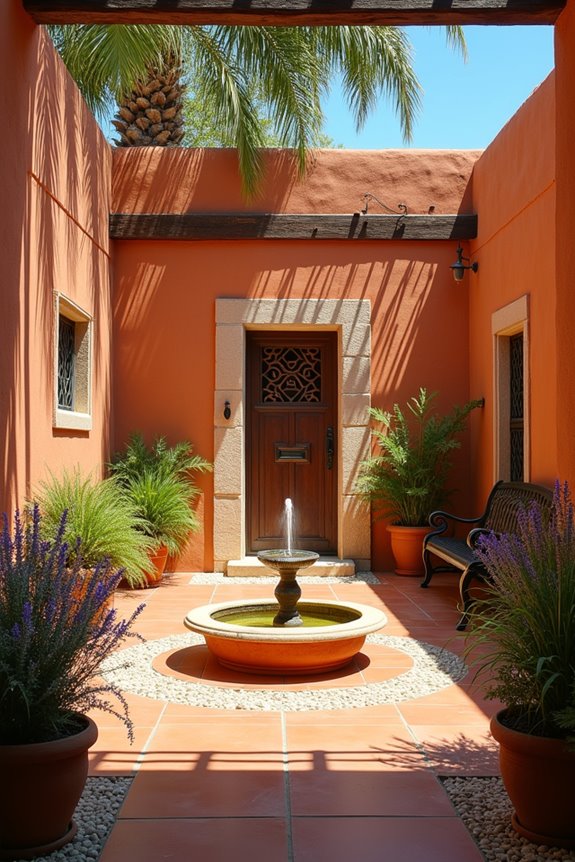
Why’d the meaning of “patio” shift so dramatically between Spain and America? The Spanish origin describes an inner courtyard open to the sky. This traditional design served as the heart of Spanish homes. By 1818, English speakers understood patios as these enclosed courtyards. Then something changed. Around 1941, Americans reimagined the patio entirely. You’d now find paved and enclosed terraces attached to buildings. This wasn’t just a translation difference. It reflected changing outdoor living expectations. Spanish homeowners gathered in central courtyards surrounded by walls. American families wanted accessible outdoor spaces right beside their houses. The Spanish origin remained rooted in sky-open courtyards. Yet American innovation transformed patios into practical living extensions. This evolution shows how cultures adapt borrowed words to fit their own needs and lifestyles.
What Patio’s Etymology Reveals About Home, Community, and Privacy
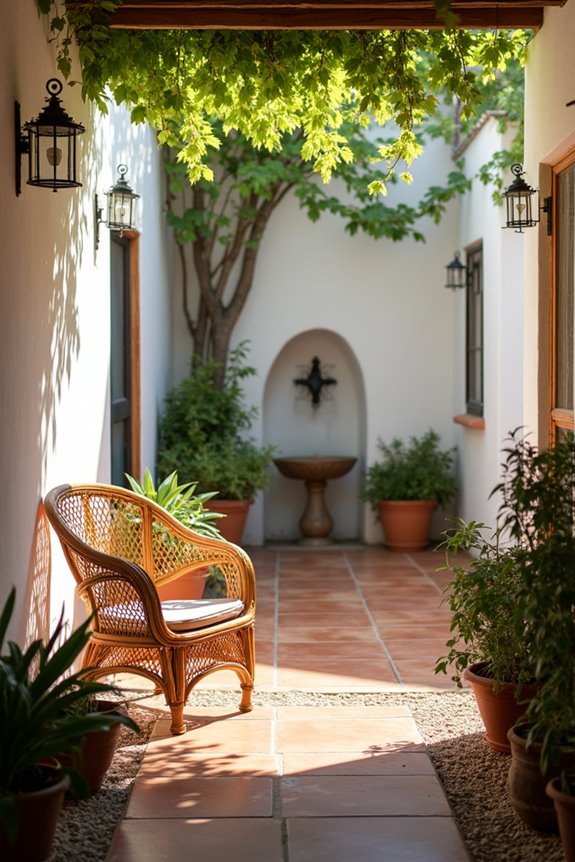
The word “patio” carries layers of meaning you won’t find in most modern dictionaries. Understanding its etymology reveals how you’ve shaped home spaces around openness and belonging. The Spanish courtyard concept reflects deep human needs for connection.
Consider what patio’s roots tell us:
- Courtyard openness stems from Latin *patere* (to lie open). Your patio invites gathering.
- Communal privacy balances exposure with enclosure. You’re together yet sheltered.
- Safety through design. Walls protect while the sky connects you skyward.
- Shared identity. Spanish-American communities built patios as cultural centers.
- Modern evolution. You’ve adapted ancient concepts to contemporary living.
From *pactum* (agreement) to your backyard space, patio embodies negotiated balance between individual and group needs. This etymology shows you’ve always sought spaces where family congregates openly yet privately. Your patio isn’t just architecture—it’s inherited wisdom about belonging.