A pergola roof transforms your open-lattice pergola into a weather-protective outdoor living space. You add adjustable or fixed coverings—like louvered slats, solid panels, or glass—to filter sunlight and block rain while maintaining the structure’s visual appeal.
Unlike traditional pergolas with 50–75% open space, pergola roofs offer flexibility and year-round comfort.
Materials range from aluminum to polycarbonate, each suited to different climates and needs. The right choice depends on your weather conditions and how you’ll use the space.
What Exactly Is a Pergola Roof?
Ever wonder why some outdoor structures look completely different even though they’re called similar names?
Why do similar outdoor structures look so different? The answer lies in their roofing design and materials.
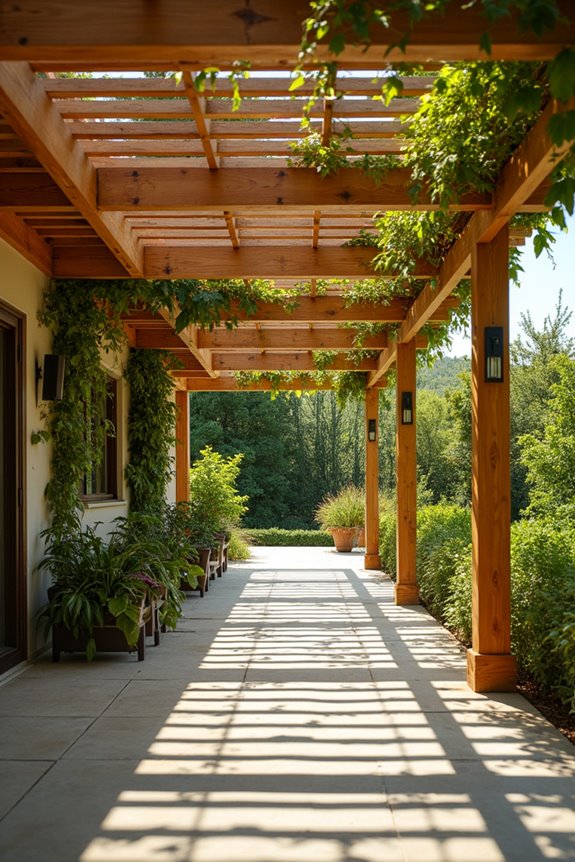
A pergola roof transforms your outdoor living space. It’s the overhead component that defines the entire shade structure. Traditional open lattice designs feature 50–75% void space. This means they’re mostly open. That openness lets sunlight filter through while blocking harsh rays.
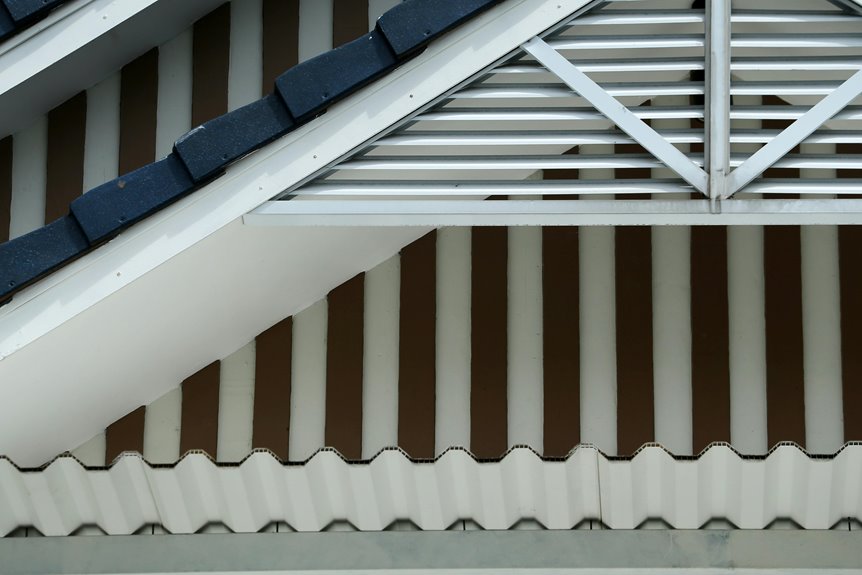
You’ve got options beyond basic lattice. Louvered roofs use adjustable slats for sun control. Retractable canopy systems fold away when you want full sky views. Solid roof panels provide maximum weather protection.
Here’s the key distinction: if your roof stays open and airy, it’s a pergola. Add a continuous, watertight solid roof, and it becomes a patio cover. A roofed pergola bridges both worlds. It enhances year-round use while maintaining that pergola aesthetic. You’re creating an all-season outdoor living space with flexible protection.
Pergola Roofs vs. Traditional Pergolas: Key Differences
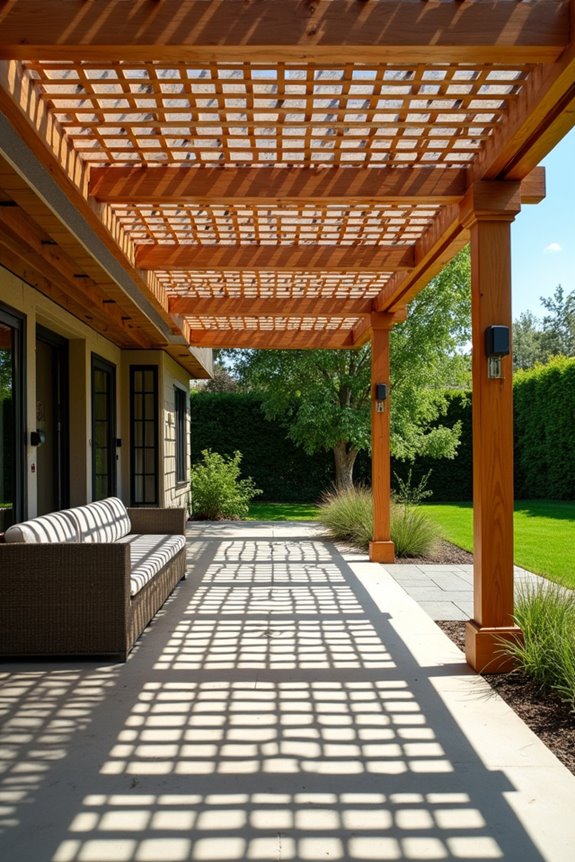
What’s the real difference between these two structures? Traditional pergolas feature an open lattice roof design with minimal solid coverage. You get plenty of light and airflow because they maintain 50–75% void space. They’re visually appealing but offer limited weather protection.
Pergola roofs change the approach entirely. You can choose retractable options for flexibility or louvered roofs that provide adjustable sun control and rain protection. These upgrades make your space weather-adaptive and usable year-round.
Here’s the critical distinction: add continuous roof infill through polycarbonate panels or insulated materials, and your structure reclassifies as a patio cover. That solid roof creates a watertight surface that fundamentally changes what you’ve built.
Think of it this way. Traditional pergolas prioritize aesthetics and airflow. Pergola roofs prioritize comfort and function.
Five Main Types of Pergola Roof Systems
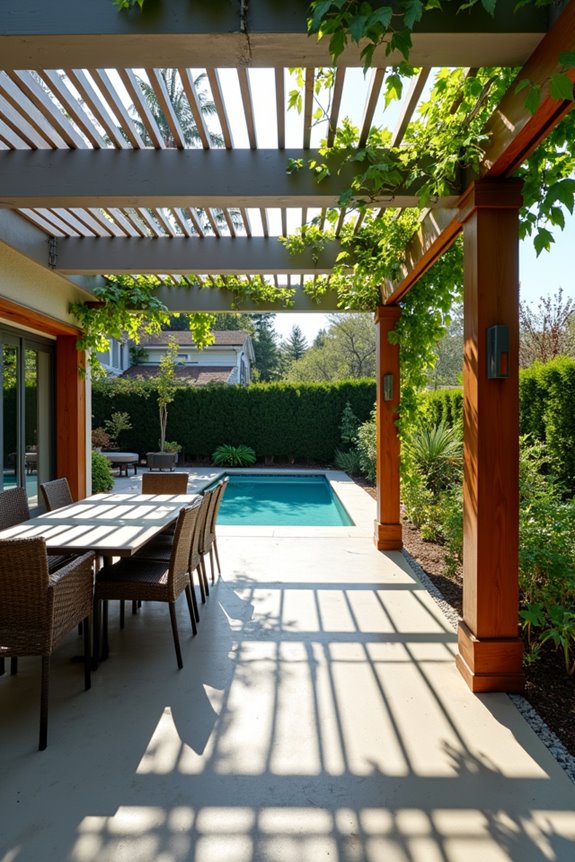
How do you choose the right roof when so many options exist? You have five main types to consider. Each offers different benefits for your space and lifestyle.
- Louvered roofs: Adjustable aluminum louvers let you control sun and shade manually or with motors. Rain sensors close them automatically during storms for weather protection.
- Fixed roofing systems: Solid panels or glass roofs provide permanent coverage. Polycarbonate panels balance light transmission with durability.
- Retractable roofing systems: Open or close fabric canopies on demand for flexible shade.
- Green roofs: Living plants create natural insulation and visual appeal.
- Solar panel roofs: Generate electricity while providing coverage.
Your aluminum pergola becomes more functional when you match the roof type to your climate and daily needs. Consider what matters most: shade control, weather protection, or energy savings?
Louvered Roofs: Adjustable Shade and Weather Control
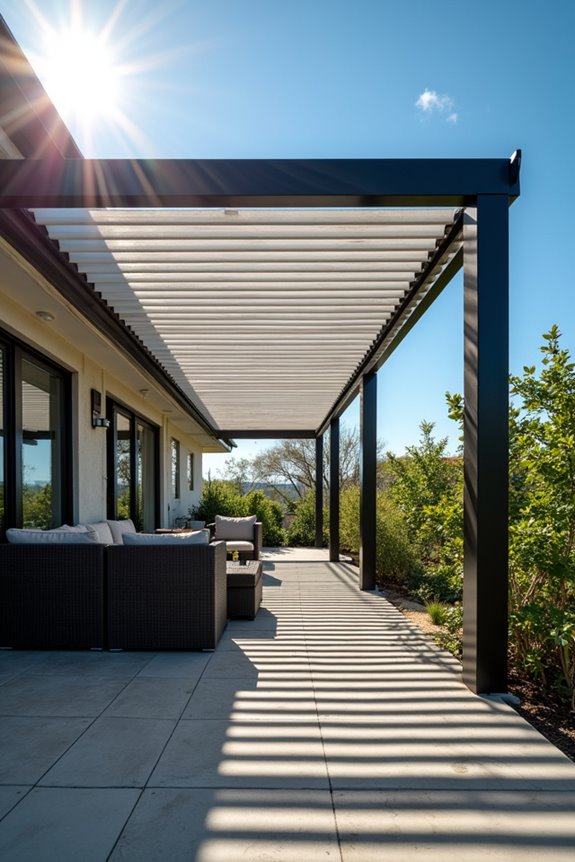
If you’re tired of picking between full sun exposure and complete shade, louvered roofs offer a practical middle ground. You control everything with adjustable aluminum louvers that tilt open or closed as needed.
| Feature | Benefit |
|---|---|
| Motorized louvers | Remote or app control |
| Rain sensors | Automatic closure |
| Powder-coated aluminum | Long-lasting durability |
| Interlocking design | Complete water barrier |
| Smart home integration | Seamless automation |
Your pergola roof adapts to weather instantly. Motorized systems detect rain and close automatically for weather protection. Manual options give you hands-on control through simple cranks or levers.
You’ll enjoy year-round comfort. Louvered roofs manage sun control and airflow simultaneously. Whether you want adjustable shade on hot afternoons or full rain protection during storms, aluminum louvers deliver reliable outdoor durability. This pergola roof style combines practical function with modern smart home integration for the outdoor space you want.
Solid Roofs: When a Pergola Is Reclassified as a Patio Cover
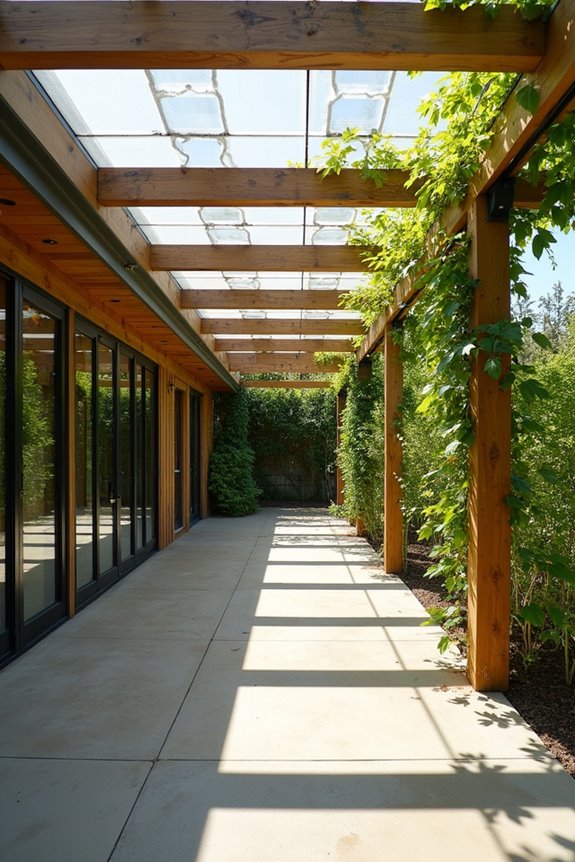
When you add a continuous, watertight roof to your pergola—using materials like polycarbonate, glass, or insulated panels—you’ve triggered a building code reclassification that changes your project. Your structure is no longer a traditional pergola; it’s now officially a patio cover (pavilion or gazebo, depending on your local codes). This matters because building officials require you to use larger posts, engineered footings, and more robust structural support for the fixed load-bearing roof.
Continuous Watertight Roof Infill
What happens to your pergola the moment you add a solid roof? It transforms into something entirely different legally and functionally. Your structure shifts from pergola to patio cover status.
Here’s what changes when you install continuous roof infill:
- Watertight protection emerges from fixed solid panels like polycarbonate or metal
- Glass roofs allow sunlight while still creating weatherproofing barriers
- Fixed panels eliminate the traditional 50–75% void openness pergolas need
- Code reclassification occurs, turning your pergola into a pavilion or gazebo
- Building permits differ for patio covers versus open pergolas
Your continuous watertight roof creates a complete water barrier. This isn’t necessarily bad—it’s just different. You’re gaining shelter and weatherproofing. However, you’re losing the pergola classification. Understanding this distinction matters when planning upgrades. Building codes recognize this difference, so permits and inspections change accordingly.
Building Code Classifications Matter
Your local building code doesn’t view a solid-roofed pergola the same way it views an open one, and that distinction carries serious consequences for permits, inspections, and structural requirements.
| Feature | Open Pergola | Solid Patio Cover |
|---|---|---|
| Roof Type | Slats or open | Continuous panels |
| Watertight | No | Yes |
| Permits Required | Minimal | Full permits |
| Post Size | Standard | Larger, engineered |
| Light Penetration | Full | Blocked |
When you add continuous roofing with solid panels—polycarbonate or glass—your pergola legally becomes a patio cover. This reclassification triggers stricter building code requirements. You’ll need engineered footings and larger posts to handle increased load capacity. Inspectors examine fixed roofs differently than open structures. Understanding pergola roof classifications helps you avoid costly violations. Many homeowners overlook this shift, then face unexpected structural requirements during inspections.
Pergola Roof Materials: Aluminum, Glass, Polycarbonate, and Wood
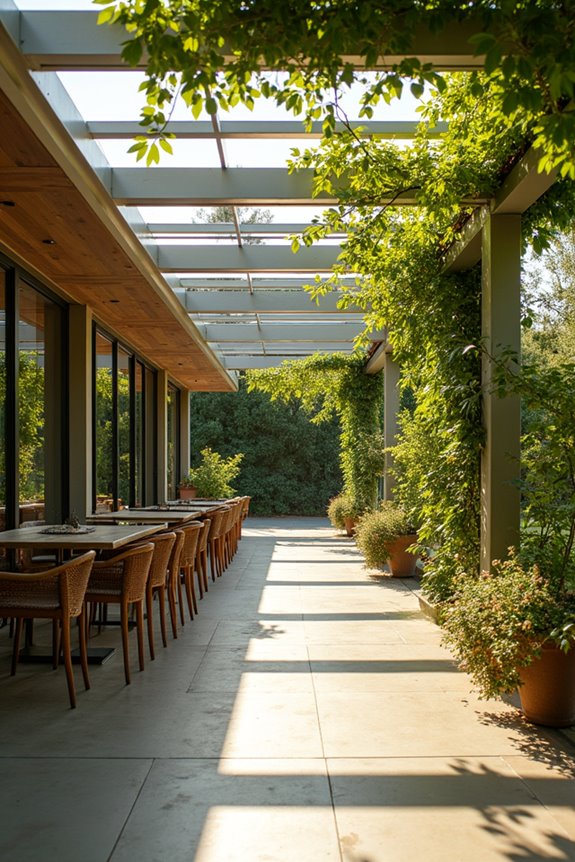
How you choose your pergola roof material matters more than you’d think. Each option balances light transmission, weather protection, and maintenance differently. You’ll find yourself part of a community of homeowners making smart outdoor choices.
Consider these popular options:
- Aluminum roofs: Lightweight, rust-resistant, and durable with excellent sun transmission
- Glass roofs: Maximize daylight and offer full waterproofing but need regular cleaning
- Polycarbonate roofs: Impact-resistant, lightweight, and easier to install while providing weather protection
- Wood pergola: Natural aesthetic that requires sealing and ongoing maintenance against rot
- Adjustable roof systems: Aluminum frames let you control light and shade throughout the day
Your choice depends on your climate, budget, and lifestyle. Aluminum works well if you want durability with minimal fuss. Glass suits you if maximum brightness matters most. Polycarbonate balances protection and easy installation. Wood appeals when you prioritize natural appearance over convenience. Each material serves different needs successfully.
Why Add a Pergola Roof: Comfort, Protection, and Year-Round Use
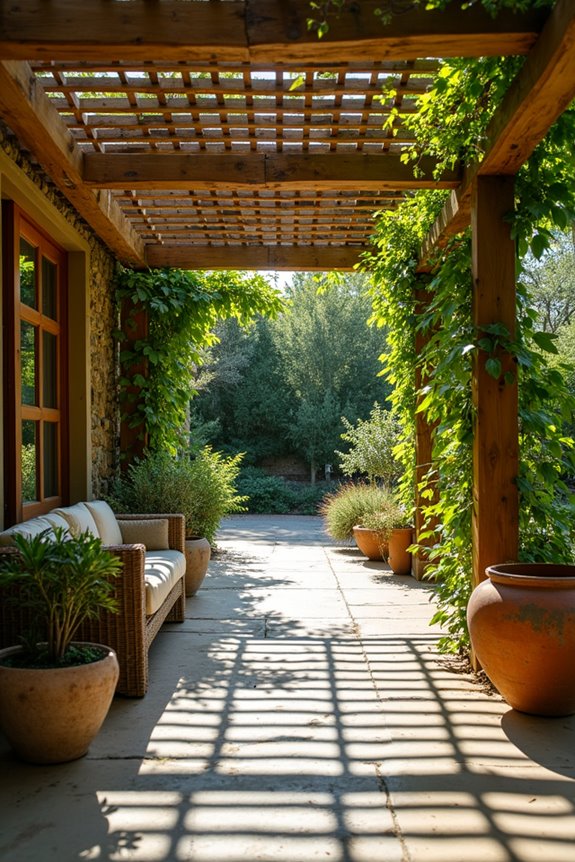
Why settle for a structure you can only enjoy when the weather cooperates? A pergola roof extends your outdoor living space functionally. You’ll gain shade and protection from rain, UV rays, and light snow. Your furniture and decking stay safe from damage. Year-round usability becomes possible with the right roof options. Louvered pergola roofs offer adjustable solar control. You open slats for breeze and close them for shelter. Solid aluminum roofing provides maximum weather-resistant coverage. Glass panels bring in natural light while protecting you below.
Beyond comfort, your roofed pergola gains privacy and visual appeal. You create a functional retreat. Friends and family gather there throughout the year.
Choose the Right Pergola Roof for Your Climate
Your climate determines everything. You’ll need sturdy, weatherproof materials like metal or polycarbonate in rainy and snowy regions, while drier areas work well with open slatted designs that let air flow and adjust sunlight as needed. The key is matching your roof’s durability and protection level to what your local weather actually throws at you year-round.
Climate-Specific Material Selection
Climate-Specific Material Selection
Selecting the right pergola roof material isn’t one-size-fits-all—it depends heavily on where you live. Your climate shapes everything about durability and usability.
Consider these climate-specific material choices:
- Coastal/Humid Areas: Choose aluminum for rust-proof weather resistance and long-term durability
- Hot/Sunny Climates: Install fixed solid roofs (metal, polycarbonate, or insulated panels) for superior year-round shade and protection
- Wind-Prone Regions: Select aluminum or steel with solid roofs to resist debris and water intrusion
- Rainy Areas: Use waterproof infill like polycarbonate or glass for consistent usability during precipitation
- Temperature Extremes: Apply insulated panels for better thermal control across seasons
Aluminum pergola roofs excel in coastal humid environments because they won’t rust or deteriorate. Fixed solid roofs maintain comfortable spaces year-round while offering shade control. Waterproof infill solutions keep you dry during storms. Insulated panels provide exceptional year-round protection. Matching your material to climate needs ensures lasting performance.
Weather Protection and Durability
The difference between a pergola that lasts decades and one that deteriorates in years comes down to how well your roof handles weather. Your choice matters significantly.
Solid roofs deliver year-round weather protection. Aluminum roofs excel here—they resist rust, require minimal maintenance, and transmit light effectively. Metal and insulated panels create watertight surfaces that shield your space completely.
Louvers offer flexibility you might appreciate. Adjustable slatted systems provide rain control and sun management without permanent commitment. However, drainage planning becomes necessary for preventing water pooling.
Wind resistance demands sturdy materials. Aluminum and steel withstand gusty conditions better than alternatives. Motorized louvers with wind sensors enhance safety automatically.
Maintenance sustains durability long-term. Reapply sealants every one to two years on metal surfaces. Clean debris regularly. These simple steps keep your pergola roof performing reliably through seasons.