You’ll spend between $2,000 and $8,000 for most pergolas. A 10×13 costs around $2,000–$6,000, while a 12×20 runs $3,000–$8,000. Material choice matters significantly: pressure-treated wood starts at $20–$35 per square foot, but aluminum and composite materials cost more initially while requiring less maintenance. Your location, season, and whether you hire professionals all affect your final price. Add-ons like lighting or ceiling fans integrated during construction cost considerably less than retrofitting later. The exact breakdown depends on several factors to consider.
What Size and Material Pergola Should You Choose?
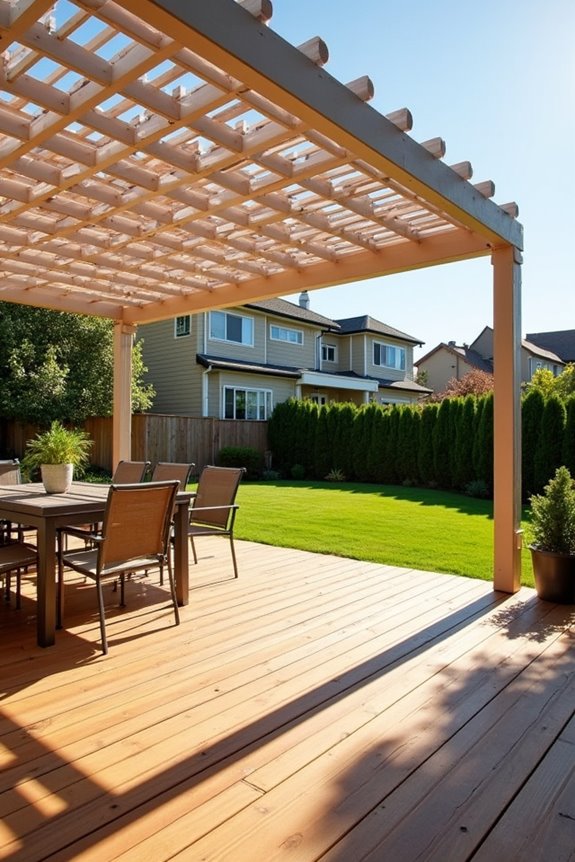
When you’re planning a pergola, your budget depends on two main decisions—size and material.
Size matters first. A 10×13 pergola runs $2,000–$6,000, while a 12×20 jumps to $3,000–$8,000. Larger square feet means more materials and framing work. Your project scope grows with dimensions.
Larger pergolas cost more. A 10×13 runs $2,000–$6,000, while a 12×20 reaches $3,000–$8,000 due to increased materials and framing.
Material choice affects your wallet next. Pressure-treated wood costs $20–$35 per square foot—the most affordable option. Cedar runs $25–$40 per square foot for improved appearance. Aluminum climbs to $30–$60 per square foot but requires minimal maintenance. Vinyl sits between at $25–$55 per square foot.
Installation and site prep add to your total cost. Pick your size and materials based on your budget and maintenance preferences. Both decisions determine your final price.
Pergola Material Costs: Wood vs. Aluminum vs. Composite
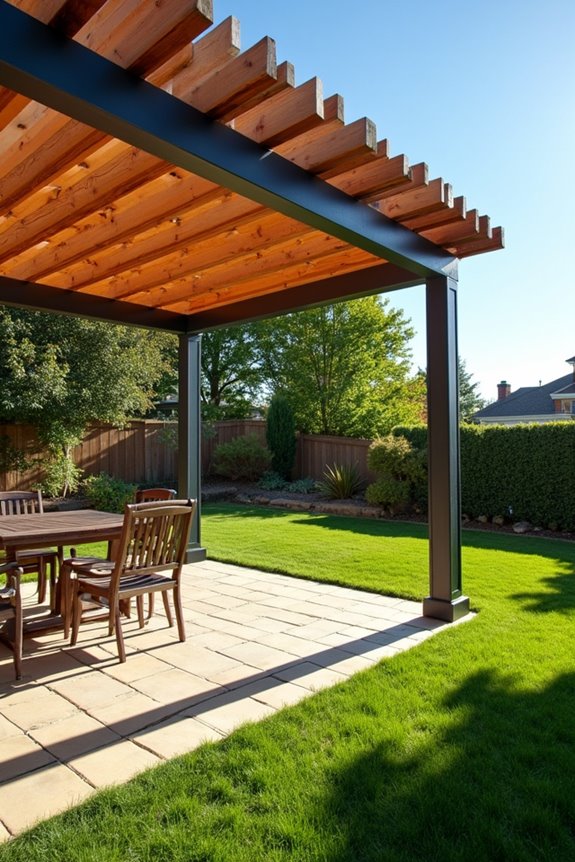
You’ll find wood offers the lowest upfront price—pressure-treated pine runs $20–$35 per square foot, while cedar and redwood climb to $25–$55 per square foot depending on quality and durability. Aluminum and composite materials cost more initially, ranging from $30–$60 and varying by brand respectively, but they’ll save you money over time since they resist rot, rust, and weathering without constant maintenance. Choosing between budget-friendly wood now or investing more upfront in premium materials depends on whether you’d rather spend less today or less on repairs and refinishing over the next decade.
Wood Material Cost Breakdown
What makes wood such a popular choice for pergolas? It’s affordable and practical. Pressure-treated pine costs $20–$35 per square foot. Cedar runs $25–$40 per square foot. Redwood jumps to $40–$55 per square foot. Exotic hardwoods like teak exceed $50 per square foot.
Cedar offers a balanced option. You get natural appearance and solid rot resistance without redwood’s premium price. Pressure-treated lumber offers the lowest upfront material costs. However, you’ll seal or stain it every 1–3 years, adding ongoing maintenance expenses.
Your lumber species choice drives your total project cost. Pressure-treated requires more maintenance work over time. Cedar balances durability with reasonable pricing. Consider long-term expenses when comparing options. Pergola kits simplify material purchasing. Quality wood selection matters for lasting value and performance.
Premium Materials Long-Term Value
Choosing a pergola material means balancing what you pay now versus what you’ll spend later. Aluminum pergolas cost $30–$60 per square foot upfront. You’ll appreciate their corrosion resistance and low-maintenance profile. They won’t need repainting or sealing.
Composite materials strike a balance. Higher initial costs pay dividends through reduced maintenance costs over time. You’re investing in durability without constant upkeep.
Exotic hardwoods offer exceptional rot resistance. Teak and ipe range from $50–$100+ per square foot. Their longevity justifies the premium price for many homeowners.
Pressure-treated wood seems budget-friendly initially. Yet regular sealing every 1–3 years adds significant long-term value concerns. Premium materials turn your pergola into a lasting investment rather than a recurring expense.
How Location and Seasonal Demand Affect Your Price
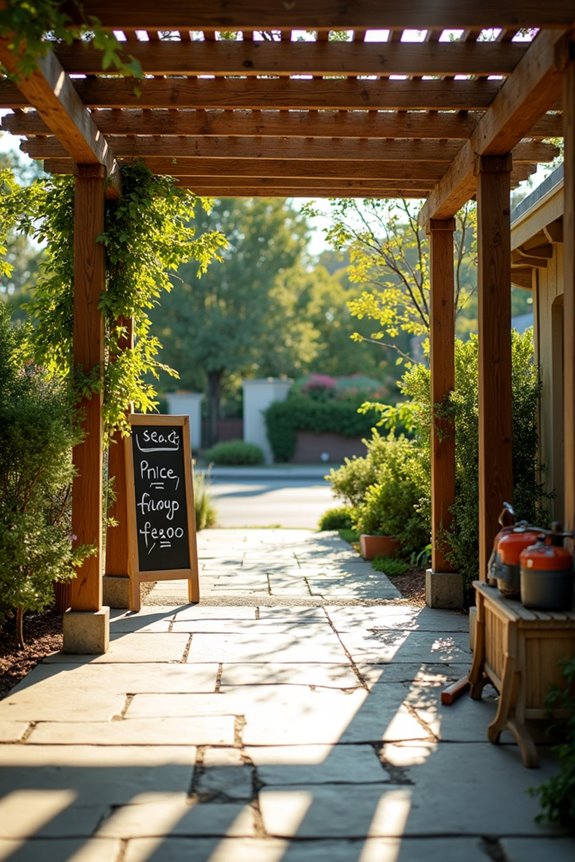
Where you live matters more than you’d think. Your zip code directly influences location-based pricing through local building codes and permit requirements that vary by city and neighborhood. These site-specific factors affect your installation cost significantly.
Seasonal demand reshapes your budget too. Spring and summer bring peak contractor demand and higher labor costs. Fall and winter offer reduced rates and shorter wait times.
Weather considerations tied to your location affect your foundation. Frost lines and wind loads require heavier hardware in certain regions. This raises feasibility and codes compliance expenses.
Timing your project strategically saves money. Scheduling during slower months reduces labor costs considerably. Your contractor’s availability improves, shortening project timelines and increasing your savings.
Design Complexity: Why Attached Pergolas Cost More
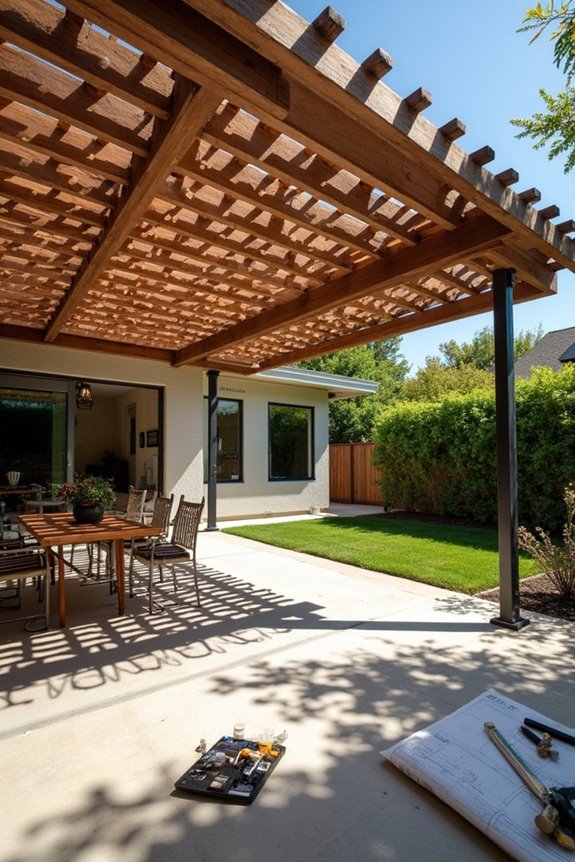
Why do attached pergolas cost more than freestanding ones? Integration with your home creates significant design complexity that freestanding structures simply don’t face.
When you attach a pergola to your house, you’re tackling multiple interconnected challenges:
- Structural anchoring and weatherproofing – You need specialized hardware, flashing, and sealing to create a waterproof connection. This prevents water damage to your home’s foundation and walls.
- Electrical and lighting integration – Plan these during initial construction. Retrofitting later means disruption and higher costs.
- Permits and code compliance – Local codes and permits add expenses. Your home insurance may require inspections too.
These factors demand skilled labor, premium materials, and careful planning. You’re creating a functional connection between your indoor and outdoor spaces while protecting your home’s structural integrity. That investment pays dividends in durability and functionality.
Budgeting for Site Prep, Permits, and Labor
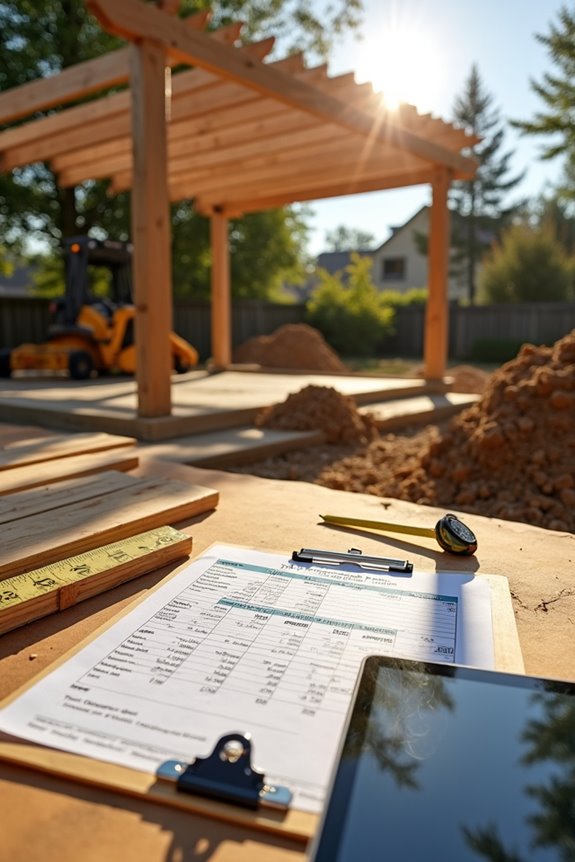
You’ve got three major expenses ahead. Site prep, permits, and labor will shape your total budget considerably, and understanding each one helps you avoid surprise costs. Let’s break down what you’ll actually pay for these essential steps.
Site Preparation Costs Breakdown
How much prep work does your pergola spot actually need? That depends on your yard’s current condition. Your graded site sets the foundation for everything else. Here’s what you’re typically looking at:
- Grading costs run $1–$2 per square foot if your ground isn’t level
- Concrete slab base for 100 square feet averages around $600
- Local permits and plan fees typically range from $50–$500
Your footing requirements depend on local site conditions. Weather impact and levelness affect your base cost and scheduling timeline.
Professional labor adds $500–$1,000 to your prep expenses. Off-season scheduling can reduce costs through contractor availability. Planning ahead with your local permits prevents delays and additional expenses later.
Permit Requirements and Labor Expenses
Before you break ground on your pergola, local permits and professional labor will likely consume a significant chunk of your budget. Permits typically range from $50 to $500, depending on your location and project scope. You’ll need submitted plans or drawings for approval. Building codes vary by region, so checking with your local authority prevents costly delays.
Professional installation averages 20% of total costs, starting around $500 to $1,000 plus site-specific factors. Labor expenses increase substantially for attached pergolas. These structures require complex flashing, sealing, and anchoring to your house, demanding skilled expertise. Site preparation adds $1 to $2 per square foot for grading work.
DIY installation cuts labor costs to $1,000–$3,000. However, you’ll forgo warranty considerations and risk hidden expenses. Professional installation protects your investment long-term.
DIY or Hire a Pro: True Cost Comparison
When it comes to building a pergola, one of the biggest decisions you’ll face is whether to tackle it yourself or bring in a professional.
Your cost range shifts substantially based on this choice. DIY projects typically run $1,000 to $3,000 for materials and tools. Professional installation adds $500 to $1,000 in labor costs. A pergola kit can simplify your build and lower expenses, though it may limit customization options.
Consider these key factors:
- Time investment: DIY demands weekends of work; professionals finish faster
- Structural complexity: Attached pergolas warrant professional expertise for safety and warranty protection
- Material quality: Premium materials and complex designs benefit from professional skill
Your total budget grows with complexity. Simple pressure-treated pine projects stay affordable. However, attached or structurally demanding pergolas justify hiring professionals. You’re investing in long-term durability and peace of mind.
Plan Add-Ons During Build, Not After: It Saves Money
Why does retrofitting a pergola cost so much more than planning ahead? You’re paying twice. Built-in wiring, gas lines, and electrical integration during construction timing saves thousands. Retrofitting requires cutting into finished surfaces, disassembly, and rework costs that multiply quickly.
Retrofitting costs multiply fast—plan electrical, gas, and wiring integration during construction to save thousands on future modifications.
Your upfront planning delivers significant savings. Decide now if you want ceiling fans, heaters, lighting, or retractable canopies. These features integrate seamlessly during the build. Adding them later means disruption, potential water damage repairs, and extended project timelines.
Comprehensive planning prevents multiple site visits. It eliminates material waste and change-order fees that drain budgets. You’ll also secure proper permits upfront rather than navigating complications mid-project.
The long-term ROI is clear. Cost savings from integrated installations during construction timing far exceed retrofit expenses. Smart builders plan add-ons before the first nail drops.