Zucchini can grow without a trellis, but you’ll want one for serious results. Trellising saves garden space by growing upward instead of sprawling six feet across. Your fruit stays cleaner and off soil, reducing rot and disease. Better airflow prevents powdery mildew and fungal problems. You’ll spot pests earlier and harvest easier too. Bush varieties need minimal support, while vining types work well on sturdy six-foot structures. The setup takes effort, but improved plant health and increased yields make it worthwhile—discover specific techniques ahead.
Do Zucchini Need a Trellis to Grow?
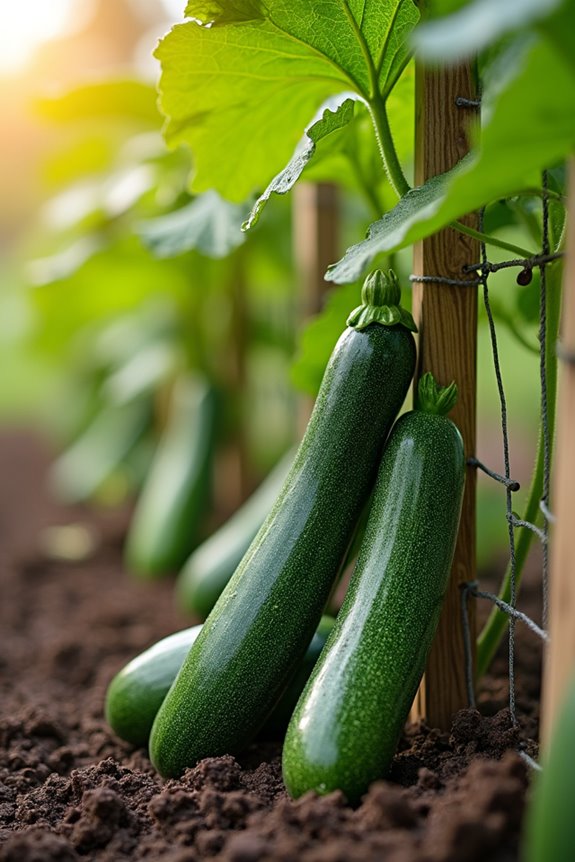
Do you really need a trellis for zucchini? Not necessarily, but you’ll want one. Here’s why: trellises aren’t mandatory for growth. However, they solve real problems you’ll face. Zucchini grows fine on the ground alone. But you’ll appreciate the benefits trellising brings.
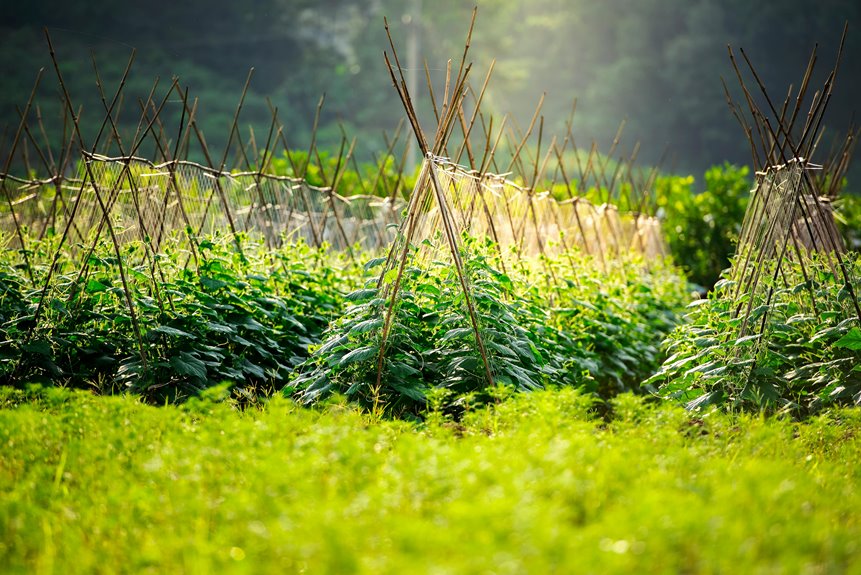
Vertical growth saves precious garden space. You’re farming upward instead of outward. Vining varieties perform well on taller trellises. Six feet or more works best for them. The structure supports their longer, sprawling stems.
Better airflow matters most. When fruit sits on soil, rot and mildew develop easily. A trellis lifts everything upward. Air circulates freely around leaves and fruit. This improves your harvest quality.
Bush varieties are flexible. They don’t require tall supports. Yet even short trellises help with airflow and easier harvesting. You’re joining gardeners who’ve discovered this practical solution.
How a Trellis Improves Zucchini Health and Yield
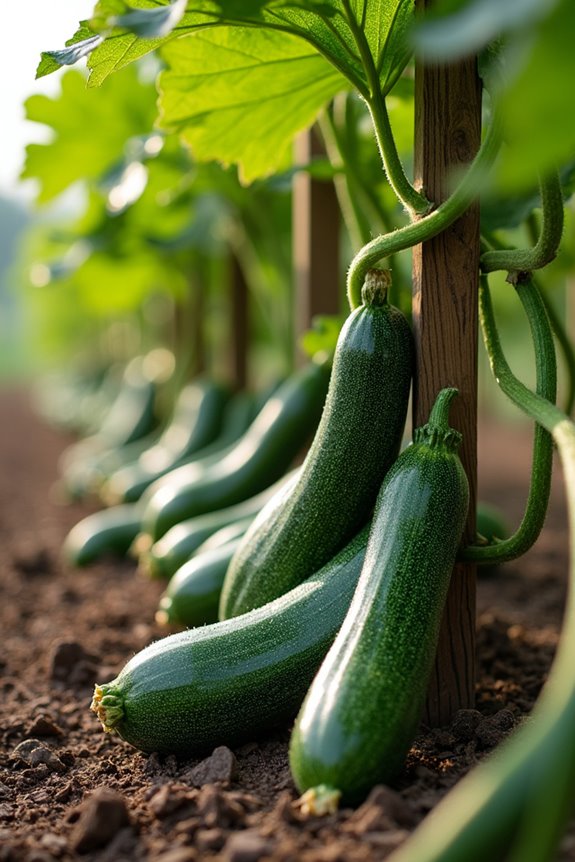
A trellis transforms your zucchini’s health and productivity. Better air circulation around foliage prevents powdery mildew and fungal diseases that devastate unpruned plants. Fruit stays cleaner when suspended above soil. Ground rot disappears. You’ll harvest more usable zucchini without blemishes.
| Benefit | Without Trellis | With Trellis |
|---|---|---|
| Air circulation | Poor | Excellent |
| Disease risk | High | Low |
| Harvesting ease | Difficult | Simple |
| Fruit quality | Bruised often | Clean, pristine |
Trellised plants yield longer stems and straighter growth. Inspecting for pests becomes easy. You spot problems early. Harvesting takes minutes instead of searching through tangled vines. Your garden stays organized. You’ll notice plants producing more fruit throughout the season.
Maximize Space: Why a Zucchini Trellis Beats Ground Growing
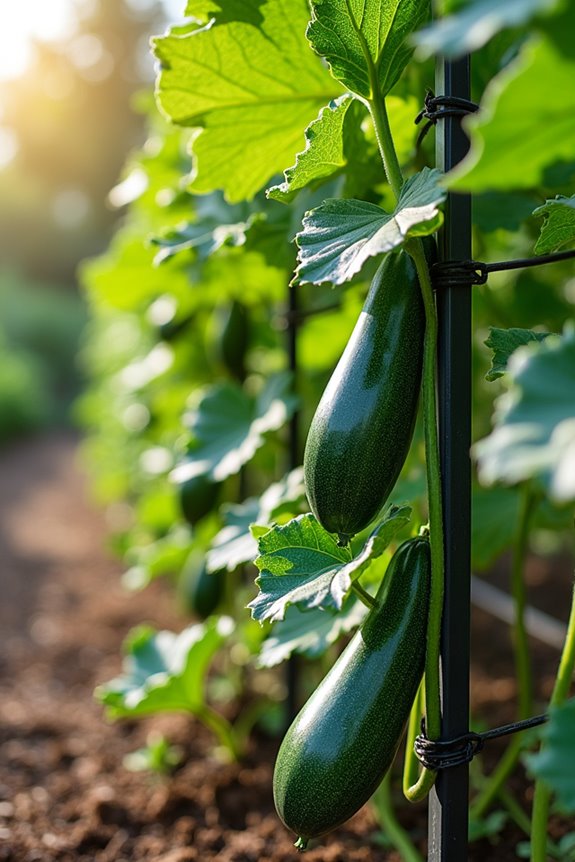
When you grow zucchini on a trellis, you’ll reclaim valuable garden space by growing vertically instead of letting vines sprawl across your bed. You’ll also notice straighter fruit with better color, fewer pest problems thanks to improved airflow, and easier access for harvesting and checking plant health.
Space Efficiency and Plant Density
How much garden space are you actually using right now? If you’re growing zucchini on the ground, you’re probably wasting valuable real estate. Trellised vines maximize your garden’s potential. You can space them just 12-15 inches apart in raised beds instead of the typical 30 inches. That’s nearly double the plant density in the same footprint.
Without a trellis, zucchini sprawls outward—reaching 6 feet in all directions. Your plants occupy massive amounts of ground space. A trellis redirects this growth upward, freeing precious bed area for companion crops or additional vegetables.
The math is straightforward: vertical growth means more plants, more harvests, and smarter use of limited gardening space. You’re essentially creating room you didn’t know you had.
Accessibility and Maintenance Advantages
Ever tried harvesting zucchini buried under sprawling vines? A trellis makes this task manageable. When you train zucchini vertically, you’ll access fruit easily without crouching or moving heavy plant material aside. The plants grow straighter. Fruit hangs at comfortable heights.
Pruning lower leaves becomes straightforward too. This simple step enhances airflow around your plants. Better airflow means fewer disease problems like powdery mildew. You’ll spot pest damage faster. Inspections take minutes instead of frustrating searches through tangled growth.
Think of trellising as creating an organized garden layout. Your plants work for you. Heavy fruit loads stay supported securely. Maintenance shifts from exhausting to efficient. You’re not wrestling vegetation anymore. You’re simply managing an accessible system that produces reliable harvests.
Fruit Quality and Pest Reduction
What happens to zucchini left sitting on damp soil? They rot. They develop discoloration. They attract pests. Trellising changes this entirely.
When you elevate your zucchini vertically, you improve fruit quality significantly. Ground contact causes spotting and decay. Vertical growing eliminates that problem. Your zucchini stays cleaner and lasts longer.
Enhanced airflow is another major benefit. Better air circulation around fruit reduces moisture buildup. This directly prevents powdery mildew and fungal diseases. You’ll notice stronger plants overall.
Pest reduction happens naturally too. Elevated fruit becomes harder for insects to access. You’ll spot problems faster from ground level. Early detection means fewer crop losses.
Trellising is the practical choice for superior zucchini. Vertical growing delivers consistent results for growers who implement it.
Which Trellis System Works Best for Your Garden?
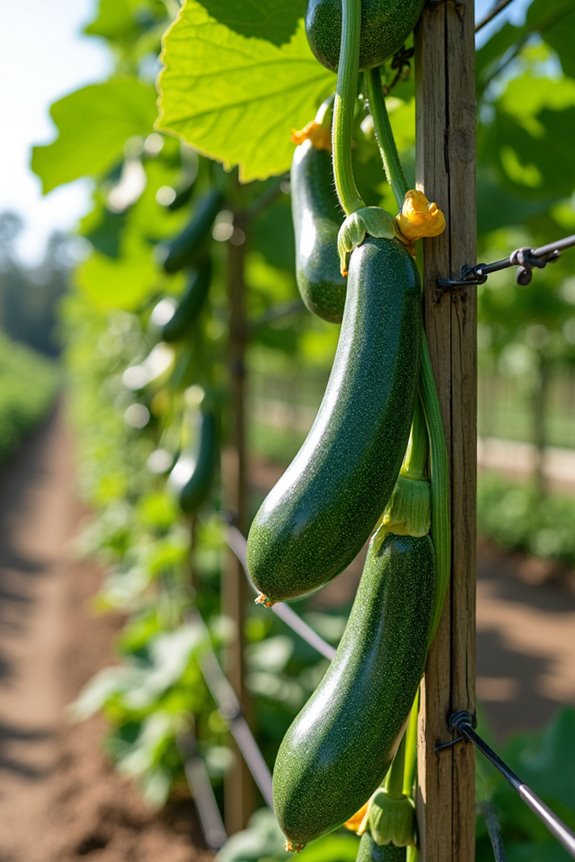
Choosing the right trellis affects your success with vertical growing. Your garden setup determines how well your plants perform. For vining varieties, invest in sturdy 6-foot structures or taller. Bush types need minimal support or none at all. Steel or strong fencing materials withstand heavy fruit loads without collapsing. Proper anchoring prevents damage during windy weather or when you’re harvesting.
Consider your space carefully. Raised beds benefit from trellises, maximizing limited area through vertical growth. Better airflow around leaves and fruit reduces powdery mildew problems. You’ll monitor pests more easily when plants aren’t crowded together.
Train your main stem to weave through the structure. Prune lower leaves regularly. This maintains excellent airflow and keeps your garden productive.
Training Zucchini Up Your Trellis: A Step-by-Step Guide
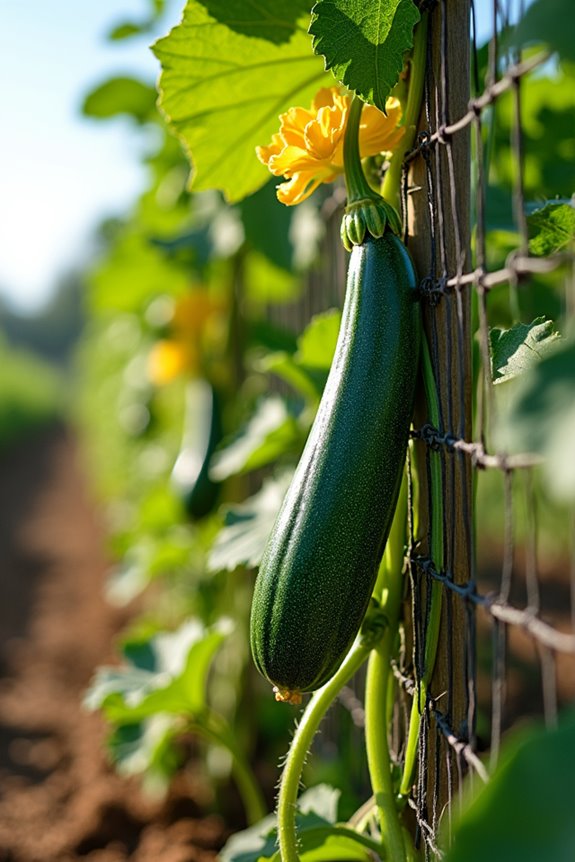
You’ll need to secure your vining zucchini stems to the trellis with plant ties or soft strips as they grow. Starting when plants reach 12–18 inches tall, gently weave the main stem and lateral shoots through the trellis framework, adjusting their position every few days to prevent breakage from the plant’s weight. Remove lower leaves that touch or hang near the ground—this simple step keeps air flowing around your plant and stops diseases like powdery mildew from taking hold.
Attaching Stems To Stakes
Once your seedlings reach about 12–18 inches tall, they’re ready for their first training session. Start attaching stems to your zucchini trellis using gentle ties or soft fasteners that won’t damage the delicate plant tissue.
Secure the main stem to a stake first. This establishes your plant’s vertical direction early on. As your zucchini grows taller, continue securing growth by wrapping longer stems around the trellis structure.
Check your ties regularly. Plants expand as they mature, and tight fasteners can strangle stems. Adjust ties to maintain upright posture without restricting growth.
Train vining growth by weaving stems through the trellis rather than relying solely on the plant’s natural support. This prevents sagging and protects developing fruit from breaking under its own weight. Regular attention to this task prevents problems later.
Guiding Upward Growth Progression
How do you actually get those sprawling zucchini vines to climb instead of sprawl? It’s simpler than you’d think. Start guiding upward growth when seedlings develop 12–18 inch trailing stems. Use soft plant ties or fabric strips to secure the main vine onto your trellis structure. As your zucchini vines continue growing, weave or tie longer stems horizontally and vertically along the trellis. This plant training method prevents stems from relying solely on their natural grip.
| Growth Stage | Action |
|---|---|
| 12-18 inches | Attach main stem |
| Weekly | Adjust positioning |
| As needed | Weave new growth |
| Ongoing | Support heavier stems |
| Throughout season | Monitor spacing |
Adjust positioning every few days during early growth. This prevents crowding and avoids stem breakage. Prune lower leaves touching ground to reduce disease. You’re creating an organized climbing system. Proper spacing—18–24 inches apart—maintains excellent airflow. Your zucchini plants grow upward.
Pruning Lower Leaves Strategically
With your vines now climbing upward, removing lower leaves becomes your next major task. You’ll strip away foliage touching the ground or overlapping near the plant base. This strategic pruning improves air circulation around developing fruit and your trellis training setup.
Better airflow prevents powdery mildew. That fungal disease develops in humid, stagnant conditions where leaves crowd together. By opening up the lower canopy, you create pathways for fresh air to flow through.
Mark pruned areas in your garden notes. This helps you maintain consistent upward growth habits across your zucchini patch.
Balance matters here. Remove lower leaves aggressively, but preserve enough foliage to fuel photosynthesis. Your plant needs those leaves for energy. Stripping too many weakens everything above them. Think strategically about which leaves truly need removing.
Pruning and Supporting Trellised Zucchini
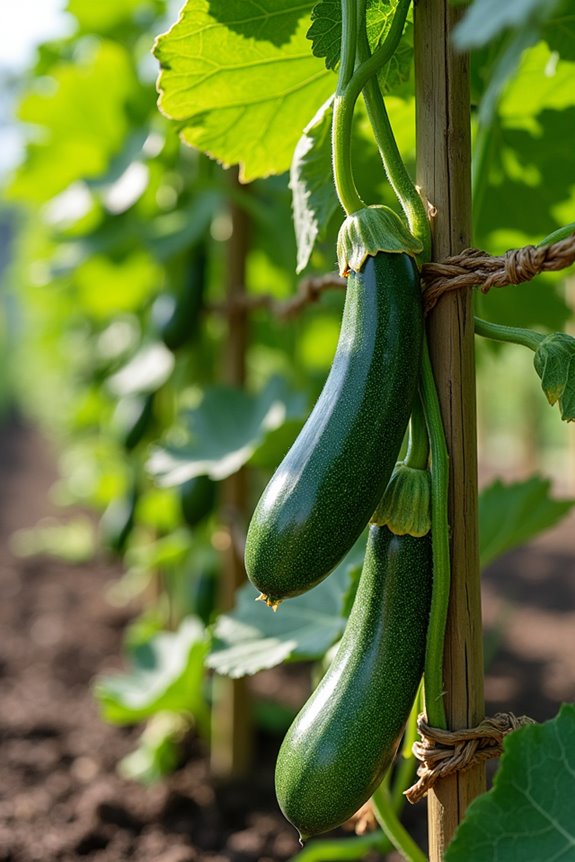
Why does supporting your trellised zucchini matter so much? Strong support prevents stem breakage and keeps fruit elevated. You’re creating ideal growing conditions for your plants.
When trellising, you’ll tie or weave long vining stems directly to your structure. This simple act of vine management prevents tangling and crowding. Pruning lower leaves that touch soil reduces disease risk markedly. Better air circulation means healthier foliage overall.
Guide new growth onto the trellis regularly. Space vines to prevent overcrowding. Periodically adjust ties as plants mature and gain weight. Your zucchini will produce more fruit with improved ease of harvesting. Supporting trellised zucchini isn’t complicated—it’s necessary maintenance that separates struggling plants from successful ones.
How Trellised Zucchini Resists Pests and Disease
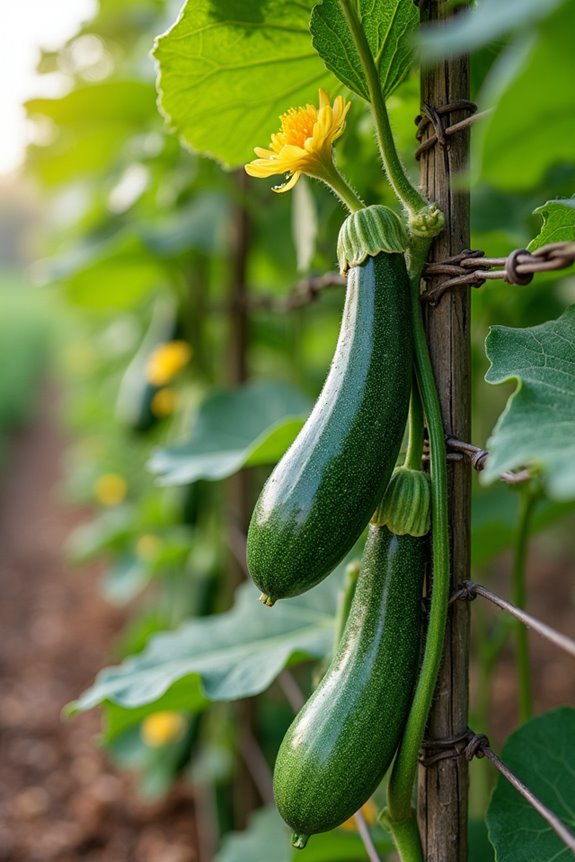
One of the biggest advantages of trellising? Disease resistance. When you elevate your zucchini off the ground, you’re creating better air flow around the leaves and fruit. This improved circulation directly fights powdery mildew and fungal diseases that thrive in humid conditions.
You’ll also spot pests faster. Elevated plants expose hidden insects like beetles and squash bugs that normally hide in soil debris. Catching them early means controlling them easier.
Staking the main stems to your trellis keeps foliage and fruit away from soil-borne pathogens. Ground contact invites trouble. Regular pruning combined with trellising removes crowded leaves and increases sunlight exposure, further reducing moisture buildup where diseases develop.
Your zucchini stays healthier. You garden smarter.
Common Trellis Mistakes and How to Avoid Them
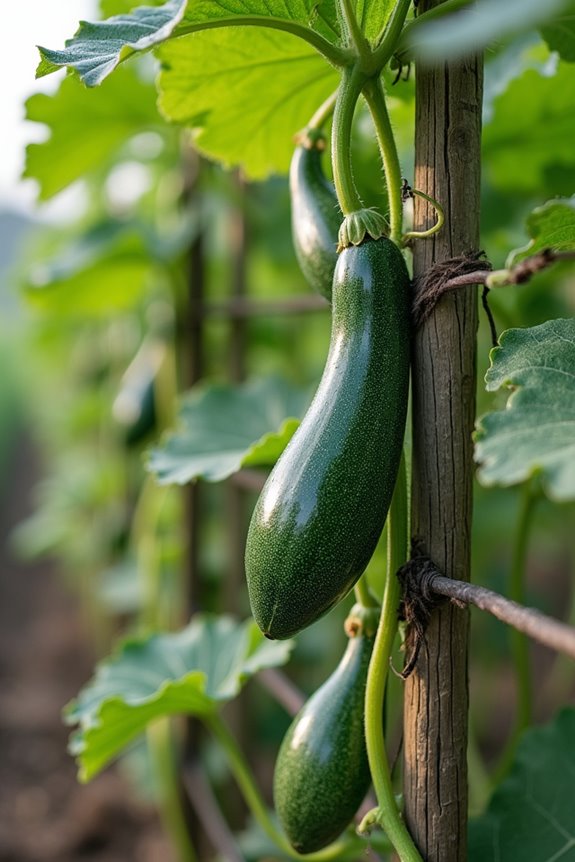
How many gardeners set up a trellis, then watch it collapse under heavy zucchini fruit? You’re likely making one of several common trellis mistakes. Weak anchoring causes most failures. Your trellis needs deep, secure anchoring into soil or raised beds to support substantial weight. Another mistake involves poor tie placement. Secure the main stem and guiding vines properly using soft fasteners. Avoid relying on the vines’ natural strength alone.
Insufficient trellis height creates crowding. Vining varieties need 6 feet or taller supports for proper vertical growth. Cramped conditions reduce air circulation and invite disease problems.
Finally, positioning matters greatly. Place your trellis on the south-facing side of beds. This maximizes sunlight exposure while supporting heavy fruit loads effectively. Strong anchoring combined with proper placement prevents costly failures.