
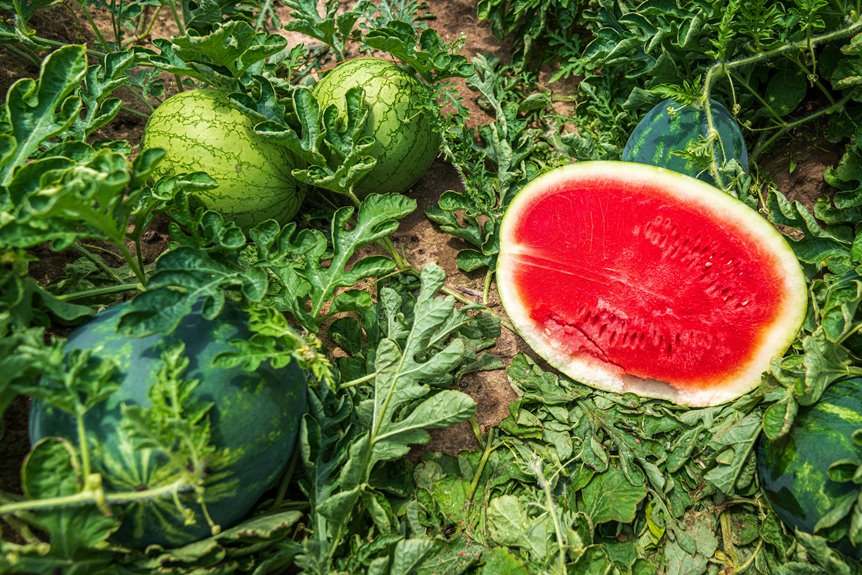
You can grow watermelons vertically on a trellis, even in tight spaces. A 4×4 raised bed holds three plants—two trained upward and one along the ground—cutting your space needs in half. Choose compact varieties like Sugar Baby for easier trellising. Use sturdy wooden or metal supports, tie developing fruit with soft cloth, and maintain 18 inches of deep soil for strong roots. Water weekly with one inch, fertilize before planting, and watch for harvest cues like browning tendrils. This approach combines spacing, depth, and proper care for measurable yield gains.
Why Trellising Watermelons Actually Works in Tight Spaces
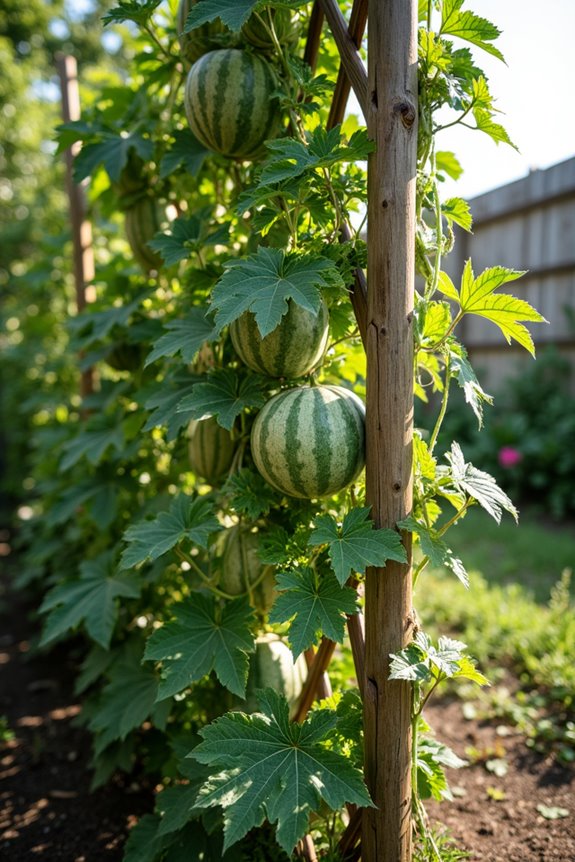
Ever wondered how watermelons could possibly grow vertically when they’re known for sprawling across entire garden plots?
Trellising changes the equation. You train vines upward instead of outward. This vertical training maximizes sunlight exposure while dramatically reducing the ground space you need.
Even a compact 4 x 4 raised bed works. Watermelons aren’t as fragile as they seem. You can adapt even large varieties to tight spaces using proper support systems.
Here’s how it functions: tight spaces no longer mean choosing between watermelons or other crops. Trellising lets you plant one watermelon at each bed end on the trellis. A third plant grows along the ground in the center. You’re using your raised bed margins plus the middle area simultaneously.
The result? Maximum yield from minimal space.
Select the Right Watermelon Variety for Your Garden
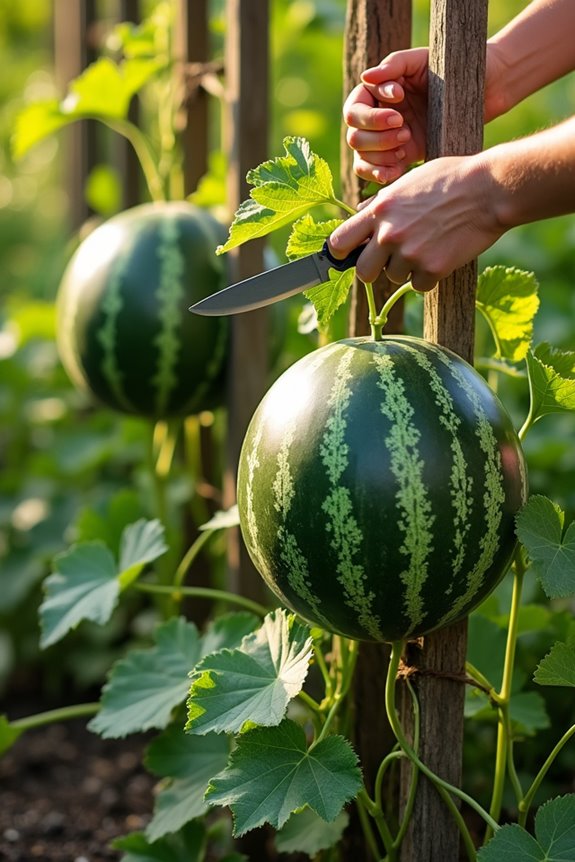
Choosing the right variety is important. Large watermelons need about 6 feet by 4 feet of space per plant, which won’t work on a trellis, but icebox varieties like Sugar Baby fit nicely in just 2 feet by 4 feet, and bush types can squeeze into 2 feet by 2 feet or containers.
Large Varieties Need Space
Most large watermelon varieties demand considerably more space than their smaller cousins. You’ll need about 6 feet by 4 feet per plant to accommodate sprawling vines and fruit growth properly. Even on a watermelon trellis, these big varieties require substantial horizontal reach for vine growth and adequate support systems.
Your space requirements must account for both runner expansion and fruit set. Overcrowding stunts development and reduces your harvest quality. Plan accordingly before planting.
Large varieties typically mature in 85 to 95 days, so timing matters for full sun exposure and heat. Don’t rush the process.
Deep, well-draining soil is necessary. Proper bed depth prevents root restriction and produces bigger crops. You’re investing in quality soil now for better results later. This foundation directly impacts your success with large watermelon varieties.
Compact Types For Trellising
Want to grow watermelons without a sprawling garden? Compact varieties let you do exactly that. Icebox watermelons need just 2 ft by 4 ft per plant. Bush-type varieties like ‘Garden Baby’ require even less space—about 2 ft by 2 ft. These smaller cultivars work well with trellis support. Trellising maximizes your garden space efficiency.
| Variety Type | Space Required | Container Friendly |
|---|---|---|
| Icebox | 2 ft × 4 ft | Yes |
| Bush Type | 2 ft × 2 ft | Yes |
| Large | 6 ft × 4 ft | No |
Compact varieties make trellising from optional to practical. They produce quality fruit without demanding massive horizontal room. Choose these garden-friendly options when space matters most to you.
Get Your Soil and Trellis Ready
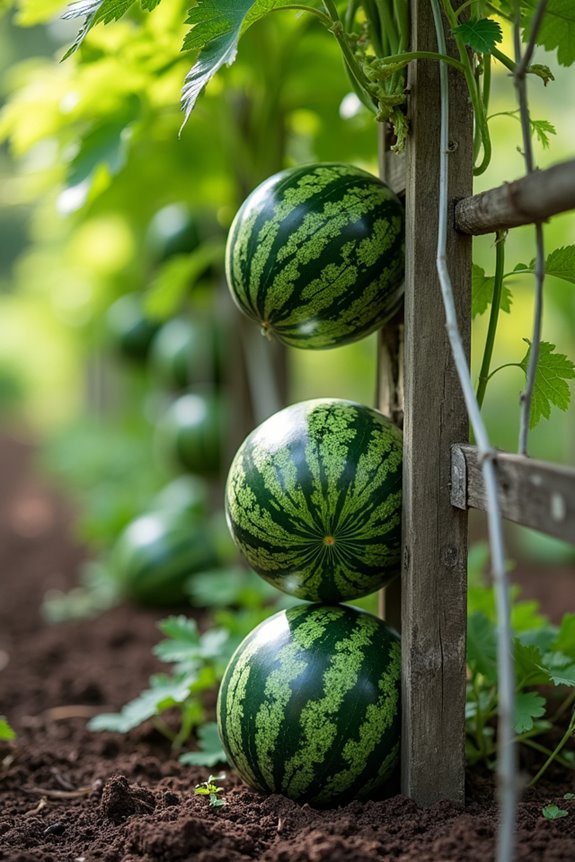
You’ll need deep soil and sturdy support. Watermelons demand at least 12-18 inches of loose, well-draining soil so their root systems can spread several feet and maximize your harvest potential. Your trellis must be strong enough to hold the weight of ripening fruit, so choose sturdy wooden frames or metal structures designed for vertical gardening.
Soil Depth and Drainage
What’s hiding beneath your trellis matters just as much as what’s climbing it. Watermelons need deep soil. Their root systems extend several feet outward and downward. Shallow soil restricts this natural growth pattern.
Aim for at least 18 inches of soil depth in your raised beds. Deeper soil produces larger, more vigorous plants and bigger harvests. Your trellised watermelon will produce substantially better yields.
Drainage is equally important. Well-drained soil prevents root rot and disease. Mix in compost or organic matter to improve both depth and drainage simultaneously.
Skip the weed barrier underneath your raised beds. It blocks root expansion when you need maximum spread. Let those roots do their job. Deep, well-drained soil creates the foundation for successful trellised growth and impressive watermelon production.
Trellis Structure and Support
A sturdy trellis is your watermelon’s backbone. You’ll want a strong structure that can handle the weight of growing vines and developing fruit. Choose materials like wood or metal that won’t buckle under pressure.
Position your trellis at bed ends to create vertical growing space. This setup lets you train vines upward instead of sprawling across ground. As vines begin running, gently guide them onto the structure. Tie developing fruit to the trellis using soft cloth strips or garden twine. This prevents heavy melons from snapping stems or dropping prematurely.
Your training approach matters significantly. Support the main vine as it climbs. Secure secondary growth regularly. Multiple trellises work well for large varieties. This strategic support system maximizes your harvest potential while keeping your garden organized and productive.
Plant and Train Watermelon Vines on Your Trellis
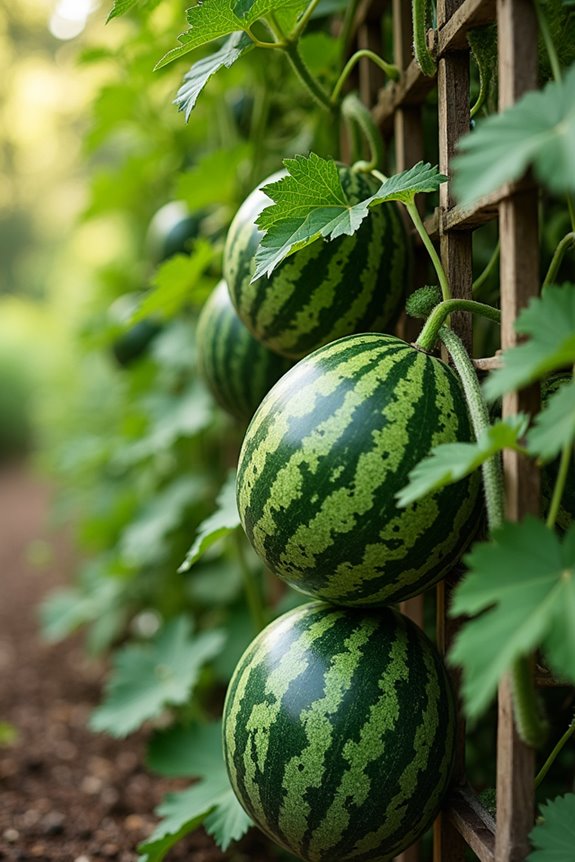
Success with trellised watermelons depends on timing and technique. You’ll guide your watermelon vines upward as they grow. This approach maximizes your vertical gardening space.
Guide watermelon vines upward with proper timing and technique to maximize your vertical gardening space and boost yields.
Here’s what you need to do:
- Plant seedlings at the trellis base in deep, well-prepared soil
- Begin training vines onto the structure when runners emerge
- Tie vines gently using soft strips to secure growth upward
- Monitor progress weekly and redirect wayward shoots back to vertical support
Your trellis-grown watermelons need consistent attention during early growth stages. Tie vines as they run up the trellis. This keeps everything contained and organized. Deep soil behind your structure enhances root growth. Strong roots mean better yields in your limited space. Training requires patience but produces productive vertical gardens that make full use of available space.
Water and Feed Trellised Watermelons: Avoiding Common Issues
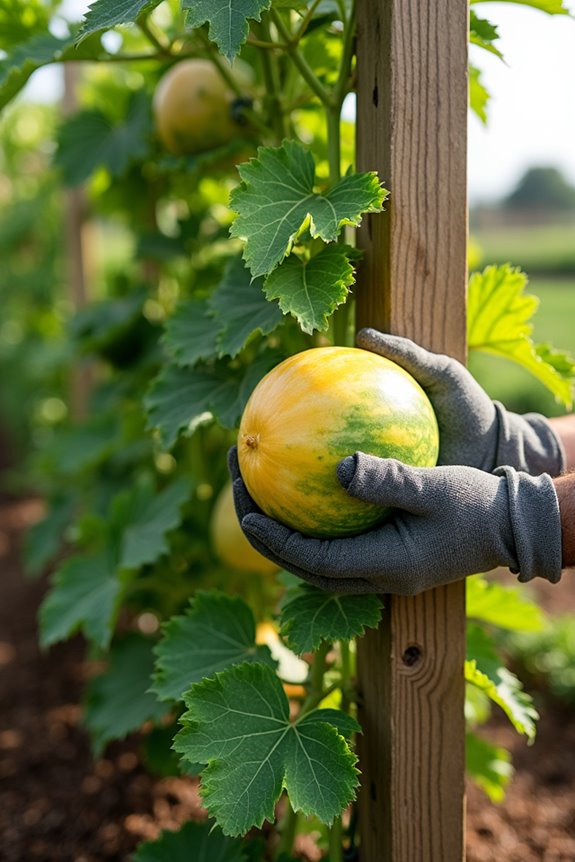
How do you keep watermelons healthy when they’re climbing vertical structures? Consistent irrigation is important. Your trellis watermelons need at least 1 inch of water weekly. Steady moisture helps calcium uptake and prevents blossom end rot. Dark spots on fruit indicate calcium problems.
Apply fertilizer before planting. Use 3 pounds of 10-10-10 fertilizer per 100 square feet. Watermelons are heavy feeders and need continued nutrients as they grow.
Good air circulation keeps plants disease-free. Space vines properly on your trellis to reduce fungal issues and promote ripening.
Monitor your plants regularly. Check soil moisture by touching it. Water deeply rather than frequently. Support developing fruit with ties. These steps prevent crop failures and maximize your vertical garden’s potential.
Harvest Ripe Melons Using Visual and Tactile Cues
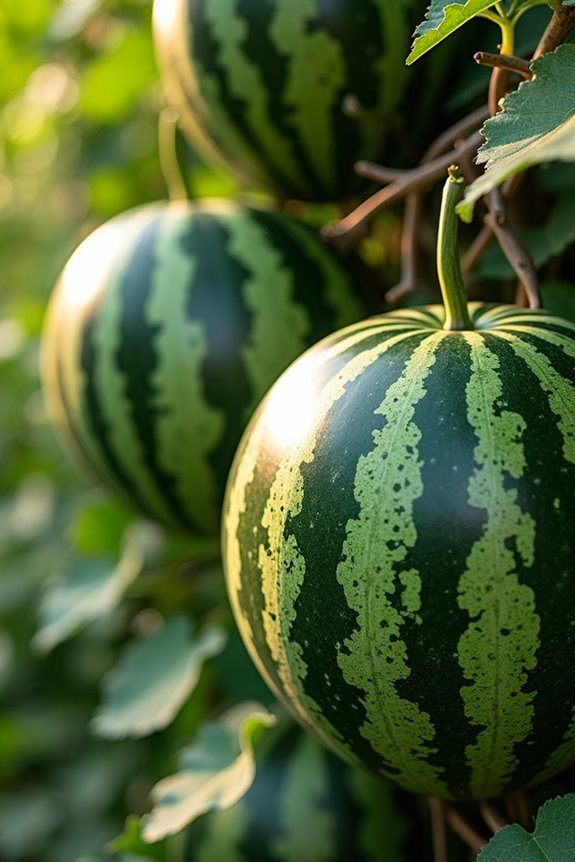
Once your watermelons reach full size on the trellis, you’re ready for the final step: picking them at peak ripeness.
Determining harvest time requires checking multiple indicators:
- Inspect the tendril near the stem—when it turns brown or dies, your melon’s likely ready.
- Examine the belly color at the attachment point—seeded varieties should show creamy-white while seedless varieties display golden yellow.
- Perform the thump test by tapping the melon; ripe ones produce deep, low-pitched sounds rather than hollow tones.
- Observe surface dulling—ripe melons lose their shiny, bright green luster as they mature.
Don’t rely on just one sign. Combine these visual and tactile cues for confident harvesting. When all indicators align, you’ve identified a ripe melon ready for picking.
Trellised Watermelon Success: Spacing, Bed Depth, and Yields
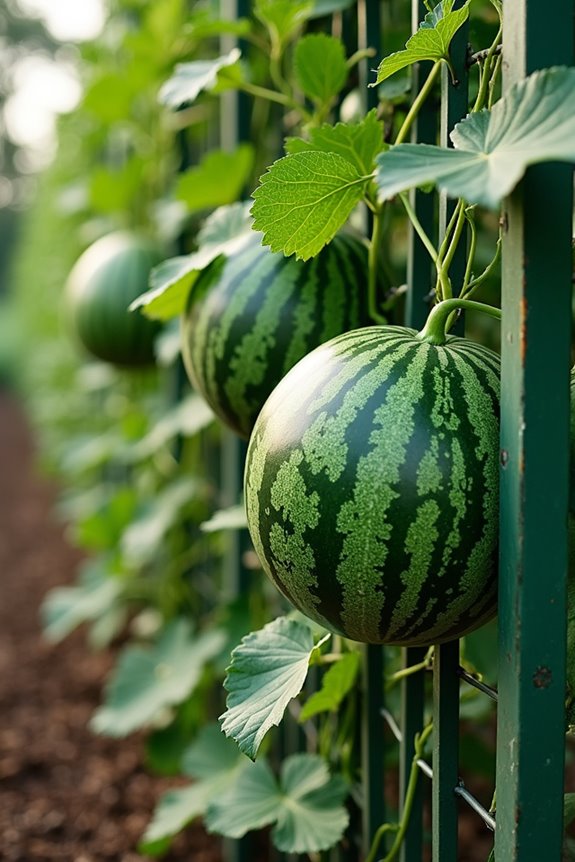
Why do trellised watermelons perform better than ground-grown vines that sprawl endlessly? Smart spacing and bed depth increase your yields significantly.
You’ll want 4 x 4 raised beds minimum for trellised watermelons. A single plant can nearly fill a 15-foot-wide circle when trained vertically. This maximizes your space without reducing production.
Bed depth matters substantially. Aim for 18 inches minimum because watermelon roots extend several feet outside the bed. Deep soil means stronger plants and larger harvests.
Once vines reach 3–4 feet long, dedicate your bed exclusively to watermelons. This optimization delivers results. Real-world evidence proves it: new beds measuring 16 feet long with 18-inch depth have yielded significant harvests.
Spacing, depth, and dedication work together. You’re not just growing watermelons. You’re engineering success in constrained spaces.