You can clean your patio safely without harming plants. Soapy water with washing-up liquid works well for basic dirt.
White vinegar mixed with water tackles tougher stains effectively.
Wet and Forget requires minimal effort and improves with rain exposure.
30 SECONDS Outdoor Cleaner removes algae, mold, and moss without chemical damage.
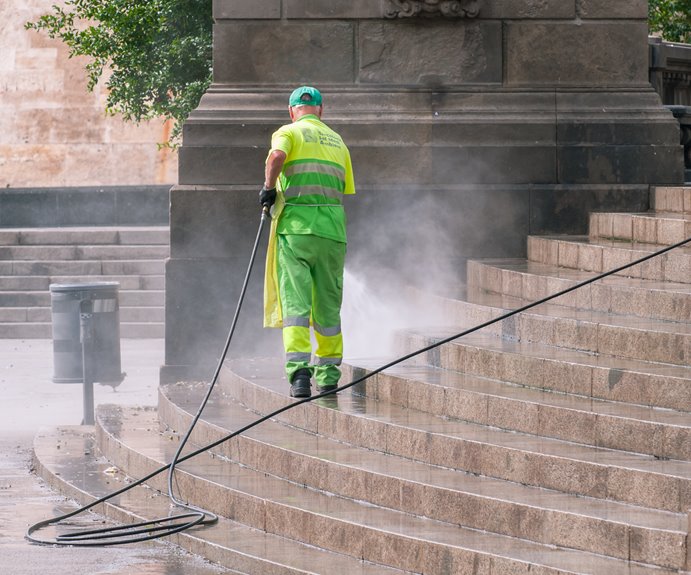
Pressure washing at low settings (1500 PSI) also protects delicate areas.
Shield nearby vegetation and rinse runoff thoroughly during any method.
Each approach offers different benefits depending on your patio’s condition.
Plant-Safe Patio Cleaners: Your Best Options
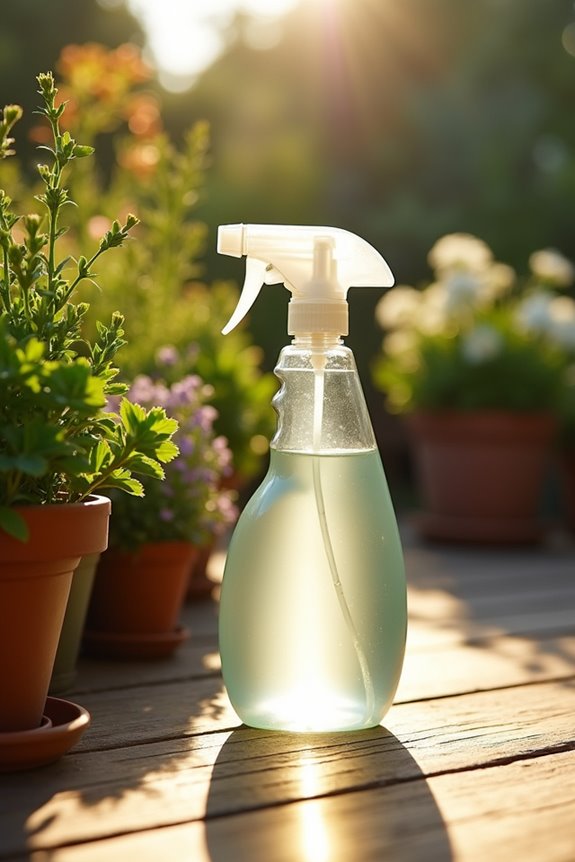
Keeping your patio clean doesn’t mean risking your garden. You have solid plant-safe patio cleaners available. Wet and Forget is your easiest option. It requires minimal effort and works better over time with rain exposure. Vinegar solutions work well too. Mix equal parts vinegar and water for effective dirt removal. Test this on a small area first. Always rinse thoroughly to protect nearby plants. Pressure washing can work safely. Use the lowest setting and wet your patio beforehand. Avoid high pressure on soft stones. Regular sweeping prevents buildup naturally. This non-chemical method protects lawns and flower beds completely. Whichever cleaner you choose, shield your plants carefully. Rinse any runoff away from landscaping. These plant-safe patio cleaners keep your outdoor space clean while protecting what you’ve grown.
Soapy Water and Vinegar: DIY Methods That Work
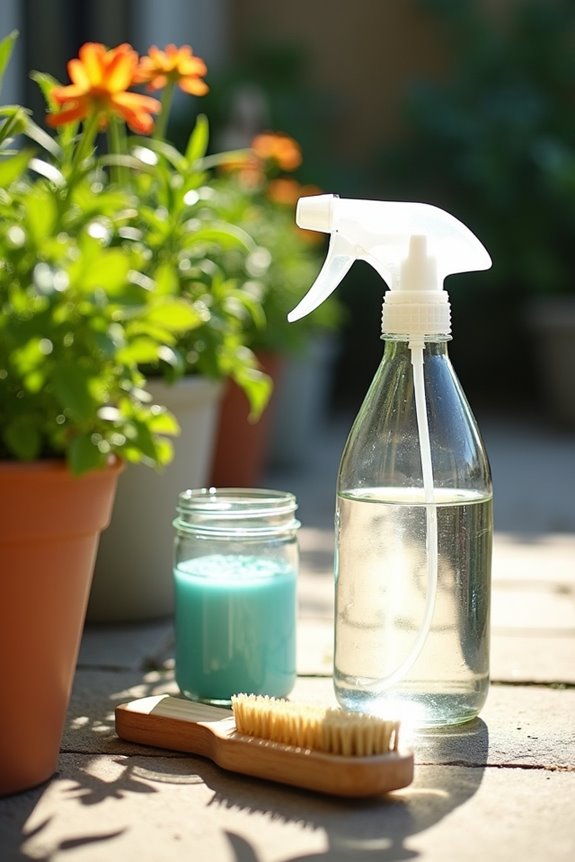
If you’d rather skip commercial products altogether, you’ve got two simple solutions in your home already. Soapy water works well. Mix warm water with washing-up liquid. Apply it to small sections. Scrub in x-direction and y-direction patterns. Rinse thoroughly with your hose.
Vinegar offers another effective option. Combine equal parts white household vinegar and water. Test this solution on a hidden spot first. Use a stiff-bristled brush for scrubbing. Rinse runoff completely to protect your plants.
Both methods require minimal effort. No heavy equipment needed. Just scrubbing and rinsing. Shield nearby vegetation during cleaning. Avoid spills on flower beds. These DIY approaches remove dirt and stains without damaging your lawn or garden. You’re protecting your space while keeping everything around it safe.
30 SECONDS Outdoor Cleaner: A Trusted Plant-Safe Choice
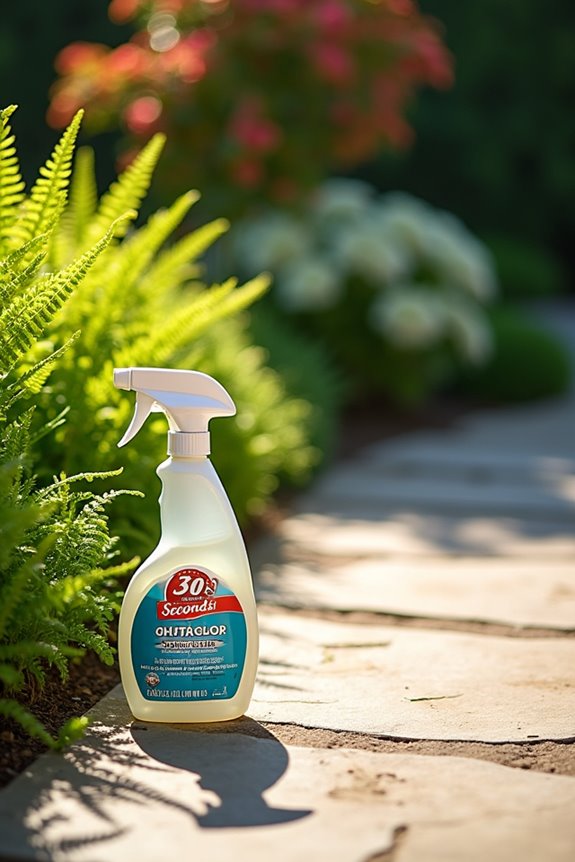
Many homeowners worry that effective cleaners will damage their gardens. 30 SECONDS Outdoor Cleaner changes that equation. This plant-safe patio cleaner removes algae, mold, mildew, and moss without harming your lawn or landscaping when used correctly.
You’ll appreciate the convenience factor. The 2-pack includes a hose end sprayer that requires no pressure washer. Simply spray it on sidewalks, decks, driveways, brick walls, vinyl siding, and outdoor furniture.
Real users report success. They’ve watched algae disappear from chairs and sidewalks while their lawns stayed healthy after rinsing. The runoff safely protects surrounding plants.
Pricing fits various needs. Choose the Ready to Use option at $8.99, the Concentrate at $12.99, or the Hose End version at $16.99. You’re investing in outdoor surfaces and garden safety simultaneously.
Pressure Washing Without Plant Damage: What You Need to Know
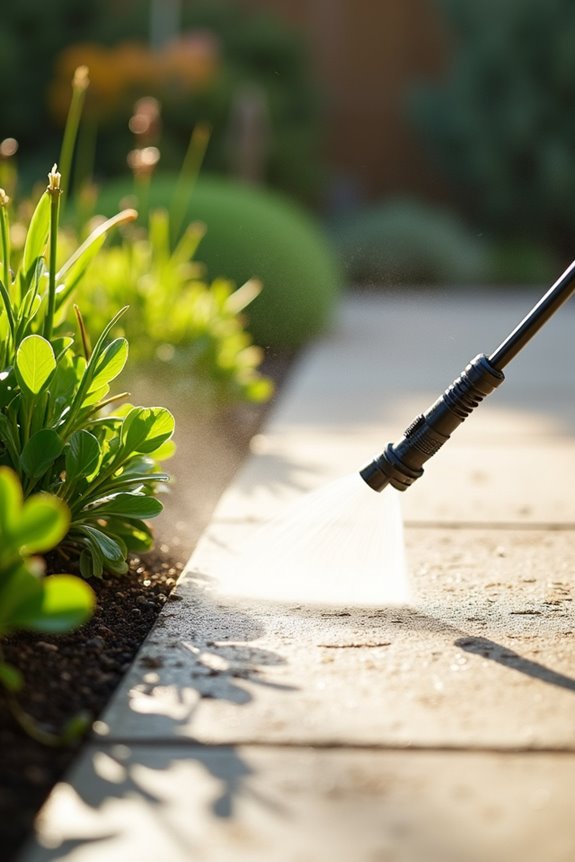
Want your patio clean without harming your garden? Pressure washing delivers results fast. However, you’ll need the right approach to keep plants safe.
Start on the lowest setting. Wet your surface first. Use overlapping passes to prevent damage to soft stones. Wear protective gear—gloves, eye protection, ear defenders, and waterproof clothing protect both you and nearby vegetation.
| Setting Level | Best Use | Plant Risk |
|---|---|---|
| Low (1500 PSI) | Delicate pavers | Minimal |
| Medium (2000-2500 PSI) | Standard concrete | Low |
| High (3000+ PSI) | Tough stains | High |
| Variable | General cleaning | Controlled |
| Test mode | New surfaces | Safe |
Shield plants during washing. Consider non-chemical methods instead—soap and vinegar work well. After pressure washing, re-sand between bricks if needed. Apply a plant-safe sealant tested on sample pieces first.
How to Protect Plants While Cleaning Your Patio
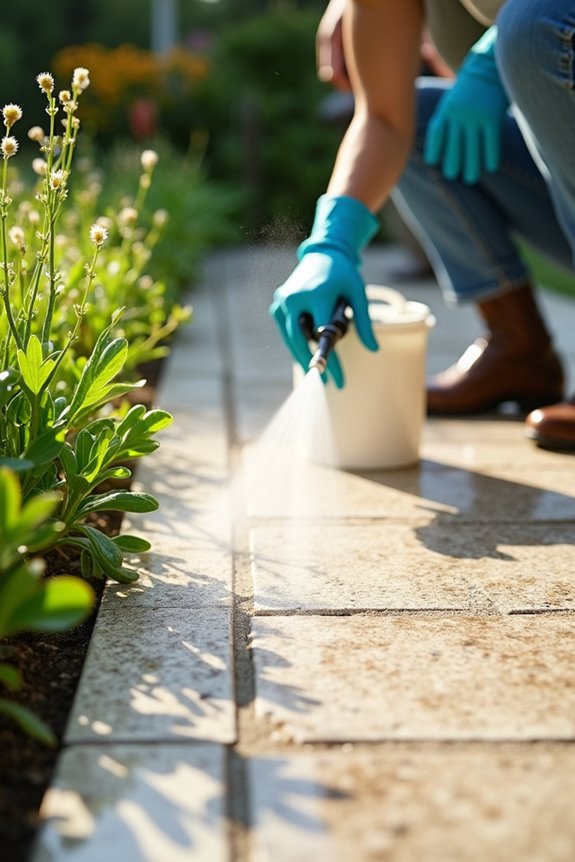
Shield your plants first. Use barriers like cardboard or plastic sheeting around flower beds and shrubs before you start cleaning. This prevents direct contact with cleaners.
Use cardboard or plastic sheeting to create barriers around flower beds and shrubs before cleaning your patio.
Choose gentle solutions like white vinegar mixed 50:50 with water. This natural cleaner won’t damage your garden while removing stubborn stains effectively.
Manage runoff protection carefully. Direct all water and cleaning solution away from planted areas. This prevents chemicals or vinegar from seeping into soil where roots absorb nutrients.
Rinse everything thoroughly after cleaning. Complete rinsing removes residue that could damage vegetation or alter soil pH. Pay special attention to edges where runoff naturally collects.
Test cleaners on small hidden spots first. This simple step prevents accidental plant damage before treating your entire patio.