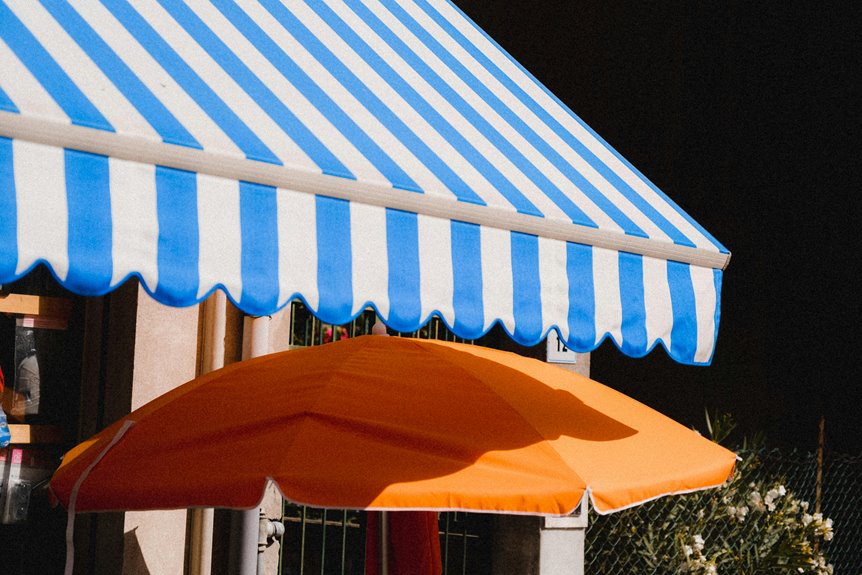
You can shade your patio affordably without major investment. Shade sails cost $100–$300 per sail and install easily yourself. Natural vines create living shade over time at minimal cost. Outdoor curtains hang from existing beams for side protection and privacy. Canvas canopies swap fabrics seasonally for fresh looks. Each option trades different benefits: sails fade in 3–5 years, vines need patience to mature, curtains lack overhead rain protection. Your climate and permanence preference determine which budget solution works best for your space.
What’s Your Budget for a Patio Cover?
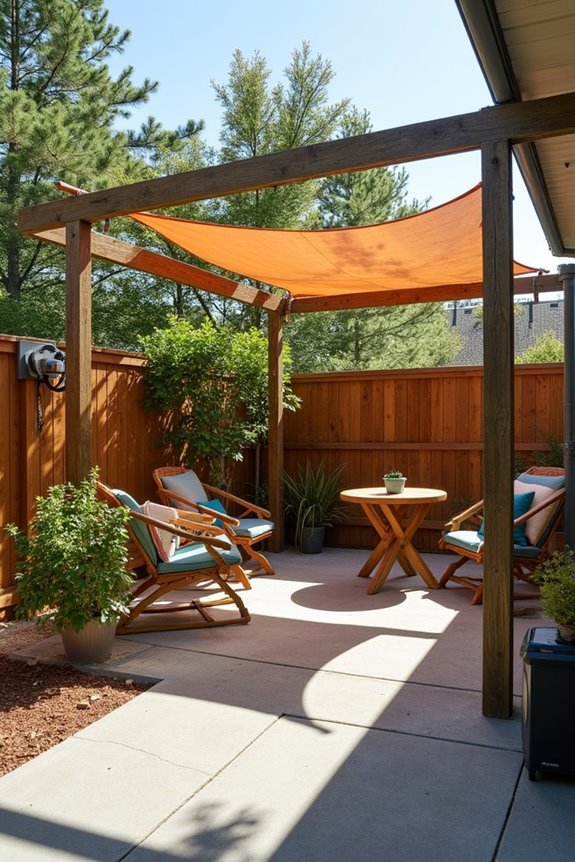
How much are you willing to spend? Your answer shapes every choice ahead.
Shade sails offer the most budget-friendly entry point. You’ll find quality options under $500 per sail. Installation is straightforward. Most homeowners tackle it themselves.
Wood pergolas sit in the mid-range. Pine versions cost roughly $1,500–$3,000. Cedar or redwood jumps to $3,000–$6,000+. You’re investing in classic appeal. Regular sealing keeps them protected.
Vinyl aluminum pergola kits split the difference. They’re mid-priced with minimal upfront hassle. No rot concerns. No constant maintenance demands.
Consider your comfort level with upkeep. Cheap upfront doesn’t always mean cheap long-term. Shade sails fade within 3–5 years. Wood requires yearly attention. Vinyl aluminum forgives neglect.
Match your budget to your lifestyle. You’ll find solutions at every price point.
What’s Your Climate? Rain, Wind, and Snow Considerations
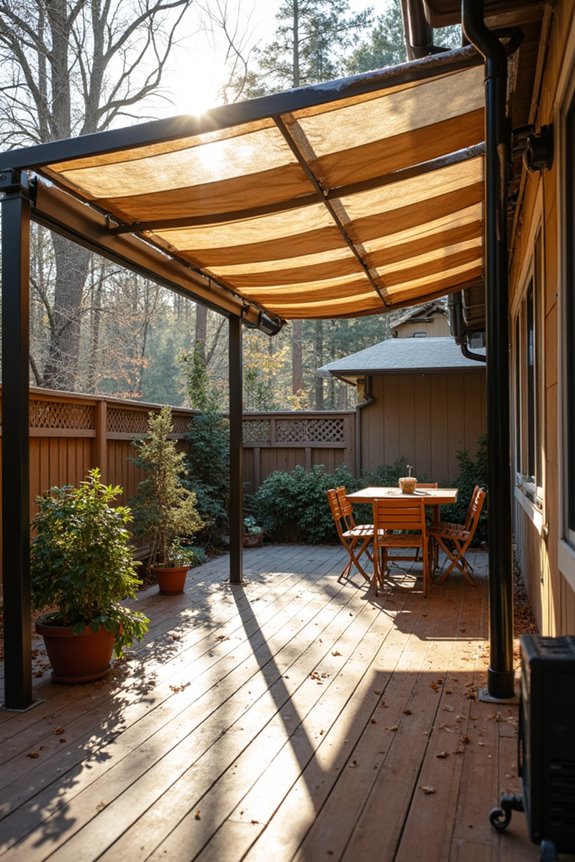
Your climate shapes everything. You’ll need to contemplate rain protection, wind resistance, and snow tolerance when choosing between lightweight options like shade sails (which work well in dry areas) and heavy-duty systems like solid roofs or insulated panels (which handle harsh weather). Understanding these three factors helps you pick a cover that won’t fail or cost you money on repairs.
Rain Protection Requirements
When you’re shopping for a patio cover, climate matters most. Rain protection directly impacts your investment’s value and usability. You’ll want to evaluate how much rainfall your region receives annually. Some options shield you completely. Others leave you vulnerable to water damage.
| Cover Type | Rain Protection | Best For |
|---|---|---|
| Retractable Awnings | None—fabric soaks | Dry climates only |
| Shade Sails | None—no coverage | Light sun, not rain |
| Louvered Pergolas | Yes—when closed | Variable weather |
| Solid Roof Covers | Complete protection | Heavy rain areas |
| Polycarbonate Panels | Excellent weather protection | Most climates |
A solid roof patio cover delivers genuine weather protection year-round. Polycarbonate panels offer durability without total darkness. You’re choosing between convenience and flexibility. Your climate determines what actually works.
Wind And Snow Tolerance
Beyond rain protection, your patio cover’s ability to handle wind and snow matters just as much in many climates. Retractable awnings work well for light winds. However, you’ll need to retract them around 20 mph to prevent damage. A louvered pergola offers better wind protection. Many systems handle 200+ mph winds when properly closed and installed. Solid roof pergola covers provide excellent protection too. They shield you from rain and snow completely. But here’s the catch: snow adds weight. You’ll want to check your system’s snow load capacity before winter arrives. Your climate determines everything. Windy coastal areas need sturdy options. Snowy regions demand reinforced designs. Choose accordingly and you’ll enjoy years of reliable coverage.
Permanent Installation or Portable Flexibility?
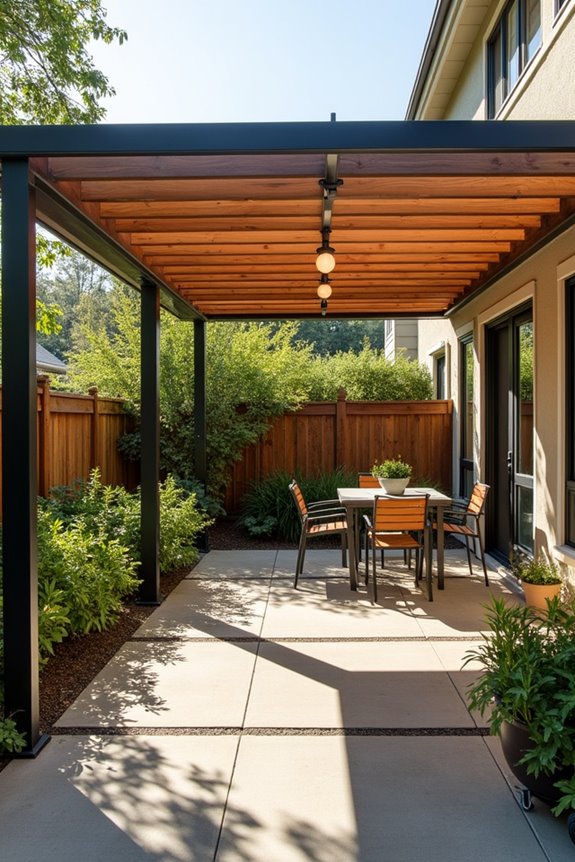
Permanent Installation or Portable Flexibility?
Should you lock in a patio cover for the long haul, or keep your options open?
Portable options like shade sails and retractable awnings offer flexibility. You can adjust them seasonally or reconfigure your space easily. Shade sails cost just $100–$300 each and install yourself. Retractable awnings run $3,000–$7,500 but provide motorized convenience. These cost-effective choices work well if you like changing things up.
Permanent installation delivers stability and durability. Insulated patio panels cost $4,000–$15,000 total but last 20–30+ years. You’re investing in weatherproof protection that handles rain, snow, and wind reliably. The upfront expense stings initially, yet spreads across decades of use.
Consider your lifestyle. Do you value adaptability or long-term security? Renters favor portable options. Homeowners planning to stay often prefer permanent solutions.
DIY or Professional Installation?
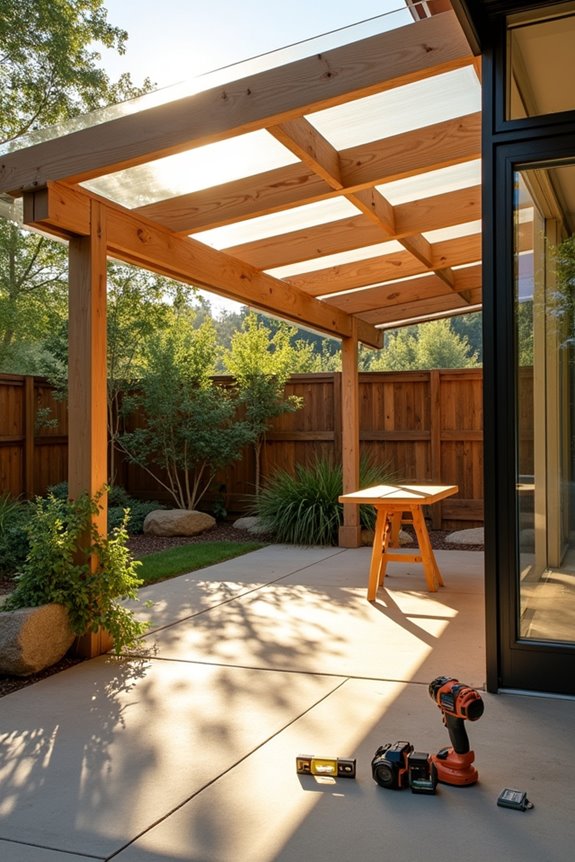
Before you grab a hammer, you’ll need to honestly evaluate your skill level, compare what you’d actually spend doing it yourself versus hiring pros, and figure out what tools you already own or’d need to rent. Simple projects like shade sails ($100–$300) or basic wood pergolas ($1,500–$3,000 for pine) work fine for DIY if you’re comfortable with measurements and basic carpentry, but footings, structural load calculations, and weather-rated systems usually demand professional expertise. More complex builds—think motorized retractables or insulated panels—require permits, electrical connections, and structural knowledge that’ll help you avoid costly mistakes and safety issues in the long run.
Skill Level Assessment
How do you know if you’re ready to tackle a patio cover yourself? Honest self-assessment matters here. Consider your experience level before committing time and money.
- You’ve completed basic home projects like deck repairs or fence installation
- You own essential tools: drill, saw, level, and measuring tape
- You’re comfortable reading technical instructions and following diagrams carefully
- You understand local building codes and can obtain necessary permits
- You’re willing to learn or hire help for complex steps like polycarbonate roof installation
Basic lattice and shade sails suit beginners. A DIY patio cover demands patience and precision. Wood kits require moderate carpentry skills. Polycarbonate roof systems and insulated panels? Those typically need professional expertise. Don’t overestimate your abilities. Mistakes cost money. Starting small builds confidence for bigger projects later.
Cost Comparison Analysis
The price tag on your patio cover hinges on one fundamental choice: doing it yourself or hiring professionals. DIY installation significantly reduces patio cover costs. Shade sails run you just $100–$300 per sail. Manual awnings cost $800–$2,500 when you install them. Wood pergolas range from $1,500–$6,000 depending on material type. Professional installation? Expect motorized awnings at $3,000–$7,500. Material costs matter too. Pine pergolas start lower than cedar versions. Vinyl and polycarbonate systems cost more upfront but save money long-term through reduced maintenance. Basic lattice kits work well for budget-conscious homeowners. You’ll find yourself joining others who’ve discovered that tackling simpler projects yourself creates real savings while building community knowledge among fellow DIYers.
Tools And Equipment Needs
Once you’ve decided whether you’re tackling this project yourself or calling in the pros, your tool requirements shift dramatically.
DIY installation demands specific outdoor equipment:
- Power drill with bits for pre-drilled aluminum or vinyl components
- Level tool to ensure proper drainage and structural alignment
- Tape measure for accurate spacing and positioning
- Circular saw for cutting wood frames or trim pieces
- Concrete mixer for footing preparation and foundation work
Professional installers handle complex tasks like footings and permits. You’ll manage lighter assembly work instead. Basic tools suffice for connecting pre-cut sections together. This hybrid approach reduces frustration while keeping costs down.
Aluminum and vinyl kits need minimal maintenance tools afterward. Wood structures demand sealers and stains for annual upkeep. Consider your comfort level with power tools before committing to full DIY installation. Start small. Build confidence. Expand your outdoor projects gradually.
Shade Sails: Affordable Color and Flexibility Under $500

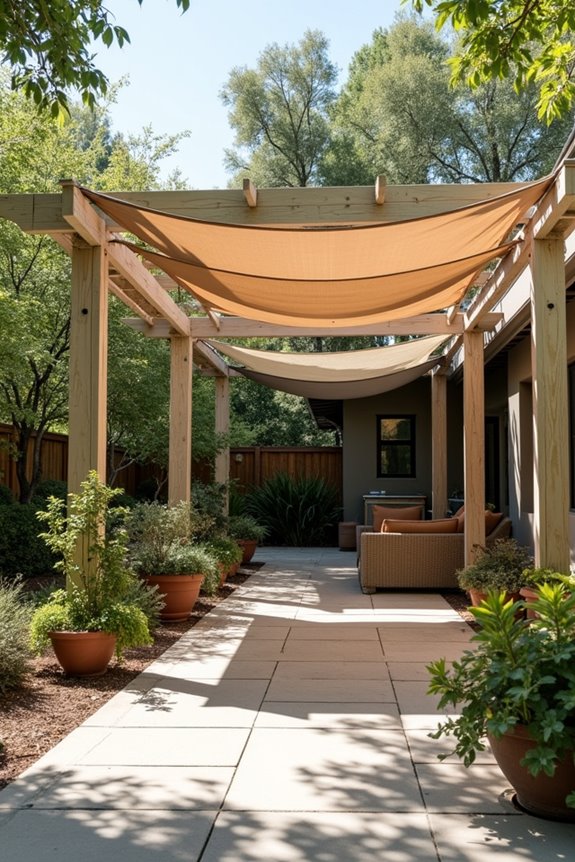
Why settle for boring patio shade when you can get modern style for under $500? Shade sails deliver exactly that. These triangular or rectangular UV-resistant fabrics stretch between posts, creating sleek architectural appeal. You’ll find quality options starting at $100 per sail, with multiple sails totaling under $500.
Installation? You can handle it yourself. DIY setup means no contractor fees eating your budget. Layer multiple sails for deeper, more interesting shade patterns that define your outdoor space.
Here’s the realistic part. Shade sails sag and fade after 3-5 years. They won’t protect you from rain or heavy snow. They provide partial shade only.
Yet for flexibility and color on a limited budget, shade sails give patios a fresh look and function as inviting gathering spots. Perfect for renters and budget-conscious homeowners.
Retractable Awnings: On-Demand Shelter Without Breaking the Bank
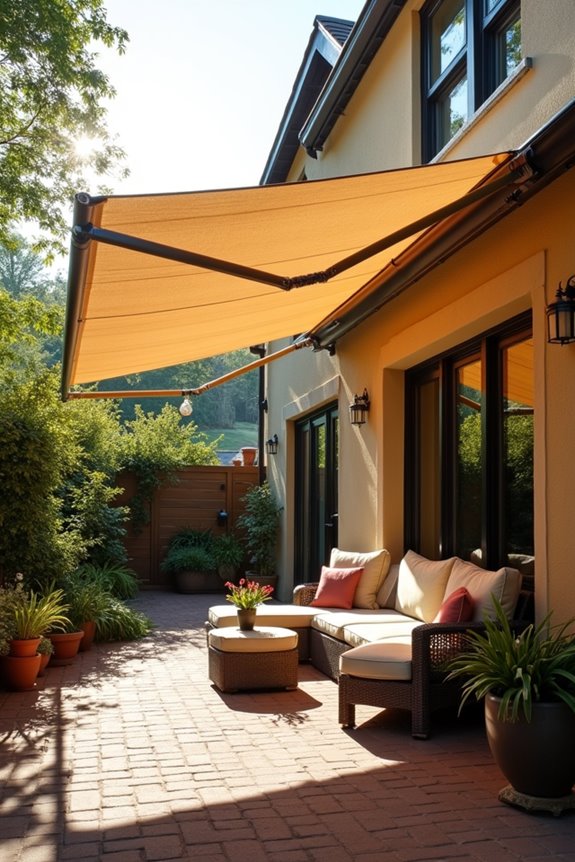
Want patio shade you can control? Retractable awnings deliver exactly that. These motorized or manual systems extend from your house on folding arms. You get shade when you need it. You retract it when you don’t. That’s the advantage of on-demand shelter.
Installation costs vary based on your choice:
- Manual DIY kits run $800–$2,500
- Motorized professional systems cost $3,000–$7,500
- Typical widths span 10 to 20+ feet
- Projections reach 8 to 13 feet
- Fabric replacement happens every 5–10 years
The fabric isn’t waterproof, so maintenance matters. Budget $300–$1,000 over a decade for upkeep. Retract during winds above 20 mph. Light rain coverage works with proper slope.
You’re joining countless homeowners who’ve ditched permanent structures. Retractable awnings offer flexibility permanent covers can’t match.
Wood Pergolas: Classic Style With Partial Shade
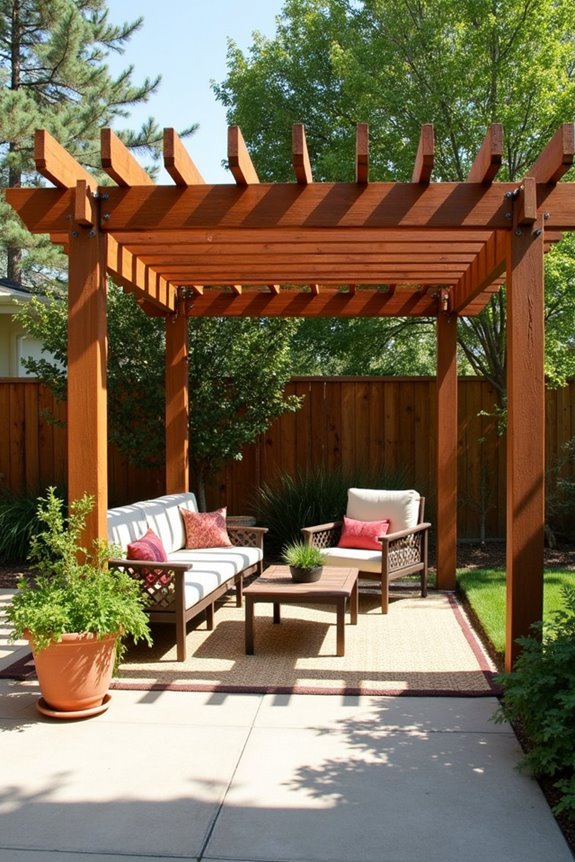
Looking for shade that doesn’t cost a fortune? Wood pergolas deliver classic style at budget-friendly prices. Basic pine options run $1,500–$3,000. Cedar or redwood costs more but lasts longer.
Wood pergolas deliver classic shade at budget-friendly prices—basic pine runs $1,500–$3,000, while cedar and redwood cost more but last longer.
You’ll get partial shade. Most wood pergolas provide 40–60% coverage depending on rafter spacing and orientation. That means dappled sunlight reaches your patio. For complete rain protection, you’d need to add a retractable shade cloth or panels later.
Maintenance demands your attention. You’ll seal or stain annually. Watch for cracks, rot, and rusty fasteners. Cedar and redwood resist rot better than pine. With proper care, expect 10–15 years of service.
The payoff? Wood pergolas are DIY-friendly. You can plant climbing vines that increase shade gradually. You’re building something that grows with your space.
Canvas and Fabric Canopies: Versatile Covers You Can Swap Anytime
Canvas and Fabric Canopies: Versatile Covers You Can Swap Anytime
If you’ve ever wanted to change your patio’s look without tearing everything down, canvas and fabric canopies are your answer. These versatile covers mount over a frame. You swap fabrics whenever you want. New colors or patterns? No problem.
What makes canvas and fabric canopies work:
- Install them yourself without hiring professionals
- Cost less than permanent roof systems
- Change designs seasonally or annually
- Weather-resistant options available for durability
- Require basic cleaning and occasional replacement
Your budget stretches further here. You get shade and flexibility together. Maintenance is straightforward. Clean the canvas regularly. Replace fabric when wear appears. Different fabric types offer varying durability levels. Some last years with proper care. You’re not locked into one style forever. This solution fits tight budgets and people who like to experiment with different designs.
Vinyl and Aluminum Pergola Kits: Durable Low-Maintenance Value
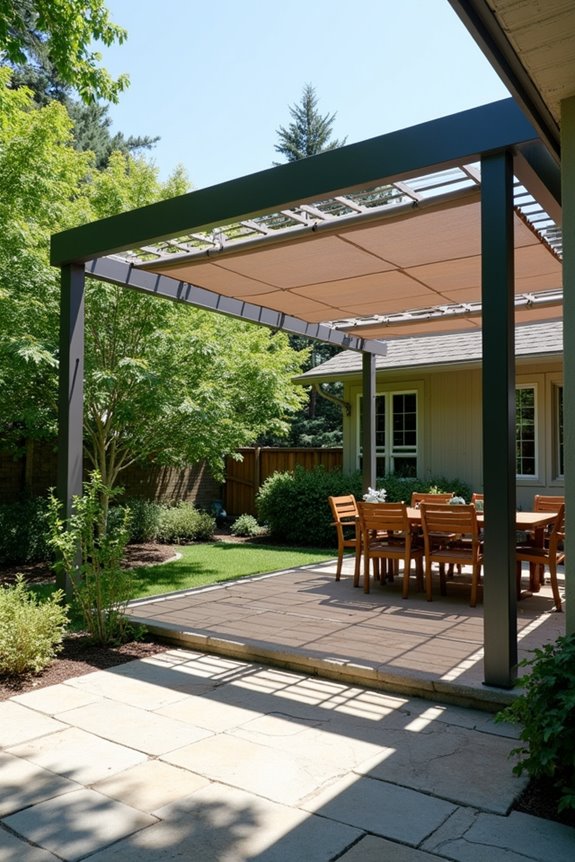
You’ll find that vinyl and aluminum pergola kits eliminate the annual maintenance grind that drains both your time and wallet. These kits assemble quickly because each piece comes pre-cut, pre-drilled, and lightweight, so you’re not wrestling with heavy materials or complicated instructions. While the upfront cost exceeds basic wood options, you’ll recoup that investment through decades of durability without sanding or staining, with genuine resistance to rot, rust, and weather damage.
Durability Without Annual Maintenance
Why spend your weekends sanding and staining when vinyl and aluminum pergola kits eliminate that yearly grind?
You’ll join homeowners who’ve ditched endless maintenance routines. These systems resist rot, rust, and insect damage without repainting or sealing required. Your patio stays protected year after year.
- Pre-cut and pre-drilled components make DIY assembly straightforward
- Polycarbonate and vinyl materials withstand weather extremes naturally
- Zero sanding, staining, or sealing needed ever
- Long-term stability means decades of reliable coverage
- Minimal upkeep saves hundreds in maintenance costs annually
Aluminum frames wrapped in maintenance-free vinyl deliver durability that outlasts basic wood options. You’ll recoup that higher upfront investment through lower lifetime ownership costs. Components handle seasonal changes without degradation. Your patio cover works hard while you enjoy it worry-free.
Cost-Effective Long-Term Investment
Calculate your patio cover’s true cost over 20 or 30 years. You’ll discover vinyl and aluminum pergola kits deliver real savings. Yes, the upfront price is higher than wood options. But here’s the thing: you won’t repaint, reseal, or replace rotted boards annually.
Maintenance-free vinyl wrapping resists rot, rust, and insect damage completely. Aluminum frames stay structurally sound without constant upkeep. Over decades, these durability features add up financially.
Compare wood’s yearly maintenance costs against vinyl’s zero-upkeep performance. You’re looking at hundreds saved annually on labor and materials. That money compounds. DIY installation further reduces expenses. When you invest in aluminum or vinyl now, your future self will appreciate the decision. Lower lifetime ownership costs make these kits genuinely budget-friendly choices.
Lightweight Assembly and Installation
What makes vinyl and aluminum pergola kits so appealing to homeowners tackling DIY projects?
You’ll appreciate how these systems simplify outdoor construction. Vinyl kits feature pre-cut components. Aluminum-frame options weigh significantly less than wood alternatives. Assembly takes fewer hours. You won’t need specialized tools or expertise.
What makes DIY assembly manageable:
- Pre-drilled holes reduce drilling time
- Lightweight aluminum parts ease solo installation
- Color-coded components minimize confusion
- Step-by-step instructions guide you through each phase
- Minimal fasteners simplify the overall process
Vinyl kits arrive ready for assembly. No cutting or measuring required. Aluminum-frame pergolas transport easily in standard vehicles. You’ll handle each piece without strain or fatigue.
Installation complexity drops dramatically. Most homeowners complete projects in one weekend. You’re joining a community of successful DIYers who’ve discovered that straightforward assembly doesn’t mean sacrificing quality or durability in your patio investment.
Lattice Pergola Covers: Decorative Shade With Growing Potential
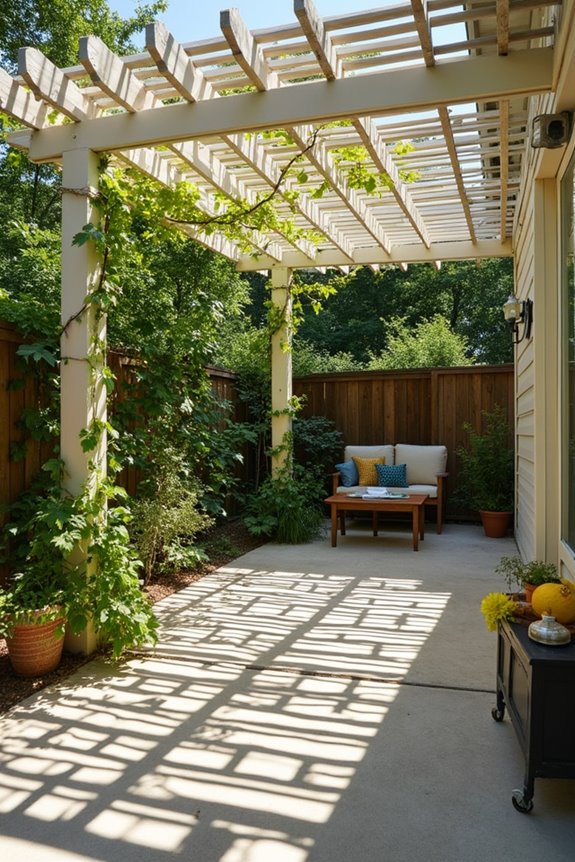
If you’re searching for a patio cover that looks elegant at a reasonable cost, a lattice pergola might be your answer. These structures feature an open framework design that creates decorative patterns while providing partial shade.
Lattice pergolas offer elegant patio covers at reasonable cost, featuring open framework designs that create decorative patterns and partial shade.
Lattice pergola covers work well because you control the aesthetic. You can train growing plants and vines across the framework, developing a living canopy over seasons. This botanical approach transforms bare wood into a personalized retreat.
Installation suits DIY enthusiasts. The straightforward assembly means you’ll save money on labor costs. Unlike solid covers, lattice designs require minimal materials and upkeep.
The tradeoff is honest: you’ll get filtered sunlight rather than complete rain protection. But for warm climates and decorative appeal, lattice pergola covers deliver style at affordable prices while inviting your community into outdoor entertaining.
Natural Vine Pergola Covers: Living Shade That Improves Over Time
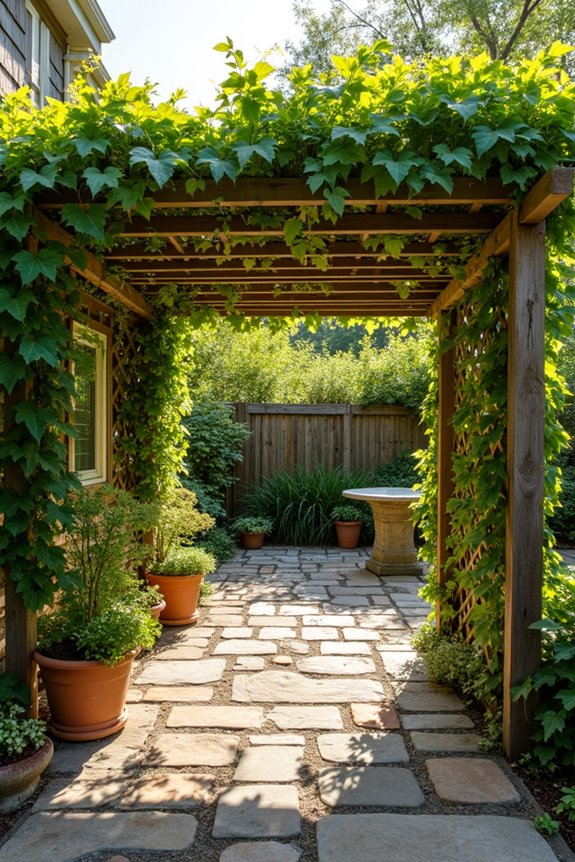
While lattice pergolas offer immediate decorative appeal, you can take the concept further by letting climbing plants do the strenuous work. Natural vines transform your pergola into living shade that improves with time. Popular choices include wisteria, jasmine, grapes, bougainvillea, and climbing roses.
What makes vines worth the wait:
- Thicker canopy develops over 2–3+ years for increasing shade function
- Natural aesthetics that evolve seasonally
- Pollinator attraction supports local ecosystems
- Fragrant options like jasmine create sensory appeal
- Low-tech, environmentally friendly maintenance
The trade-off? You’ll need patience and regular pruning. Deciduous vines leave gaps in winter, so consider evergreens or layered covers for year-round protection. Falling leaves and flowers require occasional cleanup. Lightweight structures may struggle with mature vine weight. Still, you’re building something that strengthens yearly without electrical costs or replacements.
Outdoor Curtains and Drapes: Side Shade on a Budget
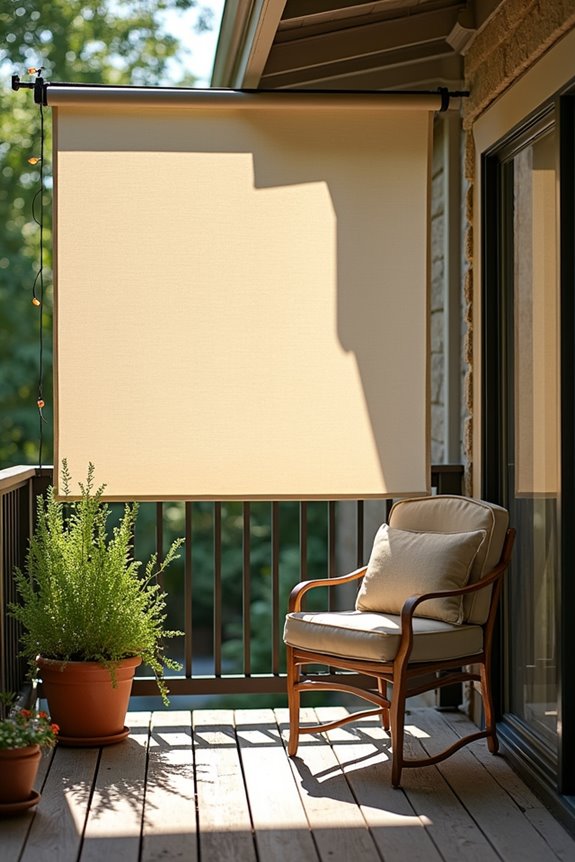
Your pergola’s open sides leave you exposed to afternoon sun and wind. Outdoor curtains and drapes solve this problem affordably. You’ll hang them from pergola beams, curtain rods, or perimeter wires to create side shade and privacy on a budget.
These fabrics offer real benefits. They soften your patio’s appearance. They block wind effectively. They let you change colors whenever you want. Quality Sunbrella fabrics resist fading for 5–10 years, keeping your space looking fresh.
However, outdoor curtains have limits. They won’t protect you from overhead rain—you’ll need a solid roof or pergola top for that. Cheaper fabrics fade quickly. Wind can make them flap annoyingly. You’ll also need an existing structure to hang them from.
Despite these tradeoffs, outdoor curtains remain a practical, affordable option for side protection.
Patio Umbrellas: Portable Shade for Any Seating Area
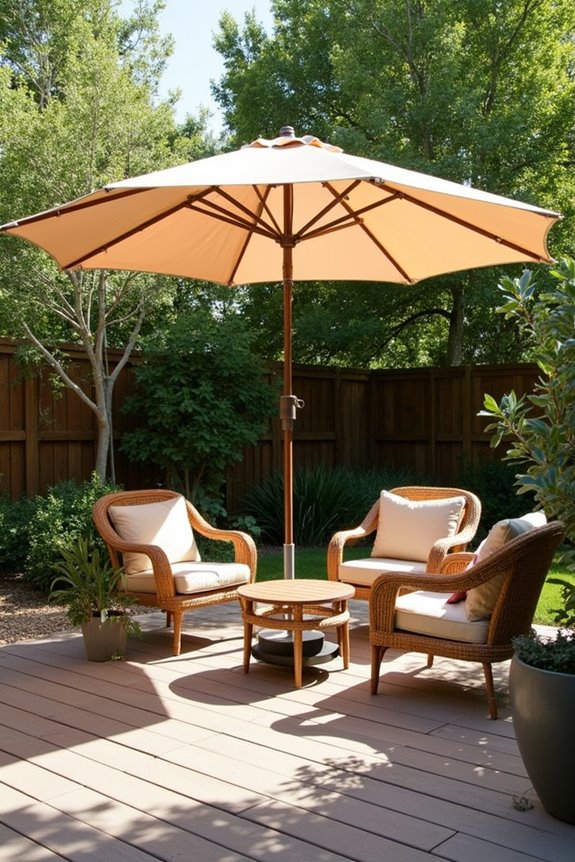
Patio umbrellas deliver instant shade without any permanent installation. You can set up portable shade in any seating area. These versatile solutions adapt to your backyard needs.
Key Benefits of Patio Umbrellas:
- Lightweight and affordable compared to fixed structures
- Various sizes and styles match any outdoor space
- Tilt or crank mechanisms angle shade as sun moves
- Easy relocation when you rearrange furniture
- Minimal maintenance compared to permanent covers
You control coverage adjustments seasonally. Most models weigh under thirty pounds. Fabric canopies come in vented designs that reduce wind damage. Performance depends on fabric durability and your local weather patterns.
Choose between market umbrellas or cantilever styles for different seating arrangements. Your budget stretches further with these portable options. Countless homeowners have found their shade solution at reasonable cost.
Long-Term Value: Which Budget Covers Last the Longest
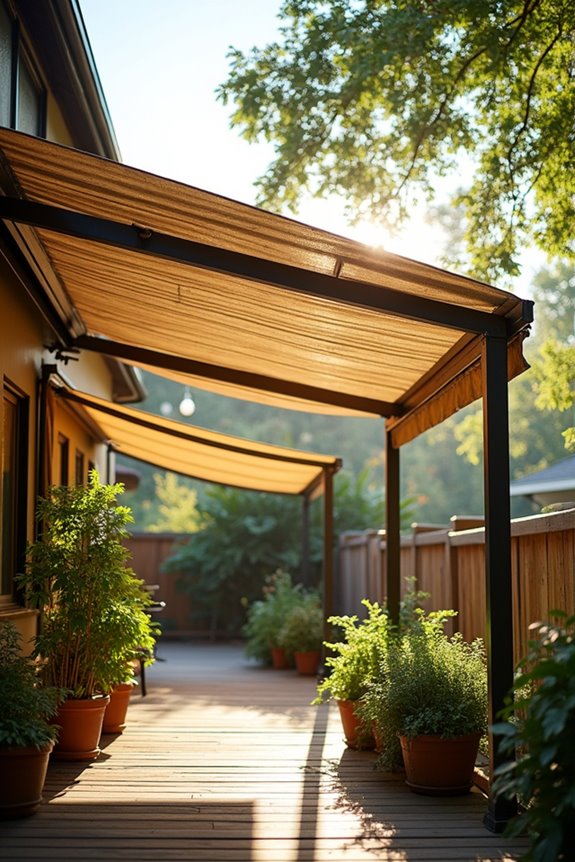
How much will you actually spend over ten or twenty years?
That’s the real question separating smart choices from budget traps. Shade sails seem cheap at $100–$300 per sail, but they’ll sag and fade within 3–5 years. You’ll replace them repeatedly. Wood pergolas need annual sealing and last only 10–15 years, adding ongoing costs.
Vinyl-aluminum kits change the equation. These maintenance-free options resist corrosion and weathering, delivering 20–30+ year lifespans without the constant upkeep wood demands. You’re investing upfront but paying nothing extra later. Retractable awnings cost more ($3,000–$7,500 motorized), yet their 5–10 year fabric lifespan makes them reasonable for flexibility seekers.
Join smart homeowners choosing durable solutions. Your future self appreciates skipping endless repairs and replacement hassles.