
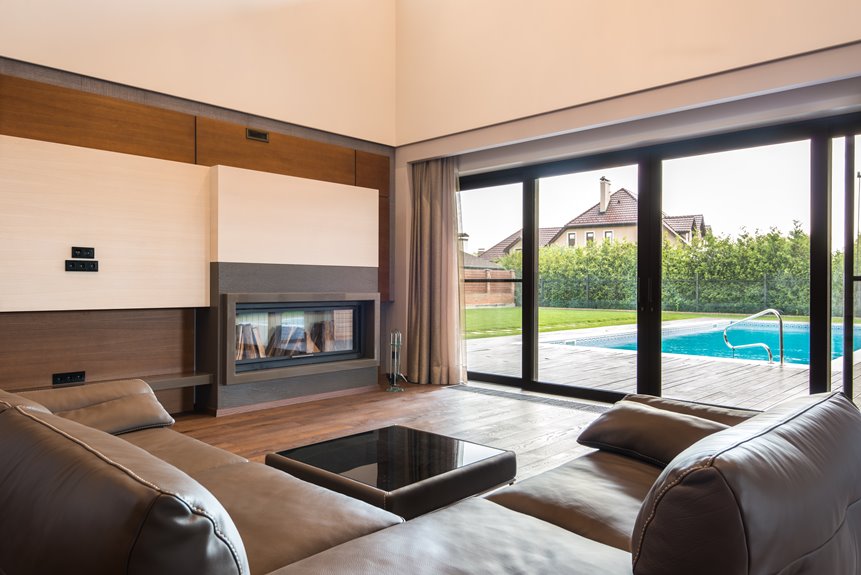
The best 2026 patio doors meet Title 24’s strict energy standards (U-factor ≤0.32, SHGC ≤0.25) while combining durable materials like fiberglass or vinyl with strong security features. You’ll want ENERGY STAR certification, multi-point locking systems, and transferable warranties covering 30+ years.
Premium brands like Andersen offer superior insulation and dealer networks, though budget options work if you prioritize short-term savings. Your climate, maintenance commitment, and long-term budget determine which door delivers real value—and the specifics matter more than brand names alone.
Evaluate a Patio Door: 5 Essential Criteria
How do you know which patio door will actually hold up in your home? Start by checking Energy Star ratings. These certifications reveal superior insulation. Better insulation means lower utility bills and year-round comfort in your space.
Energy Star rated patio doors provide superior insulation, reducing utility bills while ensuring year-round comfort in your home.
Next, examine the frame material. Fiberglass and vinyl resist warping. Wood requires constant maintenance. They’ll outlast wooden options in moisture-heavy climates.
Security matters greatly. Look for robust locking systems. Multi-point mechanisms protect your family effectively. Reinforced frames add extra protection against break-ins.
Consider aesthetics too. Larger glass panels dominate current trends. Sleek, contemporary finishes complement modern homes well.
Finally, weigh customization against long-term costs. Custom colors and sizes appeal initially. However, maintenance demands increase significantly. Calculate your total cost of ownership honestly. These five criteria help you choose doors matching your needs and lifestyle.
Compare Patio Door Materials: Durability and Performance
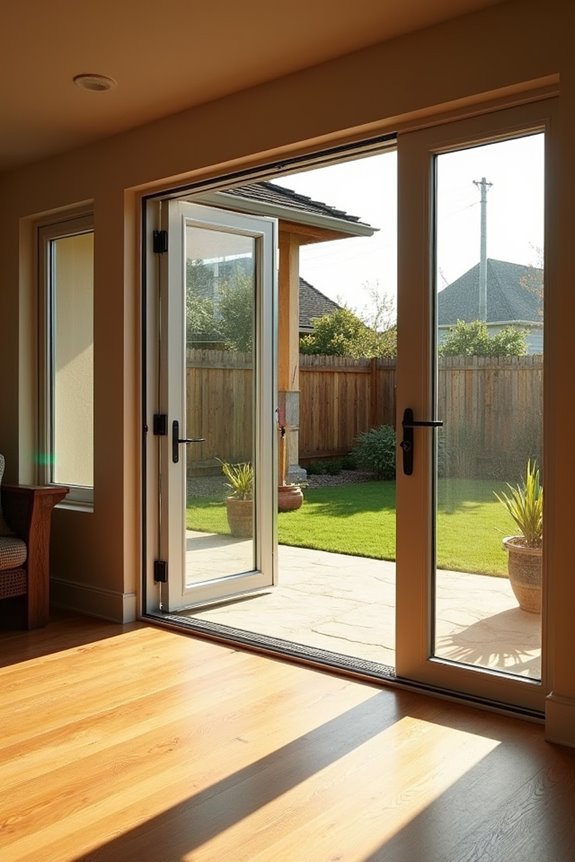
When you’re choosing between vinyl, fiberglass, wood, and aluminum, you’re really deciding between trade-offs. Each material brings different strengths to your home’s durability and energy efficiency profile.
Here’s what you should know about each option:
- Vinyl doors offer affordable maintenance and moisture resistance. Fewer color choices, though.
- Fiberglass doors last 30–50 years with excellent durability and energy efficiency. Low maintenance required.
- Wood doors deliver natural aesthetics and customization. They need regular maintenance to prevent warping and rot.
- Aluminum doors provide strong, sleek designs. Condensation can be problematic in humid climates.
- Overall performance depends on your climate, budget, and maintenance commitment.
Your material comparison should balance efficiency gains against total cost of ownership. Consider your region’s weather patterns carefully. The best choice fits your lifestyle and climate zone.
Meet Title 24 Compliance: Energy Efficiency Standards for 2026
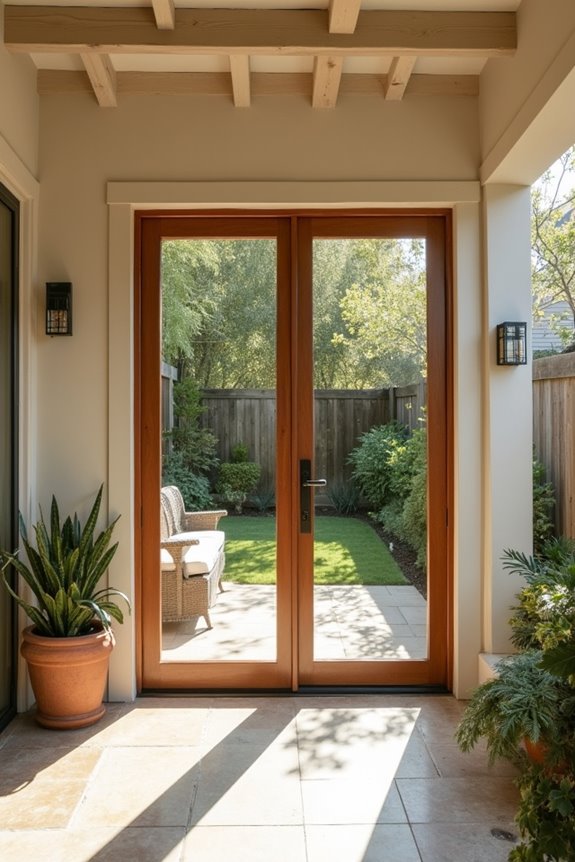
You’ll need to understand California’s Title 24 requirements. These standards mandate that new patio doors achieve a U-factor of 0.32 or lower and an SHGC (Solar Heat Gain Coefficient) of 0.25 or lower—basically, your doors must block heat transfer and limit how much sun’s warmth enters your home. Meeting these specs isn’t optional if you’re building in California, and builders-grade doors typically won’t meet code requirements, so you’re looking at premium vinyl, fiberglass, or composite materials that deliver the thermal performance inspectors and energy codes require.
Title 24 Requirements Overview
What makes a patio door energy-efficient in California? You’ll find the answer in Title 24. These standards ensure your doors minimize heat transfer and solar gain.
- U-factor ≤ 0.32: Measures how well doors resist heat flow
- SHGC ≤ 0.25: Controls how much solar heat passes through glass
- Thermal performance: The combined ability to keep heat in or out
- Premium vs. builder-grade: Premium doors meet specs; budget options often fail
- Energy savings: You’ll see 15–25% reductions in cooling and heating costs
Compliance is required. Builders and homeowners must verify certifications before purchasing. Regional standards continue tightening globally. Your climate-specific needs matter when selecting doors. Meeting Title 24 requirements protects your wallet and the environment.
Energy Efficiency Standards Impact
How do Title 24 standards reshape your patio door choices? They’re forcing builders and homeowners toward doors that perform better. You’ll notice premium patio doors easily meet Title 24 requirements. Builder-grade options frequently fall short. This matters because poor-performing doors drain your wallet through higher energy bills.
ENERGY STAR certified doors prove compliance quickly. Look for U-factors at or below 0.32 and SHGC ratings around 0.25 or lower. Your climate zone determines exact requirements. A door that works in Southern California might not suit Northern regions.
Here’s the payoff: upgrading to 2026-compliant patio doors saves you 15–25% on cooling and heating costs annually. That’s real money back in your pocket. You’re joining countless homeowners investing in efficiency today.
Compliance Certification Options
Finding the right certification is necessary. You’ll want doors displaying clear compliance certificates before purchasing. These labels verify your doors meet Title 24 requirements. They document your doors meet energy efficiency standards.
Several certification options exist:
- NFRC (National Fenestration Rating Council) labels showing U-factor and SHGC ratings
- Energy Star certifications indicating superior performance levels
- California Title 24 compliance certificates from manufacturers
- Third-party testing documentation proving thermal performance
- Local utility rebate program approvals confirming eligibility
You should request these certificates from sellers. They document that doors meet the U-factor of 0.32 or lower and SHGC of 0.25 or lower. This step matters. Proper certifications protect your investment. They also guarantee you’ll achieve those 15–25% energy savings. Check labels carefully before finalizing your selection.
Andersen Corporation: Premium Durability and Dealer Support
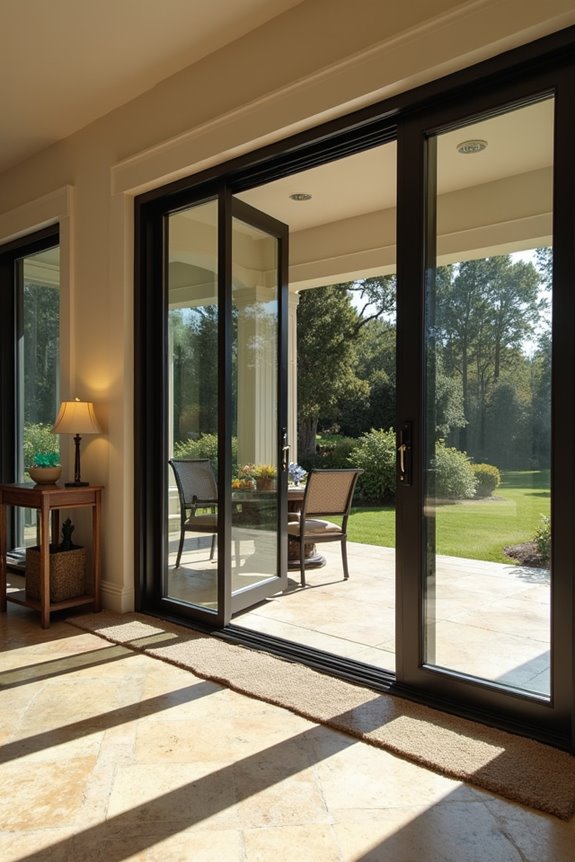
Andersen’s Fiberx composite doors combine durability with energy efficiency that meets Title 24 standards. Their transferable warranties and wide dealer network handle installation and long-term service across North America. Budget for premium pricing and note that color options are limited compared to less expensive alternatives.
Fiberx Material Innovation
What makes a patio door last decades without warping or peeling? Andersen’s Fiberx composite material. You’re getting wood fibers blended with vinyl. This combination resists the expansion and contraction that typically damages doors over time.
Here’s what you’re really getting:
- Wood fiber strength combined with vinyl durability
- Resistance to warping and peeling through seasonal changes
- Reduced maintenance demands on your schedule
- Advanced energy efficiency through innovative design
- Long-lasting performance without constant repairs
The Fiberx innovation means you won’t face the frustration of deteriorating frames after just a few years. Your investment holds up. Weather won’t compromise your door’s integrity. Andersen’s transferable warranty backs this durability promise. You’re joining homeowners who’ve eliminated the maintenance cycle. That’s practical protection. That’s smart patio door engineering working for you.
Warranty Coverage Advantages
Your patio door’s durability depends on protection that extends beyond the frame itself. Andersen Corporation backs its premium doors with a transferable warranty. This means you’re protected. Future owners are too.
| Series | Coverage | Transferability | Wood Doors | Confidence |
|---|---|---|---|---|
| A Series | Comprehensive | Yes | Standard | High |
| 400 Series | Extended | Yes | Limited | Very High |
| 200 Series | Basic | Yes | Shorter | Moderate |
| Fiberx | Premium | Yes | N/A | Very High |
| Standard | Standard | Yes | Varies | Moderate |
Your warranty coverage protects against defects. Manufacturing flaws won’t drain your wallet. The transferable warranty distinguishes Andersen’s approach. You’re joining a community valuing long-term reliability. Their broad dealer network supports your investment. Service remains accessible. Installation stays straightforward. Your patio doors deserve genuine protection.
Dealer Network Accessibility
How accessible is your nearest patio door installation?
Andersen’s dealer network spans the nation. You’ll find support nationwide. This accessibility matters for your project’s success.
What You Get With Andersen’s Dealer Network:
- Local showrooms let you see products in person before deciding
- Professional installation teams handle setup with expertise and care
- Service centers provide ongoing maintenance and repairs when needed
- Knowledgeable staff answer your questions about Fiberx composite materials
- Convenient scheduling fits your timeline and household needs
The dealer-backed model keeps you connected. You’re not navigating installation alone. When questions arise about your A series or 400 series doors, trained professionals stand ready. This network makes patio door shopping a supported experience. You belong to a community of Andersen owners who access reliable service. That connection extends beyond purchase day into years of ownership.
Pella Corporation: Smart Features and Lifetime Warranties
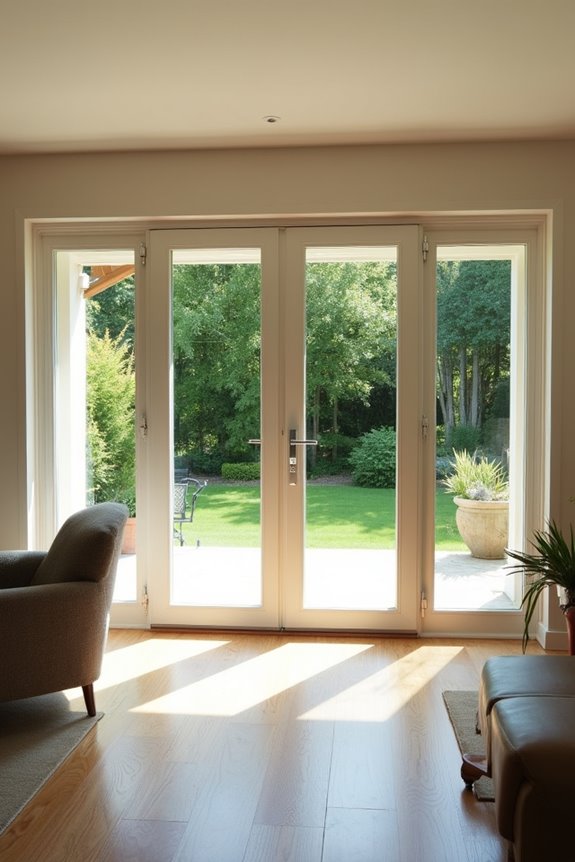
Why settle for basic patio doors when you can get ones that actually work smarter? Pella patio doors integrate smart sensor technology. You get automated blinds built between the glass panels. This means enhanced privacy without extra window coverings cluttering your space.
Pella’s warranty structure protects your investment substantially. The vinyl non-glass components carry a lifetime warranty. That’s peace of mind lasting decades. However, wood options include shorter coverage periods. Understanding this distinction matters before purchasing.
Energy efficiency runs deep in Pella’s DNA. The company’s been an ENERGY STAR partner for over 25 years. Your heating and cooling costs decrease noticeably. These patio doors earn their premium positioning through genuine performance and protective warranties that back your choice.
Wellste: Custom Aluminum Doors at Factory Pricing
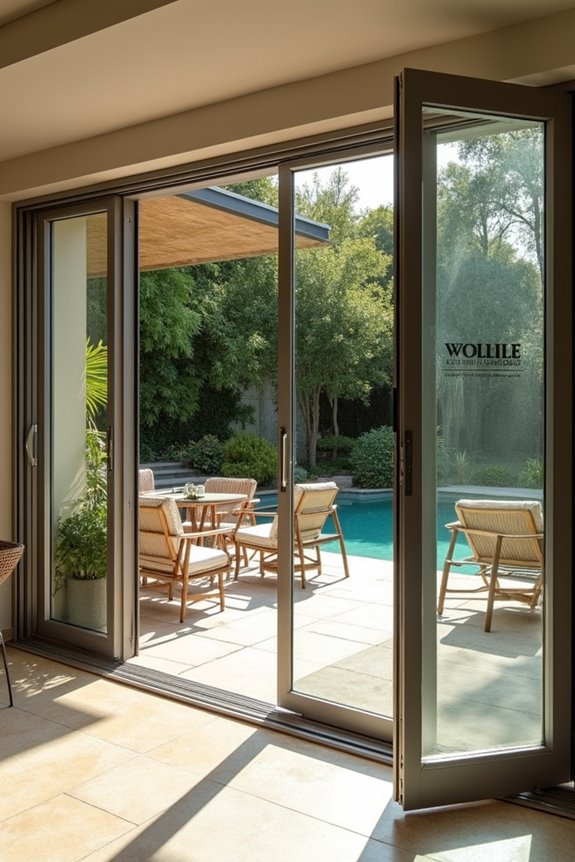
If premium features and warranties matter to you, direct factory pricing might matter even more. Wellste delivers exactly that. This China-based manufacturer has shipped custom aluminum doors to 60 countries since 1996.
You’ll appreciate what Wellste offers:
- Over 1,000 color and texture options for personalized finishes
- Factory pricing without middleman markups or dealer fees
- NFRC certification with U-values as low as 0.20 for superior insulation
- AAMA triple-performance certification ensuring durability
- Doorstep delivery straight from production
No local showrooms exist here. You purchase directly from the factory instead. This streamlines costs significantly. Wellste’s ISO 9001 and CE certifications plus partnerships with AGC and Renault Glass demonstrate manufacturing credibility.
Their custom aluminum doors combine affordability with quality. You’re joining thousands who’ve chosen direct factory relationships over traditional retail channels.
Milgard Windows & Doors: West Coast Value and Full Coverage
You’ll find Milgard stands out with its full lifetime warranty that covers the original purchaser, providing peace of mind for decades. The brand specializes in West Coast markets, combining material choices like fiberglass Ultra Series frames and vinyl Trinsic Series options with strong local service. However, you’ll need to work with their limited dealer network since retail availability remains regional, which means planning ahead matters more than it does with widely distributed competitors.
Comprehensive Lifetime Warranty Coverage
Milgard’s lifetime warranty is a major selling point for West Coast homeowners. You’re investing in protection that lasts decades. Here’s what you get:
- Original purchaser coverage for the entire lifetime of your doors
- Door and component protection including frames and hardware
- Regional support specifically designed for West Coast climates
- Durability assurance backed by the brand’s reputation
- Service confidence knowing repairs or replacements are covered
This thorough lifetime warranty sets Milgard apart from competitors. You won’t face unexpected costs down the road. The coverage extends beyond just the glass panels—it protects related components too. West Coast homeowners particularly value this regional reliability. When you choose Milgard patio doors, you’re selecting a brand that prioritizes long-term protection and dependable performance.
West Coast Market Specialization
Why does Milgard dominate the West Coast patio door market while struggling elsewhere? The company built its reputation serving California, Oregon, and Washington homeowners who value quality and warranty protection. You’ll find Milgard patio doors widely available at West Coast dealers. Their Sliding doors, French doors, and Stacking glass walls suit the region’s climate perfectly.
Outside this zone, things change. Milgard’s dealer network thins considerably. You may struggle finding local installers in the Midwest or East Coast. This geographic limitation frustrates many homeowners seeking the brand’s legendary lifetime warranty elsewhere.
For West Coast residents, Milgard represents an accessible, trustworthy choice. The company’s deep regional roots mean better availability and stronger local support. You’re joining a community that’s relied on Milgard for decades.
Material Options and Performance
When choosing a patio door, the frame material matters just as much as the design. Milgard gives you solid options that balance durability with performance.
You’ll find these patio door materials in Milgard’s lineup:
- Ultra Series fiberglass doors offer exceptional strength and minimal maintenance
- Trinsic vinyl options provide affordability without sacrificing quality
- Style Line aluminum frames deliver sleek aesthetics for modern homes
- Low-E glass standard across models maximizes energy efficiency
- Weather-sealed construction protects against West Coast moisture and elements
Fiberglass doors stand out for their resistance to warping and rotting. They’re particularly valuable if you live near coastal areas with salt air exposure. Vinyl frames offer excellent insulation properties, keeping your home comfortable year-round.
Energy efficiency is built in. Low-E glass reduces heat transfer naturally, lowering your cooling costs substantially. These material choices reflect Milgard’s commitment to long-term performance and reliability.
Pick Your Price Range: Budget vs. Premium Options
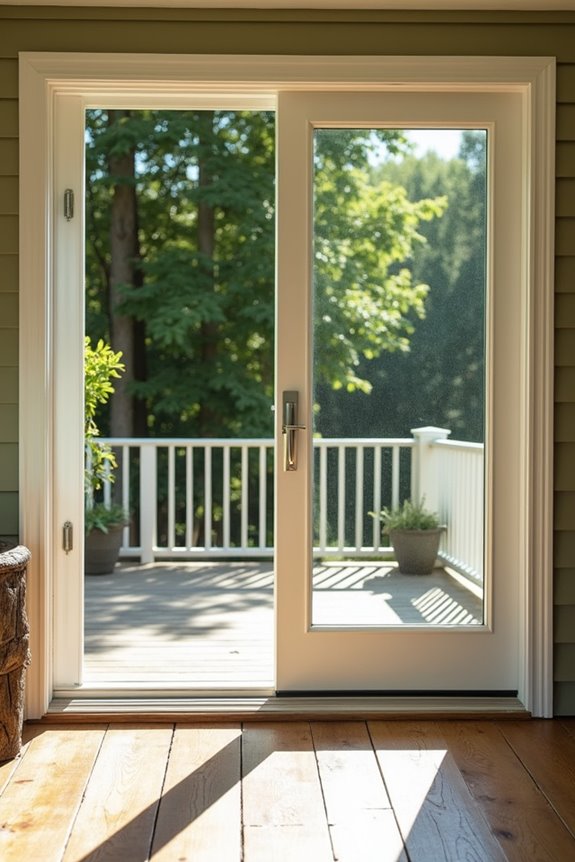
How much should you actually spend on patio doors? Your budget determines everything. You’ll find mainstream options between $899 and $2,499 installed. Premium doors range from $2,800 to $5,500 installed. The difference? Longevity and performance. Roller quality matters most here. Budget vinyl doors use basic rollers lasting 10-15 years. Premium ball-bearing rollers last 20+ years. That’s worth considering.
| Price Range | Door Type | Expected Lifespan |
|---|---|---|
| $899–$2,499 | Vinyl-clad sliding | 20–30 years |
| $2,800–$5,500 | Fiberglass or clad-wood | 30–50 years |
| Budget segment | Basic rollers | 10–15 years |
Vinyl-clad doors offer ENERGY STAR ratings at lower costs. Fiberglass delivers superior durability and long-term value. Choose based on your timeline. Budget-conscious? Vinyl works fine. Planning decades ahead? Invest in premium options with quality roller systems.
Choose a Door Type: Sliding, French, Bi-Fold, and Beyond
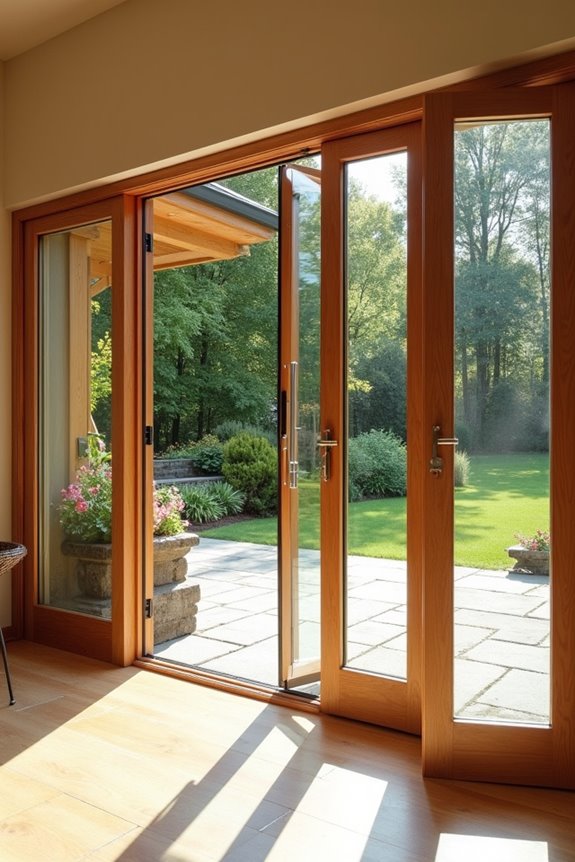
Once you’ve settled on a budget, the next step is picking the right door style for your space. You’ll find several options that each offer distinct benefits:
- Sliding doors provide wider openings and maximize your indoor-outdoor connection with vinyl or fiberglass frames
- French doors deliver classic elegance through dual-door designs and traditional hardware in wood or clad-wood
- Bi-fold doors stack panels to create unobstructed passages perfect for patios and yards
- Fiberglass frames last 30–50 years, outperforming vinyl’s 20–30 year lifespan
- Energy efficiency meets ENERGY STAR standards and local Title 24 requirements
Each door material brings different durability levels and energy performance. Fiberglass and vinyl excel in energy efficiency while maintaining affordability. Your choice depends on balancing aesthetics, longevity, and how effectively you want to connect indoors and outdoors.
Select Your Color and Finish: 2026 Design Trends
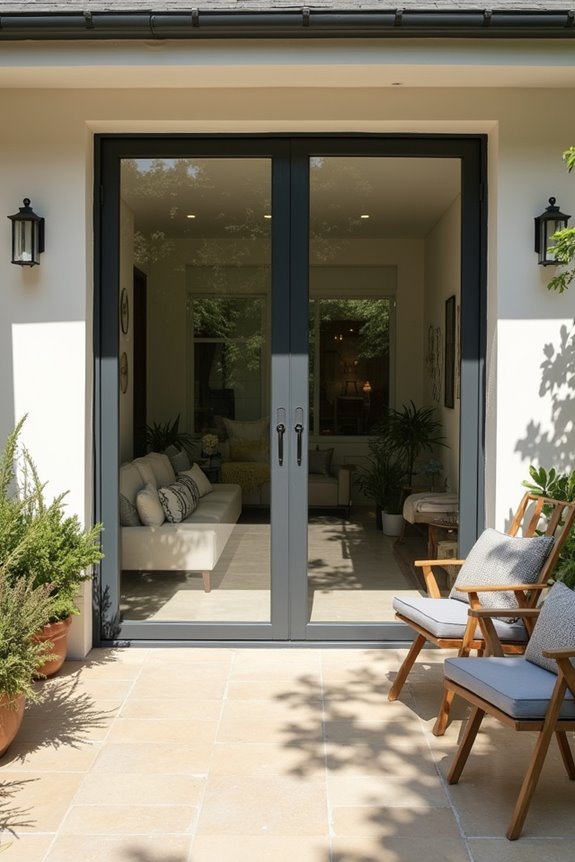
What’ll really transform your patio doors? Your color and finish choices. Design trends 2026 favor neutral tones and muted finishes that blend with modern homes. Think soft grays, warm whites, and subtle earth tones.
Contemporary aesthetics demand sleek, minimal frames. These complement your interior décor without competing for attention. You’re moving toward understated elegance.
Customization options let you match your specific style. Choose finishes that resist fading or wear based on your climate. Some homeowners prefer matte surfaces for a softer look. Others select glossy finishes for durability.
Patio doors finishes range from powder-coated metals to natural wood tones. Consider maintenance requirements before deciding. Your color options should reflect both your aesthetic preferences and practical needs for longevity and quality.
Avoid Installation Pitfalls: Critical Pre-Purchase Checks
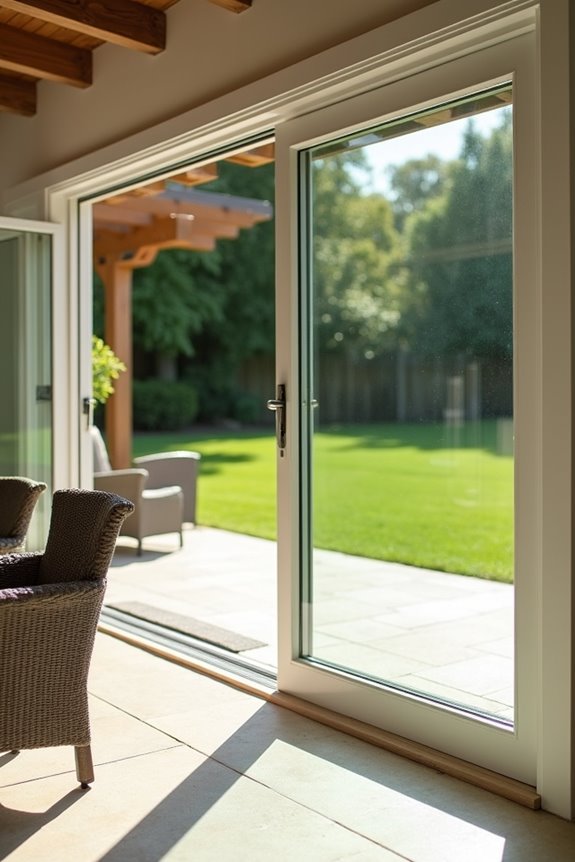
Before you finalize your patio door purchase, verify several important details that many homeowners overlook. Getting these checks right prevents costly mistakes down the road.
What to verify before buying:
- Energy Star ratings ensure superior insulation and long-term savings on heating and cooling
- Multi-point locking systems provide security far beyond single-lock designs
- Warranty coverage details vary significantly between materials like vinyl, fiberglass, and aluminum
- Material compatibility with your climate prevents moisture damage or warping
- Dealer support availability matters, especially for brands requiring professional installation
Your material choice should match your environment. Fiberglass and vinyl resist moisture effectively. Aluminum handles extreme temperatures well. Always confirm installation requirements match your home’s specifications. Check whether your preferred brand maintains a dealer network in your area. Warranty terms differ substantially between manufacturers. Understanding these factors protects your investment.
Maintain Your Doors: Long-Term Care and Repairs
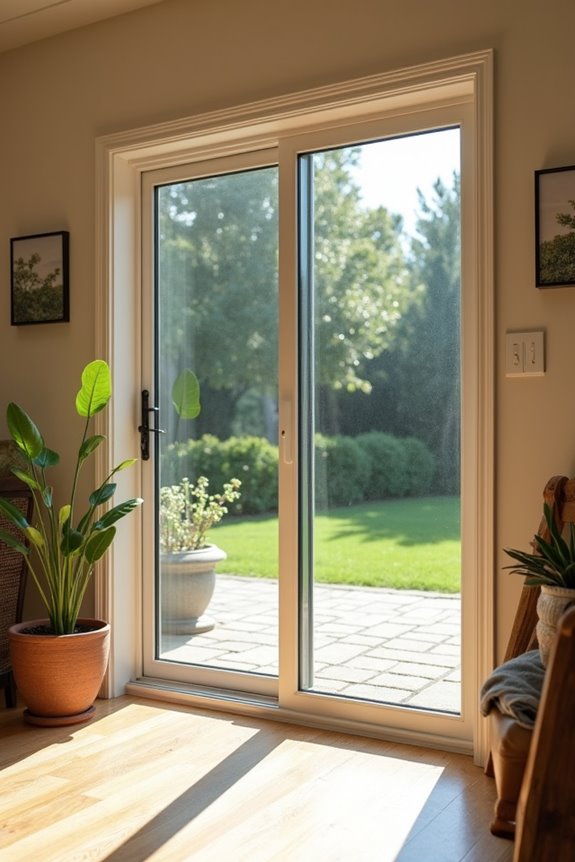
How long do your patio doors actually last? With proper patio door maintenance, your doors can serve you for decades. Fiberglass and vinyl doors resist warping better than wood. They require considerably less upkeep overall.
Start with the basics. Keep tracks clean and rollers well-lubricated regularly. Worn rollers cause most sliding door problems. Check your weatherstripping annually. Replace it when you notice gaps or damage. This prevents drafts and moisture intrusion. Energy efficiency stays intact when weatherstripping seals properly.
Plan ahead for eventual door replacement. Extensive frame deterioration often requires replacing the entire unit. Many repairs aren’t worth fixing individual parts. Check your warranty coverage for non-glass components first. Understanding whether you have lifetime or limited warranties helps you budget accordingly.
Make Your Final Decision: Warranty, Climate, and 20-Year Value
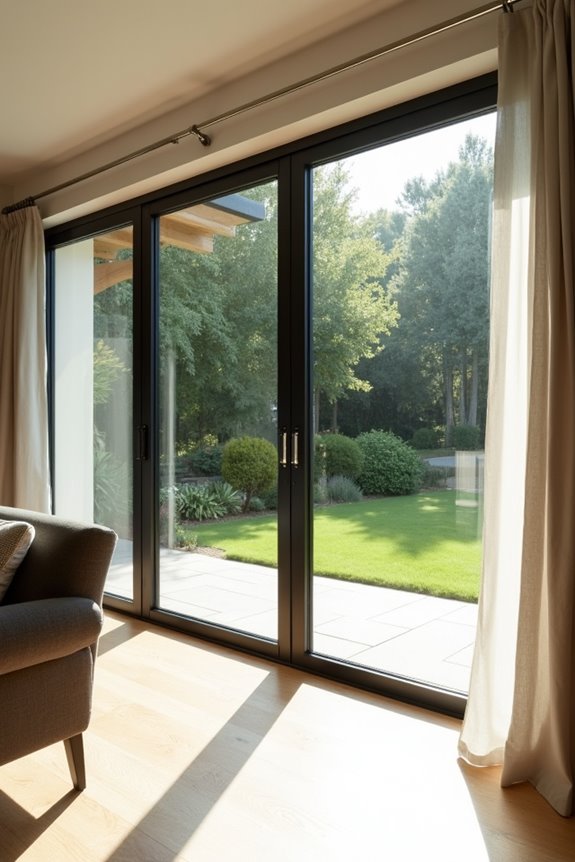
You’ve narrowed down your options. Now seal the deal by weighing warranty, climate suitability, and 20-year value together.
Consider these key factors:
- Warranty depth matters: Andersen’s transferable owner-to-owner warranty and Milgard’s full lifetime warranty protect your investment across decades
- Climate suitability shapes performance: West Coast buyers benefit from Milgard’s comprehensive warranties, while Pella’s energy-efficient Architect and Impervia lines suit varied regions
- Material choice affects maintenance costs: Fiberglass and vinyl require less upkeep than wood or aluminum over twenty years
- Energy efficiency reduces operating expenses: Low U-factors (like Wellste’s 0.20) slash heating and cooling costs significantly
- Dealer support ensures long-term care: Reputable retailers provide maintenance guidance and parts availability when you need them
Match these elements to your specific situation. Your best door balances robust protection, regional performance, and genuine savings over time.