
You’ll start by choosing post types and depths based on your climate’s frost line, then measure your space and mark locations using the 3-4-5 triangle method for perfect corners.
Next, dig two-foot holes below the frost line, fill them with gravel for drainage, and position posts with temporary bracing.
Once posts are plumb, drill through beams and posts, securing them with galvanized bolts.
Finally, space rafters twelve to sixteen inches apart and install them with notches for that classic lattice look. Each step builds on the last for solid results.
Choose Your Post Type and Depth
How deep should your posts go? Your post depth depends on your climate and frost line—the depth where ground freezes in winter. Northern climates require deeper post installation methods to prevent frost heave, which pushes posts upward when soil freezes and thaws.
You’ll choose from three post installation methods: burying posts directly in concrete footings, mounting on top of concrete footings, or setting posts below ground past the frost line. Standard post length options are 8, 10, or 12 feet, determining your pergola’s overall height and headroom.
For a spring concrete pour, dig holes below your local frost line depth. This prevents frost heave damage. Consult your local building codes—they specify exact depths for your region. Proper post depth protects your pergola’s structural integrity long-term.
Measure Your Space and Mark Post Locations
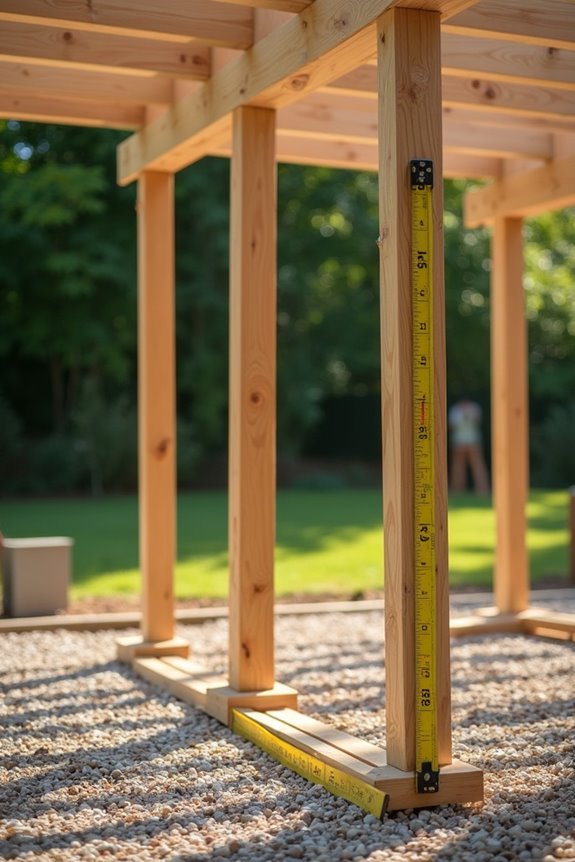
Where will your pergola fit? Start by finding a flat spot and measuring your desired area. Consider sunlight exposure. Think about nearby features too.
Next, mark your post locations carefully:
- Use a chalk line or string along the perimeter to ensure straight edges and proper alignment
- Apply the 3-4-5 triangle method at each corner to form right angles for accuracy
- Dig post holes approximately 2 feet deep, positioning them below the frost line in cold climates
Proper spacing prevents future problems. Your pergola foundation will be solid.
Before permanent installation, set temporary braces. Verify plumb and alignment at each post location. Prepare holes with gravel for leveling and drainage. Taking time now saves frustration later.
Dig Holes and Prep the Foundation
Now that you’ve marked your post locations, it’s time to break ground. Dig post holes approximately two feet deep using a post hole digger. Space them according to your plan for proper pergola foundation support.
Fill each hole with six inches of gravel or more. This gravel layer aids drainage and helps with leveling. Before pouring concrete footing, position your posts and check that they are plumb on all four sides using a level.
Check your frost line first. Your climate determines how deep you’ll need to dig. Colder regions require deeper holes below the frost line to prevent frost heave damage.
Position stakes and masonry line to maintain accurate spacing throughout. These guides keep your post holes aligned and consistent. Double-check everything before mixing concrete. Proper foundation work prevents problems later.
Set Posts and Install Cross Beams
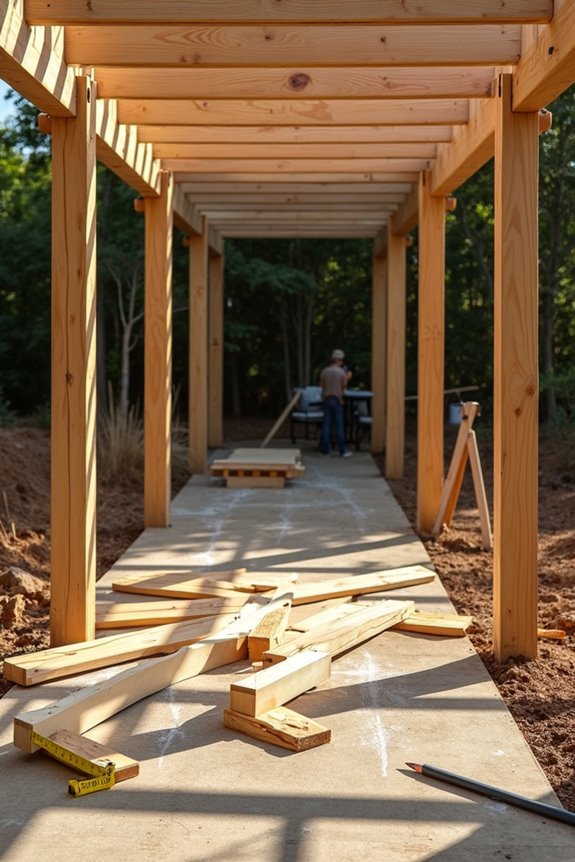
Once your foundation’s solid, the real structure takes shape. You’re ready to install cross beams and set posts that’ll support your entire pergola installation.
Start by positioning each post in its prepared hole. Use temporary 4-foot stakes for bracing while you verify perfect alignment on all sides with a post level. Check that everything’s plumb—meaning perfectly vertical.
Next, focus on the critical connection:
- Mark where your beams will sit on top of the posts
- Drill through both beams and posts using a 5/8-inch auger bit
- Insert galvanized bolts with washers and nuts. Tighten everything securely with wrenches
This drilling method creates a strong bond between your beams and posts. Verify alignment once more before moving forward. Repeat this process for all remaining posts, using masonry line to keep everything straight and evenly spaced throughout your pergola installation.
Add Rafters and Finishing Touches
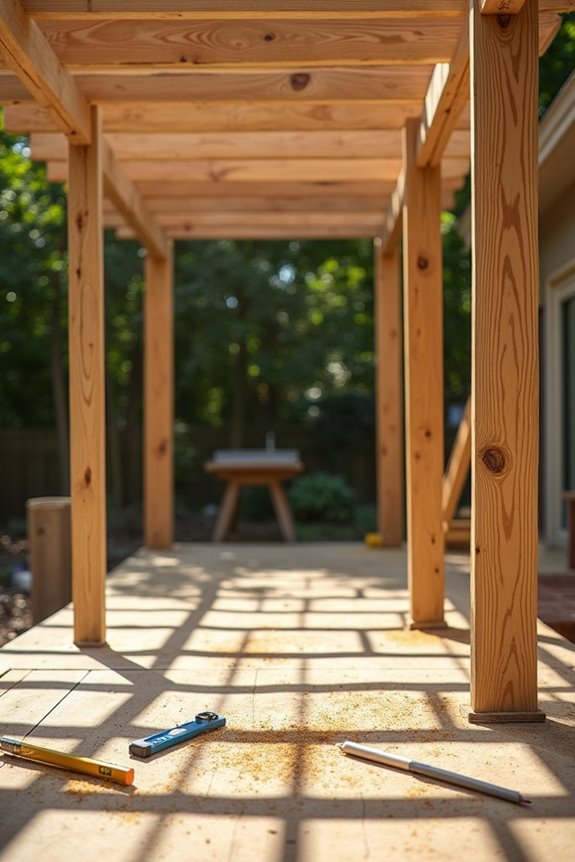
Your posts and beams are locked in place. Now you’ll add rafters to complete your pergola project. Mark up support beams at 12 to 16 inch intervals for even spacing. This installation method maintains structural balance across your entire structure.
Place rafters temporarily with screws before final fastening. This lets you confirm alignment without permanent commitment. Next comes the notching—the decorative element that distinguishes your pergola. Install eight top-layer beams with curved ends. Notch their bottom edges to interlock with the inner layer below.
| Layer | Beam Count | Curve Style | Notch Depth |
|---|---|---|---|
| Top | 8 | Curved | Shallow |
| Bottom | 6 | Straight | Deep |
Finish by securing layers with mallet taps. You’ve created a sturdy lattice effect. Your pergola’s decorative finishing elements demonstrate quality craftsmanship and solid construction.