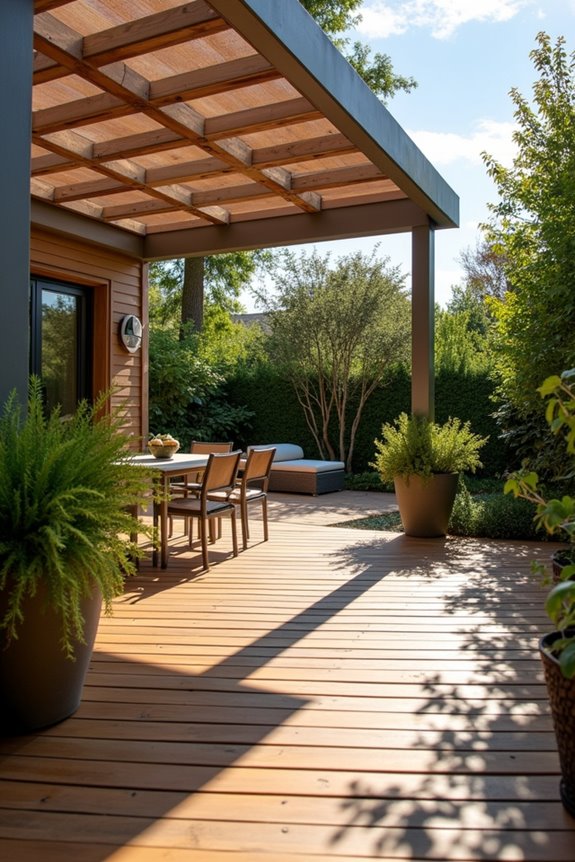
Standard pergolas give you dappled shade, not solid coverage. Open-roof designs with spaced slats create moving sun and shadow patches throughout the day. You’ll get maybe 30–50% shade depending on slat spacing and orientation. Narrower gaps increase blockage.
For serious protection, you’d need solid roofs, louvered systems, or retractable canopies—these push coverage toward 80–90%. Material matters too: metal reflects heat, while cheap options fade fast. Your climate and budget determine the best approach. Keep reading to discover exactly which shade solution matches your needs.
Standard Pergolas Provide Only Partial Shade: Here’s Why
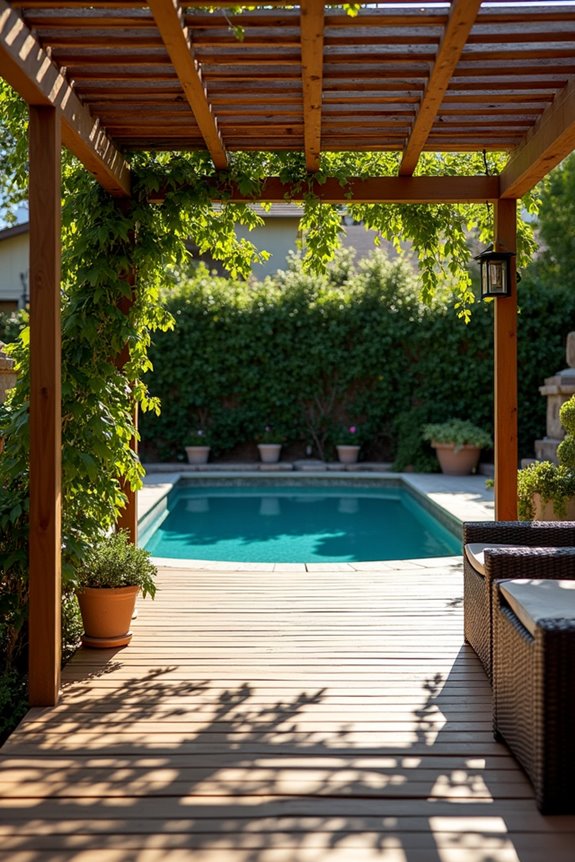
Ever wonder why your pergola doesn’t feel as shady as you’d hoped?
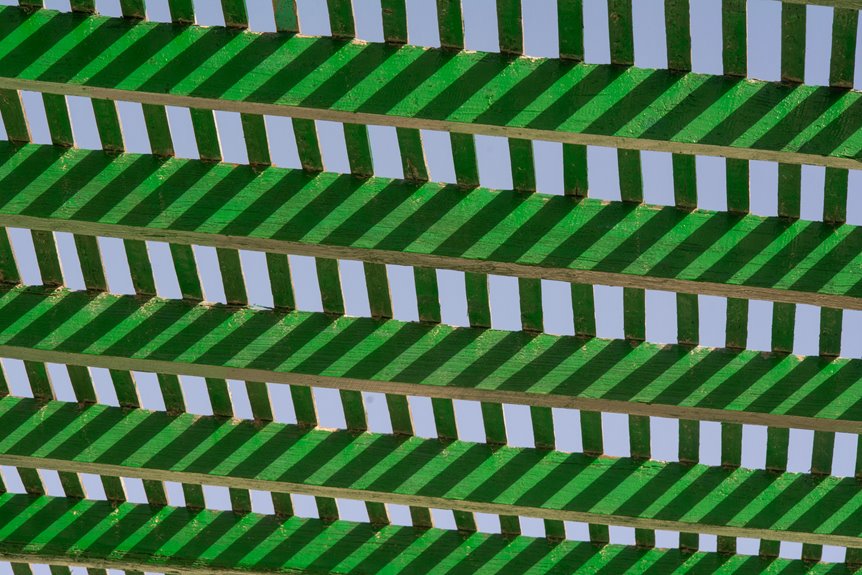
Standard pergolas with open roofs simply can’t block all sunlight. Their spaced slats create dappled light instead of solid coverage. You’ll notice patches of sun and shadow moving across your outdoor living space throughout the day.
Standard pergolas create dappled light, not solid shade, with sun and shadow patches shifting throughout your day.
Slat spacing determines shade intensity. Wider gaps mean more sun reaches you. Narrower spacing increases shade but still allows light penetration.
This partial shade design limits sun protection. On scorching afternoons, you might still feel uncomfortably warm. Temperature reduction remains modest compared to solid structures.
Weather protection is equally limited. Rain and wind pass through the open roof easily.
Most people find standard pergolas insufficient alone. You’ll need shade options like retractable canopies or climbing vines. These additions create genuine shade coverage for your outdoor space.
How Your Roof Material Affects Shade Coverage
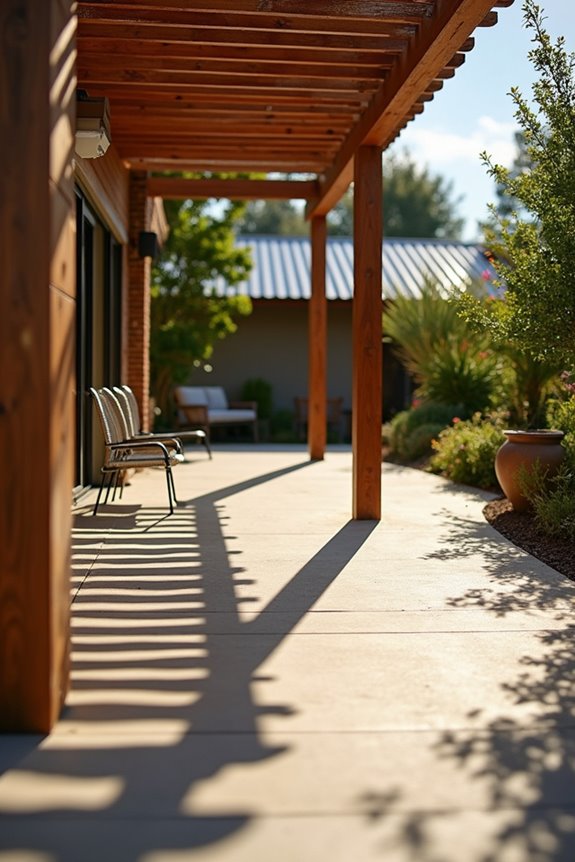
While adding vines and canopies helps boost shade, your pergola’s roof material is the primary factor. Solid roofs like polycarbonate panels block considerably more sunlight than open lattices. They deliver consistent shade depth and excellent sun protection year-round.
Polycarbonate panels offer transparency control. You choose how much light filtration you want. Metal roofs reflect heat differently than absorb it, affecting perceived shade. This heat reflection keeps your space cooler underneath.
UV resistance matters significantly. Quality materials maintain their opacity over time. Cheaper options fade and lose effectiveness. Your shade coverage depends on this durability.
Consider your climate and sun exposure. Peak afternoon hours demand stronger protection. Solid roofs provide reliable performance. Fabric canopies struggle during intense heat.
Choose materials matching your actual needs.
What Determines Your Shade Level
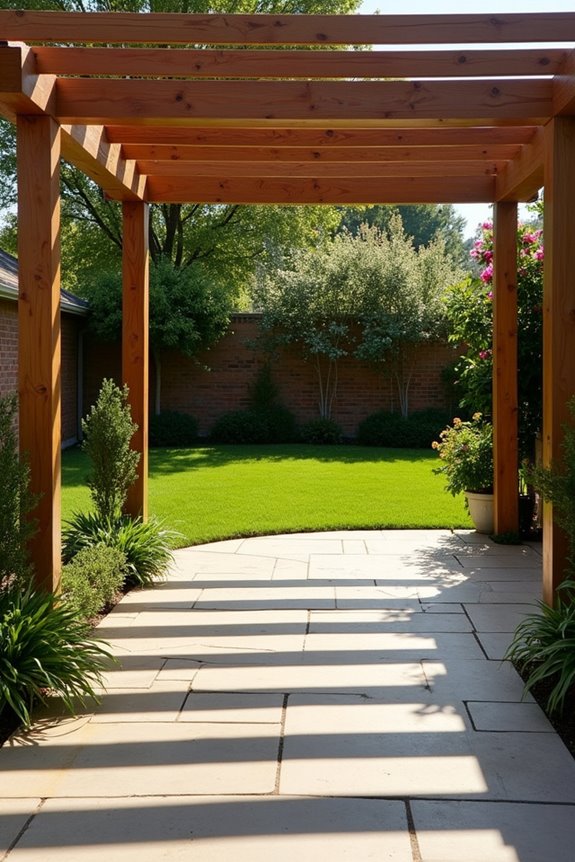
How much shadow falls across your pergola depends on several interconnected factors you can control.
- Slat spacing and angle: Narrower gaps between slats block more direct sunlight than wider gaps. Steeper angles trap more light, while flat positions let sunlight slip through easily.
- Orientation and sun path: Your pergola’s direction matters. East-west layouts provide morning shade. North-south layouts offer afternoon protection when you need it most.
- Overhang depth and beam length: Deeper overhangs cast longer, denser shadows during peak sun hours. Longer beams expand your shaded territory.
Material choice affects shade intensity. Metals absorb heat and darken shadows. Certain woods reflect sunlight, creating lighter coverage. Adjustable options like louvered roofs and retractable canopies let you customize shade levels throughout the day, providing flexibility that permanent structures cannot.
How to Get 50–90% Shade From Your Pergola
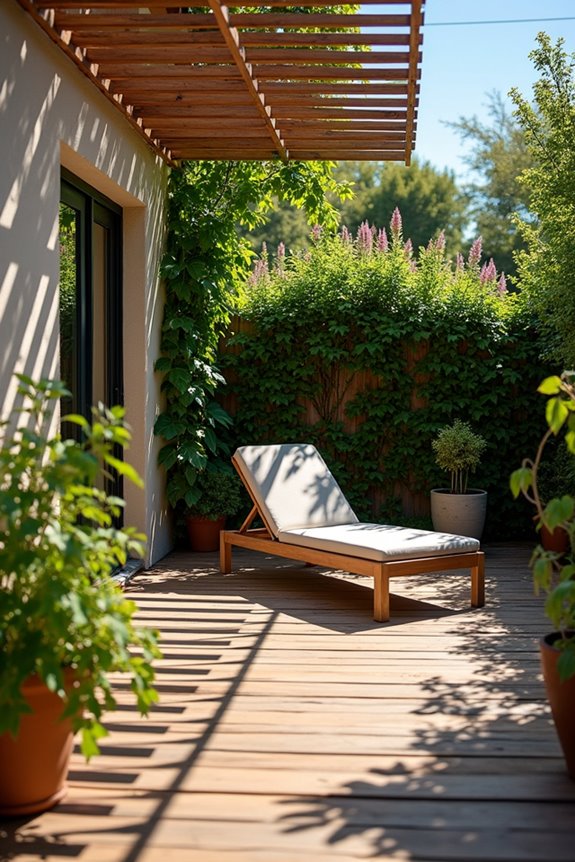
If you’re tired of squinting in your backyard, you can boost your pergola’s shade output to the 50–90% range with the right design choices.
Start by adjusting your slat spacing. Narrower gaps between slats increase sun blockage markedly. Next, consider your shade configuration and orientation—east-west designs block morning and evening sun effectively, while north-south setups work better for midday protection.
A louvered roof offers flexibility. Close the slats fully for near-complete shading during peak sun hours. For maximum shade effectiveness, explore a retractable canopy or fixed solid roof, which pushes coverage toward 80–90%.
Deeper overhangs cast denser dappled shade across your space. These adjustments create a comfortable outdoor retreat that keeps you cool and connected to your outdoor space.
Choose Your Shade Solution Based on Climate and Budget
The best shade solution depends on where you live and what you can spend. You’ll find various pergola shade options tailored to different climates and budgets.
Consider these climate-based shading approaches:
- Hot, sunny regions: Choose aluminum louvered roofs or fixed roofs for maximum UV protection and consistent sun blockage throughout the year.
- Mild climates: Lightweight shade cloth or fabric shades work well and won’t strain your budget, though you’ll replace them every few years.
- Variable seasons: Retractable canopies offer flexibility for changing sun angles, justifying their higher cost with year-round adaptability.
You don’t have to pick just one method. Combination shading solutions—pairing louvers with fabric curtains—optimize coverage while controlling expenses. This balanced approach gives you reliable protection within your budget, letting you enjoy your pergola space with confidence.