

Your pergola should be 8 to 12 feet tall. Most backyards work best with 10 feet. For dining areas or pools, aim for 8.5 to 10 feet of clearance.
Garden pathways need 7 to 8 feet. Always match attached pergolas to your house eaves, typically 7.5 to 9 feet.
Check local building codes first. Material choice matters too—aluminum and fiberglass enable taller designs with less sagging. Professional contractors can customize heights based on your specific space, features, and codes.
Select the Right Height for Your Use Case: Dining, Pools, Gardens, and Pathways
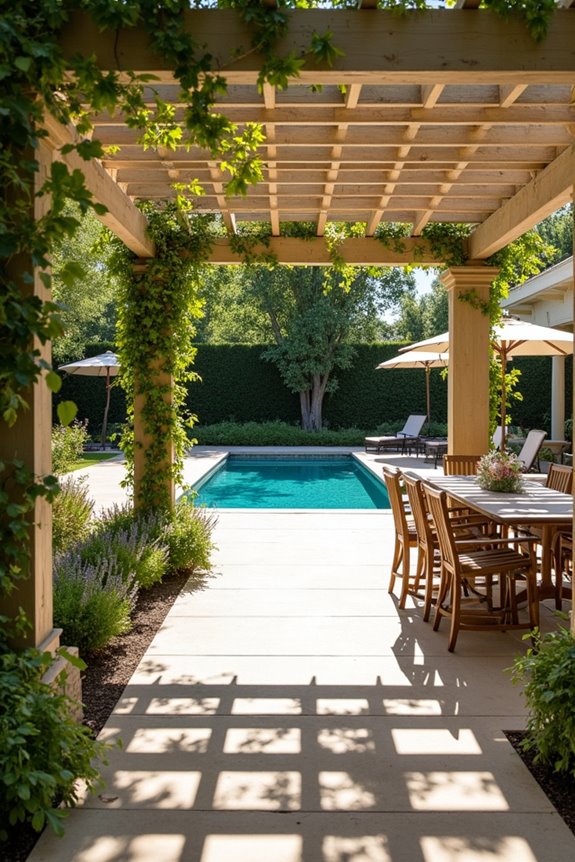
What height works best for your pergola?
Your intended use determines the ideal pergola height. For dining areas, you’ll want 8–9 feet of clearance. This height accommodates tables, seating, and overhead lighting without feeling cramped. Around pools or hot tubs, aim for 8.5–10 feet. Extra headroom allows steam to dissipate properly and keeps you comfortable.
Garden and pathway pergolas work well at 7–8 feet. This height supports climbing plants while maintaining easy passage underneath. If you’re attaching your pergola to an existing structure, match the adjacent eaves. That typically gives you 7.5–9 feet.
Freestanding designs in larger spaces can justify 10–12 feet. Greater height improves air circulation significantly. You’ll also accommodate bigger shade structures more easily. Consider your specific purpose first. Then select dimensions that balance function with your space’s proportions.
Standard Pergola Heights and How to Measure Them
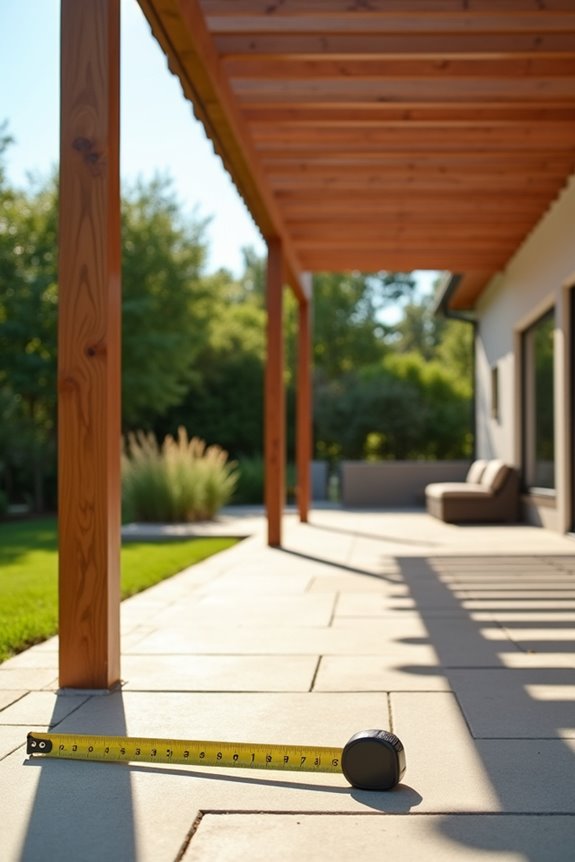
How do you know which height measurement works for your pergola? Start by measuring your space carefully. You’ll need beam end to beam end width and projection measurements to determine proper installation tips. Standard pergola height ranges from 8 to 12 feet, with 10 feet being most common. However, head clearance matters—aim for at least 7 feet minimum so you’re comfortable underneath. For attached pergolas, align your column height with existing house eaves, typically 7.5 to 9 feet. Most column height options come in 8 or 10 feet sizes. Check local building codes before finalizing dimensions. Measure twice, order once. Your pergola’s success depends on these foundational measurements matching both your space and comfort needs precisely.
How Material and Design Affect Your Pergola Height
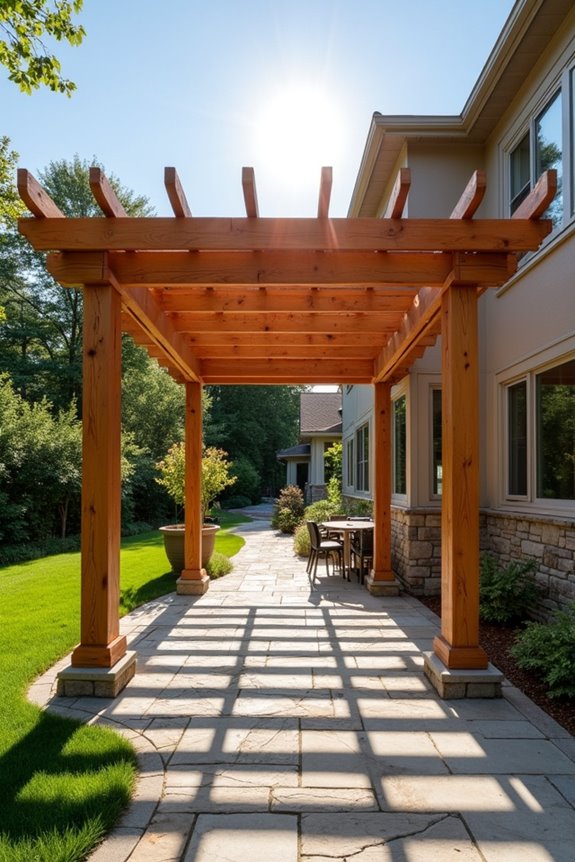
Once you’ve nailed down those standard measurements, your choice of materials and design style shapes what height works best for your space. Aluminum pergolas and fiberglass options enable longer spans without sagging. This means you can go taller while maintaining stability. PVC materials work similarly. Your design choice matters too. Modern louvered roofs need extra ceiling clearance for motorized components and airflow. Attached pergolas should mirror your home’s height for architectural harmony. Freestanding structures have more flexibility. If you’re adding lighting and fans, plan for 8–9 feet minimum clearance. Material impact directly influences installation tips and final proportions. Think about what you’re installing before committing to dimensions.
Site Factors That Determine Your Pergola’s Height
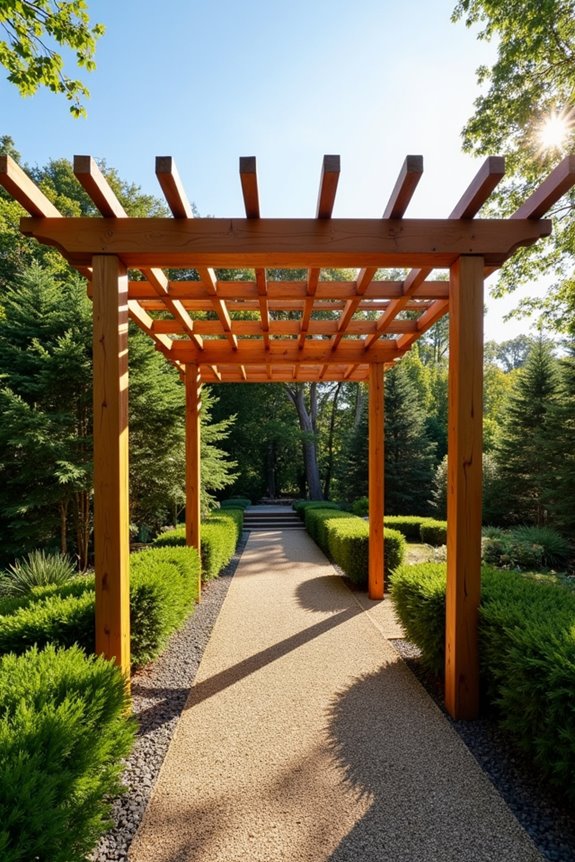
Beyond materials and design, your specific location plays a significant role in deciding how tall your pergola should be. You’ll need to consider several site-specific factors that directly impact your pergola height and installation success.
| Factor | What It Means |
|---|---|
| Roofline and Home Architecture | Your pergola should complement your house’s visual style and eave height |
| Building Codes and Zoning Restrictions | Local regulations may cap allowable heights and require permits |
| HOA Guidelines | Your neighborhood association might impose specific height limitations |
| Ground Conditions | Freezing areas need 2–3 extra feet for stable post depths |
Attached pergolas typically align with your house eaves for visual consistency. Freestanding pergolas offer more flexibility. Wind considerations and earthquake zones require professional engineering input for taller structures. Check your local requirements before building.
Custom Pergola Heights and Professional Planning
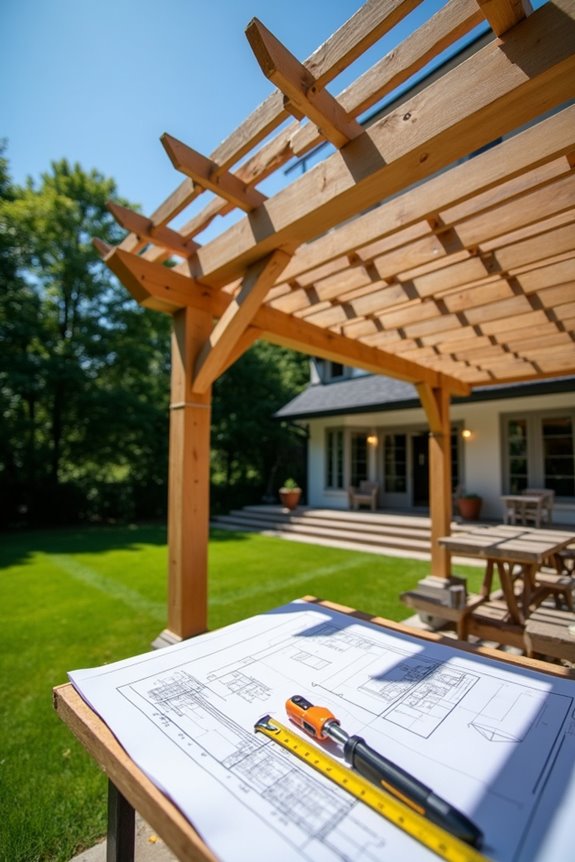
What if your ideal pergola doesn’t fit standard measurements? You’ll need professional planning. Working with experienced contractors helps you navigate custom pergola heights successfully. They align your structure with existing architecture, landscape features, and sightlines for proper integration.
Professional designers create 3D design previews. These show exactly how your pergola fits your space. Height considerations must account for ventilation and lighting clearance. You’ll also need to check local codes and permits before building.
Custom heights sometimes require structural reinforcement. This ensures safety and durability. Azenco offers motorized R-BLADE louvers and fixed R-BREEZE louvers for precise sun and shade control at any height.
Plan for expandable options too. Your pergola might need fans, heaters, or lighting later. Professional planning prevents costly redesigns. You’re investing in a structure that’ll serve your family for years.