

Cucumbers don’t strictly need a trellis, but vertical support produces better results.
Trellising improves air circulation around foliage, which reduces fungal diseases like powdery mildew.
Your fruit stays cleaner, off the soil, and easier to harvest.
Vining varieties benefit most from vertical support, while bush types succeed on the ground.
You’ll maximize space and get better yields per square foot when you trellis.
The setup takes minimal effort and delivers real benefits for most growers seeking superior outcomes.
Do Cucumbers Require a Trellis?
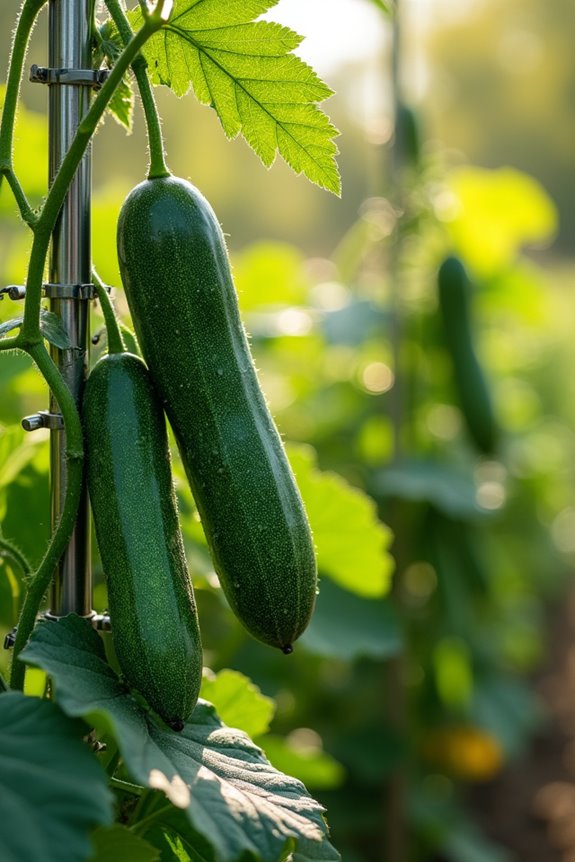
While cucumbers don’t strictly need a trellis to grow, using one offers real advantages that many gardeners find worthwhile. You’ll notice improved air circulation around the foliage. This means fewer fungal diseases. Your fruit stays clean and off the soil.
Using a trellis improves air circulation, reduces fungal diseases, and keeps fruit clean and off the soil.
Without a trellis, you’re dealing with sprawling vines. They need more mulch. They require constant maintenance. Your garden space gets consumed quickly.
Here’s the practical reality: trellising saves you room. Your harvesting becomes easier. You’ll spot ripe cucumbers faster without digging through leaves.
Your choice depends on three factors: garden size, cucumber variety, and management style. Vining varieties benefit most from trellising. Bush types handle ground growing fine.
Consider your situation honestly. Space-limited gardens work better with trellises. Larger yards work either way.
How Cucumber Vines Climb and Why They Sprawl
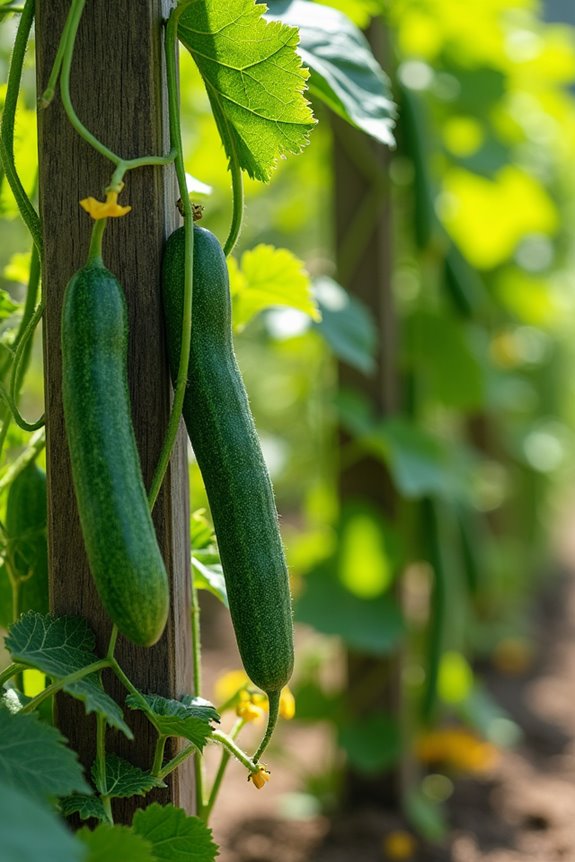
Understanding how cucumber vines grow helps you see why trellising works so well. Your cucumber vines are naturally long and flexible. They sprawl across soil without support. But here’s the thing—they’ll grab onto nearby structures as they grow.
Vines weave through lattice or netting rather than climbing straight up. This natural behavior means you won’t need to tie them manually. Most varieties handle this independently.
Trellising does more than save space. It improves airflow around your vines. Better airflow reduces humidity levels near the foliage. Lower humidity means fewer disease problems affecting your plants.
Think of it this way: a trellis works with your vines’ instincts, not against them. You’re simply providing what they’d naturally seek anyway—a vertical support to climb upward.
Cucumber Varieties That Benefit Most From Trellising
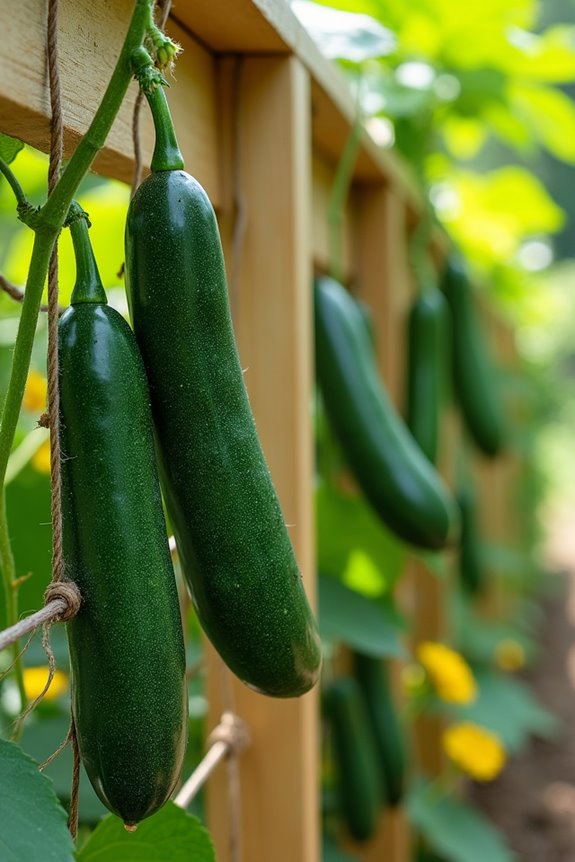
Not all cucumbers need a trellis, but vining varieties perform significantly better with one. Vining cucumbers are your best candidates for trellising systems. They grow tall and produce more fruit when supported vertically. Large slicing cucumbers with vigorous foliage particularly benefit from tall trellises—five to six feet high prevents sprawling and leggy growth. Bush cucumbers, by contrast, stay compact and don’t require support, though you can train them upward for better air circulation. Disease-resistant hybrids are especially smart choices for trellised vining types. They handle cucumber beetles and fungal pressure better. When you’re planning your garden, prioritize vining cucumbers first. Their vertical growth improves fruit quality and makes harvesting easier. This strategic approach maximizes your trellis investment and garden space.
When You Can Skip the Trellis (And Still Succeed)
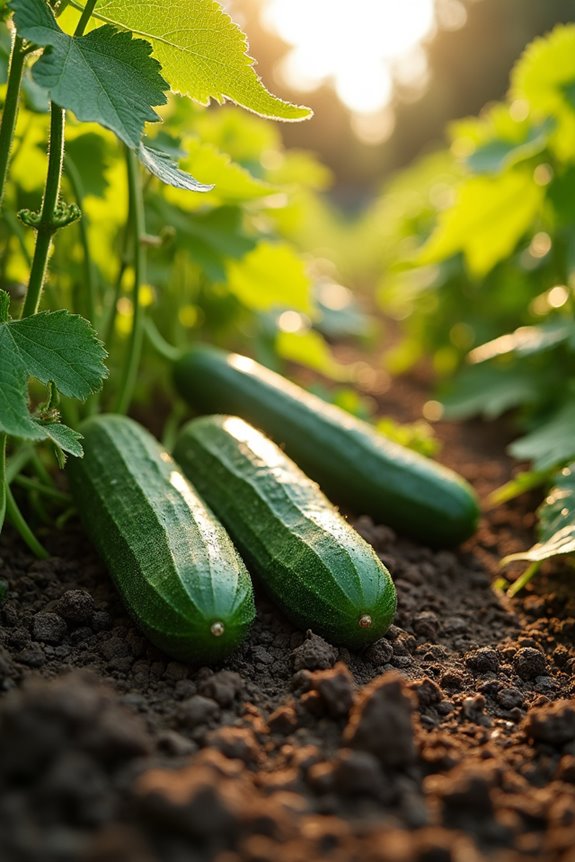
You can absolutely skip the trellis. Bush varieties don’t need vertical support because they’re bred to stay compact and bushy rather than sprawl outward like vining types. If you’ve got ample garden space, ground-growing cucumbers will succeed just fine—you’ll just need to manage the extra weeding and watch for disease spots where leaves touch soil.
Bush Cucumber Varieties Work
If you’ve got limited garden space, bush cucumbers are your answer. These compact plants don’t require trellis necessity because they naturally stay small and manageable. You’ll grow them successfully in containers, raised beds, or patios without any vertical support system.
Bush varieties offer space-efficient gardening that vining types simply can’t match. They produce well on the ground. You won’t sacrifice yield by skipping the trellis.
That said, you can still train bush cucumbers onto supports if you want. Adding a simple stake or low trellis improves airflow around plants. Better airflow reduces fungal diseases. It also makes harvesting easier when you’re working in tight quarters.
Choose disease-resistant cultivars for extra protection. Maintain consistent watering and crop rotation practices. These basics matter more than trellising for your success.
Space Availability Determines Need
How much room do you actually have? Your available space determines whether trellising matters for your cucumber success.
If you’re growing in a sprawling garden bed, ground vs trellis becomes less critical. Ground-grown cucumbers still succeed with ample horizontal area to spread freely. You’ll sacrifice some convenience. But you’ll gain flexibility.
Small gardens tell a different story. Container growers and tight spaces need trellising to maximize yield potential. Vertical growth via trellising saves precious ground area while keeping your vines productive.
Here’s the practical reality: ground-grown cucumbers demand more real estate than trellised plants. Without vertical support, vining varieties won’t reach their full production capacity in compact spaces. Your fruit also touches soil more frequently, inviting pests and rot.
Your space limitations ultimately decide whether trellising becomes necessary or optional.
Main Benefits: Healthier Plants, Easier Harvests, Disease Prevention
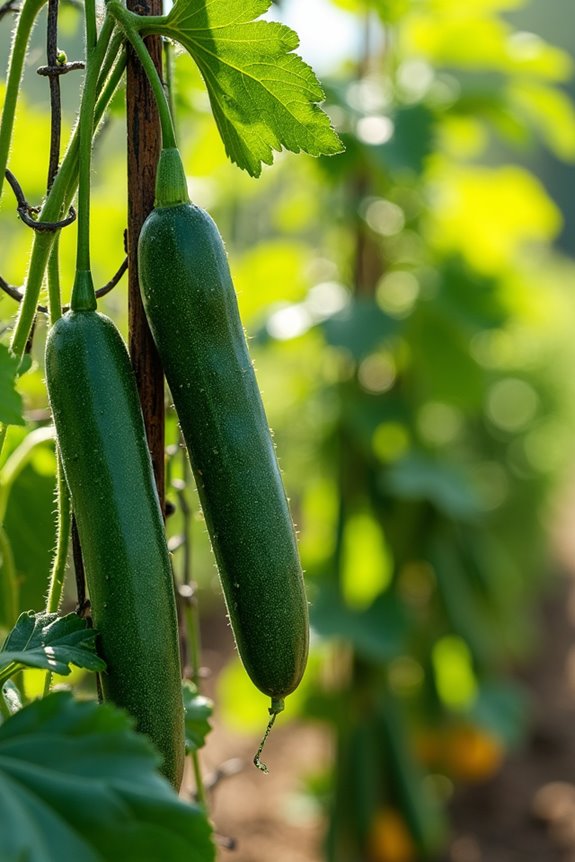
Why settle for cucumbers sprawled across wet soil when a trellis changes the outcome? You’ll discover three key benefits that make trellising worth your effort.
Better air circulation around vines prevents moisture buildup. This directly tackles powdery mildew and other fungal diseases that plague ground-grown cucumbers. Your plants stay healthier longer.
Vertical growing keeps fruit elevated and clean. You’ll harvest straighter cucumbers that look store-ready. Picking becomes simpler since ripe fruit hangs at eye level instead of hiding under leaves.
Space savings matter tremendously. One trellis occupies minimal ground real estate while supporting abundant harvests. Perfect for small gardens.
| Benefit | Result |
|---|---|
| Better air circulation | Disease prevention |
| Elevated fruit | Easier harvests |
| Vertical growth | Maximum yields |
Space-Saving Advantage in Small Gardens and Raised Beds
You’ll maximize your garden space by growing cucumbers vertically. When you trellis vining varieties upward instead of letting them sprawl across the ground, you’re freeing up valuable real estate for other crops or pathways. In raised beds especially, this vertical approach increases your harvest per square foot while keeping fruit off soil where disease spreads.
Vertical Growth Maximizes Space
Space on the ground matters. When you grow cucumbers without a trellis, they sprawl across your bed and consume precious real estate. Vertical growth changes this equation entirely. By training vines upward on a trellis, you’re using airspace instead of ground space—a practical solution for small gardens.
Here’s what vertical growing accomplishes:
- Uses 5–6 feet of height instead of spreading horizontally across multiple square feet
- Allows 12–24 inch spacing between plants instead of requiring wider distances
- Frees up ground space for other vegetables or pathways
A tall trellis supports heavier fruit without breakage. The vines climb naturally. You’re stacking your cucumber production vertically. In raised beds or containers, this approach becomes invaluable. You’re maximizing every inch available. That’s efficient gardening.
Raised Bed Efficiency Gains
Raising your garden bed brings new advantages to vertical cucumber growing. You’ll maximize your raised bed efficiency by installing a trellis. This simple structure frees up valuable ground space. Multiple cucumber plants now fit in the same footprint.
Vining varieties on a trellis reduce fruit contact with soil. Your cucumbers stay cleaner and disease-free longer. Better air circulation around the vines prevents powdery mildew. Fungal diseases become less of a problem.
A 5-6 foot tall trellis works perfectly for small gardens. You’ll accomplish more in less space. Weeding becomes easier. Pruning takes less time. Harvesting happens faster when you’re not crawling through sprawling vines.
Your raised bed transforms into an efficient growing system. You join gardeners who’ve discovered this space-saving approach.
How Close Should You Space Trellised Cucumbers?
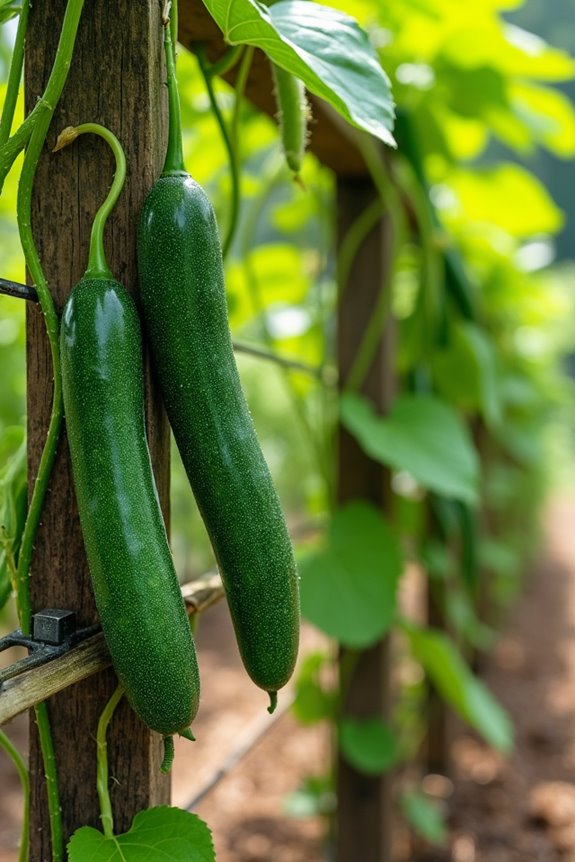
What’s the right distance between your trellised cucumber plants? Getting this spacing right supports healthy growth and easy harvesting.
Spacing guidelines for trellised cucumbers:
- Vining cucumbers need 12 to 24 inches apart within rows. This prevents overcrowding while supporting vertical growth.
- Large slicing varieties require 2 to 3 feet between plants. Their leafy growth demands extra room on the trellis.
- Smaller pickling cucumbers fit 12 to 18 inches apart. Their compact nature allows tighter spacing than slicing types.
Space rows 3 to 4 feet apart. This creates airflow around plants and reduces disease risk. You’ll also move through your garden easily for maintenance and picking.
Adequate spacing prevents fungal issues and supports vertical growth on the trellis.
Trellis Options: Cattle Panels, String, Hardware Cloth, and Cages
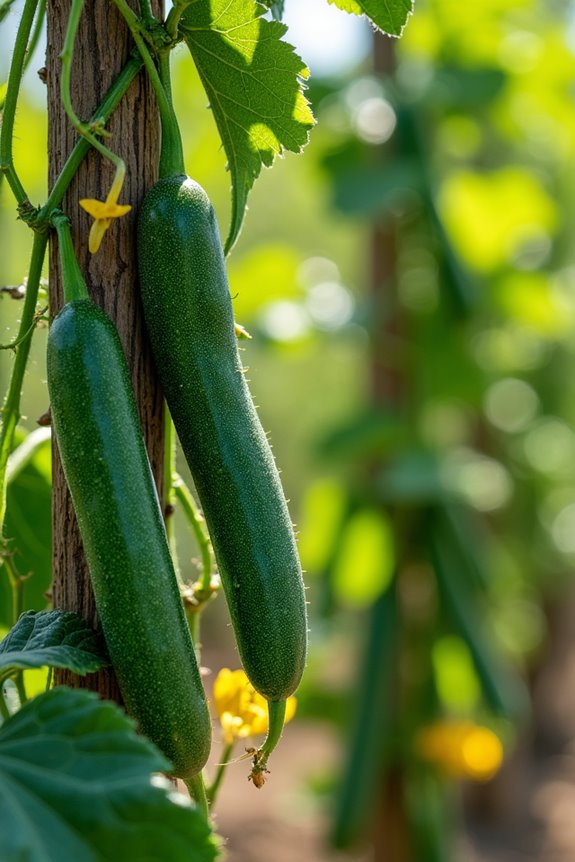
Once you’ve decided to grow cucumbers vertically, you’ll find several sturdy support systems to choose from. Cattle panels convert into trellis arches quickly and affordably. They work well for vigorous vines needing strong backing.
String trellises offer flexibility. Vertical lines secured to posts guide your cucumbers upward as they grow. This trellis option works well for most gardeners.
Hardware cloth creates grid-like support. The 4- to 5-inch squares attach to fence posts and provide excellent vine training. Your cucumbers won’t slip through easily.
Cages suit compact or container plantings. They’re less ideal for vigorous varieties but work fine for smaller plants. Each trellis option affects installation time, stability, and harvest ease differently. Choose based on your cucumber variety and garden space available.
Training Vines to Climb: What to Do in Week One
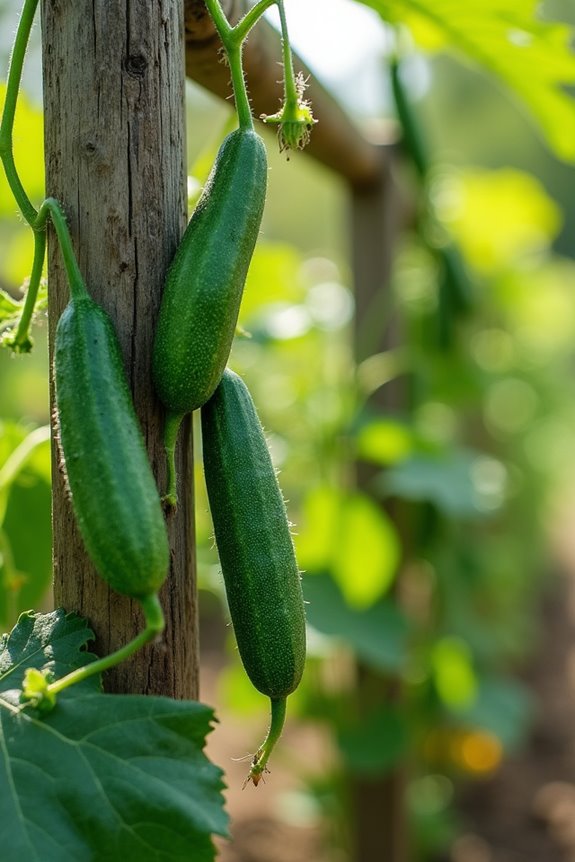
How do you turn a sprawling cucumber plant into a vertical climber? Week one sets the foundation. Your job is guiding those eager vines upward before they sprawl everywhere.
Start by securing the first shoots to your trellis using soft ties or weaving them through lattice. Cucumbers naturally climb but need initial direction. Monitor daily for tendrils and tips that’ll latch onto support structures. Adjust growth as needed to keep everything aligned.
Your week-one action plan:
- Gently guide new growth toward the trellis or support structure to establish climbing patterns
- Use soft ties or weave shoots through lattice as they appear
- Check daily for tendrils and adjust positioning to prevent misalignment
A sturdy 5–6 foot trellis provides the stable path your lengthening vines need. This early training prevents later shading and crowding. You’re establishing the conditions for success now.
Ground Growing vs. Trellises: Which Produces Higher Yields?
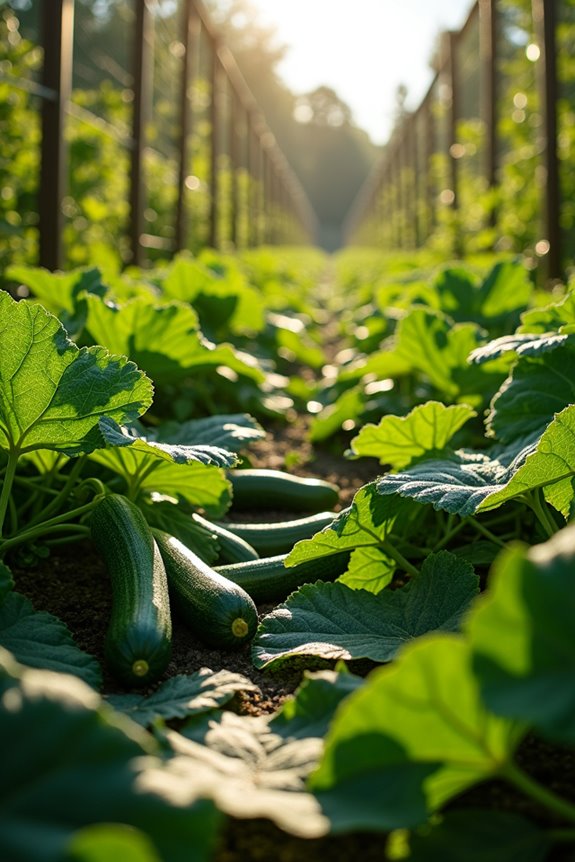
The real advantage of trellising shows up in your yield per square foot. You’ll fit more plants vertically when you’re trellising compared to ground-growing setups. Ground-growing cucumbers sprawl across your garden bed. They demand considerable space and compete for resources. This spread reduces your yields per square foot significantly.
Trellised vines climb upward instead. Better airflow circulates around each plant when you’re trellising, which means fewer diseases attack your cucumbers. Healthier plants produce more fruit. Vining varieties on tall trellises outperform bush types grown on ground level because they receive increased sun exposure throughout the day.
Your yields depend on variety selection, spacing decisions, and management practices. Disease-resistant vining varieties on proper trellises commonly exceed ground-growing yields in small spaces. You’ll see the difference in your harvest.
Overcrowding Problems (and How Trellising Prevents Them)
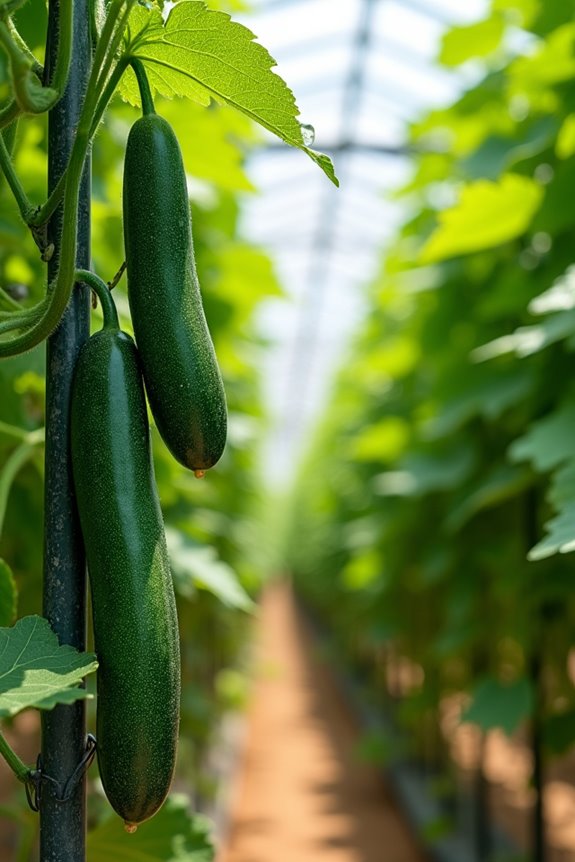
When you crowd cucumber vines together on the ground, you’re asking for trouble. Dense planting creates humidity pockets where disease spreads fast and pests thrive, while tangled vines compete for nutrients and make harvesting a frustrating guessing game. Trellising solves this by spacing your vining cucumbers 12–24 inches apart vertically, improving air flow around leaves and letting you spot ripening fruit before it hides under a tangle of overgrown foliage.
Spacing Requirements For Vining Cucumbers
Why does spacing matter so much? When you grow vining cucumbers, proper spacing prevents the crowding that invites disease and frustration. A trellis helps you manage spacing efficiently, but you still need to follow guidelines for plant health.
Space vining cucumbers 12 to 24 inches apart within rows. Keep 3 to 4 feet between rows for airflow. This spacing strategy creates several benefits:
- Disease prevention: Air circulation reduces fungal infections and mildew
- Easier harvesting: Vines won’t entangle, and fruit stays off soil
- Better light penetration: Each plant gets sunshine it needs to produce quality cucumbers
Using a trellis supports this spacing plan effectively. The vertical structure lets you plant closer together while maintaining the airflow your cucumbers require. You’re creating an environment where your vining cucumbers perform well.
Disease Spread From Plant Crowding
Overcrowding creates ideal conditions for disease. When you pack cucumber plants too closely together, you trap humidity around the leaves. This moist microclimate becomes a breeding ground for fungal diseases like powdery mildew and downy mildew.
Dense crowding limits airflow through your plants. Poor air circulation keeps leaves wet longer, promoting foliar and stem rot. You’re basically creating a disease factory in your garden.
A trellis solves this problem effectively. By training vines vertically, you increase airflow markedly and lift fruit away from wet soil. You can space vining cucumbers 12–24 inches apart instead of cramming them together.
Regular pruning on your trellis prevents fruit clustering. This reduces cross-infection between adjacent plants. You’ll notice less disease and improved foliage when you use vertical growing methods.
Vertical Growth Solves Space Limitations
How much space do your cucumbers actually need? If you’re growing in a small garden, you’ll quickly discover that ground-level plants demand serious real estate. A trellis changes everything by letting vines climb upward instead of sprawling across your beds.
Vertical growth offers three major advantages:
- Space savings: You’ll grow more cucumbers using less ground area. Your garden stretches upward rather than outward.
- Better air flow: Climbing vines create separation between leaves and fruit. This reduces the humidity problems that encourage disease.
- Easier harvesting: Fruit hangs at eye level. You’ll spot ripe cucumbers instantly instead of hunting through tangled vines.
For dense plantings, a space-saving trellis isn’t just helpful—it’s practical. You’re not fighting overcrowding anymore. You’re gardening smarter.
Measuring and Installing Your Trellis System
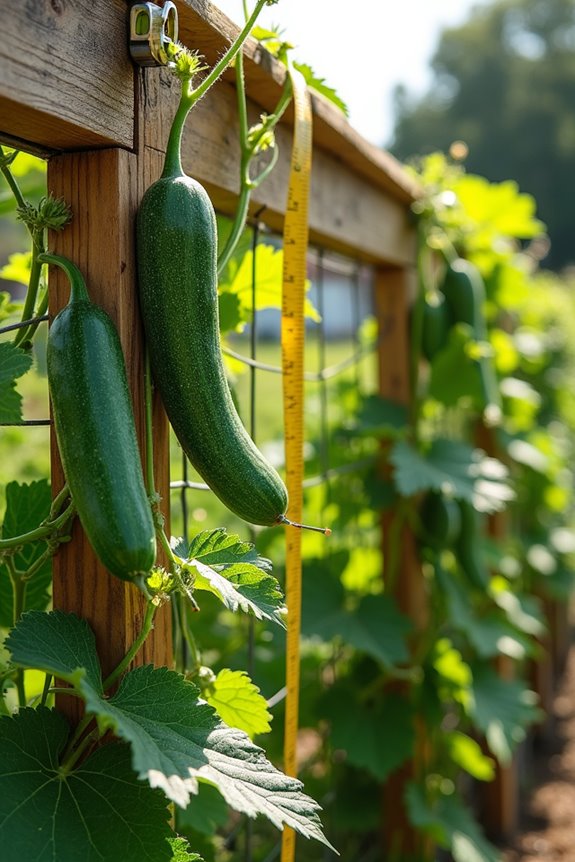
Once you’ve decided to grow your cucumbers vertically, getting the spacing and structure right is important. Start by measuring your garden bed carefully. Plant vining cucumbers 12 to 24 inches apart with 3 to 4 feet between rows. This spacing prevents overcrowding and allows air to circulate freely around your plants.
Next, build your trellis system. You’ll want a sturdy structure standing 5 to 6 feet tall. Use 4- to 5-inch square hardware cloth or bamboo for strong support. Hammer posts deep into the ground for stability.
Attach netting or wire panels to create your vertical growing surface. When you’re ready, train the vines by weaving them through the trellis. This method encourages upright growth without heavy tying.
Conclusion
Conclusion
Should you trellis your cucumbers? The answer isn’t complicated. While cucumbers can grow on the ground, trellising gives you real advantages worth considering.
Here’s what you gain:
- Better air circulation reduces disease and keeps your plants healthier
- Cleaner fruit stays off soil and develops better quality
- Easier harvesting saves you time and backache from bending down
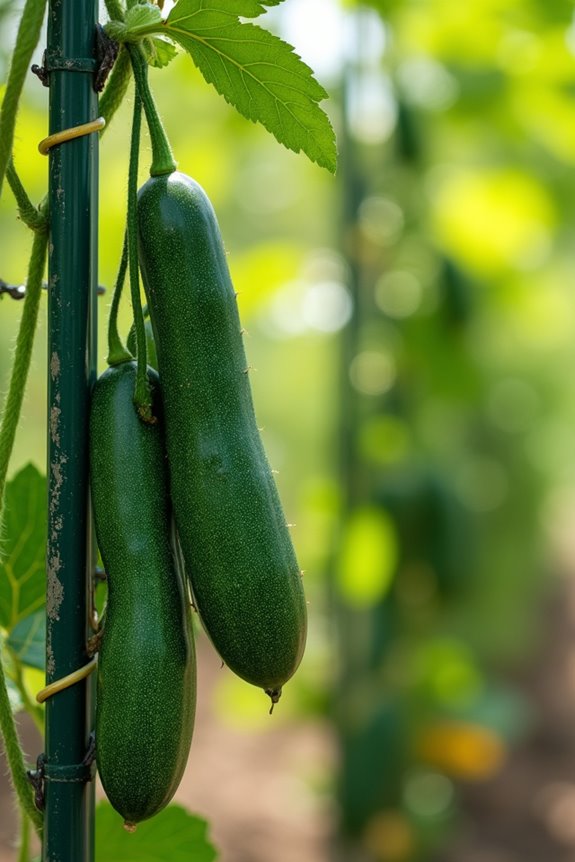
Many gardeners use trellising for cucumber growing. Your 5-6 foot trellis with proper plant spacing creates an efficient vertical garden. This approach works especially well in smaller spaces where ground room is limited.
Plant health improves noticeably with a trellis system. You’ll notice fewer fungal issues and stronger vines. While trellising isn’t absolutely required, the benefits make it worthwhile for most growers.