Trellises convert cramped gardens into vertical growing systems that triple your yield without consuming walkway space. You’ll grow cucumbers, beans, and tomatoes upward, which improves air circulation and reduces disease. Position your trellis on the north side of raised beds to avoid shading other plants.
Space vegetables strategically—two cucumbers per side about 24 inches apart works well. Use soft materials like pantyhose strips to support growing stems gently. Your garden will become more organized and productive.
Why Trellises Transform Small Garden Spaces
Ever wonder why successful gardeners with tiny plots seem to grow twice as much as their neighbors? The secret’s vertical gardening. Trellises direct climbers upward instead of outward. You’re stacking your garden in three dimensions.
Space optimization happens naturally with trellises. A single arched trellis turns a four-foot square into an arch that produces more yield. Your plants grow up. Your walkways stay clear. Everything feels less crowded.
A trellis creates better growing conditions too. Vines climbing upward get superior air circulation. Leaves dry faster. Fungal diseases can’t take hold as easily. You’ll notice stronger foliage throughout the season.
Plant inside the trellis frame. This positioning keeps everything accessible for watering, weeding, and fertilizing. You’re joining a community of smart gardeners maximizing every inch.
How Arched Trellises Create Garden Magic
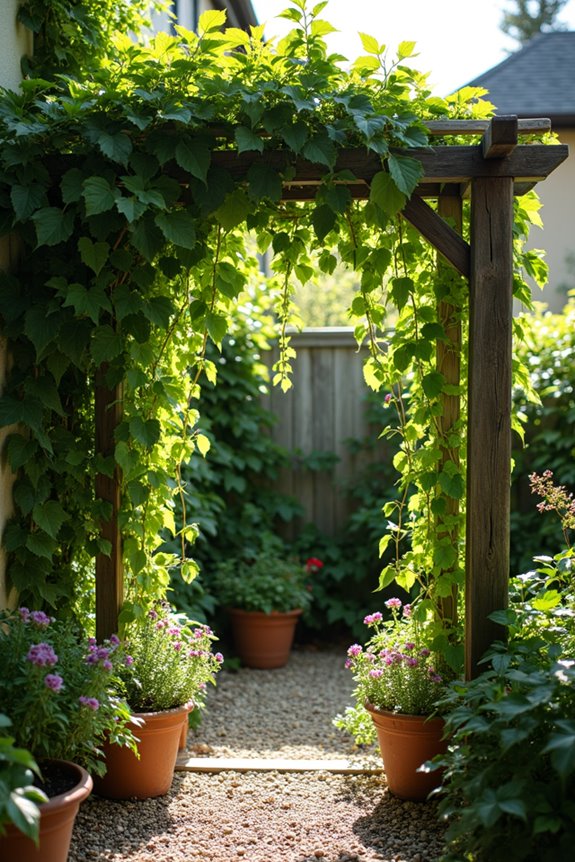
What happens when you add a curved frame to your garden? Arched trellises transform ordinary garden walkways into enchanting passages. They create visual symmetry and elegance. Your eyes naturally follow the graceful curves.
These structures concentrate sprawling vines onto smaller footprints. Melons and cucumbers climb vertically instead of spreading everywhere. You’re using just a few square feet of valuable space. Your space-saving garden design suddenly feels intentional and organized.
Arched trellises improve airflow around climbing crops significantly. Better air circulation prevents disease and strengthens plants. You’ll access your vegetables more easily for watering and weeding. Hanging fruit appears at peak condition. Maintenance becomes simpler when everything’s elevated and visible.
The Best Vegetables To Grow Vertically
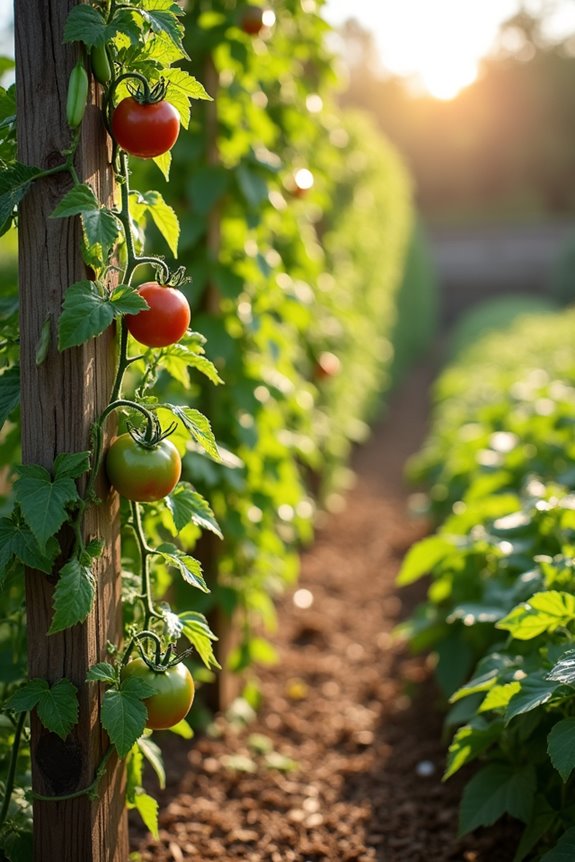
Not all vegetables do well on trellises. Choose wisely. Cucumbers excel vertically. Plant two per side, spacing them 24 inches apart. Train tendrils onto the structure consistently. Tomatoes work well with trellising. Use taller panels and train indeterminate varieties upward for maximum fruit production. Beans are natural climbers. Plant them at each metal rod’s base. Pole beans yield higher production than bush varieties when grown vertically.
Additional excellent choices exist. Sugar snap peas and snow peas do well on strong structures. Yard-long beans adapt well to vertical growing. Melons work with extra stem support during ripening. Choose smaller personal-sized varieties. Vining crops like squash need proper training to prevent crowding and disease.
Your garden space expands when you grow vertically. You’ll join successful gardeners who maximize their harvests efficiently.
Setting Up Your Trellis In Raised Beds
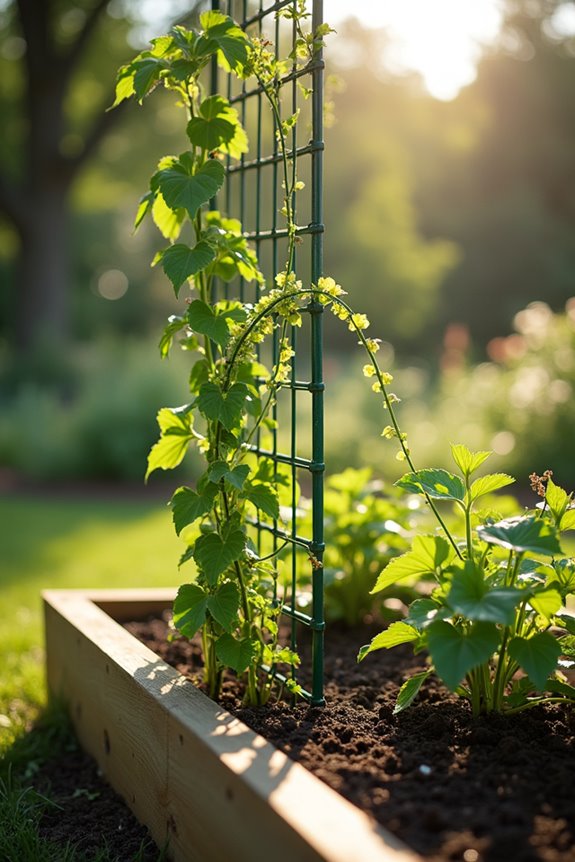
You’ll want to position your trellis strategically in the raised bed. Place it along the north side of the bed to avoid shading other plants, leaving about 6 inches of space inside the bed for soil and roots near the trellis structure itself. Plant your climbing vegetables on the inside of the trellis where you can easily water, fertilize, and pull weeds while letting vines grow through to the outside for better airflow and vertical growth.
Positioning Trellises In Beds
Where should your trellis actually go inside a raised bed? Strategic trellis placement is important. Position your structure before adding soil. This prevents disturbance and anchors it securely into the ground below.
Leave about 6 inches of space inside the raised bed near the trellis. This buffer zone gives you room to plant. You’ll also access plants easily for weeding, watering, and fertilizing.
Plant on the trellis’s inside edge. Your climbing vegetables grow through to the outside naturally. This setup simplifies maintenance considerably.
Space management matters here. Provide sufficient room around trellises for plant growth. Crowding creates problems like disease and overlap. Your climbing plants need adequate air circulation to produce well.
Spacing For Optimal Growth
How do you know if your plants have enough room on a trellis? You’ll adjust spacing from traditional ground-spread recommendations to vertical gardening measurements. This prevents crowding and promotes airflow around your climbing plants.
| Plant Type | Vertical Spacing |
|---|---|
| Tomatoes | 12-18 inches |
| Beans | 6-8 inches |
| Cucumbers | 12 inches |
| Peas | 4-6 inches |
Plant on the inside of your trellis structure. This positioning simplifies watering and fertilization while plants grow through to the outside. Leave about 6 inches inside your raised bed near the trellis for planting room. Allow sufficient space around trellises to accommodate growth and climbing movement. Standard four-foot cattle panels create effective support frameworks. Proper spacing results in stronger plants and easier maintenance throughout your growing season.
Planting Inside The Trellis
Once you’ve got your spacing measurements down, it’s time to position your trellis structure inside the raised bed itself. Install your trellis so it stands sturdy and centered. This setup lets you practice vertical gardening effectively.
Leave about 6 inches of space inside the bed for planting near the trellis. Plant seedlings on the inside rather than outside. This positioning makes weeding easier. Watering becomes simpler too. Fertilizing happens without obstacles blocking your access.
As plants mature, they’ll naturally grow through the trellis gaps and climb upward. Cucumbers, melons, beans, and tomatoes grow well with this method. You’re maximizing your raised bed area while maintaining good airflow around each plant.
Train vines to grow upward deliberately. Direct them through openings as needed. Proper spacing prevents crowding later. Your garden stays organized and productive.
Spacing Plants Correctly On Your Trellis
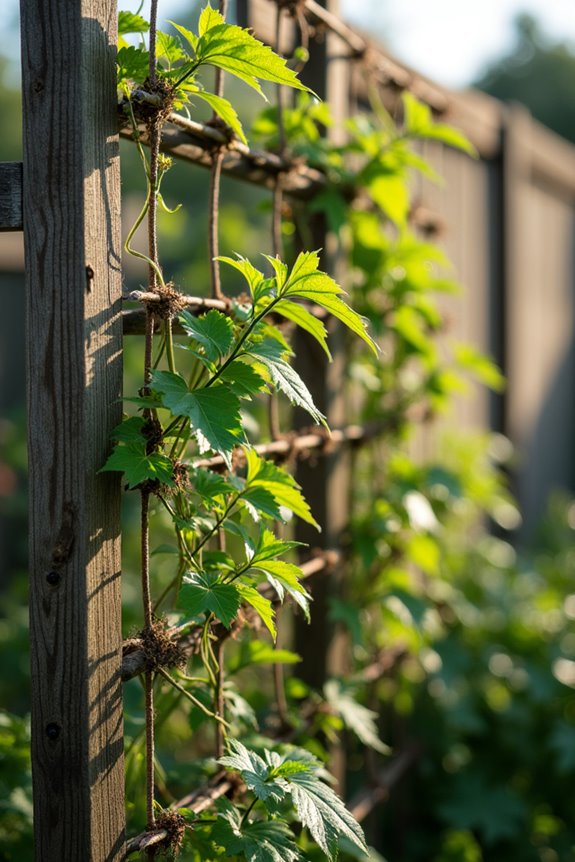
You’ll need to rethink spacing. Package instructions assume ground spreading, but vertical growing demands adjustments to prevent sparse gaps or overcrowded tangles of vines. Each crop type—from cucumbers needing 24 inches of root space between plants to pole beans requiring adequate overhead room—demands its own spacing strategy for optimal yields.
Adjusting Ground-Spread Spacing
- What’s the biggest mistake gardeners make when planting a trellis? They use ground-spread spacing. Package instructions assume horizontal growth. Your vertical gardening needs different math.
- Here’s the adjustment process. Take the recommended ground spacing distance. Reduce it by half for vertical structures. This creates optimal plant density on your cattle panel trellis.
- Why? Vertical plants grow upward. They need less horizontal room. Closer spacing maximizes your arch’s green coverage without overcrowding.
- Spacing matters for airflow too. Plants packed too tightly trap moisture. Disease thrives in humid conditions. Proper trellis spacing prevents this problem.
- Underplanting creates sparse, bare arches. Overplanting causes competition and stress. Hit the sweet spot. Your arch will produce fruit effectively.
Balancing Plant Density
Now that you’ve adjusted your spacing math for vertical growth, it’s time to put those numbers into practice. Spacing plants correctly prevents sparse arches or overcrowded tangles later on.
For cucumbers on a four-foot-wide cattle panel, plant two per side with 12 inches from edges. Space them roughly 24 inches apart along the trellis. This distance matters because it balances density for optimal airflow and prevents disease.
Pole beans need similar consideration. Plant one at the base of each metal rod so they climb without competing for light or nutrients.
Proper spacing around your vertical gardening setup accommodates growth and maintains access for watering, pruning, and harvesting. You’re creating breathing room. Good airflow keeps plants in better condition and produces better fruit. Getting density right transforms your trellis from cluttered to productive.
Spacing By Crop Type
Should spacing differ based on what you’re growing? Absolutely. Each crop has unique needs on your trellis.
For cucumbers, plant two per side. Space them about a foot from edges with roughly 24 inches between plants. This prevents crowding while maximizing your growing area.
Pole beans need vertical support. Sow them at the base of each metal rod on your trellis. They’ll climb upward and produce excellent yields when properly positioned.
Tomatoes require taller trellises and more space. Use suspended panels for indeterminate varieties. Train them upward, spacing plants generously to allow fruit development.
The standard four-foot-wide cattle panel works well for all three crops. Proper spacing ensures adequate airflow and reduces fungal disease—keeping your garden productive and disease-free.
Growing Cucumbers, Melons, And Beans On Trellises
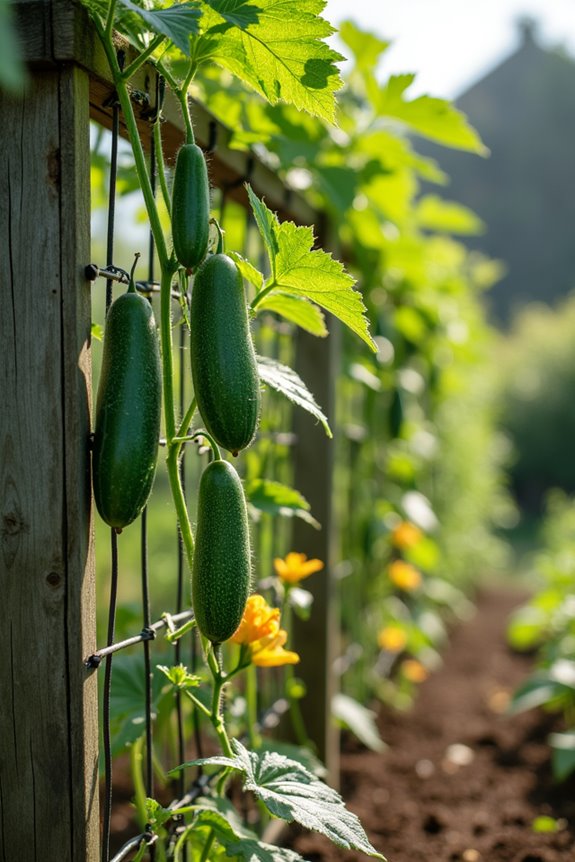
With the right vertical setup, you can grow some of your garden’s most productive crops while saving valuable ground space. Plant two cucumber plants per trellis side. Space them about a foot from edges. Allow roughly 24 inches between plants for root growth. You’ll need to guide their runners occasionally using soft materials.
Melons require similar spacing. Plant two per side. Choose smaller personal-sized varieties for easier support. As fruit develops and ripens, provide extra stem support to prevent breakage.
Beans deserve prime trellis real estate. Plant them at each metal rod’s base. Pole beans outperform bush beans when grown vertically. They’ll climb naturally with minimal training needed.
The key to success? Proper spacing prevents crowding. Good airflow keeps your crops productive.
Training Tomatoes And Squash On Trellises
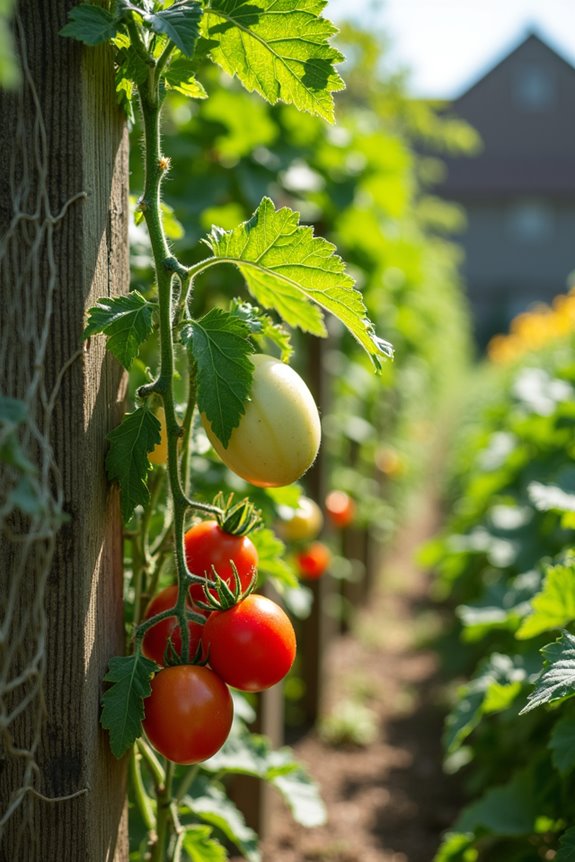
While cucumbers and beans climb naturally with minimal fussing, tomatoes and squash demand a different approach. You’ll want to use taller trellising structures for indeterminate tomato varieties. Train these vines upward to maximize vertical space and improve air circulation around fruit.
Squash needs careful consideration. Bush varieties resist vertical training and yield less when forced upward. Vining squash adapts better to trellises.
| Crop | Support Method | Key Tip |
|---|---|---|
| Tomatoes | Tall panels suspended vertically | Train indeterminate varieties only |
| Squash | Soft ties or pantyhose | Prevent stem breakage |
| Large Fruit | Slings for ripening | Extra support prevents damage |
When training either crop, space them about six inches inside your raised bed. Maintain sufficient airflow around your structures. This reduces fungal disease significantly. The result is stronger plants and better harvests.
Choosing Between DIY And Ready-Made Trellises
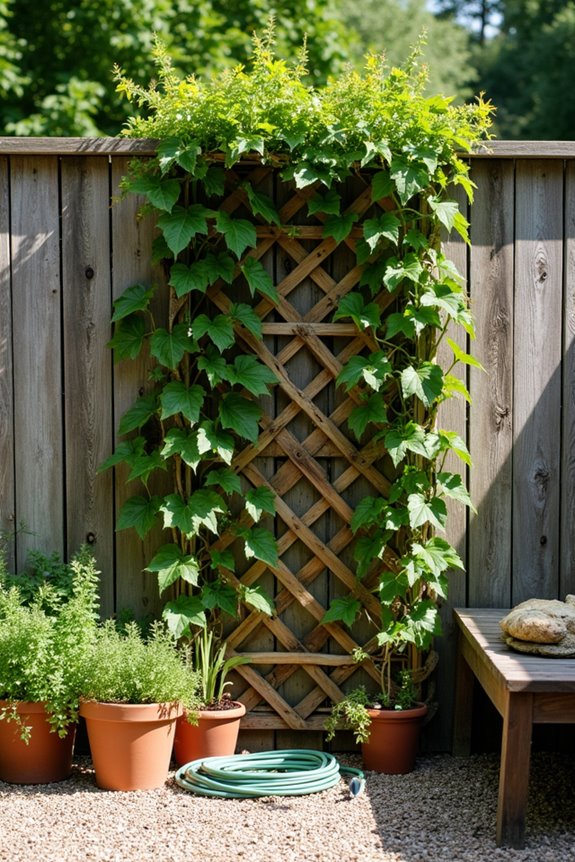
When you’re deciding between building your own trellis or buying one ready-made, you’ll need to weigh cost against durability and installation ease. DIY trellises like remesh panels (under $20) or wood frames ($40–$60) save money but require assembly time, while ready-made kits ($200–$500) come pre-built with included anchors for quicker setup. Your choice depends on your budget, how much time you can invest, and whether you want complete customization or convenient convenience.
Cost And Durability Comparison
Should you build or buy your trellis? The answer depends on your budget and how long you want it to last. Here’s what you’re really choosing between:
- DIY wooden trellises cost $20-$60 but last only one to two years
- Remesh options run about $7 per sheet with easier installation and lighter weight
- Ready-made kits range from $200-$500 with faster setup and sturdier construction
- Powder-coated steel trellises cost more upfront but offer superior rust resistance and durability
Building your own saves money initially. However, you’ll replace wooden trellises frequently. Ready-made options require a bigger upfront investment but eliminate repeated maintenance work. Steel materials resist weather damage better than wood. Consider your total spending over five years. Sometimes buying ready-made makes financial sense.
Installation Complexity And Flexibility
How much time and effort you’re willing to invest shapes whether you’ll go DIY or buy ready-made.
DIY options offer flexibility. You control mounting methods and timing. Ready-made kits prioritize speed. Installation complexity varies markedly between approaches.
| Trellis Type | Installation Time | Skill Level | Flexibility | Best For |
|---|---|---|---|---|
| Remesh Panel | 30 minutes | Beginner | High | Budget gardeners |
| Wood Frame DIY | 1-2 hours | Intermediate | High | Custom sizes |
| Ready-Made Kit | 15-20 minutes | Beginner | Low | Quick setup |
| Arch Trellis | 1-3 hours | Intermediate | Medium | Permanent structures |
| Cattle Panel | 45 minutes | Beginner | Medium | Sturdy support |
DIY flexibility serves you well during seasonal changes. Install panels when soil settles comfortably. Arch trellises need early installation before soil loading. Ready-made solutions eliminate guesswork completely. Choose based on your garden timeline and comfort level.
Soft Materials And Training Techniques That Work
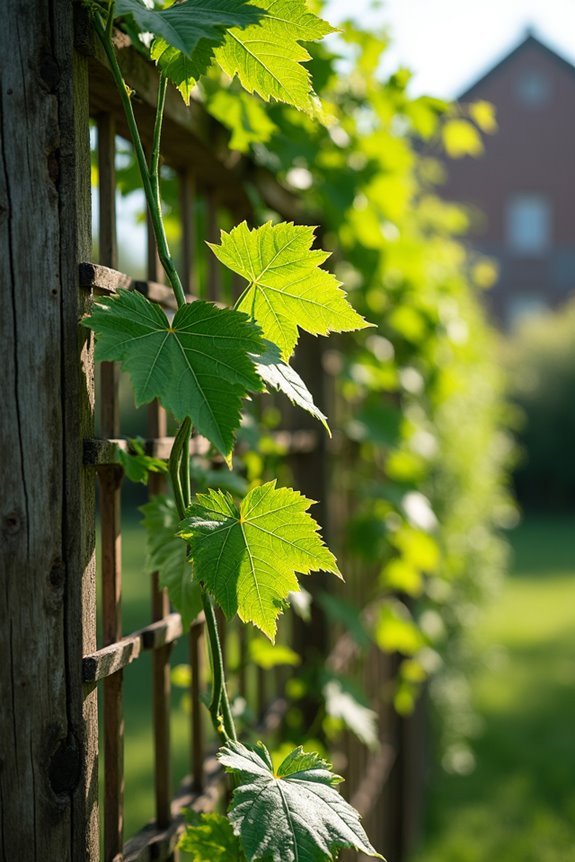
What you tie your vines with matters just as much as how you tie them. Hard materials like zip ties will damage tender stems. Instead, use gentle alternatives that let plants grow freely without injury.
- Pantyhose strips offer flexibility and won’t cut into expanding stems as your vines mature
- Cotton shoelaces provide soft support that moves with plant growth throughout the season
- Garden twine works well for wrapping runners along your trellis structure
- Plastic bags cradle heavy squash and fruit to prevent stem breakage
Place ties loosely around stems. You’re creating room for movement. As plants extend, re-tie them regularly to maintain support without constriction. This training approach keeps your trellis looking full while protecting vulnerable growth. Your vines will produce better yields when properly supported.
Your First Season Growing On A Trellis
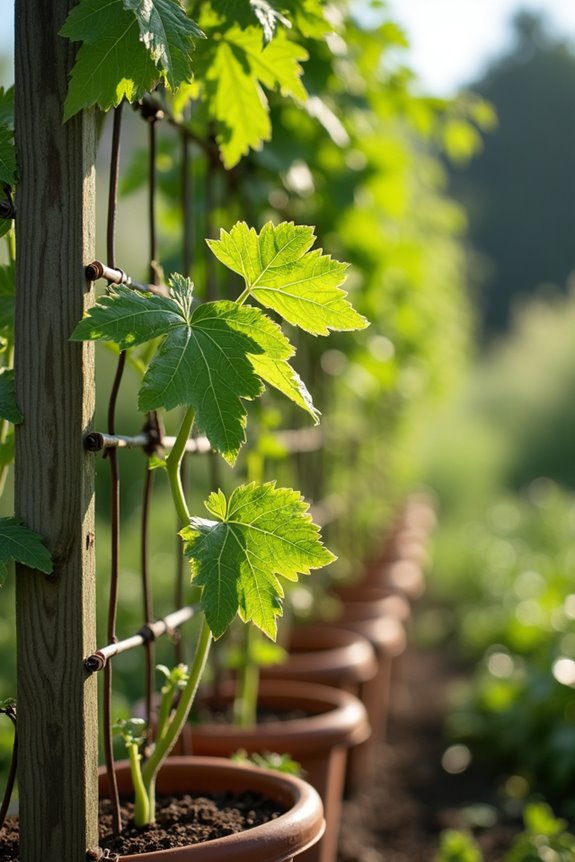
Your first season is where patience pays off. You’ll learn by doing. Start with cucumbers and tomatoes since they’re forgiving plants. Plant cucumbers two per side of your trellis about a foot from edges. Space them roughly 24 inches apart for proper growth and airflow.
Training requires consistency. Guide cucumber runners along the trellis as tendrils form. Use soft materials like garden twine or cotton shoelaces to secure vines gently. Hard ties cut into stems and damage new growth.
For tomatoes, choose indeterminate varieties and suspend panels vertically. This approach gives you more fruit with increased growing space.
| Plant | Spacing | Material |
|---|---|---|
| Cucumbers | 24 inches | Twine |
| Tomatoes | Varies | Pantyhose |
| Melons | 24 inches | Shoelaces |
Monitor spacing around your trellis. Crowding promotes fungal disease. You’re building skills that strengthen future seasons.