You’ll save garden space by training cantaloupe vines upward on sturdy structures like cattle panels or wooden A-frames instead of letting them sprawl. Use fabric slings or pantyhose to cradle developing melons and prevent stem damage. Space plants 36–42 inches apart in nutrient-rich soil, then guide tendrils daily onto your trellis using soft ties. Hand-pollinate female flowers with a small brush in early morning. Watch for yellow-buff rind color, pronounced netting, and stem slip to time your harvest perfectly. The inclined trellis method positions panels at 27 degrees for optimal weight distribution and drainage—a technique that offers practical advantages when you explore the full setup.
Why Grow Cantaloupe Vertically on a Trellis
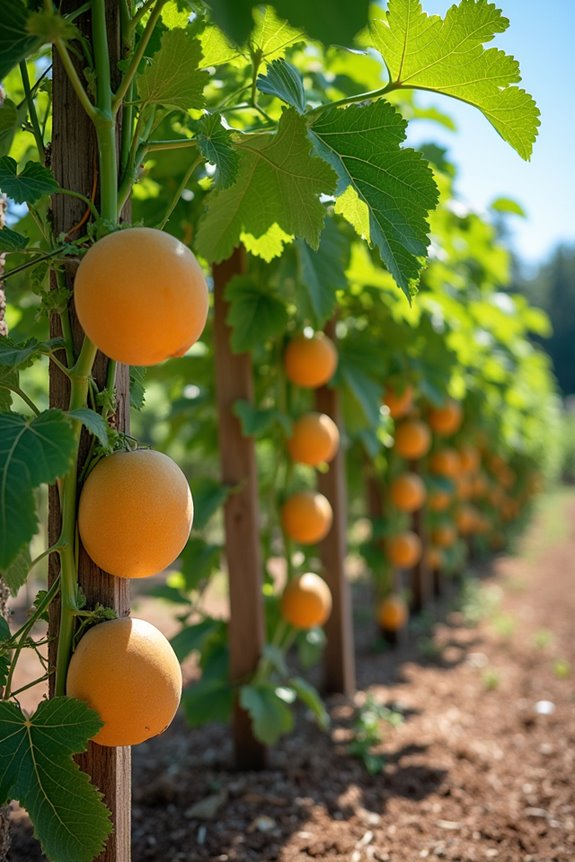
Why let your cantaloupe vines sprawl across your entire garden when they could climb? Trellising saves precious garden space. Your vines grow upward instead of outward. You’ll reclaim ground for other plants.
Keeping fruits and foliage off damp soil matters. Wet conditions breed disease and attract pests. Better air circulation dries leaves faster. You’ll notice fewer problems overall.
A sturdy trellis also prevents fruit damage. Heavy melons need support. Without it, stems break under weight. Trellising transfers that load to strong framework. Your cantaloupe stays secure as it develops.
Finally, trellises make your job easier. You’ll monitor ripeness without bending down. Fruits form on ground, atop trellis, or hanging freely. You control their position for optimal growth.
Trellis Strength and Size: Matching Structure to Melon Weight
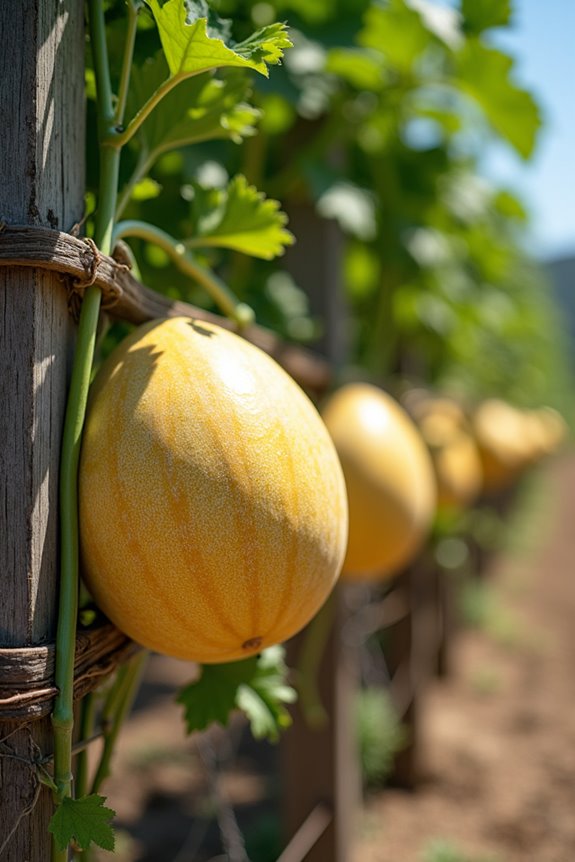
Now that you’ve decided to grow cantaloupe vertically, you’ll need to pick the right trellis structure. Your trellis strength directly impacts success. Heavier melons demand sturdy materials like cattle panels or thick-gauged field fencing. Lighter varieties work fine with netting or wooden A-frames, though they still need secure anchorage.
Size matters too. An 8-foot-tall trellis spanning 20 feet wide gives your vines plenty of room to sprawl in warm climates. These dimensions accommodate long cantaloupe growth without crowding.
Consider an inclined design angled about 27 degrees. This positioning distributes weight across multiple points—some fruit rests on ground, some on top, some hangs freely. Less direct stress reaches your vines’ stems.
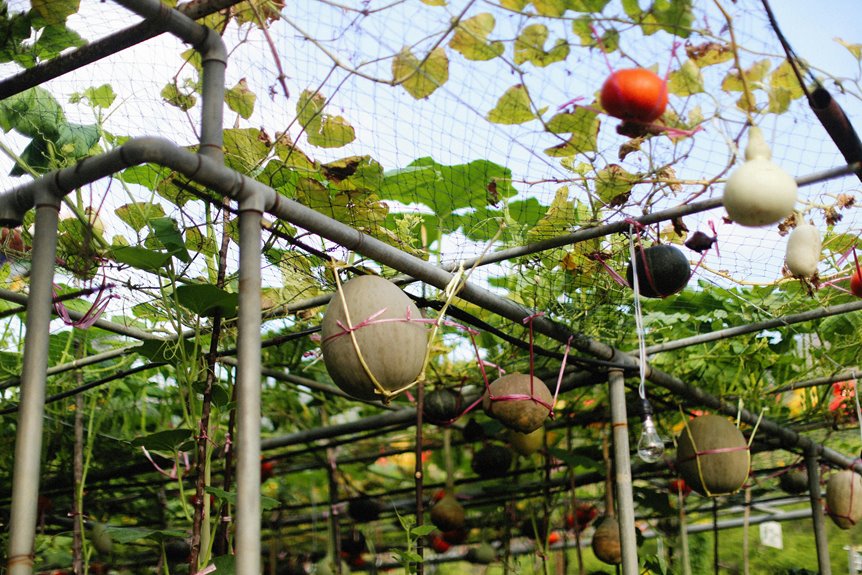
Use slings made from pantyhose, fabric, or mesh bags. These create hammock-like supports that transfer weight to your structure instead of straining delicate vine connections.
Pick a Trellis Type: Arches, Panels, Fences, and A-Frames
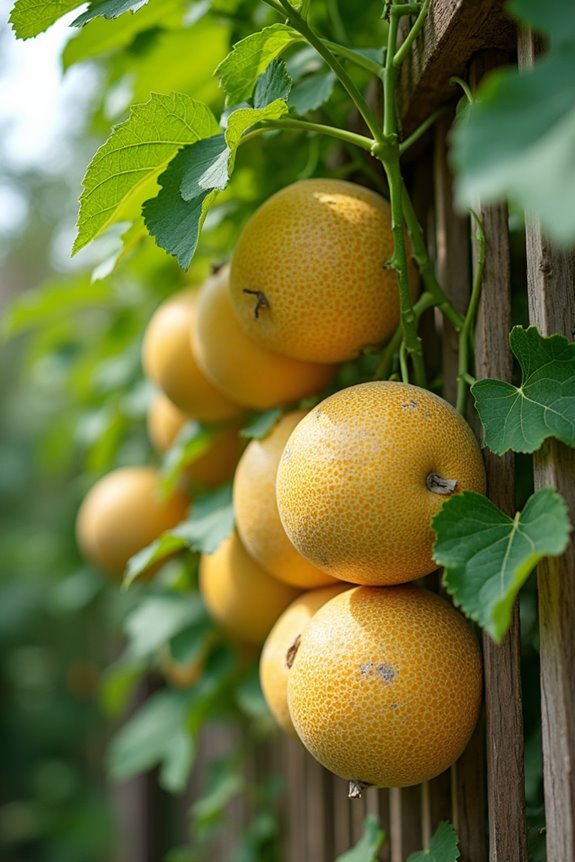
You’ll find that different trellis types—arches, panels, fences, and A-frames—each offer distinct advantages depending on your space and melon varieties. Strong materials like cattle panels or thick-gauged field fencing work best because they handle the weight of mature cantaloupes, which you’ll support using hammocks or fabric slings that cradle the fruit as it grows. Your choice depends on available space, vine length (up to 8 feet), and how wide you need to go (up to 20 feet in warm climates) to prevent crowding and maximize your harvest.
Sturdy Frame Materials Matter
Success with vertical cantaloupes depends on choosing the right trellis structure. You’ll want materials that won’t bend or sag under weight. Cattle panels and thick-gauged field fencing work best for heavier fruit. These sturdy options distribute weight evenly across your trellis frame.
Consider your melon’s eventual size when selecting materials. Smaller varieties (2–7 pounds) need less support than larger ones. Tall structures accommodate long vines better and prevent overcrowding. A-frames, arches, and panels all function well if properly constructed.
You can maximize space smartly. A 16-foot cattle panel cut in half creates a double-ended inclined trellis. This approach effectively doubles your growing area without extra materials.
Secure anchoring matters. Elevate the high end and anchor the low end on raised supports. This prevents soil compression and protects vines from damage.
Size Determines Structure Choice
What trellis type works best for your cantaloupes? It depends on your melon’s weight. Lighter varieties (2–3 lb) do well on wooden A-frames or arches. These structures require less material and setup time. Heavier melons demand sturdier options. Cattle panels or thick-gauged fencing up to 8 ft in trellis height work better for them. A double-ended inclined trellis using a 16 ft panel maximizes your growing space. It distributes weight evenly across both sides. Consider vertical panels or fences measuring 20 ft wide. This gives your long vines plenty of room. Lightweight slings support smaller fruit adequately. Heavier varieties need reinforced sling systems instead. Match your structure to your cantaloupe variety. This prevents collapse and supports proper growth.
Support Systems For Fruit
Which trellis type you choose depends on matching your structure to your cantaloupe variety’s weight and your garden’s layout. Arches and arch-based frames work well for long vines. They offer vertical space and make tending your plants easier. Panels cut in half create strong inclined trellises at a 27-degree slope. Position the low end on a raised support and secure the high end firmly. A-frames and wooden supports suit smaller melons weighing 2–7 pounds. Use hammock-like slings or pantyhose netting to transfer weight away from delicate stems. Tall fences or structures up to 8 feet high and 20 feet wide provide ample growing area in warm climates. Dual-ended panel setups double your growing space and improve yield. Each trellis type keeps fruit supported and off the soil, preventing rot and disease.
Select Cantaloupe Varieties That Thrive on Trellises
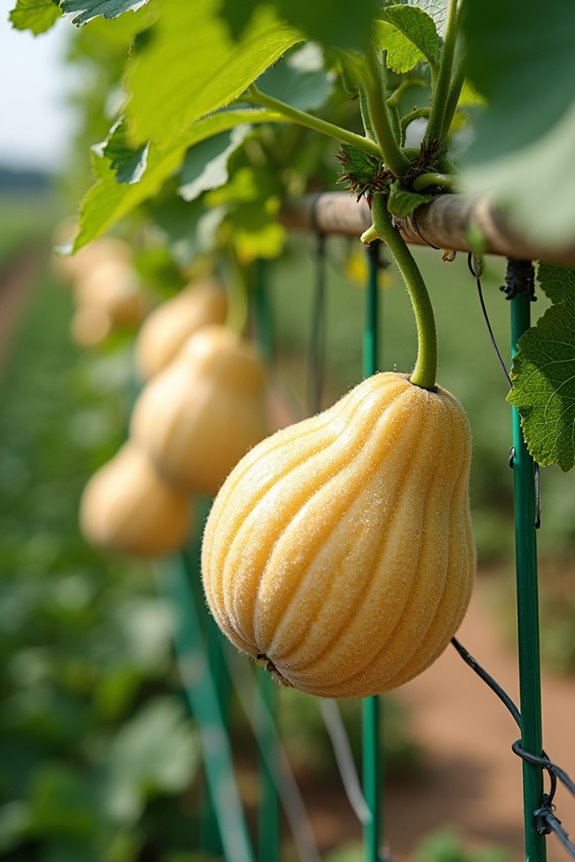
When you’re growing cantaloupes vertically, your variety choice makes or breaks the project. You’ll want smaller varieties weighing 2.5 to 3 pounds. These lighter fruits reduce stress on your trellis system and vines.
Sugar Cube stands out as the top choice for trellis growing. It produces prolific yields. The fruits stay sweet and disease-resistant. You get reliable 2.5–3 pound melons perfect for vertical support.
Look for varieties with strong netting and robust rinds. These features help fruits withstand trellis weight and wind pressure. Strong netting indicates maturity and durability—two essential qualities you need.
Skip large varieties for now. They demand sturdier support systems and heavier slings. Start with proven trellis-friendly options. You’ll experience faster success and join fellow vertical gardeners enjoying abundant harvests.
Prepare Your Soil and Raised Bed for Success
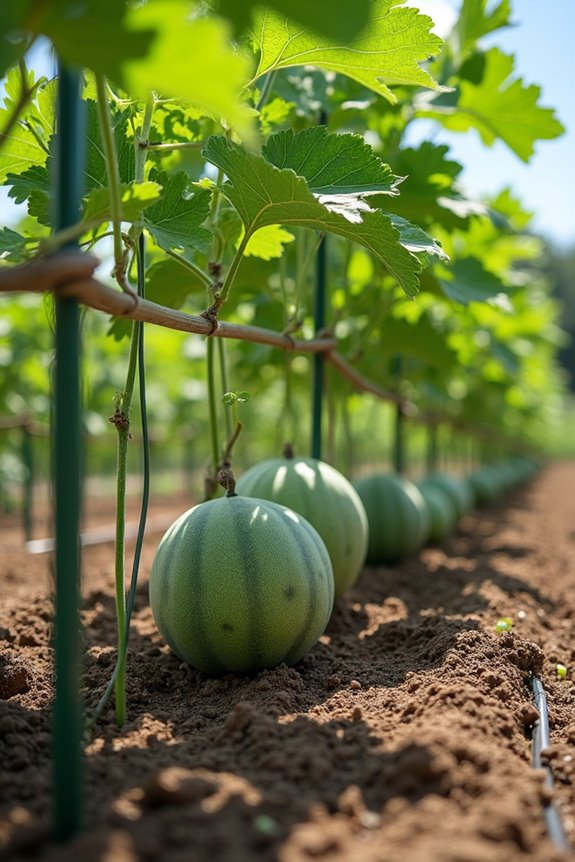
You’ll want to get your foundation right. Success with trellised cantaloupes starts with soil that’s warm, well-draining, and nutrient-packed—which means understanding your soil composition, building a proper raised bed, and enriching it with organic matter before planting.
Soil Composition and pH
What’s the secret to growing healthy cantaloupes on a trellis? It starts with getting your soil composition right.
You’ll want nutrient-rich soil. Mix compost and aged manure together. Add several inches of organic matter before planting. This builds a strong foundation.
Soil pH matters too. Cantaloupes prefer slightly acidic to neutral soil. Aim for a pH between 6.0 and 7.0. Test your soil first. Most garden centers offer affordable kits.
For raised beds, use a Mel’s Mix approach. Combine equal parts compost, peat moss, and vermiculite. This ensures excellent drainage and fertility. Add compost consistently throughout the growing season.
Don’t skip mulching. It regulates moisture and temperature while reducing weeds. Your trellis-grown cantaloupes will produce vigorous growth and sweeter fruit.
Raised Bed Construction Basics
Building a proper raised bed is your foundation for success. You’ll construct a 4 ft by 8 ft raised bed as your growing space. This size gives you plenty of room for multiple melon plants. Fill your raised bed with substantial compost and nutrient-rich soil mixtures like Mel’s Mix. This combination provides excellent drainage while retaining moisture your plants need.
Before planting, warm your soil to 70°F or higher. Consider using plastic film to pre-warm the soil faster. Space your melon plants 36–42 inches apart within the bed. This spacing allows vines to sprawl without crowding each other.
Add mulch around your plants once they’re established. Mulch conserves moisture and suppresses weeds naturally. Your raised bed setup creates the conditions needed for productive cantaloupe vines.
Nutrient Enrichment Techniques
Your raised bed’s success depends on what you put inside it. Start with Mel’s Mix-style medium, which combines compost, peat moss, and vermiculite to create a nutrient-rich environment for your cantaloupe. Before planting, amend your soil generously with several inches of aged manure and compost. This organic matter improves moisture retention and feeds your plants steadily throughout the season.
Don’t stop at planting day, though. Top-dress your bed with fresh compost every few weeks as your vines grow. This maintains consistent nutrition without overwhelming your plants. Mulch with cedar chips or straw afterward. It conserves moisture, suppresses weeds, and breaks down slowly to add more organic matter. Your cantaloupe will develop vigorous growth and sweeter fruit.
Plant Seeds or Transplants Near Your Trellis
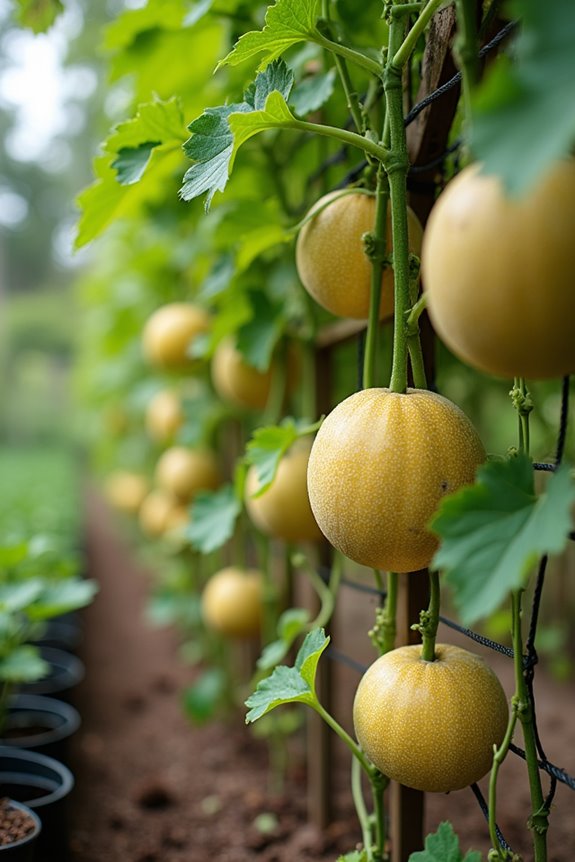
When should you plant? After your last frost date. You’ve got two solid options for getting melons in the ground.
Direct-sowing works great in warm climates (Zone 7 and up). Plant seeds half an inch deep in soil divots right next to your trellis. Point them down. Keep the soil consistently moist until they sprout.
Direct-sowing melon seeds works great in warm climates. Plant half an inch deep, keep soil moist until sprouting.
Starting indoors? That’s your move in cooler regions. Begin seeds about four weeks before your last frost date. Harden off your transplants gradually before planting them out. This toughens them up for outdoor conditions.
Space your plants thirty-six to forty-two inches apart. This gives them room to sprawl and climb. Use fertile, well-drained soil for best results. Once vines emerge, secure them immediately to your trellis structure. You’re setting up for success from day one.
Train Vines Upward as They Grow
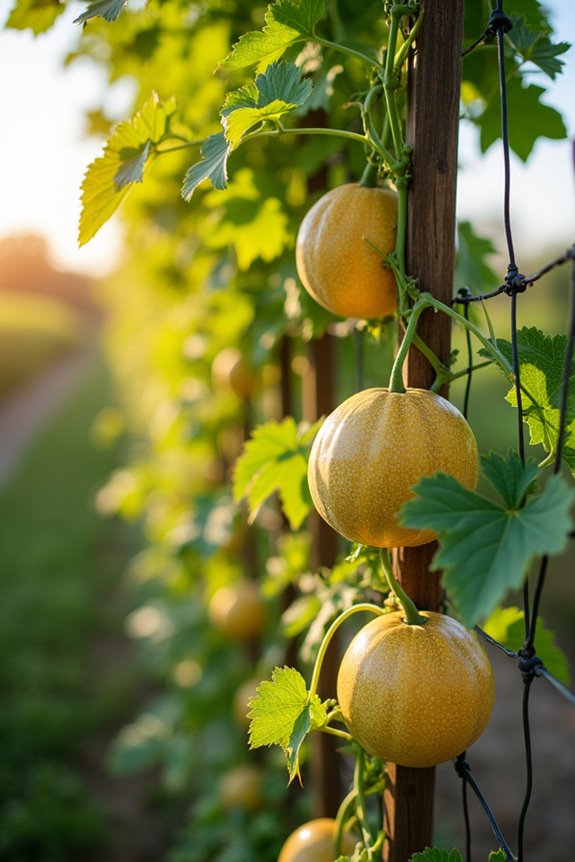
As your cantaloupe vines grow, you’ll need to reposition them daily onto the trellis panel, gently guiding new tendrils upward and securing them with soft ties—like strips of cloth or garden tape—that won’t cut into the tender stems as they thicken. This consistent positioning prevents vines from sprawling sideways or drooping downward, which keeps them climbing in the direction you want while maximizing sun exposure and air circulation around the developing fruit.
Daily Vine Positioning Matters
How do you keep sprawling cantaloupe vines from tangling into a chaotic mess? Daily vine positioning is your answer. You’ll tie vines to the trellis using soft ties. These gentle ties prevent movement that stresses developing fruit. Check your growing cantaloupe plants every single day.
Reposition vines upward along the trellis panel consistently. This keeps fruit supported and evenly spaced. Move tendrils onto the trellis top as growth progresses. You’re directing the plant’s development.
Think of it like straightening a picture frame daily. Small adjustments prevent major problems later. Soft ties matter because they won’t cut into tender stems. Your commitment to daily checks transforms chaotic growth into organized production. This routine effort directly determines your harvest success.
Soft Ties Prevent Damage
The right tie material affects the difference between healthy vines and damaged stems. You’ll want to use soft ties like fabric strips, pantyhose, or commercial plant ties that won’t cut into growing vines. Avoid tight knots that restrict growth or crush delicate stems.
As your cantaloupe vines develop, check ties regularly for looseness or chafing. Adjust them frequently to accommodate expanding growth without constricting the plant. Place ties at or just above the fruiting zone where melons form. This positioning transfers weight directly to the trellis, reducing fruit sag and potential breakage.
Lightweight, flexible materials minimize abrasion damage. Think of soft ties as gentle supporters rather than restrictive bindings. Your vines will respond with stronger growth and better fruit development throughout the season.
Encourage Upward Growth Pattern
Want your cantaloupe vines climbing high instead of sprawling across the ground? You’ll need an intentional strategy to guide their growth upward consistently. Here’s how to keep those vines reaching toward the sky:
- Move tendrils onto the trellis top as vines grow longer and stronger
- Reposition vines up the panel regularly to reinforce upward growth patterns
- Tie vines daily using soft ties that won’t crush delicate stems
- Secure anchors firmly to keep growth vertical and stable
Your cantaloupe plants will respond positively to this daily attention. The growth pattern you establish early matters tremendously. Melons eventually form underneath, on top, and hanging from your trellis structure. This vertical arrangement maximizes your garden space while keeping fruit off the soil. You’re training each vine toward productivity. Daily tending becomes routine quickly. Your persistence pays off with abundant harvests.
Keep Baby Melons From Falling: Slings, Nets, and Pantyhose Tricks
One of the toughest challenges with vertical cantaloupe growing is keeping those developing melons from crashing down. You’ll need sturdy slings to support the weight. Create hammock-like supports using pantyhose, mesh bags, or fabric. Attach these slings directly to your trellis to cradle each melon as it forms.
Position slings so fruit rests off surfaces. This allows air circulation and prevents rot. Lighter melons (2–3 lb) go in slings early. Reserve stronger supports for heavier varieties later.
Regularly inspect your slings as vines grow. Adjust them to keep fruit secure without constricting stems. Quality slings transfer weight away from stems. This reduces stem pull during rain or rapid growth.
Your effort prevents fruit from dropping.
Water Consistently Without Wetting the Foliage
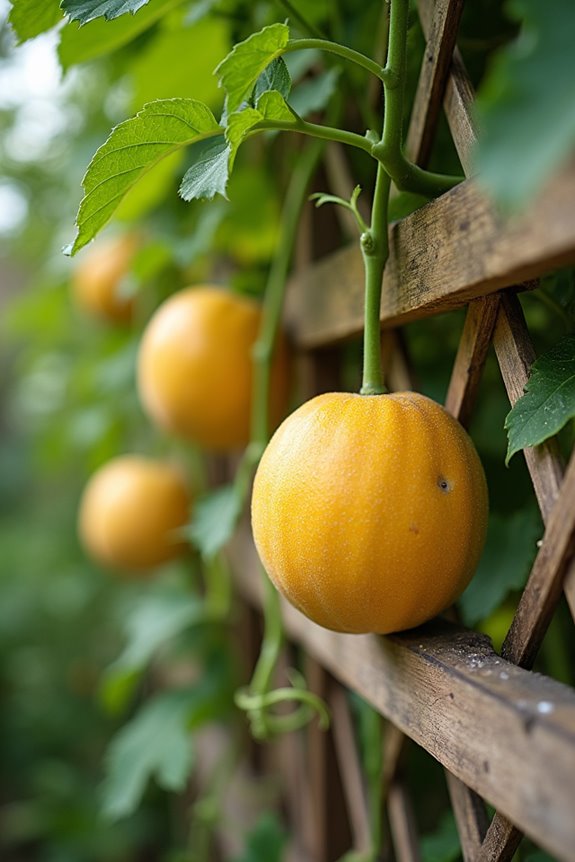
How do you water vertical cantaloupes without inviting fungal trouble? The secret lies in strategic watering methods that keep soil moist while protecting leaves.
Your watering game plan:
- Use soaker hoses or drip irrigation to deliver water directly to the root zone
- Water early morning so foliage dries before nightfall, preventing rot and mildew
- Maintain steady moisture levels to avoid drought stress and overwatering
- Mulch around vine bases with cedar chips or straw to conserve soil moisture
As fruit develops, gradually reduce watering to concentrate sugars. Your cantaloupes need consistent hydration without wet leaves touching soil. This approach keeps roots evenly moist while stabilizing temperature. Plants with proper watering balance produce sweeter fruit with fewer disease problems.
Keep Powdery Mildew and Bugs Off Your Vertical Melons
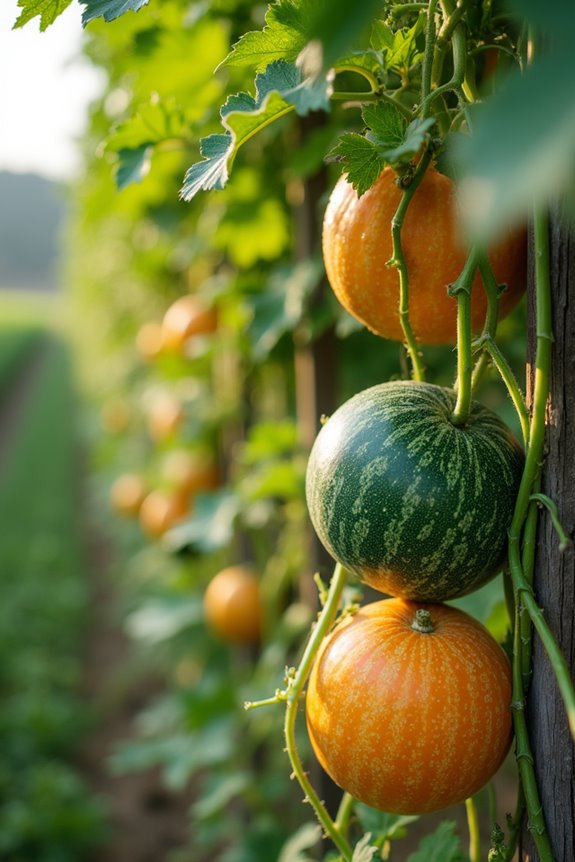
You’ve built your trellis and trained your vines upward—vertical growing provides real advantages against disease and pests. The airflow around your elevated cantaloupes naturally fights powdery mildew. That fungal coating won’t develop in well-ventilated fruit zones where humidity stays low.
Position your trellis in full sun. Sunlight helps dry moisture quickly and discourages fungal growth on leaves and developing fruit.
Monitor regularly for aphids and cucumber beetles. These pests transfer diseases between plants. Use physical barriers like netting or row covers to protect hanging melons from bug damage.
Early-season mulching and weed control remove hiding spots where pests harbor. Clean your growing area thoroughly. This simple step prevents pest populations from exploding.
Your vertical setup gives you a natural advantage—use it wisely.
Hand-Pollinate for a Better Yield (Here’s When)
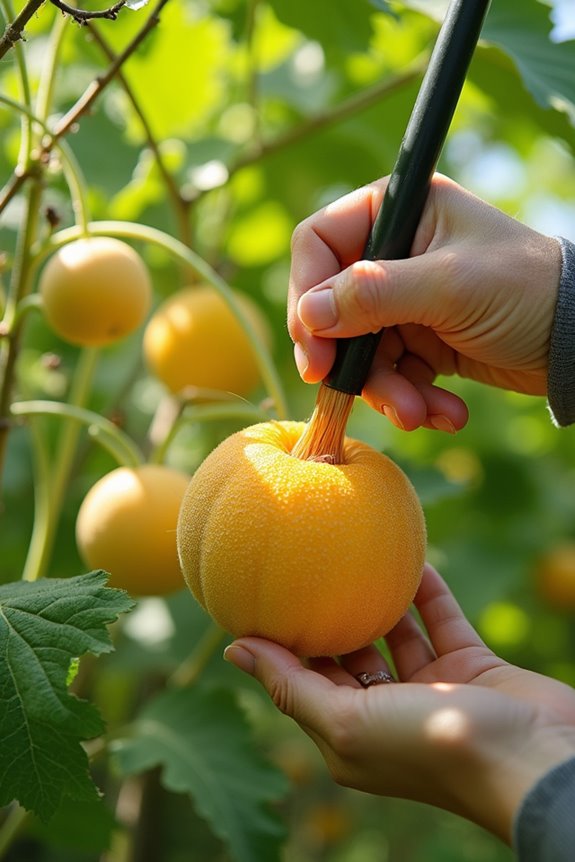
While your trellis setup ordinarily reduces disease and pest problems, there’s another way to boost your cantaloupe success: hand-pollination. When natural pollinators are scarce, you’ll need to step in and do the work yourself.
Your hand-pollination plan:
- Identify female flowers – Look for blooms with a visible ovary (tiny bulge) at the base
- Gather pollen – Use a small brush or Q-tip to collect pollen from male flowers
- Pollinate early – Work in early morning when flowers open and pollen stays viable
- Monitor progress – Watch for fruit development over the following days
After you pollinate, keep watering consistently and maintain your trellis support. Hand-pollination maximizes your vertical cantaloupe system’s output. You’re taking control of the fertilization process and improving your results.
How to Tell When Your Melons Are Ready to Pick
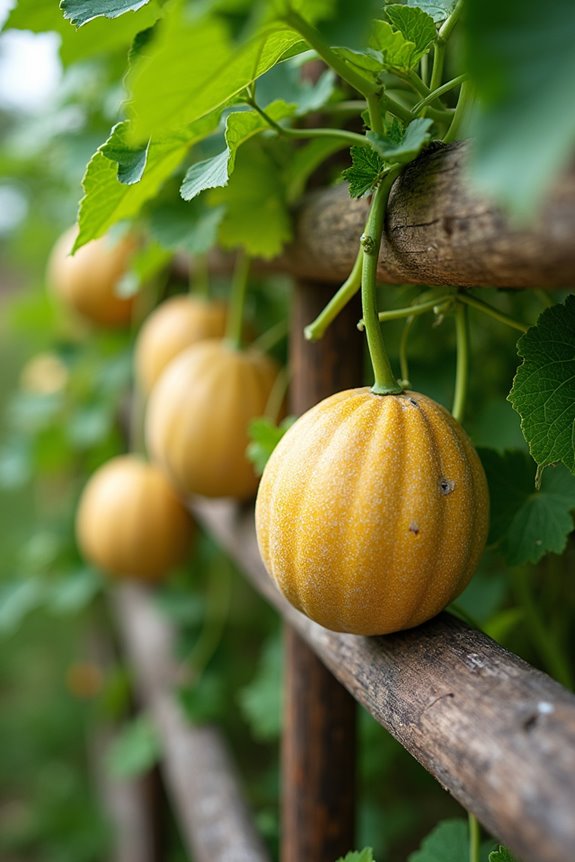
Knowing when to harvest your cantaloupes determines whether you pick sweet fruit or disappointing melons. You’ll notice three key ripeness signals: the rind’s color shift from gray-green to yellow-buff plus pronounced netting patterns, the stem slipping easily away from the vine, and a sweet aroma near the base. Timing is important since your melons ripen over 3 to 4 weeks once they form, so reduce watering about a week before you expect peak ripeness to concentrate the sugars.
Color Changes And Netting
Spotting a ripe cantaloupe on your trellis comes down to watching for specific visual and sensory clues. The rind undergoes transformation as your melons mature. You’ll notice the netting—that distinctive crosshatch pattern—becomes increasingly pronounced over time.
What to monitor:
- Gray-green netting gradually shifts to tan or gold coloring
- Yellow-buff rind emerges beneath the darkening netting pattern
- Brown streaks develop across the surface as ripeness peaks
- Fragrant aroma becomes noticeably stronger near the fruit
This color progression signals your cantaloupe’s readiness window. Don’t rush the process. Once you’ve spotted full netting coverage and that characteristic sweetness, harvest approaches within 1–3 weeks. The transformation from matte gray-green to rich tan tells you everything you need to know about picking timing.
Stem Slip And Aroma
Stem Slip And Aroma
Beyond the visual markers you’ve already learned to recognize, your cantaloupe will give you two more powerful signals that harvest time has arrived: the stem slip and that unmistakable sweet aroma.
The stem slip is your indicator. Gently tug the fruit sideways. A ripe cantaloupe releases easily from the vine with minimal resistance. This natural separation means the fruit has stopped drawing nutrients and reached peak ripeness.
Next, trust your nose. Lean in close to the fruit’s base. You’ll detect a sweet, fruity aroma that signals readiness. This scent indicates sugars have concentrated inside the melon.
Timing matters here. Pick your cantaloupes right after the slip occurs. Don’t wait for overripeness, which diminishes flavor quality. Harvest when conditions align—slip plus aroma equals perfect fruit.
Water Management Before Harvest
When should you stop watering your cantaloupes? Moisture management determines whether you harvest perfectly ripe melons or disappointing fruit.
Here’s your watering timeline:
- Reduce watering about one week before full ripeness arrives
- Monitor the blossom end for a softer baseline texture
- Check rind color shifts from gray-green to yellow-buff
- Observe the stem area for browning signals
Less water concentrates sugars in your fruit. You limit hydration during this phase to increase sweetness in every bite.
Feel the melon gently. A slight give at the blossom end indicates readiness. Avoid overwatering now—excess moisture dilutes flavor and delays harvest. Your attention to moisture management during this period produces fragrant, sweet cantaloupes that slip easily from the vine.
Harvest at Peak Sweetness Without Damaging Vines
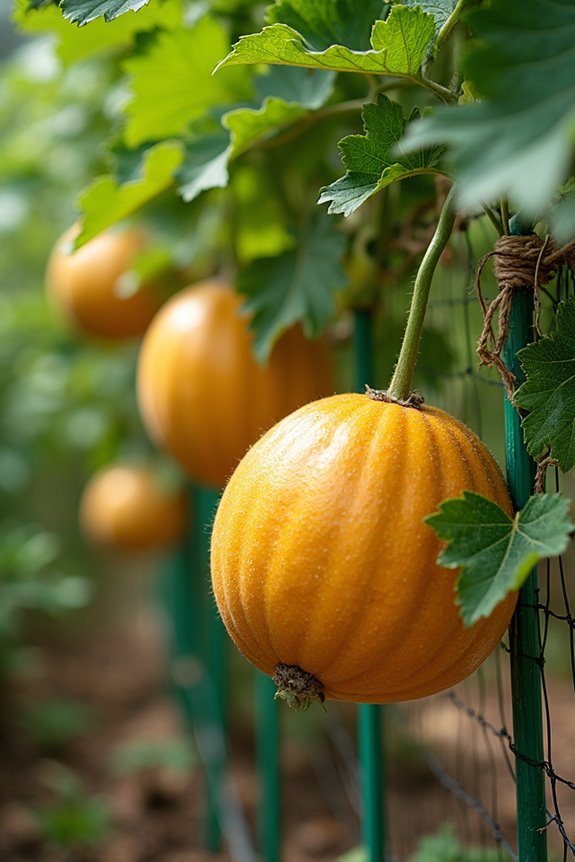
The ripe cantaloupe won’t wait. You’ll know it’s ready when the fruit slips easily from the vine with minimal pressure. Look for a pronounced musky aroma and tan, yellow-buff netting on the rind—these are your ripeness indicators. Harvest when melons detach readily without force. Pulling too hard damages your vines and compromises future yields. Your trellis-grown melons form in multiple positions—underneath, on top, and hanging down. Pick early and timely to prevent heavy fruit from pulling down the structure. This coordinated approach protects your investment. After harvesting, leave a short stem or clip attached. Avoid re-wetting leaves afterward since excess moisture reduces fruit quality and storage life.
The Inclined Trellis Method for Double the Yield
How’d you like to grow twice as many melons in the same space?
The inclined trellis method increases your growing potential. You’ll use a 16 ft by 50 in cattle panel cut in half. Here’s what makes this system work:
- Slope the panel at 27 degrees over your 4×8 ft raised bed
- Position the end 4 feet above the bed surface for drainage
- Use both halves for a double-ended setup that doubles your yield
- Employ fabric slings to support fruit weight away from stems
Your melons grow on three surfaces—ground, trellis top, and hanging underneath. This distributes weight across your structure instead of stressing fragile vines. Smaller varieties like Sugar Cube melons perform well here. They’re prolific producers weighing just 2.5 to 3 pounds. Less weight means less breakage risk and easier handling for you.
Why Your Melons Are Dropping (and How to Fix It)
Even with your inclined trellis set up properly, you’ll still lose melons if you don’t support them right. Heavy cantaloupes require serious trellis weight management. Your vines need sling-like supports that transfer fruit weight away from stems. Without them, drops happen fast.
| Problem | Solution |
|---|---|
| Weak slings fail under 2.5–3 pound fruit | Use sturdy, reinforced trellis frames |
| Unsecured tendrils cause early drops | Tie vines to trellis as they grow |
| Rain events knock loose fruit | Secure fruit during wet weather |
Repositioning vines regularly prevents crowding and movement-related drops. Keep freestanding growth balanced throughout the season. Harvest on time. Overripe fruit loosens easily and slips off vines. Check your cantaloupes daily. This attention protects your yield.