
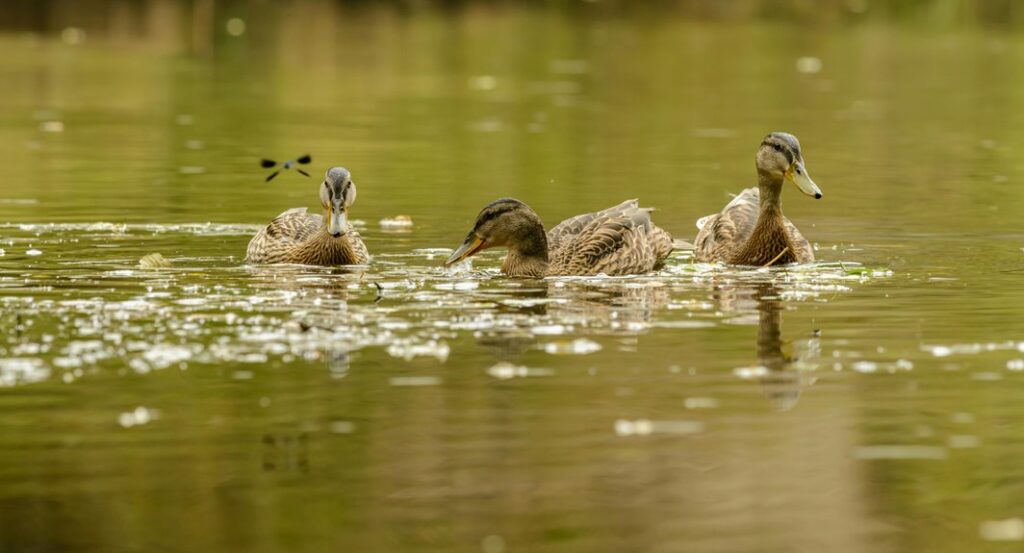
Most backyard ducks won’t fly away on their own. Heavy breeds like Pekins and Khaki Campbells are too hefty for sustained flight. However, Muscovy ducks and Mallards are strong fliers and can escape. Wing clipping—trimming flight feathers on one wing—works well for most breeds. Pair clipping with secure fencing, overhead netting, and reliable food and shelter. Ducks stay home when their basic needs are met. Understanding your specific breed’s abilities helps you choose the right containment approach for your situation.
Do Most Backyard Ducks Actually Fly?
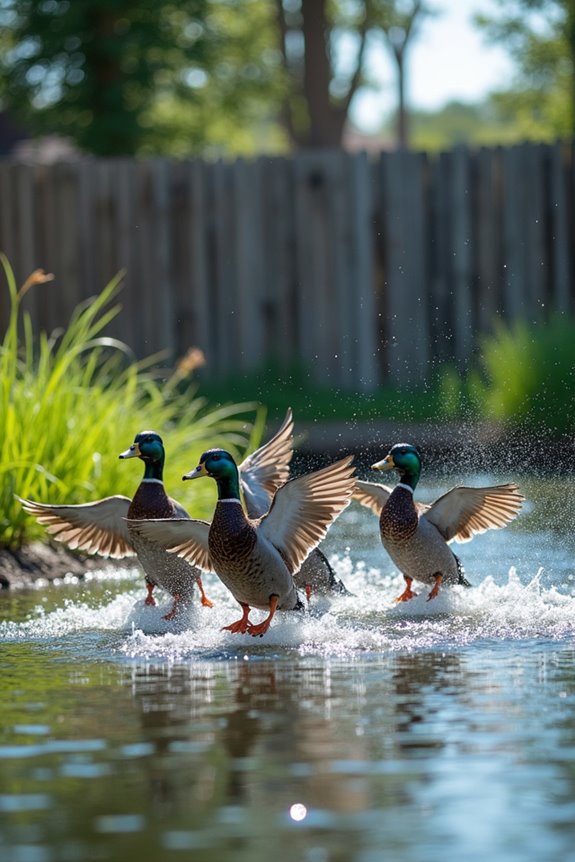
Most domestic ducks can’t actually fly. Your backyard breeds like Pekins and Khaki Campbells are simply too heavy. They’ve been selectively bred for meat and eggs rather than domestic flight capability.
Most domestic ducks like Pekins and Khaki Campbells are too heavy to fly, bred instead for meat and eggs.
Muscovy ducks are the exception. They’re strong fliers who can actually escape. Most other common breeds stay grounded or manage only brief, clumsy hops.
Even non-flying ducks deserve attention though. A startled duck might suddenly launch into the air. This unpredictability is why many keepers use wing clipping. It’s a simple preventative measure for ducks near roads or predator areas.
Understanding your specific breed’s flight capability matters. Check with your breeder about what you’re getting. This knowledge helps you plan proper containment and keep your flock safe and secure.
Which Duck Breeds Are Escape Artists?
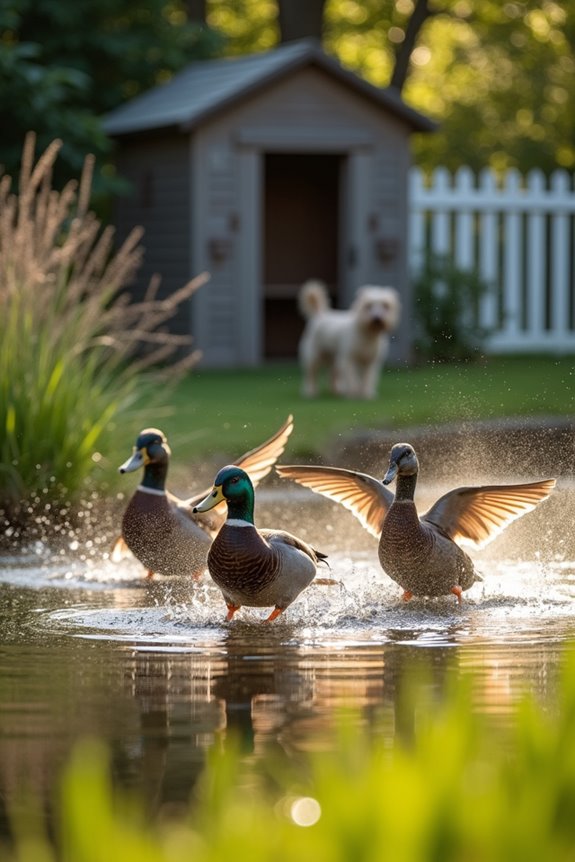
Pekin ducks? Often flightless or poor flyers. You’ll sleep easier owning them. Call ducks and mallards present real challenges. These breeds have serious flight capability. They’ll cover distance when startled or threatened.
Here’s the practical part: even strong flyers stay home when conditions suit them. Shelter. Food. Water. Safety. Provide these essentials in your duck area. Your athletic breeds won’t leave.
Still worried? Wing clipping works reliably across most breeds. It’s painless. Feathers regrow. Most backyard keepers use this method successfully.
Wing Clipping: Safe, Simple, and Temporary
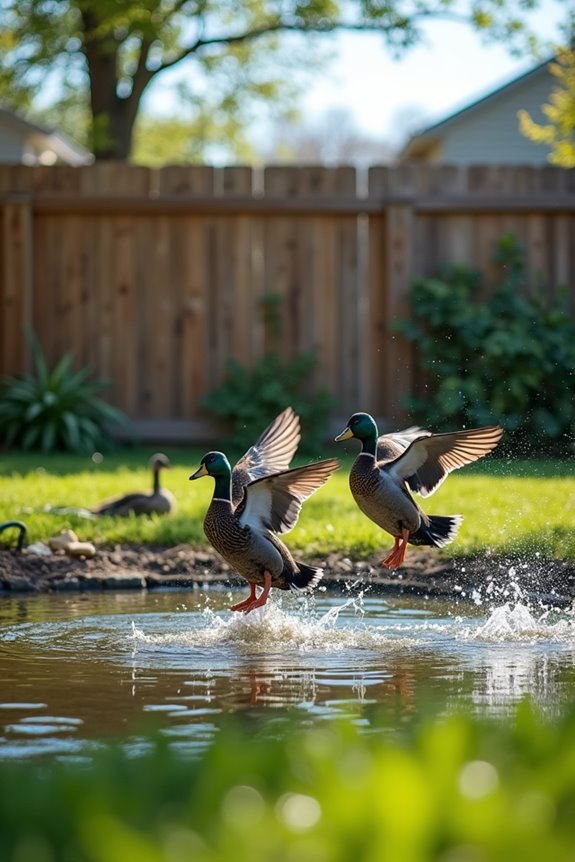
You can clip your ducks’ wings. This two-person process involves cutting the main flight feathers on one wing while leaving the two outermost feathers intact, which prevents escape without permanent harm. Keep in mind that wing clipping serves as a temporary containment measure only—it’s not a permanent solution and still requires your ducks to have a secure, covered area where they can retreat and stay protected from predators.
The Clipping Process Explained
How do you keep a duck from flying away without building an enormous enclosure? Wing clipping offers a practical solution. You’ll cut the main flight feathers on one wing. Leave the two outermost feathers untouched. This imbalance prevents your duck from achieving sustained flight.
Here’s the process. Gather a helper for safety and efficiency. Have one person gently restrain the duck while extending one wing. Locate the primary flight feathers—these are the longest feathers at the wing’s tip. Using sharp scissors, carefully trim these feathers to about half their original length.
The procedure takes minutes. Your duck experiences minimal discomfort. This containment method works well for most breeds, though some varieties like Muscovy ducks may still achieve limited flight despite clipping.
Remember: clipping remains temporary. Combine it with secure shelter and fencing for complete protection.
Safety And Temporary Benefits
Wing clipping is safe. You’re removing only the main flight feathers on one wing, leaving the outermost two feathers untouched. This straightforward process takes just two people and a few minutes.
The temporary duration is one major benefit. Since ducks shed and regrow wing feathers annually during molt, clipping isn’t permanent. Your ducks regain flight capability naturally each year without additional procedures.
Safety matters most. Wing clipping keeps your flock contained within your yard. This prevents escapes when wild ducks fly overhead and reduces risks from nearby roads and predators. Your ducks stay protected in their designated space.
One important note exists though. Muscovy ducks can still fly well despite clipping. Their stronger wings mean this method works better for other breeds. Consider your specific duck type before deciding.
How to Clip Wings Safely (And Why It Doesn’t Hurt)
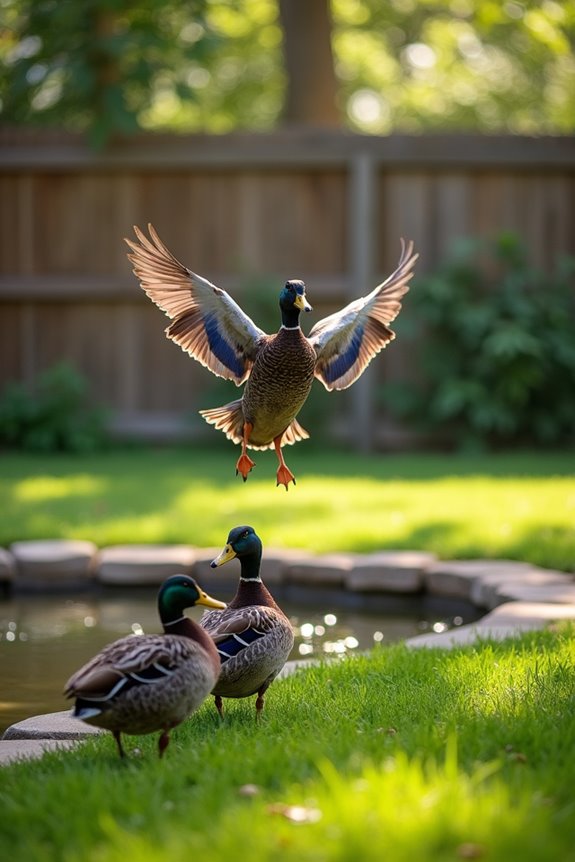
Ever wondered why some backyard duck owners trim their ducks’ wings? Wing clipping offers effective containment without harming your birds. The process is straightforward. You cut the main flight feathers on one wing. Leave the two outermost feathers intact. This reduces lift and prevents escape.
It’s a simple, two-person job. One person holds the duck gently. The other clips the feathers with sharp scissors. Done correctly, it’s painless. Ducks don’t have nerves in their feathers, so they feel no pain during clipping.
Safety remains your priority afterward. Clipped ducks still need secure enclosures and supervision. They can still experience stress or attempt escape. Some breeds like Muscovy ducks fly well despite clipping. Even with clipped wings, your flock benefits from predator protection and traffic safety.
Fencing, Netting, and Wire: Your First Line of Defense
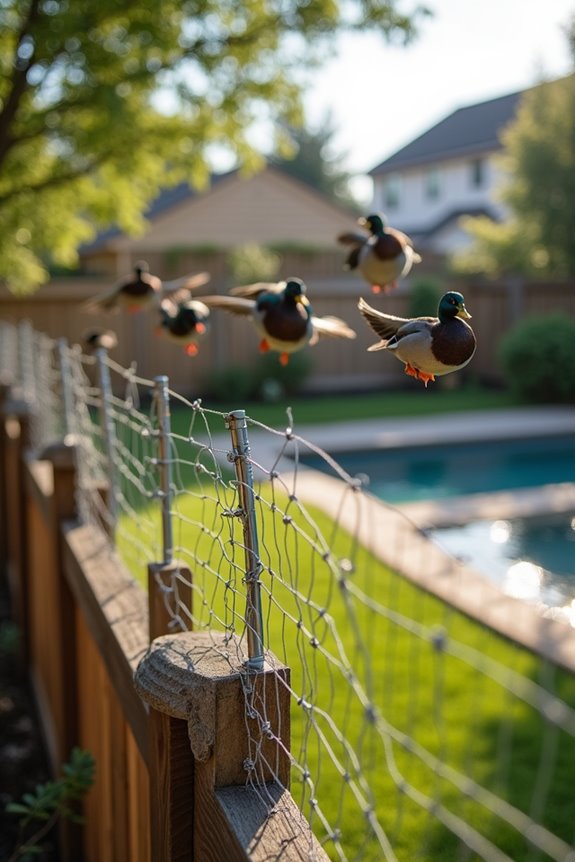
You’ve got two main strategies. Physical barriers like fencing and wire enclosures create solid boundaries that prevent your ducks from wandering off, while netting solutions offer flexible protection against both escapes and outside threats. Understanding how to install and maintain each type helps you choose what works best for your setup.
Physical Barriers For Containment
The foundation of any non-free-range duck setup starts with solid physical barriers. You’ll want at least two square metres per duck in a fenced and wire-covered yard. This containment creates your primary defense against escapes.
Wire-covered pens and sturdy fencing markedly reduce escape chances when wild ducks fly overhead or predators approach. These barriers work together to keep your ducks safely contained.
Consider netting over your pen as an extra layer of protection. It prevents your ducks from launching skyward during excitement or stress.
Transport and shelter require careful design too. Use dark boxes with non-slip bases and barriers that prevent wings or feet from catching. These containment features protect your ducks during movement and storage, keeping them secure and comfortable in confined spaces.
Netting Solutions And Installation
When wild ducks spot your backyard flock, they’ll likely descend for a closer look—and that’s when netting becomes your most valuable tool. Overhead netting forms the foundation of your escape-proof enclosure. It prevents your ducks from flying out when wild visitors arrive.
Install netting across your entire duck yard. Make sure it covers all open spaces completely. Secure it tightly to fence posts using clips or wire. Check regularly for tears and gaps.
Your enclosure needs durable fencing too. Use sturdy materials that withstand pecking and jumping. Bury fencing at least six inches underground to stop predators from digging beneath it.
Regular maintenance keeps everything working properly. Repair holes promptly before they expand. Replace worn sections immediately. When ducks molt and grow, inspect the netting again. Your consistent attention keeps them safely contained.
Why Pen Size and Shelter Stop the Escape Urge
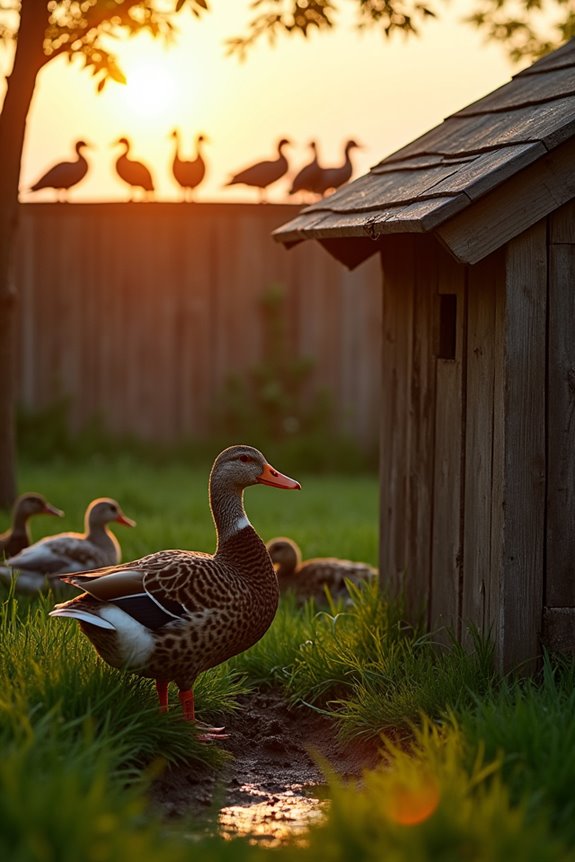
Ever wonder why some backyard ducks stay put while others constantly test the fence?
Why do some backyard ducks stay put while others constantly test the fence? Space, shelter, and breed selection hold the answer.
Your duck yard’s size matters. Providing at least two square metres per duck creates enough space that your flock feels settled. They’re not bored. They’re not restless.
Quality duck shelter reinforces this contentment. Movable Duck Arks offer secure nighttime spaces. Thick dry straw bedding encourages your ducks to remain nearby instead of wandering off exploring.
Breed selection influences your containment needs. Indian Runners fly only centimetres off the ground. Muscovy ducks? They’re skilled fliers requiring heightened enclosure security.
Wing clipping provides practical backup protection. This two-person method prevents flight effectively when combined with proper pen infrastructure.
Adequate space and reliable shelter eliminate the escape urge. Your ducks simply won’t want to leave.
Free-Ranging Without Loss: Training Ducks to Return
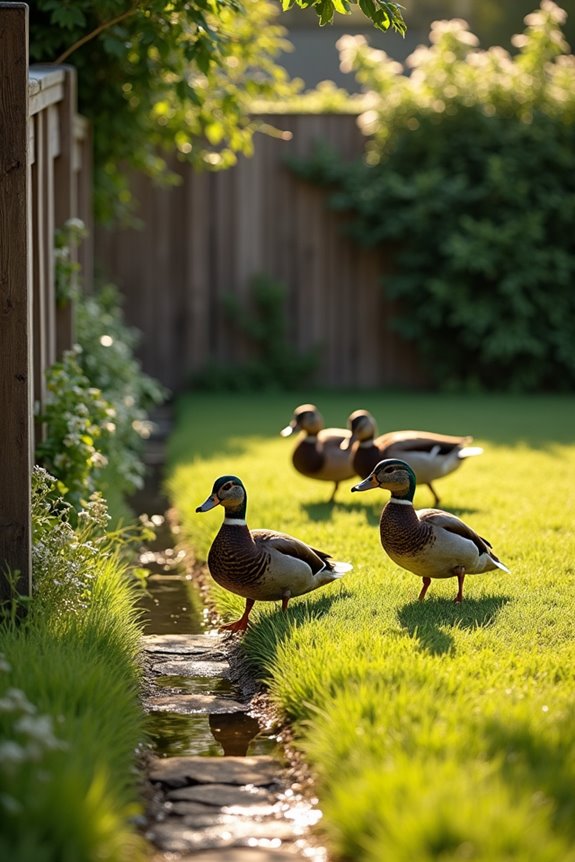
Secure pens work well. But you can let your ducks roam freely with the right training approach. Free-ranging ducks need consistent routines and supervision to stay safe and return home.
Build your duck training program around three key elements:
- Establish a reliable feeding schedule — Feed your ducks at the same time and place daily. They’ll learn to return for meals without hesitation.
- Create an accessible shelter — Keep the coop open and inviting. Your ducks recognize it as their safe zone and roosting spot.
- Maintain active supervision — Watch your flock during free-ranging time. This reinforces safe routes back to the enclosure and prevents predator problems.
You’re building trust and familiarity. Ducks naturally return when they know where food and safety wait. This approach works especially well for breeds with limited flight capability.
Food, Shelter, and Keeping Ducks Committed to Home
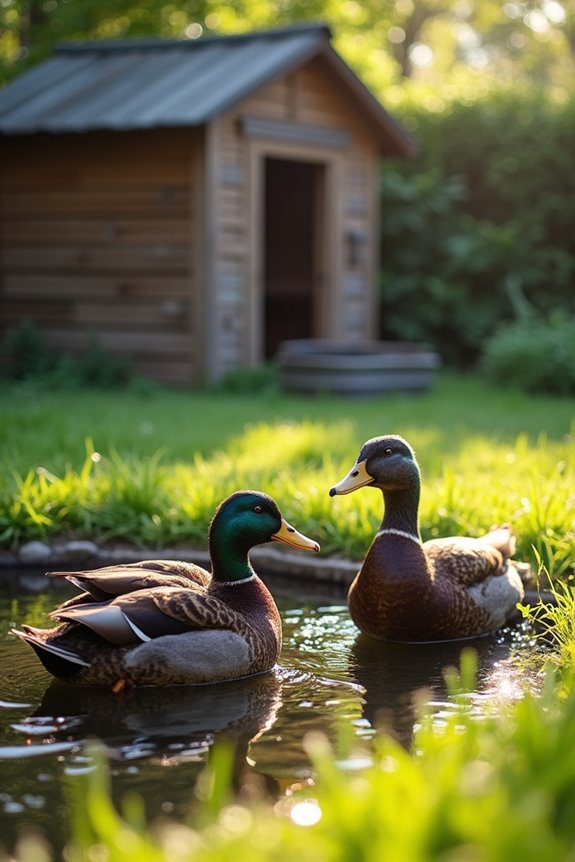
You’ll find that ducks won’t wander far. They stay close when you provide solid shelter, reliable food sources, and safe nighttime housing—basically, the essentials that make home feel like the best place to be. Meeting these needs is far simpler than chasing escaped ducks across your neighborhood.
Shelter And Housing Basics
Shelter And Housing Basics
What’s the foundation of duck care? Proper shelter and housing. You’ll want to create a safe environment that keeps your ducks protected and content. Here’s what you need:
- Fenced yard space: Provide at least two square metres per duck in a wire-covered area with thick, dry straw bedding you replace regularly.
- Nesting options: Offer open-topped boxes, though ducks use straw bedding alone if boxes aren’t available.
- Night shelters: Consider commercially made Duck Arks for movable protection during sleeping hours.
Your ducks will stay grounded and safe when you establish solid housing basics. Regular bedding changes keep everything clean and comfortable. These foundational steps prevent escape attempts and protect your flock from predators while building their confidence in their home space.
Nutrition And Resource Management
Beyond a safe coop, your ducks need consistent nutrition and resources to function well. Feed them non-medicated layer pellets daily. This is their foundation. Supplement with fresh greens and vegetable scraps to keep them engaged and content. Add calcium-rich shell grit so they’ll produce strong eggs.
Water matters. Place a large dispenser near feed areas on a wire-covered platform. This reduces mud and encourages hydration. Ducks drinking regularly stay healthier.
When ducks eat well and have constant water access, they’re less likely to become flight risks. Proper nutrition reduces stress and restlessness. They’ll feel committed to your housing setup instead of seeking escape. Think of good feed and water as anchors keeping your flock grounded and healthy at home.
When Natural Flight Abilities Matter More Than Clipping
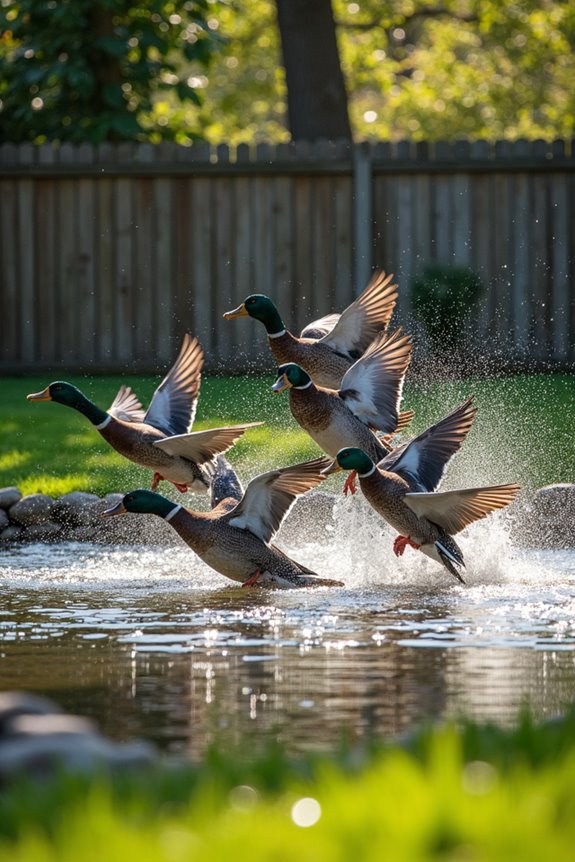
While wing clipping remains a popular containment method, it’s not equally effective for all duck breeds. You’ll find that flight behavior varies dramatically. Some ducks stay put. Others escape anyway.
Consider these situations where natural flight abilities matter more than clipping:
- Muscovy ducks possess genuine flying capability — even clipped wings don’t guarantee containment since they’re naturally stronger fliers than other domestic breeds
- Startled ducks may still launch airborne — fear or predators trigger flight responses regardless of wing condition or environment containment efforts
- Breed genetics trump clipping effectiveness — certain bloodlines retain better flight muscles. Clipping alone won’t stop determined individuals
Your environment containment strategy needs backup plans. Fencing. Netting. Sheltered areas. Wing clipping works best combined with these measures. Understanding your specific ducks’ natural abilities helps you build better boundaries. You’re not fighting nature—you’re working with it strategically.
Five Mistakes That Trigger Escape Attempts
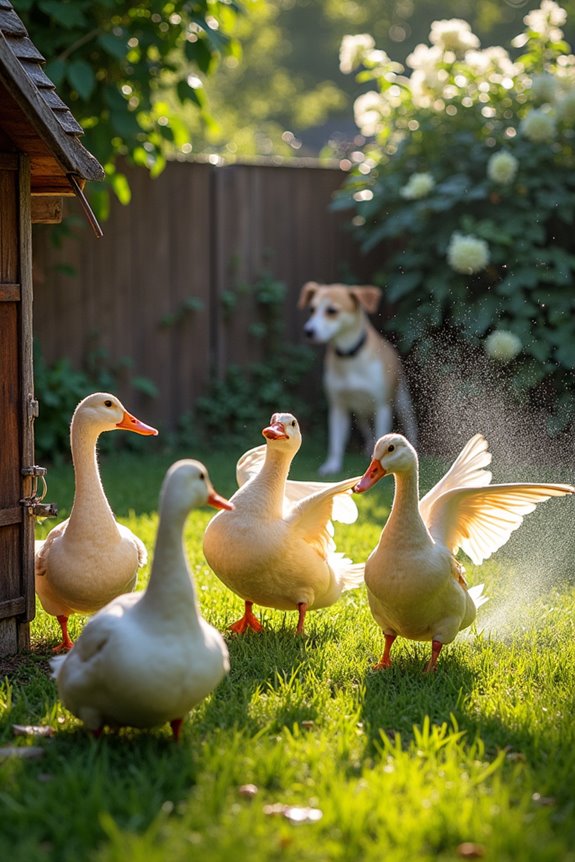
Understanding why ducks try to escape matters just as much as knowing how to stop them. You’re probably making at least one common mistake that encourages flight attempts.
First mistake: inadequate enclosures. Your ducks need a properly fenced and wire-covered yard. Without secure containment, even limited-flight breeds will wander away.
Second mistake: poor training. You haven’t reinforced staying in safe spaces or taught them to return. Active management prevents escape habits from forming.
Third mistake: relying only on food or shelter. Ducks seek perceived safety elsewhere when you don’t provide genuine security through physical barriers.
Fourth mistake: ignoring molt cycles. Growing feathers temporarily boost flight abilities, making escape attempts more likely during these periods.
Fifth mistake: inadequate protection from wild ducks. Startled by overhead flocks, your ducks panic and attempt flight. Shelter them properly against external threats.
Choosing Your Strategy: Clip, Fence, or Train

Three main paths exist for keeping your ducks contained.
You’ll find different containment strategies work for different situations. Consider your setup, budget, and duck breed carefully.
- Wing clipping: Trim main flight feathers on one wing. This practical method takes two people and prevents most ducks from escaping. However, strong fliers like Muscovy ducks may still fly away.
- Fencing and wire covers: Build a secure yard with overhead protection. This approach requires more upfront work but provides excellent predator protection and lasting containment.
- Training and conditioning: Teach ducks to return home using food rewards. This method builds their attachment to your space naturally.
Each strategy has merits. Many duck keepers combine approaches for maximum security. Whatever you choose, remember that clipped or fenced ducks still need shelter, food, and protection from predators.