

Chain link fencing runs you $10 to $34 per linear foot installed, depending on height and material quality. A 6-foot fence costs less than an 8-foot one.
You’ll spend roughly half your budget on labor if you hire professionals. Going DIY saves 40-60% but takes three to five days of work.
Don’t forget permits, utility checks, and a 15-20% cushion for surprises. Understanding these cost layers helps you create a realistic budget that matches your property’s needs.
What Affects Chain Link Fence Pricing?
Ever wonder why two chain link fence quotes can look so different? Several key factors shape your final price. Fence size matters most—both length and height directly impact costs. A 6-foot fence runs $10-$20 per foot, while 8-foot climbs to $12-$34 per foot. Material type and gauge significantly affect pricing too. Galvanized steel and vinyl-coated options cost more than basic materials. Post costs add roughly $3 per linear foot. Gates and hardware—including hinges and latches—run $100-$450 for gates plus $50-$150 per 100 feet for hardware. Installation decisions shape your budget substantially. Professional installation ensures quality and warranties but costs more. DIY installation saves 40-60% but requires your time and skill. Understanding these factors helps you compare quotes accurately and plan your budget realistically.
Material and Labor: Breaking Down Your Costs
Understanding where your money goes is critical. Material costs—especially the chain link fabric itself—typically account for 40-60% of your budget, while labor and installation can range from $5-$15 per linear foot depending on your location and site conditions. Breaking down these expenses helps you decide whether a DIY approach or professional installation makes sense for your project.
Material Cost Breakdown
Chain link fabric represents the largest expense in your budget. You’ll allocate 40-60% of total material costs to fabric alone. Standard residential fabric rolls cost $75-$150 per 50-foot roll for 11.5-gauge galvanized options.
Posts form the second major expense category. Standard 6-foot line posts run $15-$30 each. Corner and gate posts range from $25-$60 each, creating significant costs on longer fence lines.
Hardware components complete the material list. Tension cables, alignment clips, and fasteners cost approximately $50-$150 per 100 linear feet. These elements directly impact fence durability and performance.
Upgrading materials increases overall costs. Vinyl coating or heavier gauge fabric can raise fabric expenses by 50-100%. While these improvements extend lifespan and visual quality, they require larger budget allocations. Breaking down these material categories enables more accurate project planning and cost estimation.
Labor and Installation Expenses
Labor costs make up roughly half your total fence budget. Professional installation typically runs $5 to $15 per linear foot. This range depends on your project’s complexity and your region’s rates.
You’ll finish professional installation in 1–2 days. DIY projects take 3–5 days for beginners. Site preparation significantly impacts labor costs. Minimal ground clearing costs less than extensive excavation or utility location work.
Gate installation adds another expense. Single gates run $200–$500. Double gates cost $400–$800. Posts require careful placement and weather resistance consideration.
Professional installation offers real advantages. You get warranty protection and code compliance. You’re joining a community of homeowners who prioritize quality chain link fencing. That investment pays dividends long-term.
How Height, Gauge, and Site Conditions Change the Price
Why does your neighbor’s fence quote look nothing like yours? Several factors shift your chain link fence cost dramatically. Your installation price depends on multiple variables working together.
- Height determines material needs — Six-foot fences run $10-$20 per linear foot. Eight-foot options jump to $12-$34 per square foot due to extra materials and labor.
- Gauge thickness affects durability and price — Thicker 9-gauge costs $2-$10 per linear foot. Thinner 11.5-gauge runs $1.50-$7 per linear foot but offers less strength.
- Site conditions complicate installation — Slopes, obstacles, and utility locations increase labor hours significantly. Your per linear foot price rises with difficult terrain.
- Post spacing drives total materials — Posts every 8-10 feet combined with height and terrain alter your overall project cost substantially.
DIY vs. Professional Installation: Cost Comparison

Now that you understand how height, gauge, and site conditions impact your quote, another major factor deserves your attention. You can reduce installation costs by 40-60% through DIY work. A 150-foot fence costs roughly $2,096 with DIY materials and tool rental versus $3,881 professionally installed.
Your DIY toolkit requires post hole diggers, fence stretchers, and basic hand tools—an initial investment of $200–$500. You’ll need tool rental too, typically around $300.
Professional installers complete projects in 1–2 days and provide warranty protection. They ensure code compliance. You avoid costly mistakes and save significant time.
Consider your skill level honestly. DIY suits confident homeowners. Professional installation offers peace of mind and guaranteed results. Your choice depends on balancing budget against convenience and expertise.
Budget for Permits, Utilities, and Surprises
You’ll likely encounter costs beyond the fence itself. Permit fees run $50–$200 for residential projects, and you’ll probably need utility location services ($100–$300) to avoid hitting buried lines, plus potential surveys and site plans. Factor in old fence removal at $3–$5 per linear foot, unexpected property complications, and building permit consultations for complex situations—these additional expenses can easily add several hundred dollars to your final bill.
Permit Requirements And Costs
Permit Requirements And Costs
Before you dig a single hole, permits come first. Your local government requires them. Permit costs typically range from $50 to $200. Location and project scope affect your final bill.
Building permits protect your investment and neighborhood. Here’s what you’ll encounter:
- Permit costs ($50–$200) vary by jurisdiction and fence size
- Site plans and fence specifications may be required documents
- Utility location services cost $100–$300 to map underground lines
- Professional fees from building permit consultants add to expenses
Some projects demand surveys too. Property surveys run $300 to $800. Simple installations might skip formal surveys. Use existing property markers instead.
Utility location prevents costly mistakes. Underground conflicts mean expensive repairs. These services are necessary. Professional consultations guide you through requirements. Plan ahead. Your installation costs depend on completing permits correctly.
Hidden Expenses To Anticipate
What sneaks up on fence budgets? Hidden expenses derail even solid plans. Before your chain link fence installation begins, you’ll encounter several surprise costs that add up quickly.
| Expense Type | Typical Cost |
|---|---|
| Permits and Site Plans | $50–$200 |
| Utility Location Services | $100–$300 |
| Property Survey | $300–$800 |
Permits require site plans for most residential projects. Private utility location prevents dangerous underground conflicts during installation. You’re protecting both security and safety simultaneously.
Old fence removal costs $3–$5 per linear foot, though salvage opportunities might offset expenses up to $6 per foot. Utility relocations bring unexpected charges beyond base installation costs. Property surveys verify boundaries on complex lots.
Budget conservatively. Set aside 15–20% extra for hidden expenses. You’ll appreciate the cushion when surprises emerge.
Maintenance Costs and How Long Your Fence Will Last
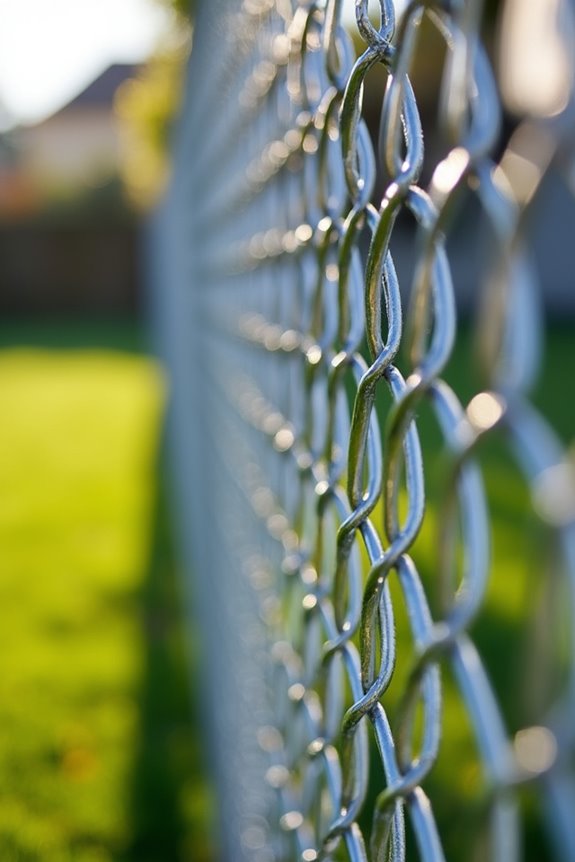
Think of chain link fence maintenance like caring for a car—the effort you invest upfront pays dividends down the road. You’ll find that galvanized chain link fence lasts many decades when properly installed and maintained. Regular upkeep prevents costly repairs later.
Your maintenance costs depend on material choice:
- Galvanized steel requires periodic cleaning and rust prevention treatments to maintain weatherproofing
- Vinyl-coated chain link needs occasional cleaning but eliminates most rust concerns entirely
- Higher gauge materials reduce maintenance demands and replacement costs significantly over time
- Proactive inspections catch minor issues before they become expensive fence installation costs
Vinyl-coated options require less upkeep overall. Galvanized steel demands consistent attention but rewards dedication. Either way, fence longevity extends substantially when you address problems early. Your investment protects your property boundaries while minimizing future expenses.