
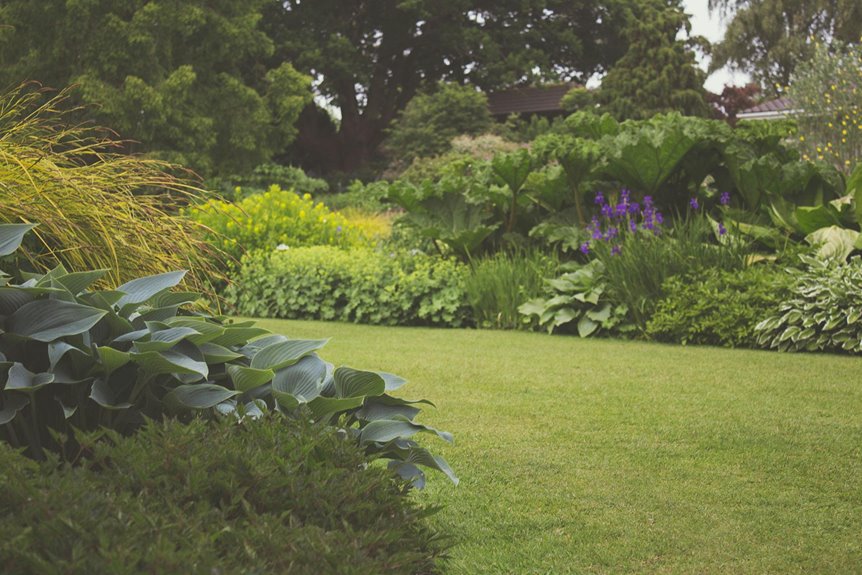
Start by defining what you’ll actually use your backyard for—entertaining, relaxing, or gardening.
Next, survey your space: map sun patterns, note wind direction, check drainage, and identify views worth framing.
Then divide your yard into distinct zones with clear purposes, using plants and hardscape like pathways to separate activities naturally.
Choose a design style that matches your home’s architecture, add focal points like benches or water features, and connect everything with flowing pathways.
Finally, pick plants and materials suited to your soil type, climate, and sunlight conditions. Each step builds on the previous one, creating a cohesive outdoor living space.
Define Your Backyard’s Purpose and Primary Functions
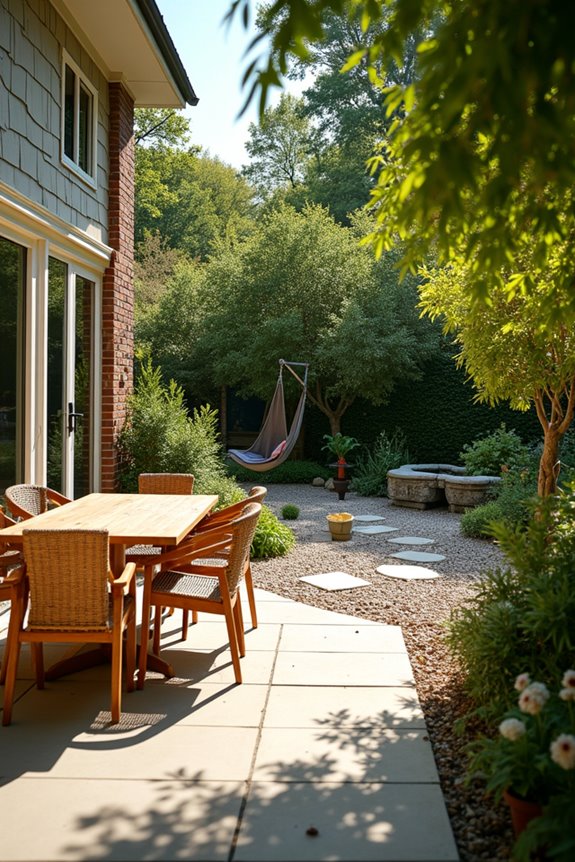
What do you actually want to do in your backyard? This question drives everything in landscape design. You’ll spend time there. Make it count.
Your backyard’s purpose shapes your entire space planning strategy. Do you want entertaining space for gatherings? Or peaceful relaxation zones? Maybe you’re growing vegetables. Perhaps you need all three.
Your backyard’s purpose shapes everything. Entertaining, relaxation, gardening—define what matters most to your household first.
Define your primary functions first. This focus guides zoning decisions. Zoning means creating separate areas for different activities. An entertaining zone needs open space. A gardening area requires sunlight and water access. Relaxation spots work best away from traffic.
Consider your daily routines honestly. How often will you actually use this outdoor living space? What matters most to your household? Answer these questions. Your answers prevent costly redesigns later. A purposeful backyard becomes a valued extension of your home.
Survey Your Site: Sun, Wind, Drainage, and Views
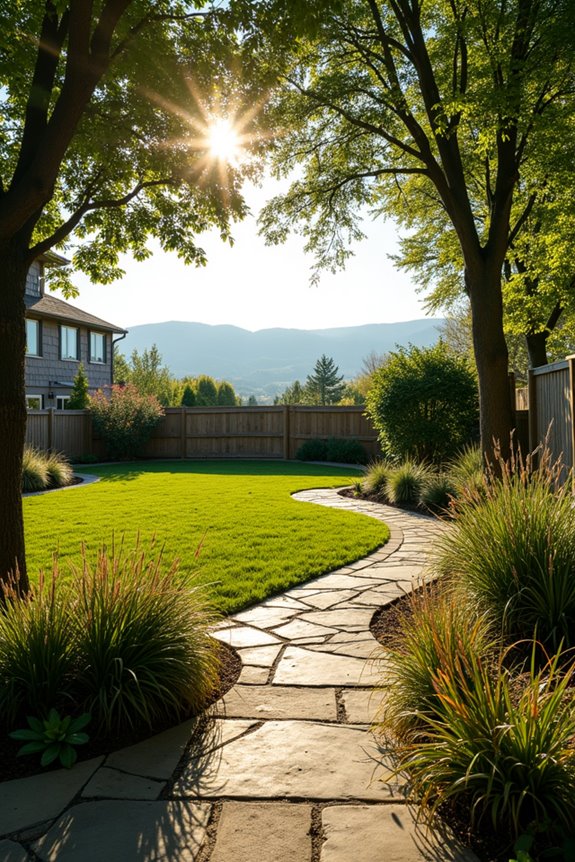
Before you place a single patio stone or plant a shrub, you’ll need to understand your backyard’s natural conditions. Start by mapping sun patterns throughout the day. Note where light hits during morning, noon, and evening hours. This guides patio placement and plant selection.
Next, observe wind patterns. Strong winds create uncomfortable seating areas and stress plants. Identify shelter opportunities using existing structures or planned plantings.
Assess drainage by watching rainfall. Does water pool anywhere? Mark these wet spots for moisture-loving plants or improved drainage solutions.
Evaluate your site’s microclimates. Some areas stay shadier or warmer than others. These variations determine where different plants perform well.
Finally, identify attractive views worth framing. Frame specimen trees and distant vistas with pathways. Consider immovable features like driveways and existing trees—they anchor your entire design.
Plan Zones for Entertaining, Relaxing, and Working
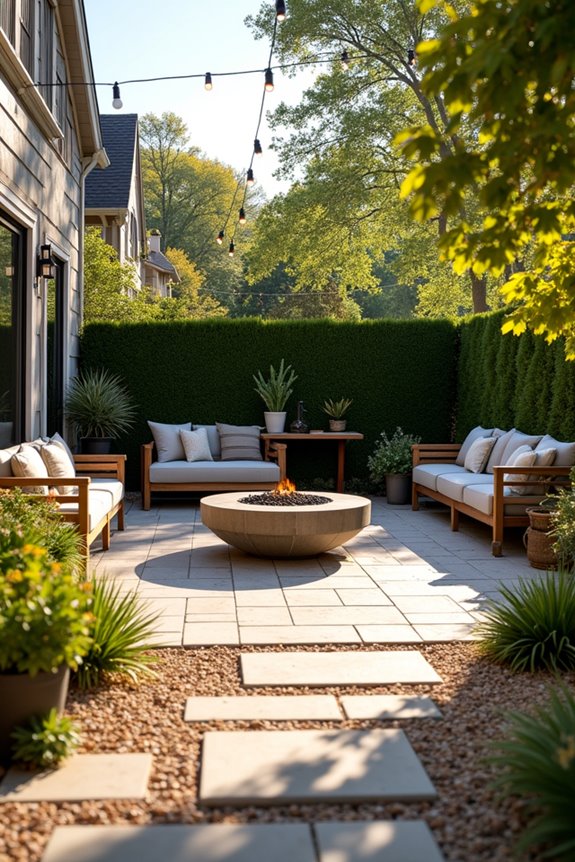
Now you’ll divide your backyard into distinct zones. Each area—entertaining, relaxing, and working—should serve a specific purpose and flow naturally together. You’re creating separate garden rooms that let you host gatherings, find quiet moments, and handle practical tasks without them bumping into each other.
Defining Your Space Zones
Ever notice how a backyard without structure feels overwhelming? You’re staring at empty space. That’s where your landscape plan comes in. Divide your yard into distinct garden rooms. Each zone serves a specific purpose.
Start by listing your priorities. Do you need an entertaining area? A quiet relaxation spot? A workspace for gardening? Write these down. This clarifies what you actually need.
Next, sketch your zones on paper. Use pathways and plant boundaries to separate them. These act like walls. They create distinct spaces and control microclimate. Microclimates are small areas with unique sun, wind, and moisture conditions.
Finally, create cohesive transitions between zones. Match materials and colors across your yard. This makes movement feel intentional. Your backyard becomes a connected, purposeful space.
Creating Functional Garden Rooms
Once you’ve mapped out your zones, it’s time to turn each one into a real, usable space. Think of each garden room as having walls, ceilings, and floors—just made from plants instead of wood.
Use plant placement strategically to define boundaries and shape each area. Tall shrubs create privacy screens. Medium plants establish structure. Ground covers fill in details.
Next, add hardscape elements like concrete, pavers, or gravel to anchor your spaces. These materials support seating areas and define pathways connecting your garden rooms.
Include focal points within each zone—a bench here, a dining table there. These destinations give purpose to your design.
Finally, weave pathways throughout. They’re the highways connecting your entertaining, relaxing, and working spaces. Keep plants positioned to allow clear foot traffic.
Balancing Multiple Activities
To get the most from your backyard, you’ll need to designate separate zones for different activities. This landscape design approach divides your outdoor space into functional rooms that work together effectively.
Start by identifying three distinct zones:
- Entertaining zone – Create a dining area with weather-resistant furniture and overhead lighting for evening gatherings.
- Relaxing zone – Design a quiet retreat with comfortable seating surrounded by shrubs and trees for privacy.
- Working zone – Establish a productive space with a sturdy table and adequate shade for gardening or remote work.
Connect these zones with pathways using concrete, pavers, or gravel. Balance hardscaping and softscaping throughout your design to maintain visual interest. Proper zoning prevents activity overlap, allowing each area to serve its intended purpose while supporting your lifestyle needs.
Choose a Design Style and Add Structural Features
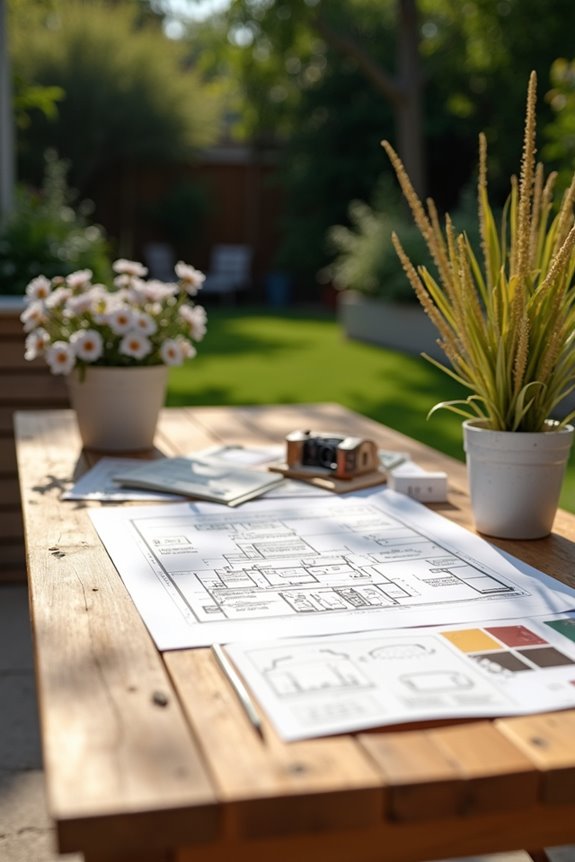
Your backyard’s design style is its backbone. It unifies everything you’ll create. Pick a cohesive design theme—English, Japanese, French, or native. Your choice guides plant selections and materials. It should complement your home’s architecture.
| Theme | Best Features | Plant Examples |
|---|---|---|
| English | Stone paths, hedges | Roses, lavender |
| Japanese | Water features, gravel | Bamboo, maples |
| Native | Natural edges, local stone | Regional wildflowers |
Establish your focal point early. This anchors the entire design. A specimen plant, arch, or water feature works well. Plan spaces as interconnected rooms with defined boundaries. Create hardscape structures—patios, walls, pathways—that guide movement. These structural features provide cohesive transitions between areas. Your hardscape and plantings should feel intentional together. This intentionality transforms scattered yards into unified outdoor rooms.
Connect Zones With Pathways and Focal Points
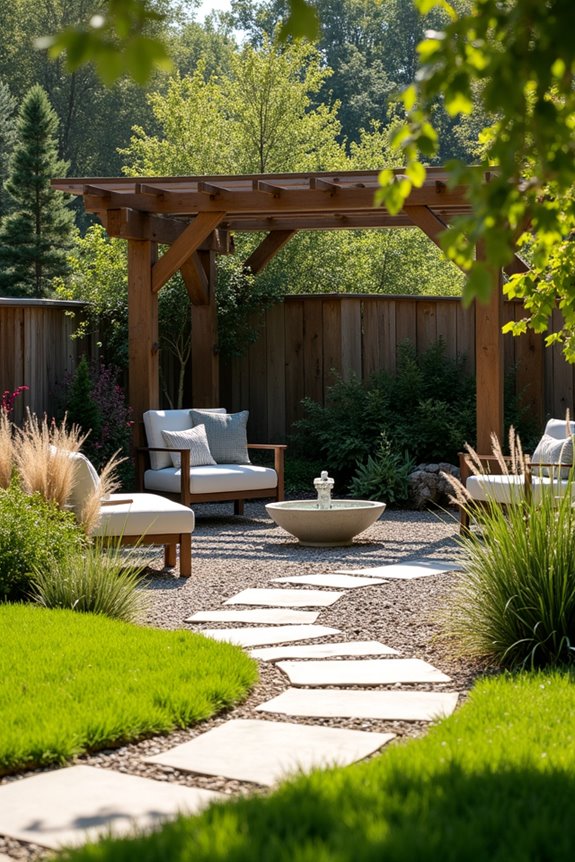
Now that you’ve established your design style and anchored key structural features, it’s time to weave those separate areas together. Pathways are your connective tissue. They create integrated outdoor rooms across your landscape.
Design thoughtful circulation between spaces:
- Use materials like concrete pavers or gravel to define clear routes that encourage exploration and natural movement flow
- Plant edging along pathways to mimic walls while providing continuous seasonal color and visual interest throughout the year
- Position focal points—benches, urns, or fountains—at key intervals to direct attention and guide visitors intentionally through your landscape
Lighting extends usability after dark. Strategic placement illuminates focal points and pathways. This creates safe passage while establishing an inviting atmosphere. Large paving stones offer flexibility for curved designs that feel less rigid. These thoughtful connections create an integrated, welcoming destination from your backyard spaces.
Select Plants and Hardscaping for Your Conditions
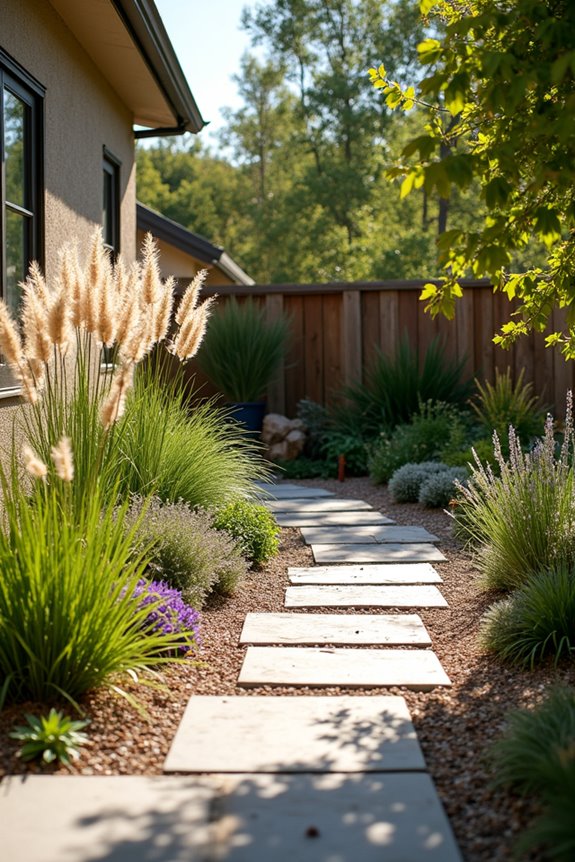
Now you’ll tackle the backbone of your design: choosing plants and hardscaping materials that actually work in your specific conditions. Your soil type, sun exposure, and local climate determine which plants will succeed versus which ones you’ll battle all season. Getting these fundamentals right from the start saves you time, money, and frustration down the road.
Matching Plants to Climate
What grows well in one backyard might struggle or fail in another—and that’s completely normal. Your climate and local conditions shape everything you plant. Success starts with understanding what you’re working with.
Consider these essential factors:
- Sun exposure—Determine if your yard gets full sun (6+ hours), partial shade (3-6 hours), or shade (under 3 hours). This affects which plants will perform well.
- Soil type—Test your soil’s drainage, pH, and nutrients. Sandy soil drains fast. Clay holds moisture longer. Your plants need the right match.
- Plant hardiness—Choose species that survive your region’s coldest winters. Native plants excel here since they’ve adapted naturally.
Native plants offer resilience and low maintenance. They tolerate local climate nuances better than non-natives. Add drought tolerance for resource efficiency. A landscape designer helps refine selections for your specific microclimate and vision.
Hardscaping Material Selection
Once you’ve chosen plants for your climate, it’s time to think about the hardscape—the non-plant elements like patios, walkways, and borders that anchor your yard’s structure. Your hardscaping materials shape how you’ll actually use your space.
Select materials that match your landscape style. Concrete, pavers, gravel, and stepping stones each offer different looks and functions. Consider what works best for your yard’s needs and aesthetic goals.
Plan drainage carefully. Poor drainage causes water pooling and soil compaction, especially on slopes or heavy soils. This planning prevents costly problems later.
Create cohesive walkways using large paving stones strategically. They invite movement between garden rooms while visually expanding smaller yards. Coordinate your hardscape colors and textures with nearby plants. This unified approach makes your entire landscape feel intentional and complete.