
You’re paying for durability that lasts decades, not just the furniture itself. Premium patio sets use Grade-A teak, marine-grade aluminum, and Sunbrella fabrics that resist rot, corrosion, and fading far longer than cheap alternatives.
Skilled craftspeople hand-weld frames and hand-weave wicker—labor-intensive work that requires years of training. Quick-dry cushions with drainage channels prevent moisture damage.
Multi-year warranties and replacement parts keep your investment protected. Understanding where each dollar goes reveals why quality furniture actually saves you money over time.
Why Premium Materials Cost More
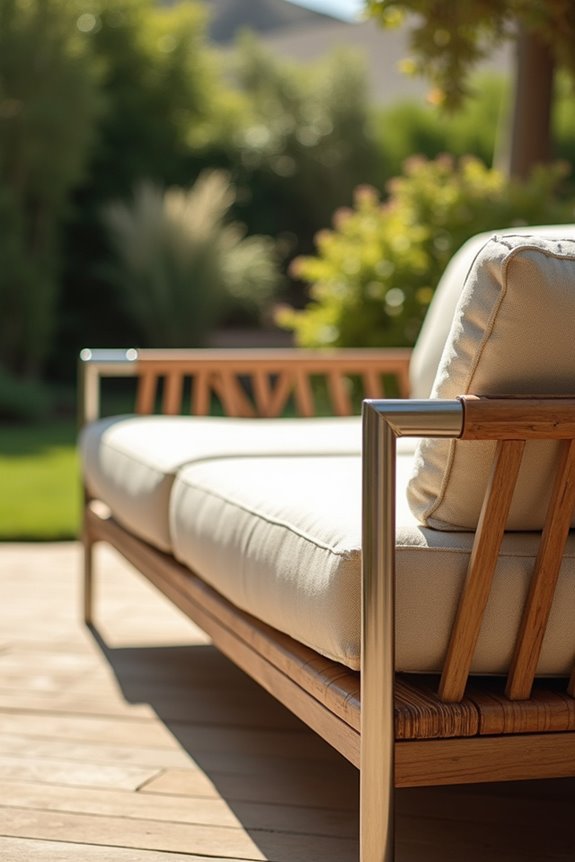
Ever wonder why a teak patio set costs three times more than basic metal furniture?
You’re paying for materials that last. Grade-A teak contains natural oils that resist rot and insects for decades. Marine-grade aluminum won’t corrode or rust in salty air. All-weather wicker handles rain and sun without breaking down.
You also invest in superior comfort. Foam cushions with drainage channels dry quickly. Sunbrella fabrics resist fading and mildew better than standard textiles. These high-performance materials cost manufacturers significantly more upfront.
The quality difference compounds over time. Budget furniture deteriorates in three to five years. Premium pieces withstand twenty years or more. You’re buying durability and longevity. That’s why premium furniture requires a higher initial cost. Your investment delivers value through years of reliable outdoor living.
Why Skilled Labor Drives Up Patio Furniture Prices
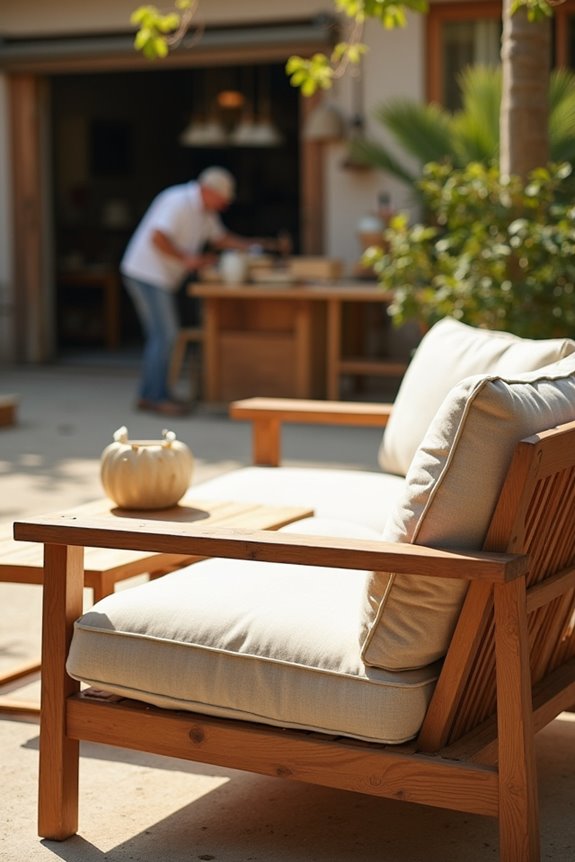
When you buy premium patio furniture, you’re paying for skilled hands. Artisans spend hours on handcrafted techniques like fully welded frames (which fuse metal pieces together for strength), handwoven wicker with consistent tension (so it doesn’t sag), and precision joinery that hides hardware—all tasks that require years of training and can’t be rushed. Compare that to bolt-together sets where unskilled workers simply snap pieces together, and you’ll see why the craftsmanship gap creates such a price difference.
Handcrafted Construction Techniques
Skilled craftspeople don’t just assemble patio furniture—they build it piece by piece using techniques that take years to master. When you’re buying handcrafted outdoor pieces, you’re investing in multiple labor-intensive processes that mass-produced alternatives skip entirely.
Consider welding. Expert craftspeople fully weld aluminum frames rather than using bolts. This creates stronger joints and cleaner aesthetics, but demands precision and experience.
Then comes joinery—the traditional woodworking method joining teak without nails or excessive hardware. This finished product lasts decades longer than standard construction.
Handwoven wicker requires consistent tension throughout. Weavers maintain this quality across entire pieces, preventing loose sections that unravel quickly.
Each process demands skilled hands. That’s not overhead—that’s the core value you’re purchasing when you choose handcrafted furniture over cheaper alternatives.
Precision Assembly and Finishing
Why does handcrafted patio furniture cost so much more during assembly and finishing? Skilled labor and meticulous craftsmanship drive the expenses. You’re paying for workers who hand-weld frames with precision. Each joint receives careful attention. Rather than using cheap bolt-together methods, manufacturers employ traditional joinery techniques. This approach takes longer but creates furniture that lasts decades.
The finishing process demands expertise. Multi-step sanding and specialized coatings protect hardware from rust and weather damage. Craftspeople test components through UV exposure, salt spray, and temperature cycling. These rigorous quality checks catch problems before furniture reaches your patio.
Cushions receive tailored construction too. Workers install quick-dry foam and drainage channels, then attach removable covers. You’re investing in pieces built to endure rather than discard.
Premium Cushion Engineering: A Cost Breakdown
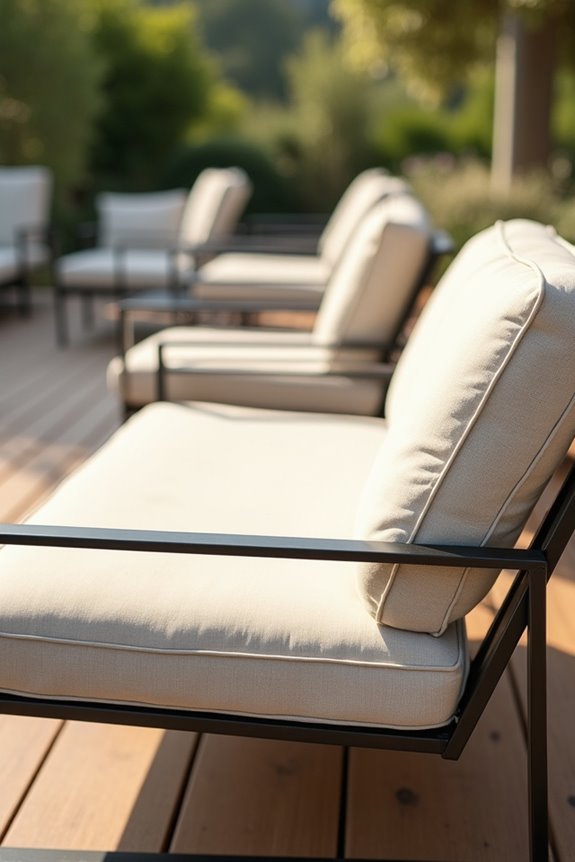
Ever wonder why premium outdoor cushions cost so much? You’re investing in advanced cushion engineering. High-end fabrics like Sunbrella resist fading and mildew. These materials alone account for up to 60% of your couch’s total price.
Beneath the fabric lies sophisticated moisture management. Multi-layer quick-dry foam and drainage channels prevent water buildup. High-resilience batting keeps cushions bouncy and supportive for years. This layered construction takes precision and expertise.
You’re also paying for comfort features. Zippered, removable covers simplify cleaning. Deep-seating proportions cradle you properly. These design choices add cost but extend lifespan beyond a decade.
Think replacement cushions and parts availability. You can refresh your furniture without replacing everything. That long-term value justifies the upfront investment. Premium cushion engineering delivers durability worth protecting.
How Timeless Design Justifies Premium Pricing
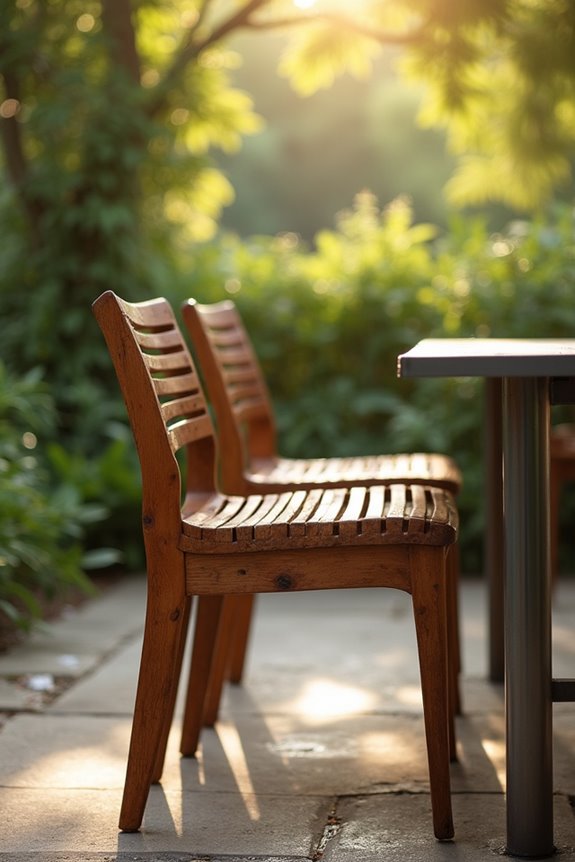
What separates furniture you’ll love for a decade from pieces that feel dated in three years? Timeless design. Premium pricing reflects this commitment to lasting appeal.
High-end outdoor sets use cohesive collections with sculptural silhouettes. Designer collaborations ensure your dining, lounge, and accent pieces work well together. This unified look maintains relevance beyond evolving trends.
Durable materials like teak and aluminum withstand real-life conditions for 5–10+ years. Multi-step finishing and handwoven details preserve visual quality while resisting wear. Replacement components keep your original design intact as seasons pass.
This durability justifies premium pricing through lasting value. You’re not replacing furniture every few years. Instead, you’re investing in pieces that age gracefully. That’s the real cost difference.
Testing Standards That Prove Durability (and Increase Cost)
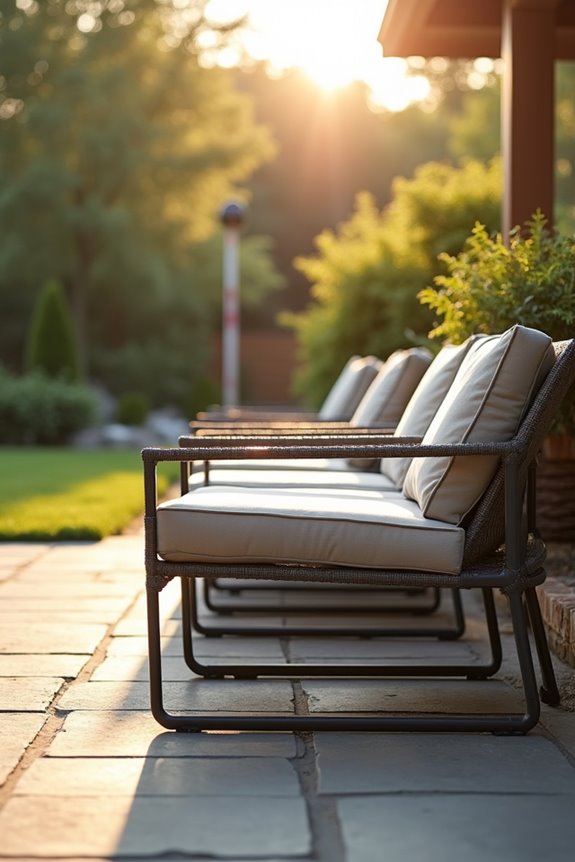
You’ve probably noticed that premium patio furniture costs way more than budget options. That’s partly because manufacturers put their materials through rigorous tests—UV fade testing that exposes furniture to intense sunlight, salt-spray corrosion tests that simulate coastal environments, and temperature cycling that swings between extreme heat and cold to see if anything cracks or warps. These demanding standards verify durability, but they add significant expenses to production that get passed straight to you.
Rigorous UV Fade Testing
Why does premium patio furniture cost so much more than budget options sitting right next to it? Rigorous UV fade testing answers that question. You’re paying for fabrics that actually survive years of intense sunlight exposure.
Here’s what happens behind the scenes:
- Labs expose fabrics to controlled UV cycles simulating 5–10+ years of real sun damage
- Manufacturers add UV stabilization additives that prevent color breakdown and material weakening
- Testing validates performance standards before furniture reaches your backyard
This process isn’t quick or cheap. Brands invest heavily in equipment, expertise, and validation to confirm durability. When you buy tested furniture, you’re getting documented longevity. Those longer warranties? They’re backed by actual lab data proving your fabrics won’t fade into dull, washed-out versions within a season. That confidence costs more upfront but saves replacement headaches down the road.
Salt-Spray Corrosion Validation
salt-spray corrosion testing.
Manufacturers expose metal hardware and frames to saline mist repeatedly. This simulates what your furniture endures near ocean salt or winter road treatments. Testing verifies protective finishes actually resist rust and corrosion.
| Test Duration | Environment | What Gets Checked | Cost Impact |
|---|---|---|---|
| 500 hours | Salt mist chamber | Hardware coating integrity | Moderate increase |
| 1,000 hours | Humid salt spray | Frame welding strength | Significant increase |
| 2,000+ hours | Accelerated conditions | Long-term durability | Premium pricing |
Brands that publish salt-spray validation data build trust with you. You’re paying for documented corrosion resistance and proven durability warranties. Premium furniture manufacturers invest heavily in this testing. That validation supports multi-year frame guarantees and higher price tags. You’re buying confidence your investment survives coastal environments for decades.
Temperature Cycling Performance Standards
While salt-spray testing proves your furniture can handle salty air, temperature cycling performance standards validate how materials survive repeated heating and cooling. You’re putting your chairs through extreme conditions—from freezing winters to scorching summers—all in a controlled lab setting.
What these durability standards measure:
- Frame warping and structural integrity across extreme temperature swings
- Paint and finish adhesion without cracking or peeling
- Joint resilience to prevent loosening from thermal expansion and contraction
Manufacturers test across wide temperature ranges because real-world environmental exposure demands proof. Premium materials and multi-step finishing quality undergo rigorous temperature cycling—the reason you’ll pay more upfront. Products with proven material resilience justify their cost through reduced early failure risk, protecting your investment across diverse climates.
How Warranty Coverage Justifies the Premium Price
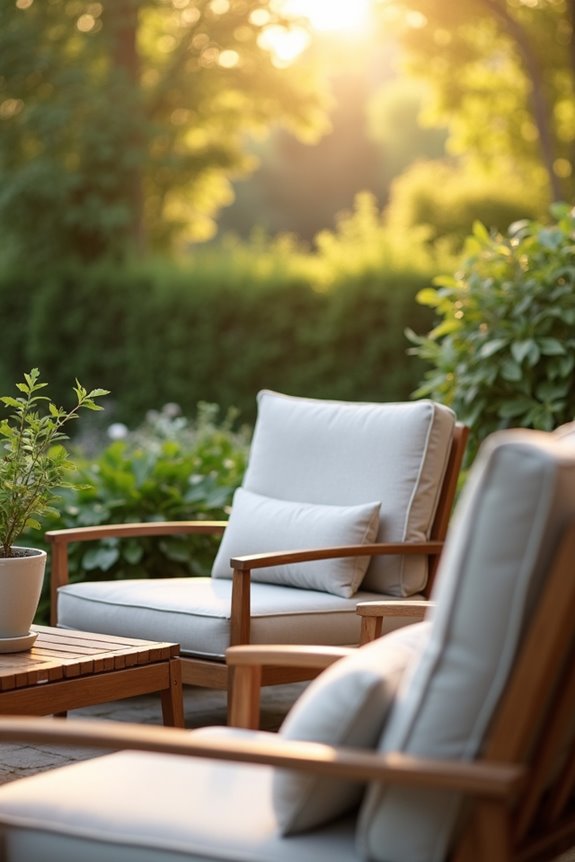
When you’re making a significant investment in outdoor furniture, you’re purchasing protection and reliability. Terra’s warranty coverage protects your investment with multi-year protection on frames, finishes, and cushions. You’re not alone in this purchase—you get a dedicated customer support team ready to help.
Here’s what makes this practical: durable materials backed by warranties reduce costs over time. Replacement cushions and parts remain available for years. This means you’re extending your furniture’s lifespan instead of replacing everything. The premium price becomes justified when you calculate actual long-term value.
Consider it this way: you’re joining a group of owners who prioritize quality and durability. Industry-leading protection builds confidence in construction. Design integrity and performance work together, making higher initial costs feel reasonable over time.
The Real Cost Breakdown: Where Your Money Goes
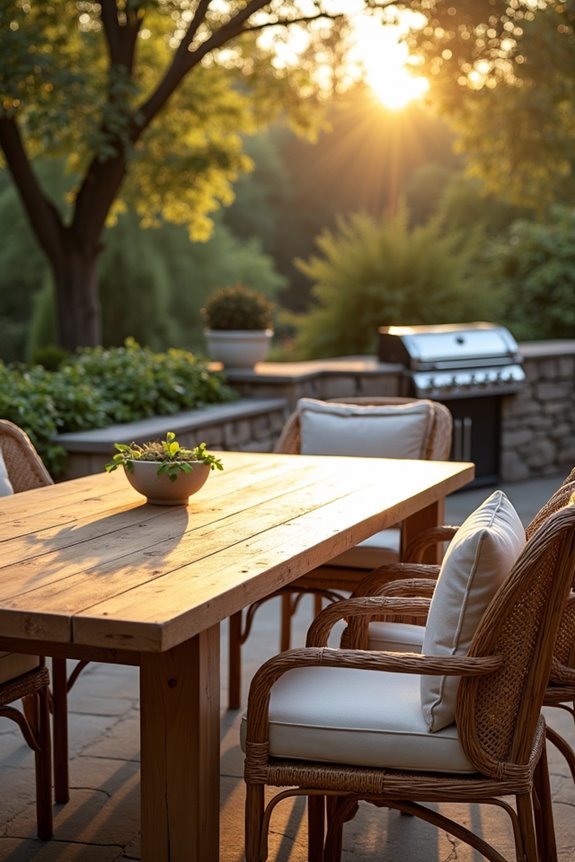
Now that you understand why the warranty protects your investment, it’s time to see exactly where that premium price actually goes.
Your money funds three major categories:
- Premium Materials — Grade-A teak, marine-grade aluminum, and HDPE wicker resist sun damage, rust, and rot for decades. These materials cost significantly more than standard alternatives.
- High-Performance Fabrics — Sunbrella cushions and fade-resistant covers prevent mildew and fading. Quality fabrics often represent 30–40% of your total cost.
- Construction Quality — Fully welded frames, handwoven wicker, and multi-step finishing require skilled labor and time.
Beyond the base furniture, you’ll encounter delivery fees, assembly charges, and optional weatherproof covers. These add-ons accumulate quickly. Understanding this breakdown helps you see that you’re paying for longevity, not just aesthetics. Your patio investment lasts.
How Much Longer Does Quality Patio Furniture Actually Last?
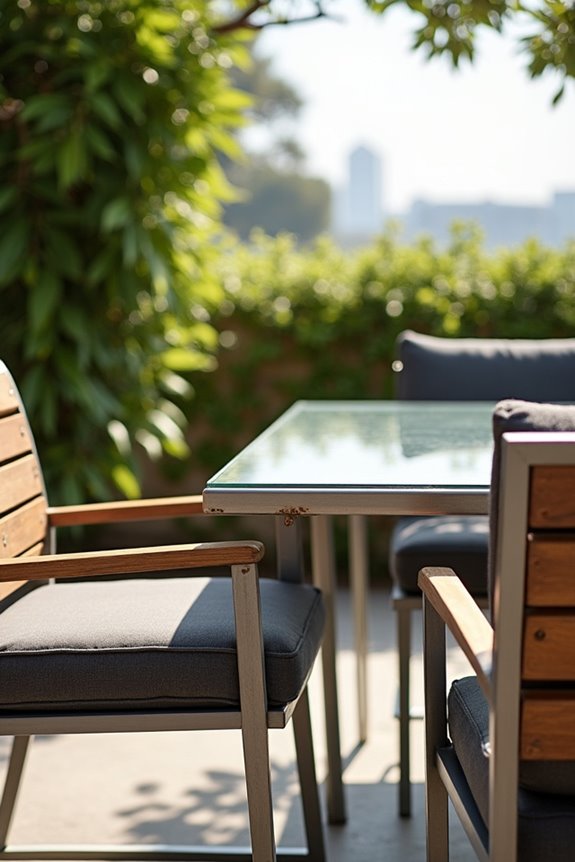
How many seasons will your patio furniture survive? Quality pieces outlast budget options by decades. Terra furniture uses marine-grade aluminum, Grade-A teak, and HDPE wicker that resist sun, rain, and temperature swings.
| Material | Lifespan | Key Benefit |
|---|---|---|
| Marine-grade aluminum | 15-20 years | Corrosion-resistant frames |
| Teak wood | 20-30+ years | Natural protective oils |
| HDPE wicker | 10-15 years | Weather-resistant weaving |
| Quick-dry cushions | 5-8 years | Prevents moisture damage |
| Welded frames | Lifetime | Eliminates loose hardware |
You’re investing in durability. Fully welded frames and handwoven wicker reduce structural failure. Premium cushions with quick-dry foams and drainage channels prevent rot. The warranty coverage—5 to 10+ years—reflects genuine confidence in longevity. Your quality furniture becomes a lasting outdoor investment.
Does the Investment Actually Pay Off?
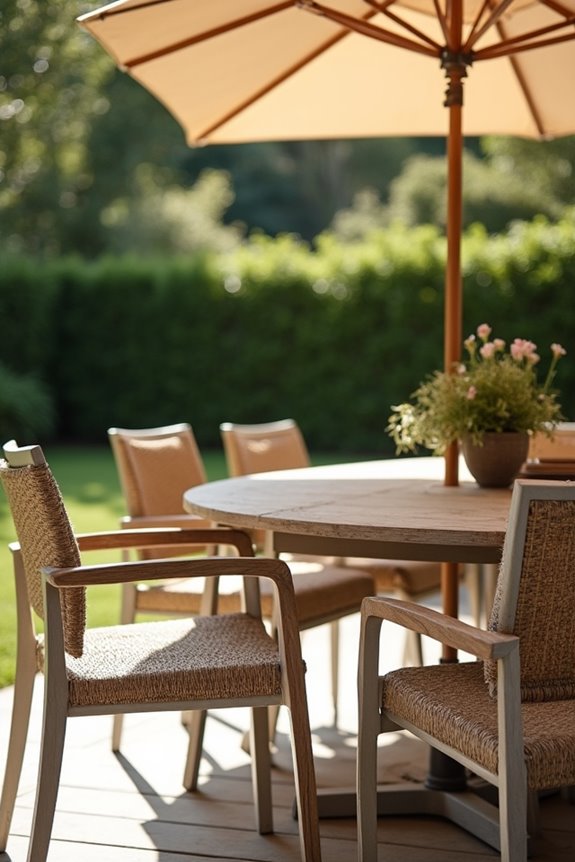
So you’re staring at the price tag. Here’s the reality: quality patio furniture pays off over time.
Premium materials like marine-grade aluminum and Grade-A teak resist degradation. This durability means you’re not replacing pieces every few years. Consider these financial benefits:
- Lower replacement costs across decades of ownership
- Reduced maintenance expenses for cleaning and repairs
- Minimal cushion replacements with Sunbrella fabric protection
Your warranties back this investment too. Fully welded frames carry 5–10+ year coverage. High-performance fabrics remain fade-resistant for 5+ years. That’s protection you’re actually using.
Initial expense stings, absolutely. But spread costs across ten years? Monthly expenses drop significantly. You’re joining homeowners who view outdoor spaces as long-term retreats. Premium construction becomes irreplaceable comfort that sustains your lifestyle.