You’ll want aluminum, stainless steel, or synthetic wicker for wet climates. Aluminum won’t rust and dries quickly. Synthetic wicker and resin resist water damage better than natural materials. Teak and hardwoods work too if you oil them regularly.
For cushions, choose olefin fabrics that dry fast and resist mold. Store cushions indoors during heavy rain and use waterproof covers off-season. Elevate furniture on legs so water drains underneath. Proper maintenance extends your furniture’s life.
Which Patio Furniture Actually Handles Rain?
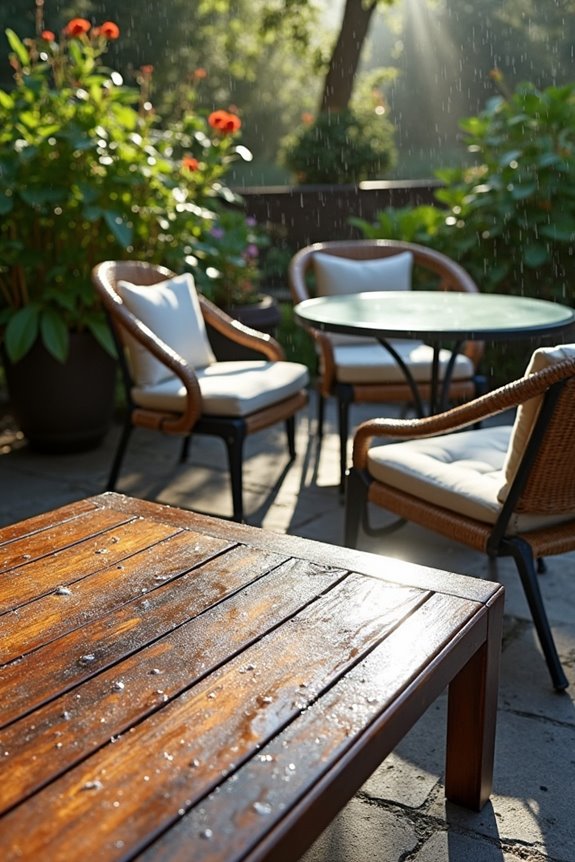
How do you choose patio furniture that won’t fall apart the moment rain hits?
You’ll want to focus on materials built for wet conditions. Aluminum is rust-free and dries quickly. Powder-coated metal offers extra moisture resistance and UV protection. Both handle rainy weather well.
For seating, resin wicker outperforms natural wicker. It tolerates rain and moisture without deteriorating. Your cushions matter too. Olefin fabric resists water and mildew effectively. These cushions dry fast after storms.
Weather protection extends your furniture’s life. Use waterproof covers during heavy rain. Store cushions indoors or in a deck box when needed.
You’re not just buying furniture. You’re investing in pieces that’ll last through countless seasons. Choose materials designed for moisture.
Aluminum for Wet Patio Furniture: Rust-Free and Durable
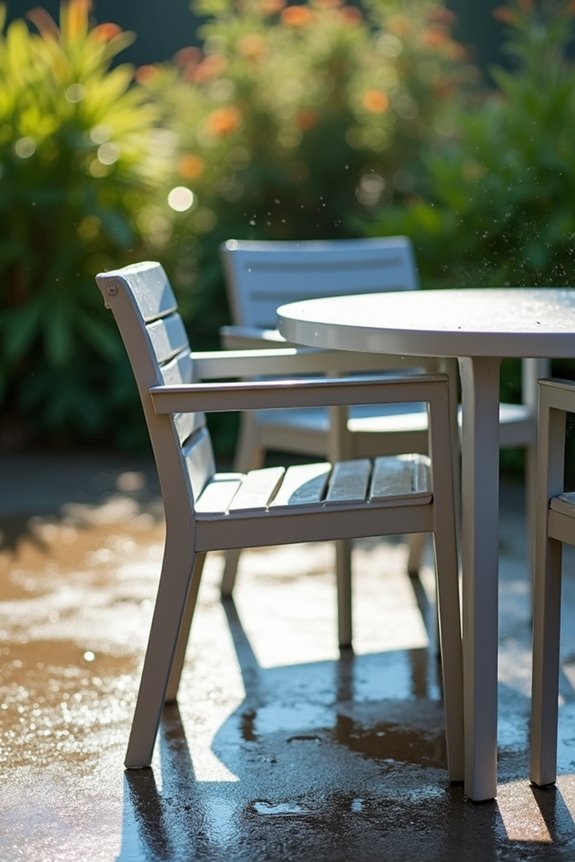
Aluminum stands out as one of the best choices for wet patio furniture. You’ll appreciate its rust-free nature. Unlike iron or steel, aluminum won’t corrode or deteriorate when exposed to rain and humidity. This durability makes it ideal for your wet patio environment.
Powder-coated aluminum offers enhanced protection. The coating adds UV resistance and weather-resistant properties that shield your furniture from sun damage and moisture. You can clean it easily with mild soap and water, then dry it thoroughly.
Aluminum is practical for several reasons: it’s lightweight. You’ll move pieces effortlessly for storage during heavy storms or off-season months. Plus, aluminum stays cooler to the touch in hot, sunny climates compared to darker metals. With regular maintenance, your aluminum furniture will maintain its durability and appearance for years.
Synthetic Wicker and Resin: Durable, Low-Maintenance
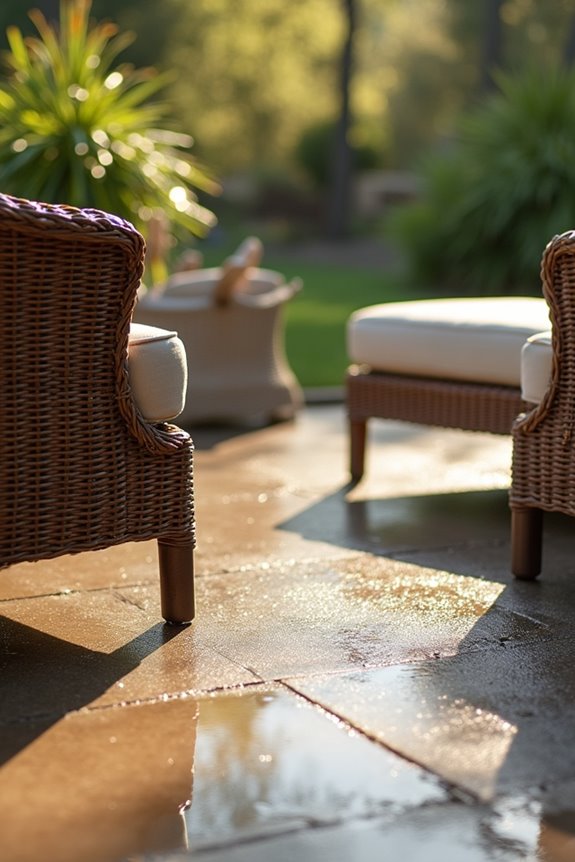
Why settle for natural wicker when synthetic alternatives outperform it in wet conditions? You’ll discover that synthetic wicker and resin weave furniture delivers superior weather resistance and moisture tolerance. These materials resist water damage that typically plagues natural options.
Here’s what makes them ideal for your outdoor space:
- Water-resistant construction: Resin weave maintains its shape and color through rain and storms without deteriorating
- Low-maintenance upkeep: You skip the extra moisture care that natural wicker demands, saving time and effort
- Easy storage: Lightweight synthetic pieces pack away for winter, protecting your investment from seasonal damage
Unlike natural wicker, synthetic options are maintenance-free during wet seasons. You won’t worry about mold or rotting fibers. Resin furniture handles downpours confidently. These water-resistant pieces keep their appearance longer. Your outdoor furniture fabric stays strong and durable year-round.
Teak and Hardwoods: Wood That Handles Wet Conditions
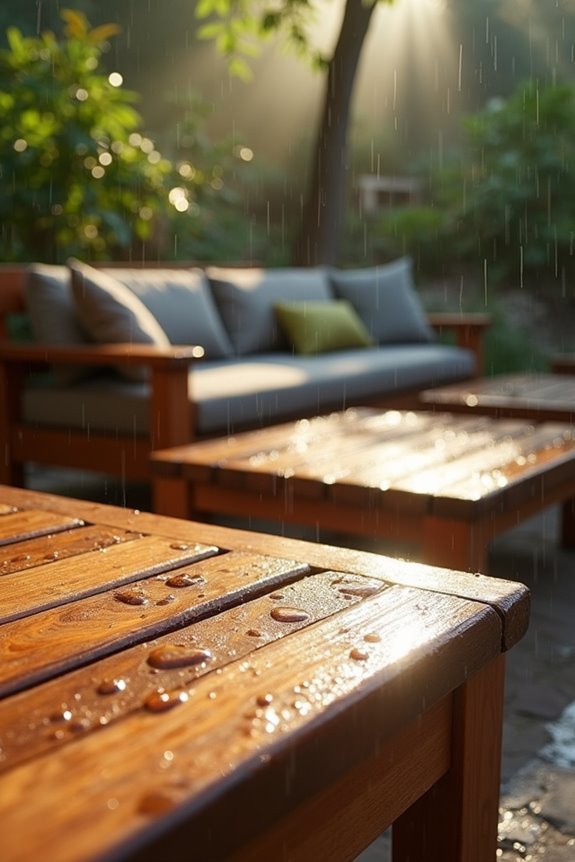
You’ve got options beyond synthetic materials. Teak and hardwoods like acacia and black locust naturally resist water, insects, and rot—they’re built tough for wet climates. To keep your investment performing at its best, you’ll need to understand their natural oil protection, learn how they hold up across seasons, and discover the maintenance routines that extend their lifespan.
Natural Oil Protection Benefits
When it comes to keeping wood furniture dry outdoors, natural protection works well. Teak contains natural oils that shield the wood from moisture and weather damage. These oils create a weatherproof barrier without extra effort on your part.
What makes natural oils effective:
- Water resistance: The oils repel rain and snow. Your furniture stays drier longer.
- Crack prevention: Natural oils keep wood from drying out and splitting during temperature changes.
- Reduced warping: Moisture can’t penetrate as easily. Your pieces maintain their shape better.
However, don’t skip protective sealants entirely. Over time, outdoor wood loses its natural protection. Applying sealing coats every year or two maintains that water resistance. Think of sealants as reinforcement for nature’s original defense system. You’re helping teak and similar hardwoods do what they do best.
Durability Across Weather Conditions
How well does wood actually hold up when it’s constantly wet outside? You’ll find that some woods perform better than others. Teak stands out as your best choice. It naturally resists water and requires only occasional oiling to maintain protection. Other hardwoods like acacia and black locust offer solid durability too.
| Wood Type | Water Resistance | Maintenance Needs |
|---|---|---|
| Teak | Excellent | Low |
| Acacia | Good | Moderate |
| Cedar | Fair | High |
Moisture exposure damages most woods eventually. Water pooling causes cracking, rotting, and warping. You’ll need regular sealing and maintenance to protect your outdoor furniture. Think of it like sunscreen for your patio—consistent application keeps everything in good condition. This commitment pays off with years of reliable durability across unpredictable weather conditions.
Maintenance Practices for Longevity
What separates a wooden patio set that lasts decades from one that deteriorates in just a few years? Maintenance practices. You’ll want to establish a routine that protects your investment and keeps moisture from causing damage.
Here’s what you should do:
- Apply protective sealants and coatings regularly to create a barrier against water pooling and moisture penetration
- Oil your teak and hardwoods annually to maintain color and enhance natural moisture resistance
- Store furniture off-season in dry spaces to prevent prolonged wet exposure
These steps aren’t complicated. Teak’s natural oils provide built-in protection. But you can’t rely on that alone. Water pooling causes cracking and warping. Protective coatings act as your furniture’s shield. Oiling refreshes defenses and keeps wood looking great. Off-season storage simply reduces unnecessary weather stress.
Plastics and Composites: Materials That Dry Fast in Wet Weather
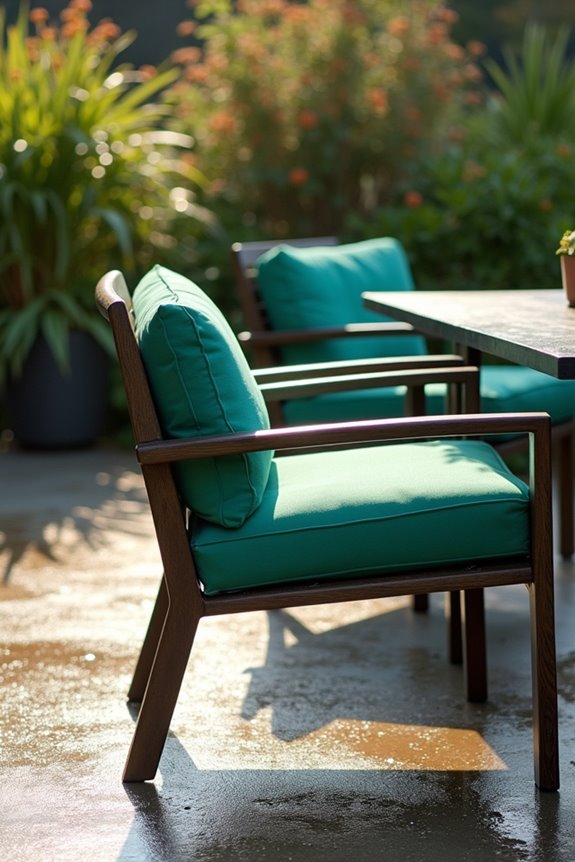
If you’ve ever watched water bead up and roll right off modern patio furniture, you’ve seen plastics and composites in action. HDPE and recycled plastics create durable frames that resist moisture intrusion completely. They dry faster than traditional materials after rain or sprinklers.
Resin wicker offers superior weather resistance compared to natural wicker fibers. You’ll appreciate how quickly it sheds water without absorbing moisture. This synthetic material won’t rot or deteriorate from constant wetness.
Olefin fabrics on cushions provide exceptional quick-drying performance. These water-resistant textiles resist mold and mildew growth effectively. Your cushions remain fresh and functional even during humid seasons.
Together, these materials create furniture that handles wet conditions with ease. You’re choosing longevity and low maintenance when selecting plastic and composite pieces.
Why Metal Needs Extra Protection From Standing Water
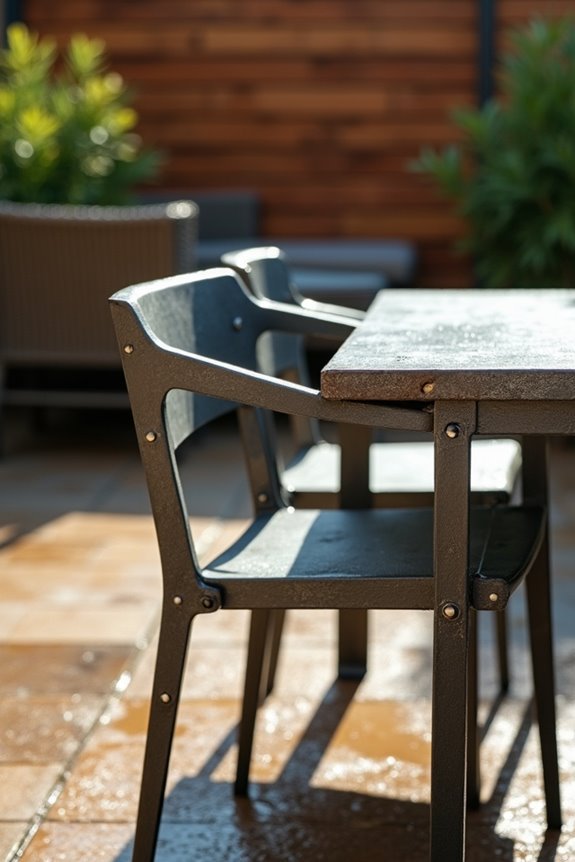
While plastics and composites shrug off moisture without a second thought, metal furniture tells a different story. You’ll face real challenges with most metals in wet conditions.
Here’s what happens with different metals:
- Iron and untreated steel rust quickly when exposed to standing water. They need constant vigilance.
- Aluminum and stainless steel resist rust naturally. They’re your safest options for wet climates.
- Powder coating and protective coatings add weather resistance. They’re necessary for bare metals.
Standing water is your biggest enemy. Even small puddles cause deterioration over time. You’ll want to choose rust-resistant options like aluminum or stainless steel whenever possible.
Regular maintenance matters too. Clean your metal furniture with mild soap and water. Then dry it thoroughly. This simple routine prevents moisture from settling into crevices where rust develops.
Proper storage during off-season and covering during storms also protect your investment significantly.
Prevent Wood Rot: Sealing and Storage Strategies
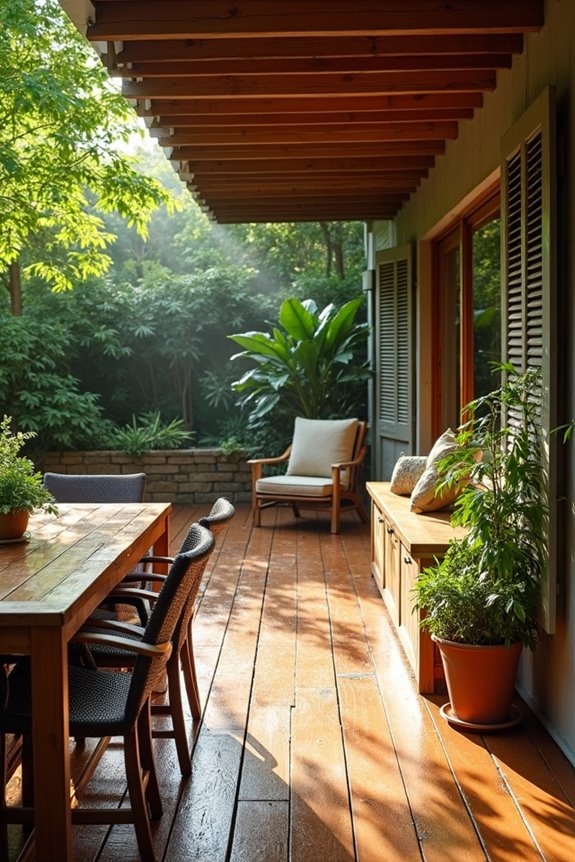
How does wood furniture survive constant exposure to rain and moisture? You’ll need a two-part strategy: sealing and storage.
First, apply a protective sealant to create a watertight barrier. This coating prevents moisture absorption and stops cracking, warping, and wood rot before it starts. Even teak, which resists decay due to its natural oils, benefits from regular sealant applications. You’re providing your furniture with an extra protective layer.
Second, practice smart storage. During wet seasons, move furniture indoors or into sheltered areas. This complements sealing by minimizing prolonged water contact.
Water pooling on surfaces causes serious damage. Elevate furniture slightly using legs or stands to allow drainage.
Your outdoor furniture maintenance routine combines these elements: seal regularly, store strategically, and prevent standing water. This approach extends lifespan and maintains your patio’s condition for years.
Quick-Dry Fabrics and Waterproof Cushion Solutions
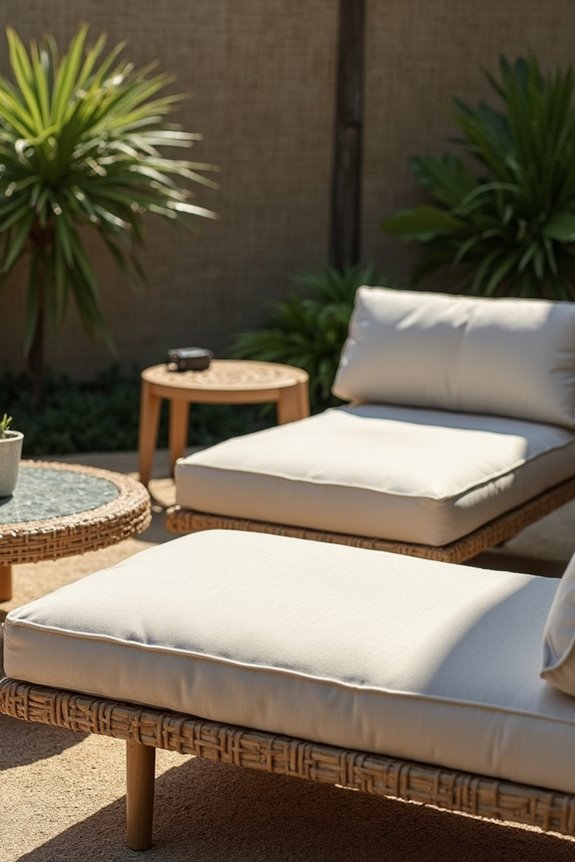
What fabric choice keeps your cushions dry and usable after a rainstorm?
You’ll want moisture-resistant fabrics that shed water quickly. Olefin cushions stand out as your best option. They’re UV-resistant, water-resistant, and quick-dry fabrics that won’t trap moisture.
Here’s what makes these materials work:
- Olefin polypropylene: Solution-dyed for color retention. Resists fading and water damage effectively.
- Synthetic wicker: Outperforms natural wicker by reducing moisture absorption significantly.
- Moisture-resistant fabrics: Paired with foam core protection to prevent mold growth after rain.
Skip polyester-cotton blends entirely. They absorb water and dry slowly. Your waterproof cushions need fabrics engineered for outdoor conditions.
The key? Match quick-dry fabrics with proper foam core protection. This combination prevents mildew and extends your outdoor cushions’ lifespan considerably. You’re investing in durability and comfort.
When to Cover, When to Store: Protection Strategy
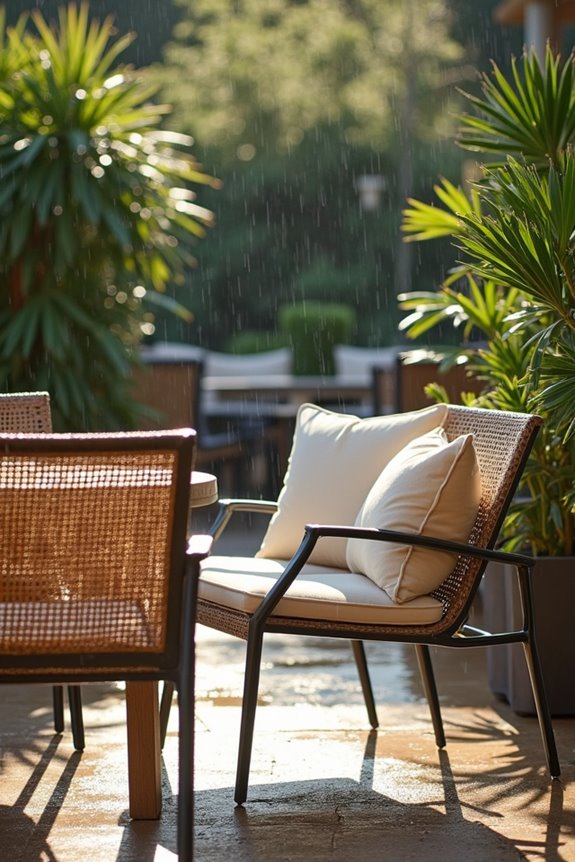
You’ll need different strategies depending on the season and weather patterns in your area. During rainy seasons, you can keep cushions on your furniture but cover them with waterproof fitted covers before storms roll in. For winter months or extended periods when you’re not using your patio, storing cushions inside a deck box or garage provides protection against moisture damage.
Seasonal Storage Solutions
Because moisture and mold damage furniture, timing matters. You’ll want to develop a seasonal routine that protects your investment year-round. Materials like HDPE and aluminum resist water naturally. But your cushions need extra care during wet seasons.
Create a practical storage system with these steps:
- Store cushions indoors or in a deck box before heavy rain arrives
- Use fitted water-resistant covers on mattresses and cushions for added protection
- Check weather forecasts regularly to adjust your coverage strategy
Remove covers quickly once rain ends. This prevents trapped moisture underneath. During rainy months, keep cushions stored safely away from direct rain exposure. A deck box keeps everything organized and accessible. This approach minimizes moisture absorption while keeping your outdoor space ready for use whenever weather permits.
Weather-Based Coverage Tactics
Protecting your furniture requires more than just picking the right materials. You’ll need smart weather-based coverage tactics to keep outdoor furniture materials in top condition.
Use waterproof covers when rain’s on the horizon. This prevents moisture absorption into cushions and fabrics. For metal furniture, covers reduce rust formation. Remove covers during sunny, windy days to prevent condensation and allow moisture management.
Store cushions indoors or in deck boxes during prolonged wet weather. This extends their life considerably. Teak has excellent weather resistance, but even teak benefits from protection during heavy storms.
Keep weather-ready storage solutions accessible. You want covers you can grab quickly as conditions change. Apply tarps during winter months when rain increases. Remove them periodically for ventilation. This simple routine prevents mold growth and keeps your investment protected year-round.
Extend Patio Furniture Life in Wet, High-Moisture Climates
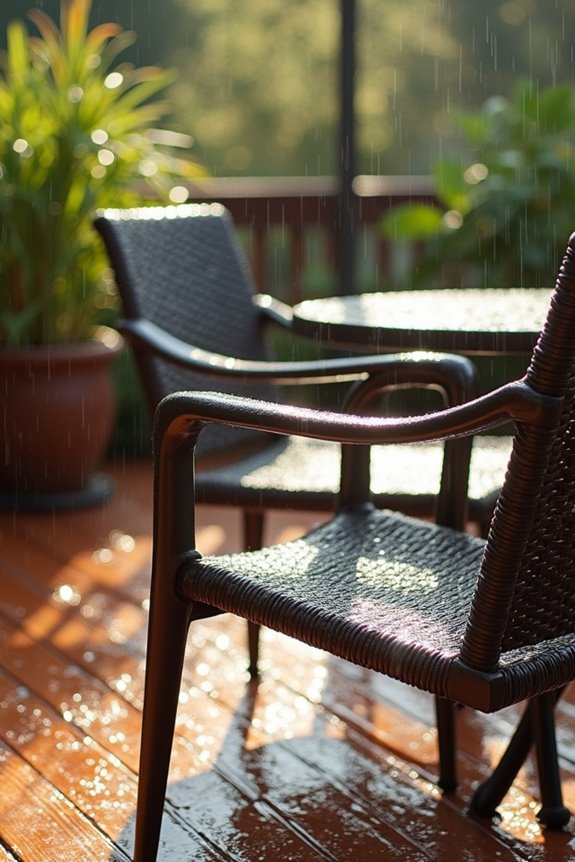
When rain and humidity become your patio’s constant companions, material choice determines whether furniture lasts or deteriorates. You’ll want to invest in pieces built to withstand moisture year-round.
Start by selecting smart materials:
Selecting smart materials like resin wicker, powder-coated aluminum, and olefin cushions is the foundation of weather-resistant patio furniture.
- Resin wicker and powder-coated aluminum resist rust and corrosion better than natural alternatives
- Olefin outdoor cushions dry quickly and resist mold while maintaining comfort
- Teak sealing and UV-protective coatings protect wood from water absorption and color fading
Don’t skip weather-ready bases like GFRC or powder-coated metal frames. They anchor your furniture securely during heavy rainfall. Store cushions indoors during extreme wet seasons. Regular maintenance—cleaning debris and reapplying protective finishes—extends furniture life significantly. You’re building a patio that handles what nature throws at it.