

Your homeowners insurance does cover fence damage. It falls under Coverage B (Other Structures), which typically caps at about 10% of your dwelling limit—so a $200,000 home might cover up to $20,000 in fence repairs. Wind, fire, hail, storms, and vandalism trigger coverage. However, depreciation reduces payouts unless you’ve added replacement-cost coverage. Wear and tear, wood rot, and poor installation don’t qualify. Your deductible applies first. Understanding what your specific policy covers takes knowing the details.
Understanding Coverage B: How It Protects Your Fence
Ever wondered whether your homeowners insurance actually covers that fence around your property? Your fence likely is covered. It falls under Coverage B. This covers Other Structures on your land.
Coverage B is separate from your dwelling limit. Your home’s coverage is Coverage A. If your home is insured for $200,000, your fence coverage typically maxes out at about $20,000. That’s roughly 10% of your dwelling limit.
Your policy terms determine what damage qualifies. Fire, wind, hail, and vandalism usually count. Vehicle damage sometimes does too. However, depreciation applies. Your fence won’t receive full replacement cost. Age and condition reduce the payout to actual cash value. Your deductible still applies before you receive anything.
What Damage Actually Gets Covered?
Your fence coverage depends on what caused the damage. Wind, fire, hail, storms, and vandalism typically trigger your homeowners policy to pay out, but you’ll face deductibles and depreciation that can substantially reduce what you actually receive. Exclusions like flood or earthquake won’t be covered unless you’ve added special endorsements to your policy.
Covered Perils And Scenarios
What damage actually qualifies for fence coverage? Your homeowners policy covers fences under Other Structures (Coverage B). You’re protected when covered perils cause damage. Wind damage from storms typically qualifies. Hail strikes your fence? You’re covered. Vandalism and vehicle impact also count. Fire damage to fences gets replaced or repaired through your policy.
However, policy exclusions matter significantly. Maintenance neglect can disqualify claims. If you’ve ignored rotting wood or deteriorating posts, insurers may deny coverage. A neighbor tree falling on your fence usually triggers coverage through your own policy, which then pursues recovery from their insurer.
Coverage limits typically equal 10% of your dwelling coverage. For a $200,000 home, expect up to $20,000 in fence protection. Understanding these scenarios helps you maximize your protection.
Exclusions And Limitations Apply
Now that you know what perils trigger coverage, it’s time to understand what your policy won’t pay for. Your Other Structures coverage has real damage limitations you should know about.
Gradual wear and tear isn’t covered. Wood rot, termite damage, and mold fall into exclusions too. These develop slowly without a specific covered peril causing them. Maintenance negligence also disqualifies you from claims. If you’ve neglected your fence upkeep, insurers won’t cover resulting damage.
Depreciation reduces what you’ll actually receive. Your policy pays actual cash value, not replacement cost. That means your ten-year-old fence won’t be reimbursed as new.
Poor installation voids coverage as well. Cosmetic damage without structural impact gets denied. Understanding these coverage exclusions helps you maintain realistic expectations about what your homeowners insurance actually protects.
Depreciation And Deductible Impact
Depreciation and deductibles shrink your actual payout. Your insurer calculates actual cash value by subtracting depreciation from replacement costs. Older fences lose value faster. Your deductible also reduces reimbursement—you pay this amount first before insurance kicks in.
| Factor | Impact | Example |
|---|---|---|
| Depreciation | Reduces payout significantly | 10-year fence = 50% less value |
| Deductible | Amount you pay upfront | $500 deductible reduces claim by $500 |
| Replacement Cost | Full replacement price | $3,000 fence repair |
| Actual Cash Value | After depreciation applied | $1,500 payout after deduction |
Wind damage claims follow policy terms closely. Some policies offer replacement cost coverage for fences, eliminating depreciation penalties. Others don’t. Documentation through photos and contractor estimates proves necessary. They help insurers calculate accurate depreciation impact and ensure fair settlements.
Storm Damage to Your Fence: What’s Covered?
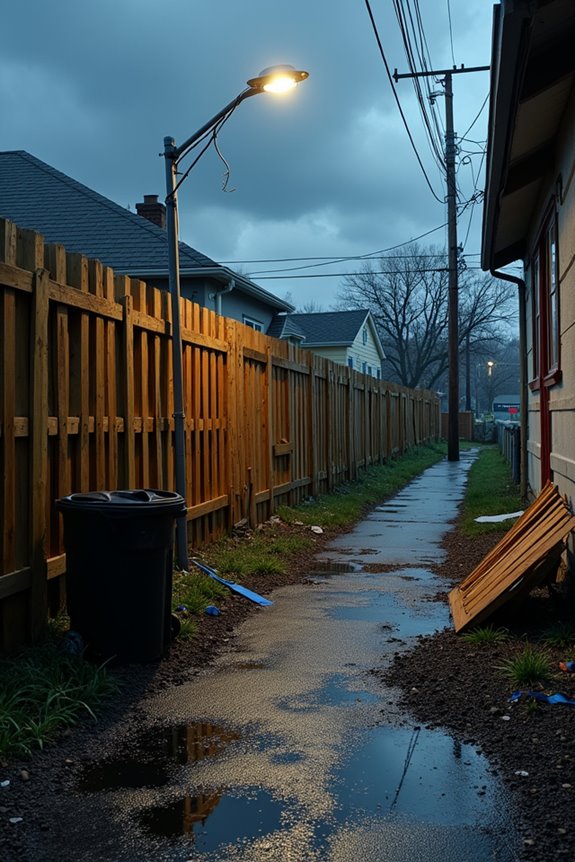
When a storm damages your fence, you’ll want to understand exactly what your policy covers and how to document the damage for your claim. Wind, hail, and lightning typically qualify as covered perils, but you’ll need to photograph the damage promptly, gather repair estimates, and account for your deductible before filing. Your coverage amount usually caps at around 10% of your dwelling coverage limit, and your insurer may apply depreciation to reduce the payout, so knowing these details upfront helps you prepare for what to expect.
Wind Damage Coverage Details
Because storms can wreak havoc on your property, it’s important to understand exactly what your homeowners insurance covers when wind damages your fence. Most policies include wind damage to fences under other structures coverage. Your payout limit typically equals about 10% of your dwelling coverage. For example, a $200,000 home might provide $20,000 for fence repairs.
However, your deductible applies first. You’ll pay this amount before insurance kicks in. Depreciation also matters. Insurers often pay actual cash value rather than replacement cost for older fences, meaning you’ll receive less than full repair expenses.
Document all damage with photos immediately. Get repair estimates from contractors. Review your policy language carefully. Some policies exclude wind entirely, so verify your specific coverage before filing a claim.
Storm Documentation And Claims
How do you actually get paid after a storm damages your fence? Start by documenting everything. Take photos and videos once it’s safe. This storm documentation protects your claim.
Next, obtain an itemized repair estimate from a contractor. Your homeowners insurance needs specifics. Coverage B typically covers fence damage up to 10% of your dwelling coverage limit.
File your claim promptly with detailed documentation and the repair estimate attached. Your insurer will review the damage and depreciation factors. Depreciation reduces payouts unless you’ve selected replacement cost coverage.
The claims process takes time. Be patient and responsive to your adjuster’s requests. Keep copies of everything you submit. This organized approach strengthens your claim and provides fair compensation for storm damage to your fence.
Who Pays When a Neighbor’s Tree Falls on Your Fence?
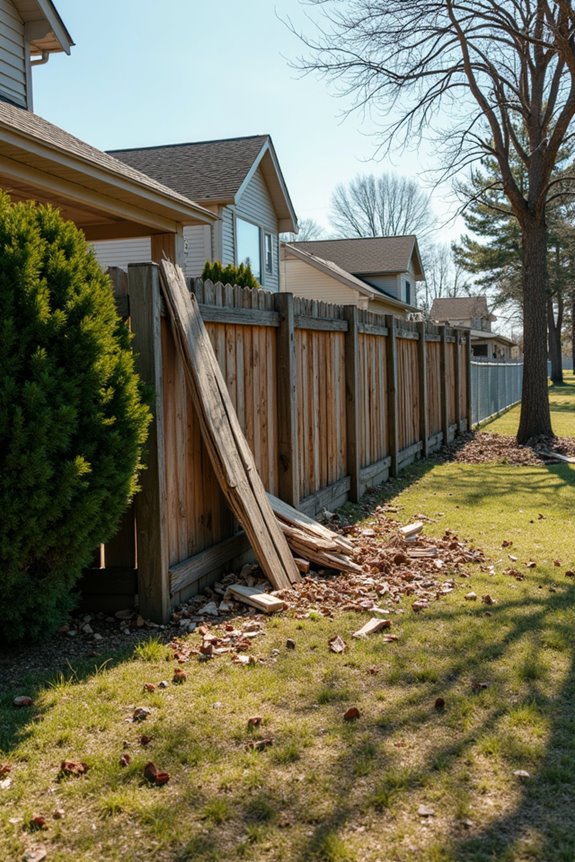
A neighbor’s tree falling on your fence creates an annoying situation. You’ll file a claim with your own homeowners insurance first. Your Coverage B (other structures) typically covers the fence damage. Your insurer then pursues subrogation—recovering costs from the neighbor’s insurer if negligence exists.
Here’s the process: document everything with photos. Contact your insurer immediately. They’ll assess the damage and determine coverage based on your policy limits and deductible. If the neighbor’s tree was diseased or poorly maintained, your insurer can still cover you while investigating negligence.
Boundary-line trees complicate matters in some states, potentially creating shared responsibility. You might recover your deductible through subrogation efforts. Filing promptly protects your interests and helps insurers work together efficiently.
Who Pays When a Vehicle Damages Your Fence?
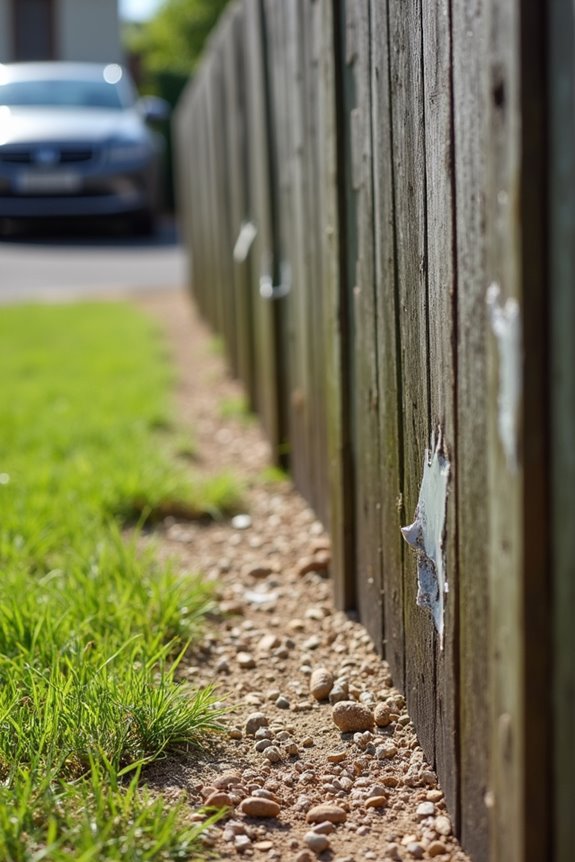
When a car hits your fence, the driver’s auto liability insurance typically becomes your primary recovery source. This coverage pays for fence damage after the at-fault driver’s liability limits apply. You’ll need documentation—photos, police reports, and repair estimates—to support your claim settlement.
Your homeowners insurance serves as backup protection. If the driver lacks adequate coverage, your homeowners policy may respond depending on your specific coverage B limits and state laws. File a claim with the at-fault driver’s insurer first.
Your own insurer can pursue recovery through a process called subrogation, potentially reducing or eliminating your deductible. An accurate repair estimate strengthens your position significantly. Professional assessments establish both fault and reasonable costs, making claim settlement smoother and faster for everyone involved.
Fence Damage Your Insurance Won’t Cover
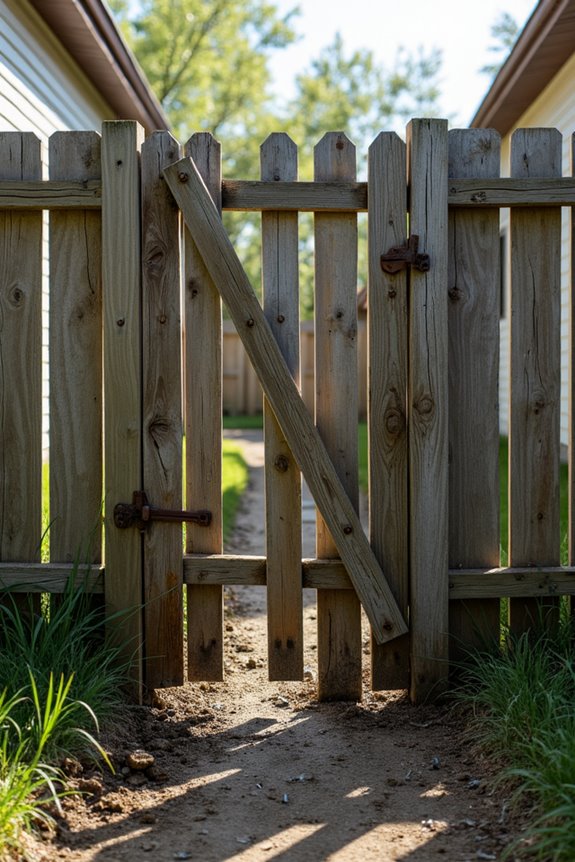
Unfortunately, not all fence damage qualifies for homeowners insurance coverage. Your policy won’t cover gradual wear and tear like wood rot or rust. Termites and mold also fall outside coverage exclusions. Cosmetic damage without structural impact won’t trigger claims either.
Improper installation is a major exclusion. If your fence wasn’t installed correctly, you’ll likely face denial. Flood damage requires a separate flood policy entirely. Wind damage may be covered, but earthquake damage isn’t without additional endorsements.
Understanding these coverage exclusions helps you plan ahead. You might consider separate policies for specific risks. Regular maintenance prevents some exclusions from applying. Know your policy limits before fence problems arise. This knowledge protects your wallet and prevents disappointment later.
Fence Claim Payouts: Coverage Limits, Deductibles, and Depreciation
Now that you know what your insurance won’t cover, it’s time to understand what it actually will pay out. Your fence falls under Coverage B (Other Structures). Most policies cap payouts at roughly 10% of your dwelling limit—meaning a $200,000 home gets up to $20,000 in fence coverage.
| Factor | Impact | Example |
|---|---|---|
| Deductible | Subtracted first | $500 deductible applies |
| Depreciation | Reduces payout | 10-year fence pays less |
| Replacement-cost | Full coverage option | Pays new fence price |
| Covered perils | Determines eligibility | Wind, fire, vandalism included |
| Payout limits | Caps total amount | $20,000 maximum for example |
Most insurers pay Actual Cash Value unless you’ve added replacement-cost coverage. That means depreciation eats into your payout considerably. Document everything with photos and repair estimates before filing your claim.
Filing Your Fence Damage Claim: Documentation Steps
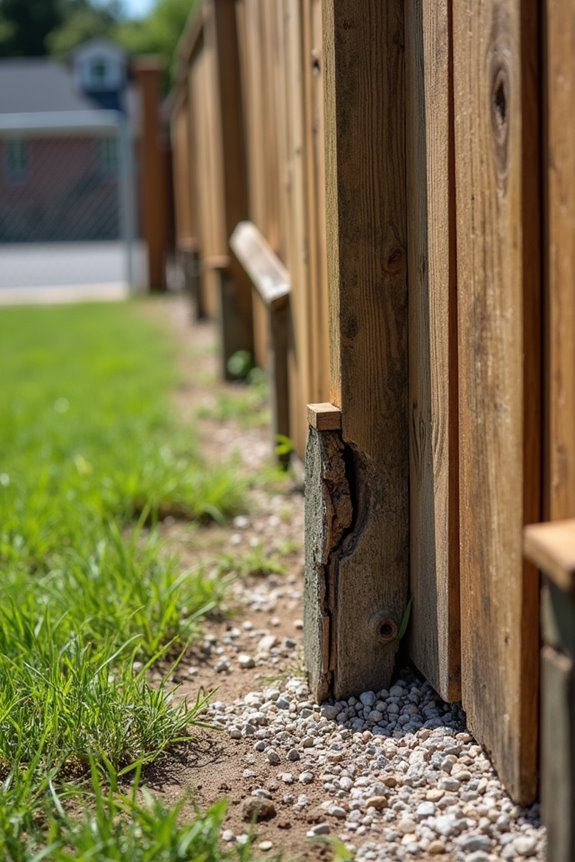
How you document fence damage can make or break your claim.
Start by photographing everything immediately. Take shots from multiple angles. Capture the fence itself. Show surrounding areas too. This visual evidence proves the damage’s extent and cause.
Photograph fence damage from multiple angles immediately to document extent and establish cause for your insurance claim.
Next, document the specifics. Note the date, time, and location. Write a clear description of what happened. Identify the covered peril—was it wind, storm, fire, or vandalism? If police involvement occurred, obtain those incident reports.
Get repair estimates from licensed contractors. Request itemized breakdowns. Keep all invoices and receipts organized.
Finally, follow your homeowners insurance company’s claims process. Call or file online. Record every communication. Save reference numbers.
This documentation protects your claim and strengthens your case for proper reimbursement.
Review Your Policy: What to Ask Your Insurer About Fence Coverage
Before you file a claim, sit down with your policy and ask your insurer direct questions about fence coverage. Understanding your specific Coverage B limits matters. You need clarity on what your policy actually covers.
| Question | Why It Matters |
|---|---|
| What’s my Other Structures limit? | Determines your fence coverage amount |
| Which covered perils apply to fences? | Wind, vandalism, and fire typically qualify |
| Are there maintenance requirements? | Neglected fences may deny claims |
| How’s neighbor damage handled? | May require their liability coverage involvement |
Ask whether your fence limit is 10% of your dwelling coverage. Confirm if weather damage qualifies as a covered peril. Request specific details about maintenance expectations. Understanding policy limits prevents claim surprises. You’re protecting your investment by knowing exactly what your policy delivers.