
Skip barbed wire and welded fencing—goats will escape them. Your best option is fixed knot woven wire with 3-4 inch openings and proper post tensioning. Add a hot wire on top to deter rubbing and head-forcing. Cattle panels work as quick alternatives, though heavier options last longer. Space posts 12-20 feet apart for maximum durability. The right fence combination keeps goats contained for years instead of months. There’s more to learn about each option’s specific strengths and installation tips.
What to Avoid: Why Barbed Wire and Welded Wire Fail
Why do so many goat owners end up replacing their fences within months? You’re likely dealing with fence failure from poor material choices.
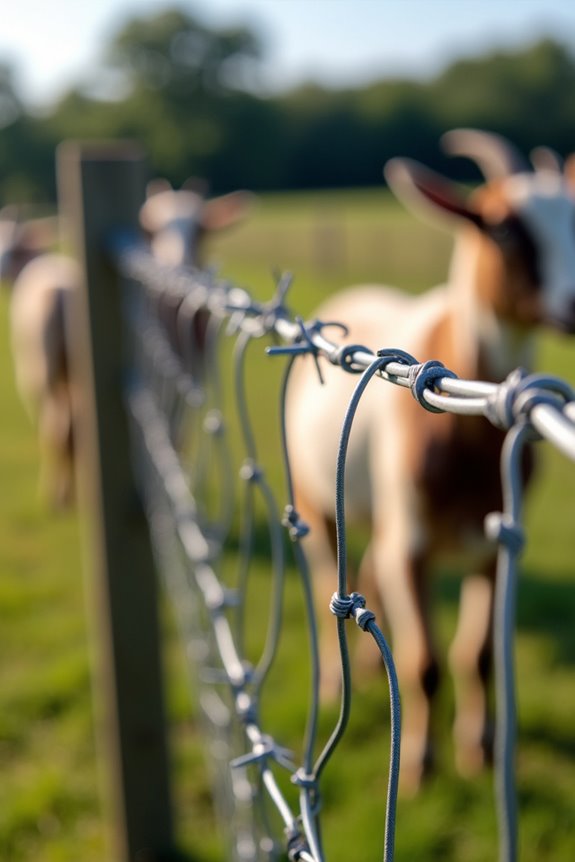
Barbed wire is an absolute no-go. Your goats will push through if their heads fit between wires. Long barbed wire setups act as walls instead of barriers. They don’t contain—they frustrate.
Barbed wire frustrates rather than contains—goats push through wherever their heads fit between wires.
Welded wire fencing fails faster than you’d expect. Goats stand on fences with hooves six inches off the ground. This pressure stresses the welds and causes rapid deterioration. You’ll buy twice within a year.
Many welded and chain-link styles collapse under pressure then spring back. That’s terrible for goat containment and escape resistance.
Instead, choose fixed knot or woven wire with proper knots. Vertical knots preferred. Good stretching provides superior fence durability and keeps your herd secure. These options outperform high tensile wire alternatives for actual goat fencing needs.
Woven Wire Fencing: The Most Durable Long-Term Choice
How much longer can your goats actually stay contained? Woven wire fencing delivers the durability you need. Fixed knot varieties resist goat pressure better than welded wire. Vertical knots and proper post tensioning create a taut installation that prevents fence gaps.
| Feature | Benefit | Result |
|---|---|---|
| Fixed knot design | Reduces holes from pressure | Years of containment |
| Vertical knots | Strengthens joint integrity | Fewer escape attempts |
| Post tensioning | Creates taut fence line | Better head-through deterrence |
Your durable fencing investment pays off long-term. A hot wire above the woven section enhances goat containment further. Space posts 16-30 feet apart depending on terrain. Top and bottom wire configuration deters rubbing effectively. Fixed knot systems cost more upfront but eliminate constant repairs. High-tensile fence varieties offer flexibility without sacrificing strength. You’re joining goat owners who’ve solved their containment challenges permanently.
Fixed Knot vs. Welded Wire: Which Holds Up to Goat Pressure
Now that you’ve learned why woven wire fencing outperforms other options, you’re probably wondering what makes fixed knot designs so much better than their welded counterparts.
Here’s the truth: goats are natural fence testers. They’ll stand on your fence and push hard. Welded wire fences fail quickly under this goat pressure because welds crack and deteriorate within a year. Fixed knot fencing resists because each intersection uses actual knots instead of welds.
The difference matters for goat fencing durability. Those knots above and below joints absorb stress. One-piece vertical stay wire adds strength too. You’ll notice fewer holes forming over time.
Yes, fixed knot fencing costs more initially. But it reduces goat escape risk considerably. Pair it with fixed-height systems for head-through prevention. That combination gives you fence longevity and peace of mind. Your goats stay contained. Your fence stays intact.
Cattle Panels and Pallet Fences: Budget-Friendly Alternatives
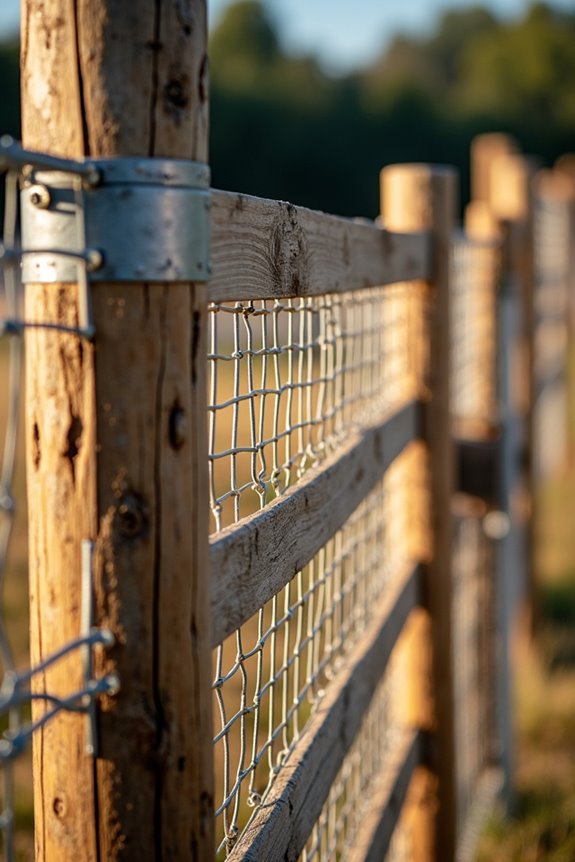
Cattle panels offer a practical shortcut if fixed knot fencing feels out of reach. You’ll install 16-foot panels quickly using t-posts. They’re sturdy and durable. Heavier panels work best for long-term durability.
Here’s the catch: smaller kids and mini breeds squeeze through fence openings easily. Baby goats become escape artists without reinforcement. You’ll need to assess your goat sizes carefully.
Transport practicality matters too. Those long panels challenge pickup trucks and trailers. Consider your logistics before ordering.
For gates, use pipe gates with cattle panels mounted on them. Wire-mesh built gates fail faster.
Budget-friendly pallet fences offer another option. Both cattle panels and pallet fences require honest evaluation of kid safety and durability needs. Choose based on your specific goat fencing situation and transport ability.
Combining Woven Wire With Electric Fencing: When Durability Meets Deterrence
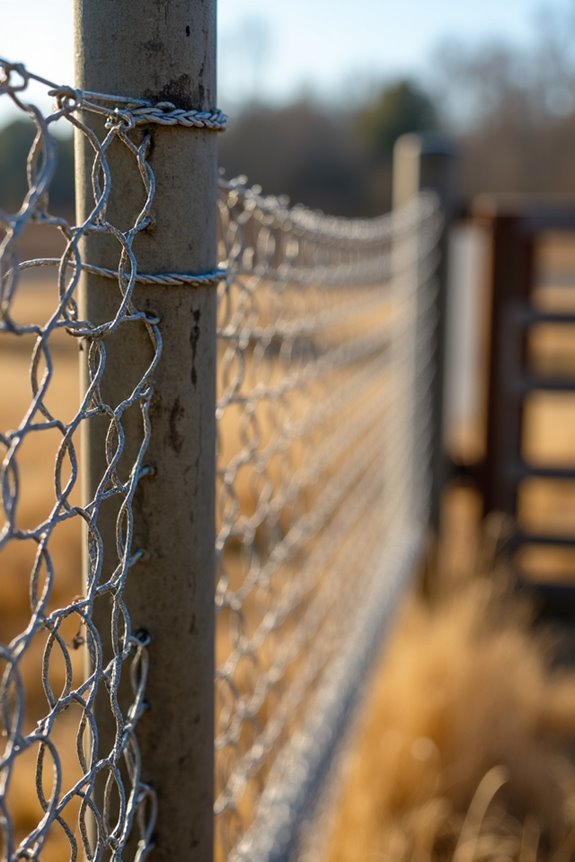
A fence that physically contains your goats while also discouraging escape attempts is possible by combining woven wire with electric fencing.
Fixed knot woven wire provides sturdy physical containment. Its vertical knots resist goat pushing and prevent collapse. Add a multi-line fence with a hot wire on top. This combination deters rubbing, jumping, and head-forcing attempts.
Fixed knot woven wire resists goat pushing while electric fencing deters rubbing, jumping, and escape attempts.
Choose 3-inch or 4-inch openings to prevent head-through escapes. Avoid larger openings that snag horns.
Proper tensioning and post spacing are important. Space posts 12–20 feet apart depending on your product. Strong tensioning maintains durability and long-lasting performance.
This approach creates reliable goat containment. Your herd stays secure. You gain peace of mind.