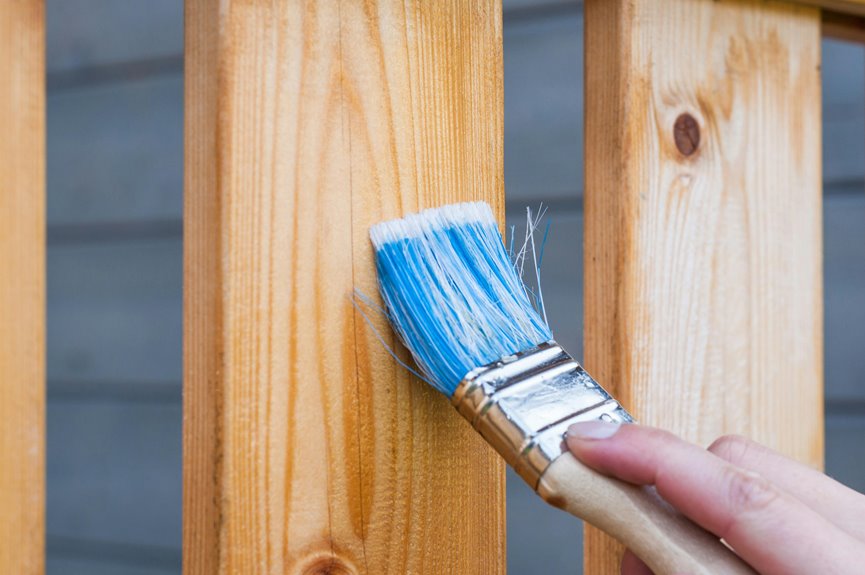
Yes, fence paint protects wood—but here’s the catch. Paint forms a nonporous film that blocks moisture and filters UV light, keeping your fence safe from weathering. The problem? Thin coatings crack over time, especially without proper prep work. You’ll need to sand, clean, and prime before painting. Even then, you’re looking at repainting every three to five years.
Stain might actually serve you better long-term since it penetrates wood without peeling like paint does—but the details matter more than you’d think.
Paint vs. Stain: Which Protects Wood Fences Longer?
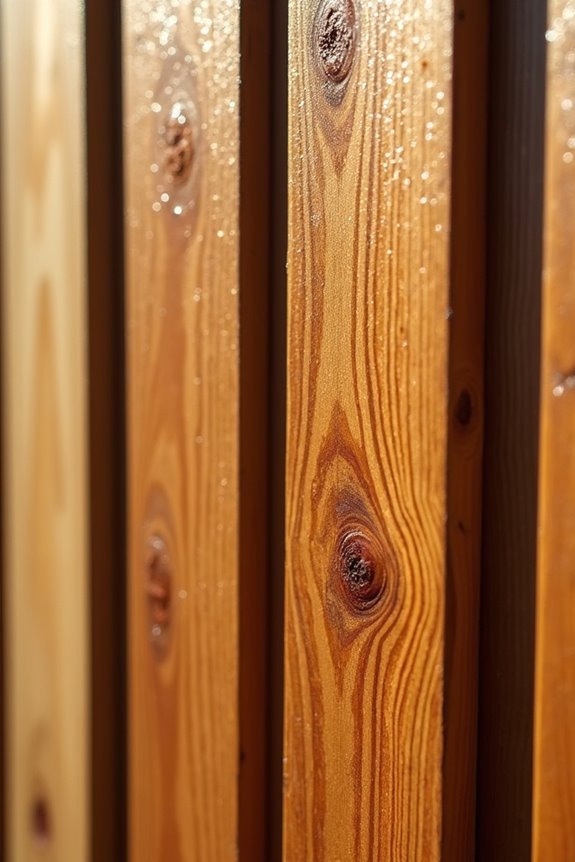
Why do some fence owners swear by paint while others prefer stain? The answer lies in how each protects your wood differently.
Pigmented paints offer stronger moisture resistance and broader weather protection overall. They create a solid barrier that shields wood from rain and snow. Stains, however, penetrate wood fibers and provide UV protection without blistering or peeling like paint sometimes does.
Pigmented paints shield wood from moisture and weather, while stains penetrate fibers for UV protection without peeling.
You’ll find stains fade more evenly and refresh more easily. Just clean and recoat—no scraping required. Paints demand more maintenance when they peel. That said, solid-opaque paints function similarly to stains in protection.
For fence longevity, stains often extend intervals between applications. Paints deliver broader color options and potentially stronger overall protection with proper maintenance. Your choice depends on your priorities: easier upkeep or maximum durability.
How Paint Creates a Protective Barrier (and Why It Fails)
Paint’s real strength lies in what it actually does. It forms a nonporous film that blocks moisture and shields wood from weathering. You’re getting genuine protection here.
Here’s how paint works for your fence:
- Pigment filters UV light and reduces photodegradation
- Film thickness creates a moisture barrier
- Proper adhesion prevents peeling and blistering
- End grain sealing stops water infiltration
But here’s where it fails. Thin coatings crack. Poor prep work compromises everything. Moisture penetration still happens when you skip priming or rush the job.
Even properly applied paint isn’t a preservative. Under conditions favoring fungal decay, paint can’t fully prevent wood degradation. You’re managing moisture, not eliminating decay risk entirely. That’s the honest truth about what paint actually protects.
The Catch: Why Paint Cracks, Peels, and Requires Frequent Refresh
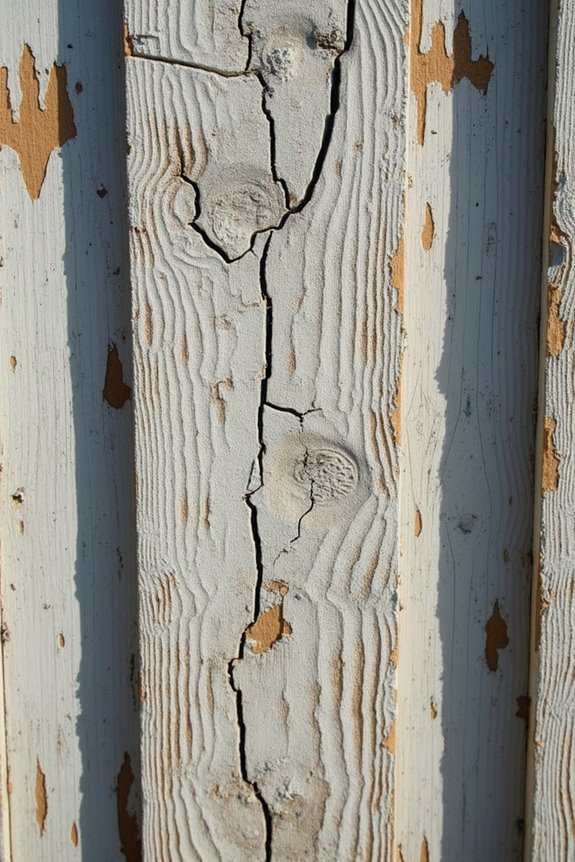
So you’ve painted your fence. Within three to five years, you’ll likely see peeling at the edges and joints. Here’s why: paint forms a nonporous film that can’t move with wood as it expands and contracts. Without proper prep-work—sanding, cleaning, and removing mold—adhesion fails quickly. Poor surface preparation is one of the biggest culprits. Even quality oil-based paints crack and delaminate under UV exposure and moisture cycles. Weather matters too. If you paint during humidity spikes or cold snaps, curing suffers and cracking accelerates. The reality is paint requires frequent refresh cycles. You’re not applying a permanent solution; you’re committing to regular maintenance. Understanding this upfront helps you plan realistically and protect your investment long-term.
Clean, Sand, and Prime: Essential Prep to Prevent Paint Failure
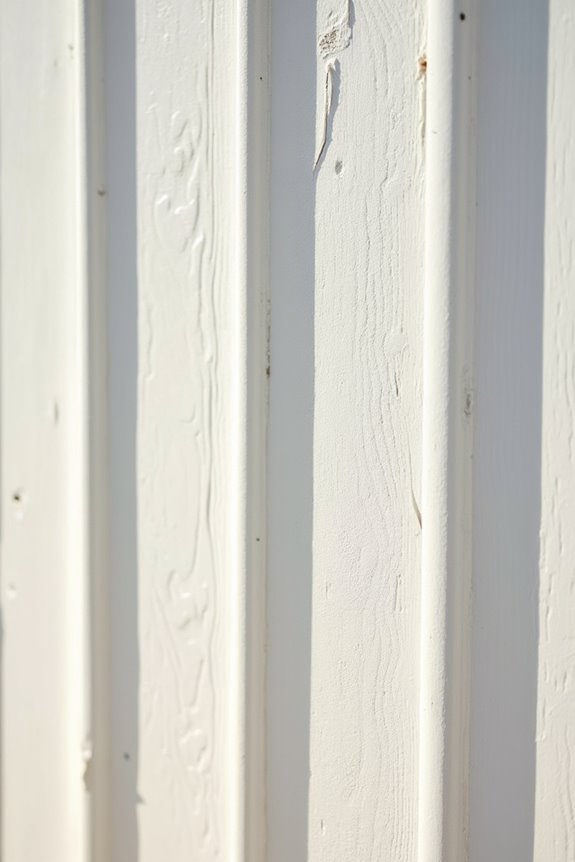
You’ve got to prep properly. Before any paint touches your fence, you’ll need to clean away dirt and mold, sand down rough spots and edges to help the paint grip better, and apply primer on bare wood so your topcoat actually sticks around. Skip these steps, and you’re basically guaranteeing that cracking and peeling problem we just talked about.
Surface Preparation Fundamentals
Surface Preparation Fundamentals
Why does a fresh coat of paint peel and flake within a year on some fences, while others maintain their appearance for five years? The difference comes down to surface preparation fundamentals.
You’ll want to follow these steps:
- Power wash your fence at a 45-degree angle to remove debris
- Apply cleaner or bleach-detergent to eliminate mold and mildew
- Sand rough areas for smooth adhesion and improved bonding
- Seal end grain early to reduce moisture uptake
Proper surface preparation prevents paint failure. Skipping these steps invites peeling. Priming is mandatory on bare wood or weathered panels. This enhances topcoat adhesion and color depth while providing moisture protection.
Apply priming under optimal conditions: 50°F to 85°F with low humidity. Wet weather extends drying times and compromises bonding. You’re investing in longevity when you prepare correctly.
Primer Application Best Practices
Now that your fence is properly cleaned and sanded, the next step determines whether your paint job lasts years or months. Primer creates the bond between bare wood and your topcoat. Skip this step, and you’ll watch paint peel within a season.
Apply primer to saturate rough timber completely. This first coat fills wood pores and blocks moisture. Wait 2–4 hours for drying before adding topcoats.
End grain demands special attention. This wood grain absorbs water like a sponge, so seal it thoroughly. You’ll prevent swelling and rot by prioritizing these vulnerable spots.
Two thin topcoats follow your primer layer. Thin coats dry faster and adhere better than one thick coat. You’re building protection that lasts.
How Long Paint Lasts and When You’ll Need to Touch Up
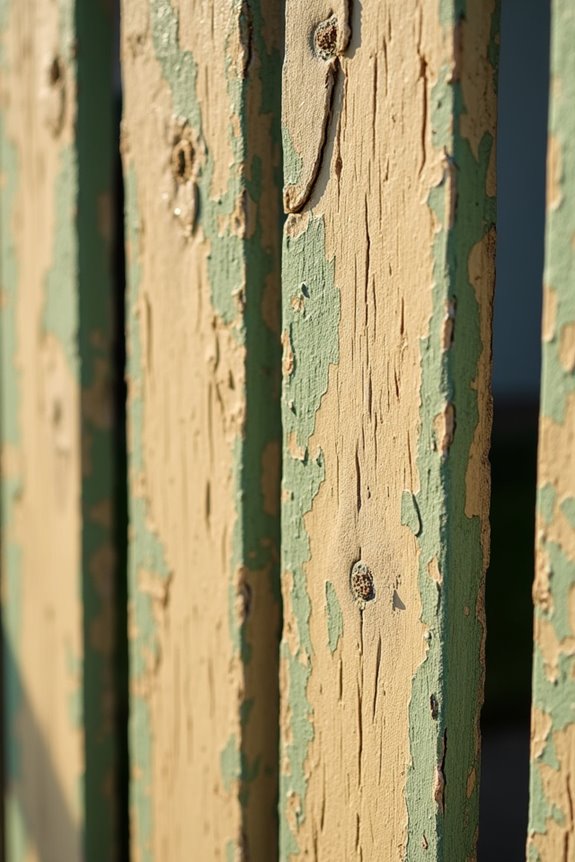
How much time passes before your fence needs fresh paint? You’re typically looking at three to five years of protection. The timeline depends on several factors you’ll want to monitor:
Your fence typically needs fresh paint every three to five years, depending on weather, wood condition, and maintenance habits.
- Paint quality and number of coats applied
- Your local weather patterns and sun exposure
- Initial wood condition and surface preparation
- Regular maintenance habits like cleaning and inspecting
Rough-sawn wood often needs touch-ups sooner due to longer drying times. Environmental conditions matter greatly—extreme sun, rain, or humidity can shorten longevity considerably. You’ll want to inspect your fence regularly for peeling or chipped areas. These signs tell you when a fresh coat is necessary. Two coats provide better depth and durability than one coat alone. Harsher climates benefit from additional top coats. Staying on top of maintenance protects your investment and extends your fence’s lifespan.
Why Stain Often Outperforms Paint for Fence Protection
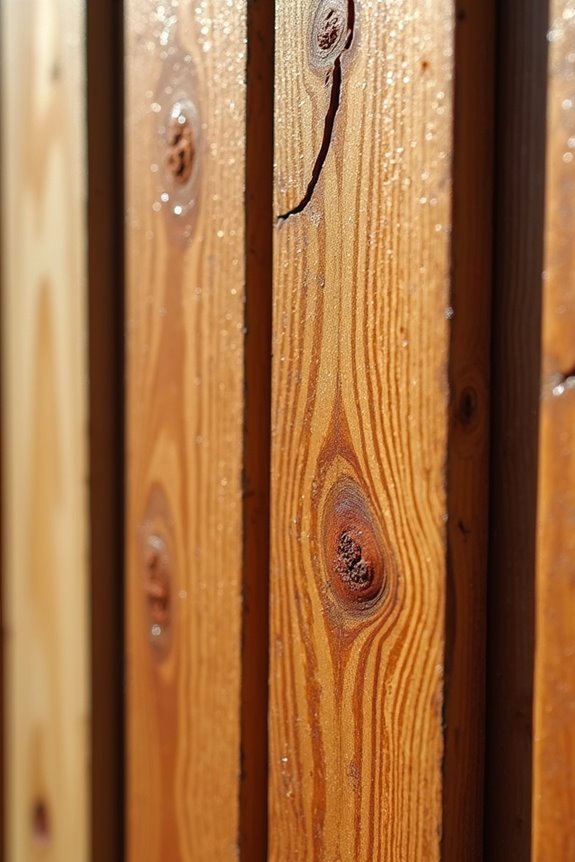
If you’ve struggled with peeling paint on your fence, stain might be the answer you’re looking for. Unlike paint that sits on wood surfaces, penetrating stain actually soaks into the wood fibers themselves. This deeper penetration blocks moisture from the inside out. You’ll notice your fence resists rot, warping, and mildew better.
Stain also delivers UV protection without forming a brittle film that cracks and peels. Your wood grain stays visible and natural-looking. The fence wears more evenly over time instead of showing obvious paint failure spots.
Here’s what matters: maintenance becomes manageable. You simply clean and reapply stain when needed. No extensive scraping or sanding required. Oil-based stains last three to five years or longer with proper care, outlasting paint in harsh conditions.