

Fence post spikes work for lightweight, temporary fences on stable, well-draining soil. They’re affordable ($15–30 per post) and install fast with a sledgehammer.
However, they struggle in soft soil, frost cycles, and water-logged conditions. Spikes typically last 5–10 years before alignment issues emerge, while concrete footings last 25+ years. You’ll need regular maintenance—tightening bolts and inspecting for rust.
Choose spikes for flexibility and speed, but understand their real performance trade-offs first.
What Are Fence Post Spikes?
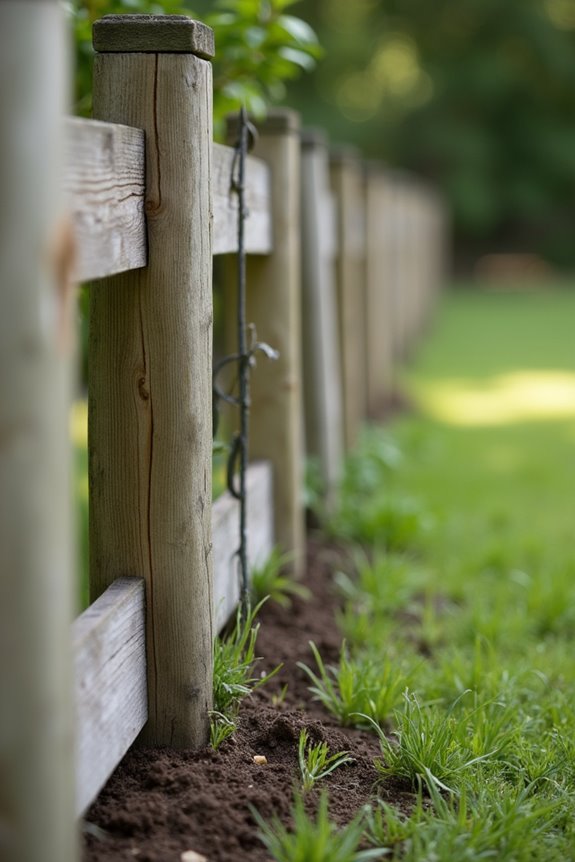
Ever wondered how to install a fence without breaking out the shovel and concrete mixer? Fence post spikes are your answer. They’re metal ground anchors with pointed bottoms that you drive directly into soil. The hollow top grips your wooden post securely.
You’ll find spikes in different sizes. A 600mm spike fits 65–80mm posts. A 750mm spike handles 85–105mm posts. Many models feature adjustable bolts or clamps that tighten around your post for extra security.
These spikes save you serious time and effort. No digging required. No concrete mixing. Installation happens fast—sometimes in minutes. You’re joining plenty of homeowners who’ve ditched traditional methods for this quicker approach. Plus, keeping timber off wet soil reduces rot and extends your fence’s lifespan.
How Do Fence Post Spikes Work?
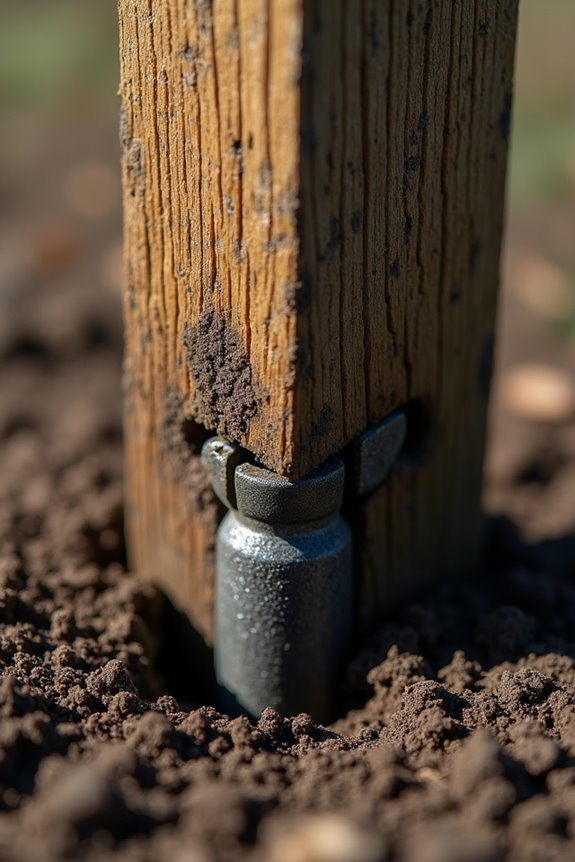
You’ll drive the spike down. The pointed metal base pushes deep into the soil, creating a stable foundation without requiring digging or concrete mixing. Then you insert your wooden post into the hollow top sleeve and secure it using bolts or clamps, which tighten to grip the post firmly in place.
Spike Design and Structure
How do those metal spikes actually keep your fence posts standing straight? You’re looking at smart spike design and post support working together.
The spike features a hollow top sleeve that grips your wooden post. Internal screws or bolts tighten around the post. This clamp reduces wobble significantly.
Below ground, a fin or spiral anchor does the work. It resists pull-out forces from wind and frost movement. Think of it as an underground anchor fighting to keep everything stable.
The spike’s height matters too. Taller spikes work better with larger posts. A 600mm spike fits 65–80mm posts. A 750mm spike handles 85–105mm posts.
Materials protect against rust. Powder-coated steel and galvanized metals last longer in soil. This combination of design elements creates reliable post support for lightweight to moderate fences.
Post Insertion and Securing
Getting that spike into the ground properly sets up everything that comes after. You’ll drive your post spike deep using a sledgehammer and post driver tool. This mechanical anchor holds firm in the soil. Once your post spike reaches the correct depth, you’re ready for the next step.
Now you insert your fence post into the hollow sleeve at the top. The post sits snugly inside the spike’s opening. You’ll then tighten bolts or screws to secure the post and eliminate wobble. These fasteners work like a vice, gripping your post firmly in place.
During installation, check that everything stays level and straight. Small adjustments now prevent major problems later. Your post spike system works best when you’ve completed these securing steps properly.
Why Fence Post Spikes Fail: Common Failure Modes
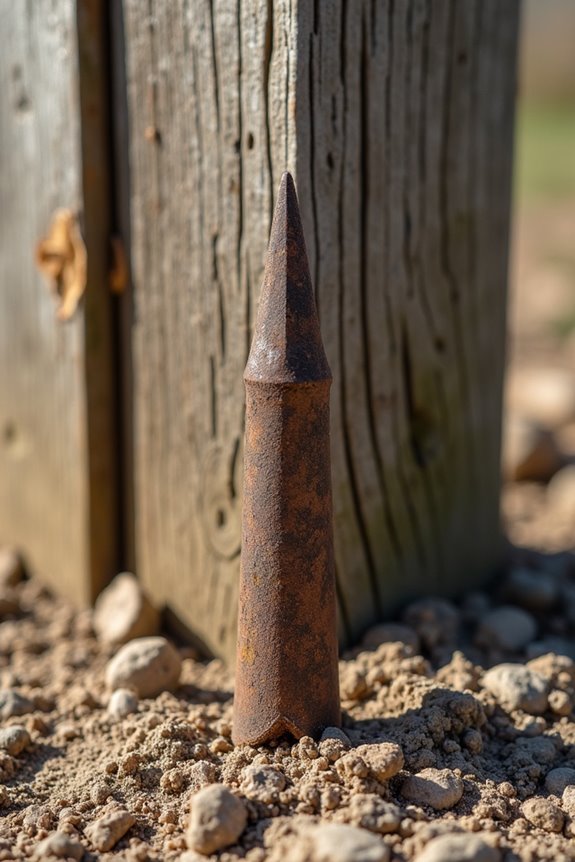
Despite their convenience, fence post spikes aren’t invincible—they fail in predictable ways when conditions aren’t right.
You’ll encounter several common failure modes:
- Ground shifting – Soft or sandy soil won’t hold spikes firmly. The earth moves under load. Your posts wobble and loosen over time.
- Frost heave – Cold climates push spikes upward during freeze-thaw cycles. Ground movement forces them out of alignment permanently.
- Leverage issues – Heavier or taller fences create excessive tilt and wobbling. The spike can’t handle the increased stress.
- Water damage – Pooling water at the base causes rot where timber meets spike. This deterioration weakens the entire connection.
Spikes work best for lightweight fences in stable, well-draining soil. Substantial or wind-exposed fences demand better solutions.
Soil Types That Undermine Post Spike Stability
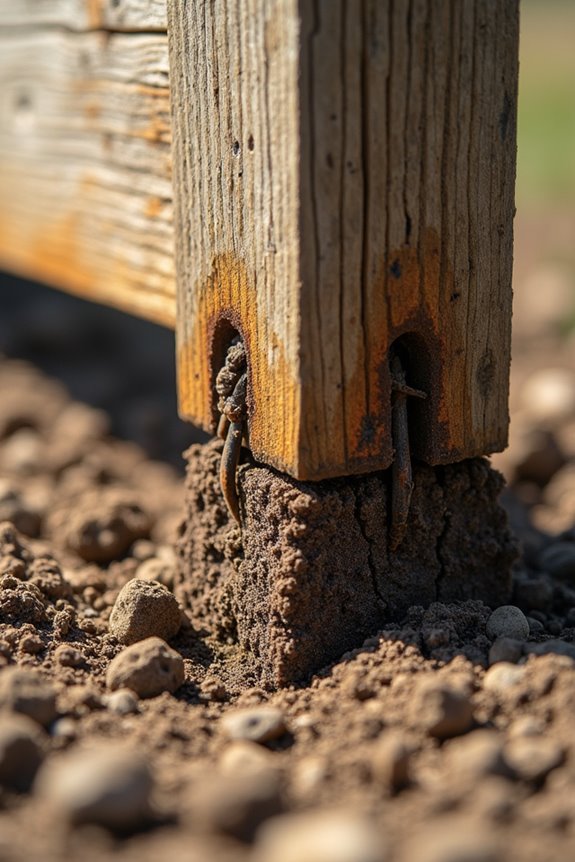
Certain soil types create real problems for spike stability. Soft or sandy soils shift constantly, causing your spikes to gradually loosen and lose their grip as the ground moves beneath them. Rocky ground and uneven terrain demand different solutions—like concrete footings or adjustable bases—because standard spikes can’t anchor properly in these challenging conditions.
Soft Soil Challenges
Soft Soil Challenges
Why do fence post spikes sometimes fail in sandy or soft ground? When you install spikes in soft soil, you face a difficult problem. The ground shifts around the spike over time. This movement undermines your fence’s stability.
Here’s what happens:
- Soil particles shift and settle around the spike, creating gaps that weaken the connection
- Heavy or tall fences leverage against the spike more forcefully in unstable ground
- Frost heave pushes spikes out of alignment during freeze–thaw cycles in cold climates
- Water-soaked soil promotes rot at the timber–spike interface without proper drainage
You’ll notice wobbling or tilting despite the spike’s design. Soft soil requires additional stabilization methods. Consider adding drainage improvements or reinforcement. Spikes work best in stable, well-draining soil with lightweight fences. In sandy conditions, you should explore alternative solutions.
Rocky Ground Complications
Rocky ground presents a completely different challenge than soft soil. You’ll find that spikes can’t penetrate uneven rock faces evenly. This misalignment causes your fence to lean or wobble over time. The irregular surfaces mean poor grip and reduced stability.
Pre-drilling becomes necessary in rocky terrain. You’re creating a pilot hole before driving the spike deeper. Without this preparation, your posts won’t sit securely.
Concrete footings offer better alternatives for rocky ground. They distribute weight more effectively than spikes alone. You might also consider heavier-duty spikes or protective post sleeves.
Exposure matters too. Rocky soil lacks sufficient cover around spike bases. This accelerates rot and shortens your post’s lifespan considerably. For tall or windy fences, concrete-fixed posts outperform spikes in rocky conditions.
Load and Wind Limits: When Spikes Reach Their Breaking Point
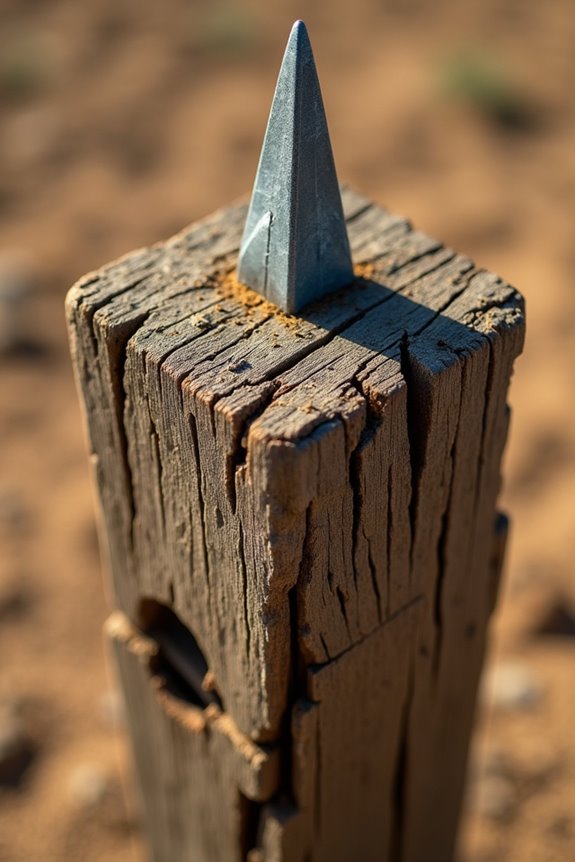
At what point does a fence post spike stop being reliable? You’ll discover spikes limitations when you push beyond lightweight applications. Here’s where they struggle:
- Heavy fences create excessive leverage that gradually tilts posts out of alignment.
- High-wind areas demand superior stability that spikes simply can’t consistently provide.
- Tall structures multiply downward forces exponentially, stressing the spike’s grip.
- Soft soils allow ground shift that loosens spikes over seasons.
You’re dealing with physics here. Spikes work for temporary or light-duty fencing. But substantial loads? Concrete-set posts win decisively. Frost heave in cold climates pushes spikes upward, compromising everything. Adjustable bolts help reduce wobble temporarily. They won’t solve fundamental load issues though. Know your fence’s demands before choosing spikes. Match the solution to your actual needs.
Five Ways to Prevent Post Spike Failure Before It Starts
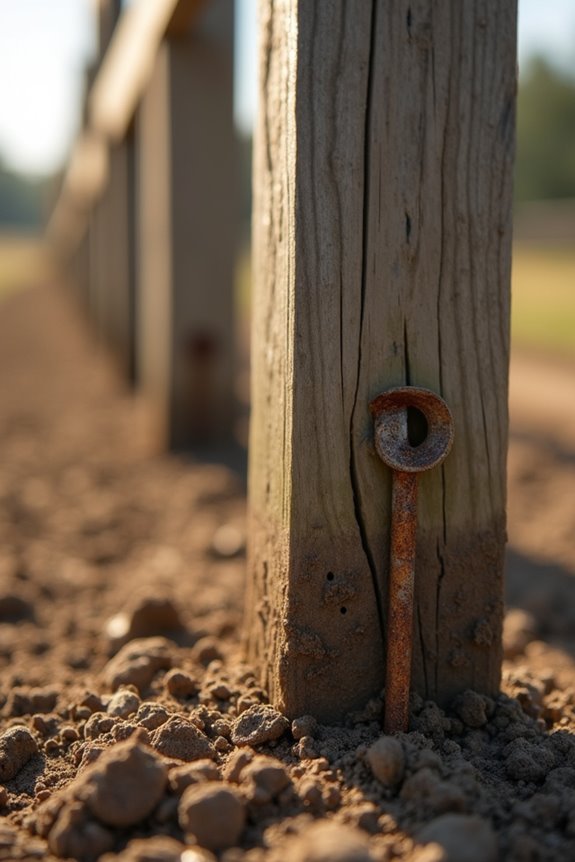
You’ll want to know your soil first. Different soil types—clay, sandy, or rocky—require different spike strategies, and picking the wrong one guarantees wobbling posts that’ll frustrate you for years. Regular maintenance like checking bolt tightness and inspecting for rust keeps your spikes working properly instead of failing silently beneath your fence.
Soil Type Selection Matters
Soil Type Selection Matters
Why does your fence spike fail in some yards but hold strong in others? The answer lies beneath your feet. Your soil type dramatically affects installation success and long-term spike performance.
- Soft or sandy soil shifts under fence weight, causing spikes to loosen over time and destabilize your posts
- Well-draining soil with gravel prevents water pooling at the base, reducing rot at the timber-spike connection point
- Frost heave in cold climates pushes spikes upward when footings aren’t deep enough or lack proper drainage
- Rocky or uneven soil requires concrete bases or alternative anchoring methods for level, stable installations
Before you drive that first spike, assess your yard’s soil composition. Know what you’re working with. This simple step prevents frustrating repairs later and keeps your fence secure for years.
Regular Maintenance Prevents Wobbling
Installing a fence spike correctly is just the beginning. You’ll want to inspect all bolts and screws at least twice yearly and after storms to catch loosening before wobble maintenance becomes a bigger problem. This simple routine catches problems early.
Keep the base area clear of debris and weeds. Water retention around your spike causes soil movement that destabilizes everything. Add gravel or drainage material to reduce frost heave risk—that freezing action tilts posts fast.
During installation, check alignment with a spirit level. Re-check depth occasionally as your fence settles naturally over time. Consider post sleeves or adjustable bolts to tighten around the post and minimize wobble issues.
These fence post spikes work best when you stay proactive about maintenance.
How to Maintain Post Spikes for Lasting Performance
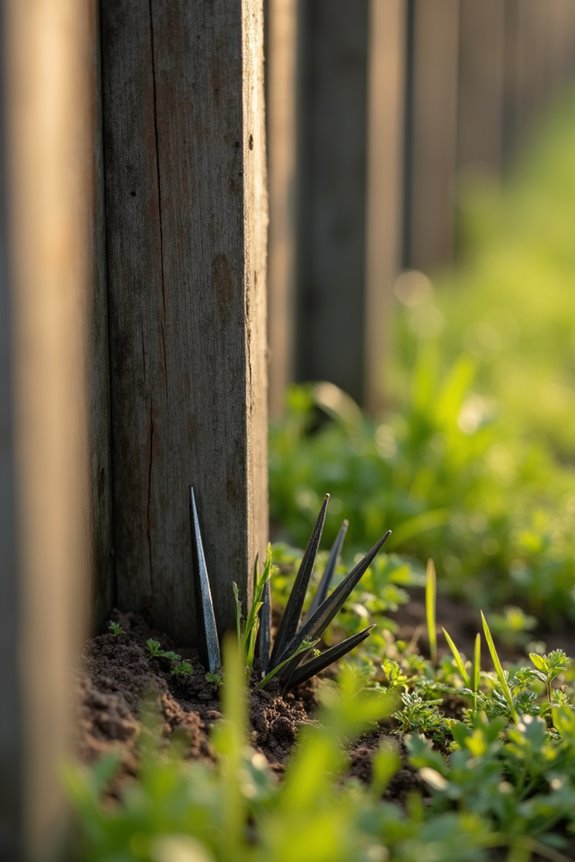
Once your fence posts settle into the ground, the real work begins. You’ll want to stay on top of spikes maintenance to keep your fence standing strong for years to come. Here’s what you need to do:
Once fence posts settle, maintenance becomes key to keeping your fence strong for years to come.
- Tighten all bolts and screws regularly to prevent wobble as soil shifts
- Inspect the base area twice yearly and after storms for rust or rot
- Use powder-coated or galvanized spikes to slow rust and protect timber
- Keep debris cleared and manage weeds to prevent soil erosion around the spike
Check alignment with a spirit level during installation and ongoing maintenance. This straightforward approach keeps your investment secure. You’re protecting not just your fence but also your property’s appearance and security long-term.
Cost Comparison: Spikes, Concrete, and Alternatives
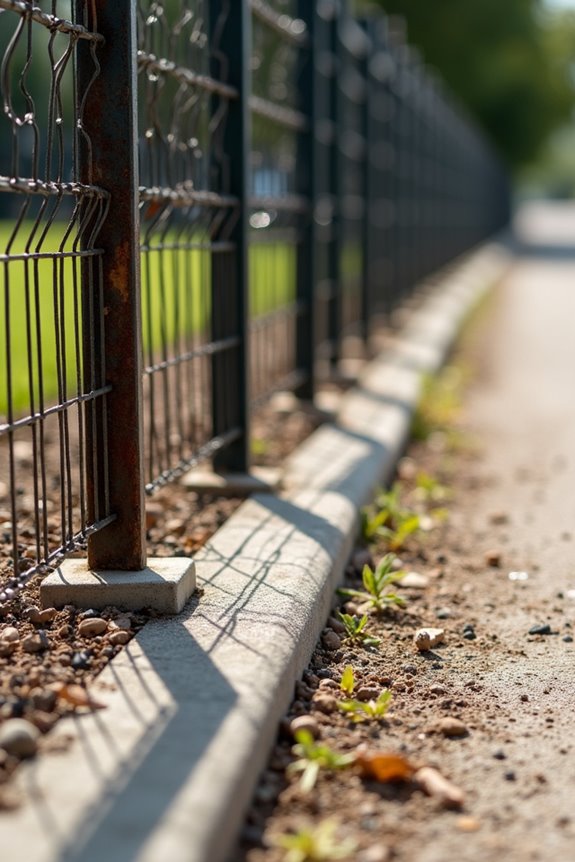
Keeping your fence maintained matters. You’ll find spikes offer lower upfront costs and faster installation. Concrete footings require more initial investment but deliver superior long-term value.
| Method | Upfront Cost | Long-Term Maintenance |
|---|---|---|
| Spikes | Low | Higher costs over time |
| Concrete | High | Lower maintenance needs |
| Alternatives | Medium | Varies by type |
Spikes cost less initially. You’re looking at $15-30 per post versus $50-100 for concrete. However, concrete resists frost heave and soil movement better. You’ll replace spike-set posts sooner in harsh climates.
Consider your fence’s purpose. Temporary installations favor spikes. Permanent fences justify concrete’s expense. You’re investing in stability and durability. Most homeowners find concrete worthwhile for substantial fences lasting decades.
Spikes vs. Concrete: Which Holds Up Over Time
How long will your fence actually stand straight?
You’re comparing two fundamentally different approaches to foundation durability. Here’s what separates them:
- Wind resistance — Concrete footings anchor posts deeply. Spikes sit surface-level, creating leverage problems in exposed areas.
- Frost heave impact — Cold climates push spikes upward. Concrete resists ground movement better over seasons.
- Long-term stability — Concrete-set posts with treated timber last 25+ years. Spikes typically hold 5-10 years before alignment issues appear.
- Maintenance demands — Concrete footings require minimal intervention. Spikes need drainage solutions and adjustable bolts for corrections.
Concrete footings demand patience during curing. But fence post spikes offer quick installation without digging. The trade-off? You’re betting on short-term convenience versus long-term straightness.
For permanent fences, concrete wins decisively. Spikes work fine for temporary applications.
When Post Spikes Are Your Best Option (And Why)
Concrete footings win for permanent installations. But here’s where spikes work best: lightweight to moderate fences on stable, well-draining soil. The speed is the main advantage. No digging required. No mess. No disruption to your yard.
Post installation becomes remarkably simple. You position the spike. Drive it down. Done.
Need a temporary solution? Spikes are ideal here. Easily removable when you’re ready for change. Rocky or hard ground giving you trouble? Spikes bypass the digging process entirely.
Consider adjustable bolts or internal grips. They reduce wobble on taller fences or windy locations. Just remember: add proper drainage around the base. Use post sleeves for protection.
This approach suits you if you value convenience and flexibility over permanence.
When Concrete Footings Outperform Post Spikes

Why do serious fence builders reach for concrete instead of spikes? You’ll discover the answer when you face challenging conditions.
Concrete footings outperform spikes in these situations:
- Heavy or large fences that need serious support
- Wind-exposed areas where posts experience constant pressure
- Problematic soils that shift and move seasonally
- Long-term projects requiring 25+ years of durability
Concrete provides superior rotation resistance. Your posts stay locked in place. Treated timber posts set in concrete resist warping and rot effectively. Frost heave won’t lift your fence. Soil movement won’t destabilize it.
Yes, concrete requires more work. Digging, mixing, pouring, and curing takes time. That’s the trade-off. You’re investing effort upfront for decades of reliable performance. When conditions demand stability, concrete footings deliver what spikes simply can’t match.
Step-By-Step Installation for Maximum Stability
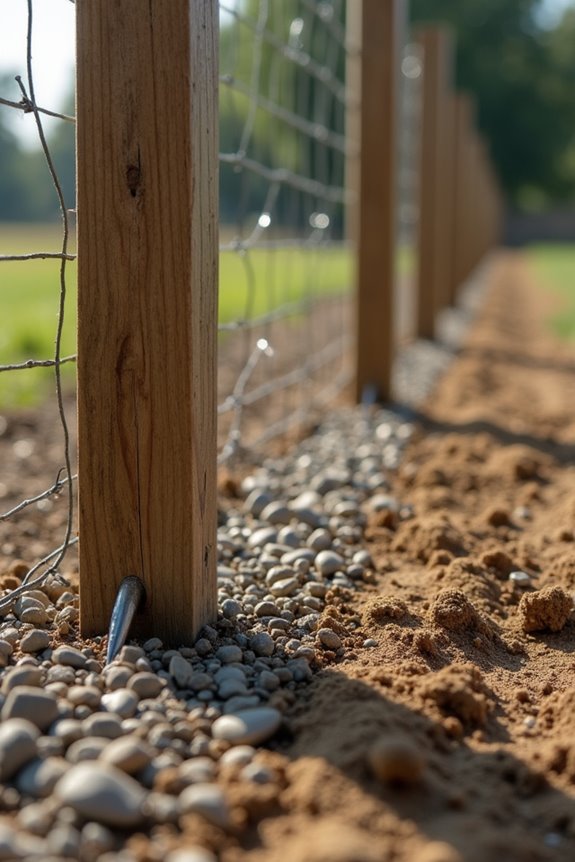
When you’re ready to install fence post spikes, getting the fundamentals right is important. First, match your spike size to your post diameter—600mm spikes fit 65–80mm posts, while 750mm spikes accommodate 85–105mm posts. This ensures proper post stability.
Next, mark post locations and drive spikes into the ground using a sledgehammer or fence post driver. Space them six feet apart for consistency. Check that each spike sits level and straight by placing a spirit level on top before fully seating it.
Insert your wooden post into the spike, then secure it with bottom fins and top sleeve hardware. Tighten all bolts as you work deeper. After installation, inspect connections regularly and add gravel around the spike base to prevent water pooling. This spike installation method extends your fence’s lifespan and structural integrity.
Do Fence Post Spikes Really Work? Here’s the Honest Answer
You’ve now got the technical know-how to install spikes correctly. But do they actually work? Here’s the honest truth: spikes deliver real results for certain situations. They’re not suitable for every fence project, though.
Consider these key performance factors:
- Soil type matters most – Spikes perform well in stable, well-draining soil but struggle in sandy or frost-prone areas
- Weight limitations exist – They work well for lightweight fences yet fail under heavy wind exposure
- Long-term durability varies – Adjustable bolts and post sleeves reduce wobble, extending spike lifespan significantly
- Maintenance prevents failure – Gravel drainage and alignment checks stop rot and water pooling problems
Bottom line: spikes work well when conditions align with their design. For permanent, heavy-duty installations, concrete footings remain superior. Know your soil. Know your fence weight. Then decide with confidence.